Kiawah Island / Charleston, SC: Insider Tips for First-Time Visitors
Most golfers arrive at Kiawah Island with one round circled on the itinerary. The Ocean Course pulls them in, and everything else is afterthought. That instinct is understandable but costs visitors in ways they only recognize after the trip is over. Kiawah rewards planning more than most golf destinations, and the difference between a well-sequenced visit and a haphazard one is significant. The following tips reflect what experienced visitors consistently wish they had known before their first trip.
Where to stay in Charleston & Kiawah Island
Planning the trip? Compare live prices across every nearby hotel and rental in one search.
Prices and availability from Booking.com, Expedia and others via Stay22. GolfTrailsHQ may earn a commission at no additional cost to you.
Play Osprey Point or Turtle Point Before the Ocean Course
The temptation to play the Ocean Course on the first available tee time is strong. Resist it. The Ocean Course is fully exposed to Atlantic wind, elevated above the dune line, and demands a level of strategic discipline that benefits enormously from a day of calibration on the island's more sheltered layouts. Osprey Point or Turtle Point serve this purpose well. Both are serious courses in their own right, and a round on either one provides a baseline for how the Lowcountry turf plays, how the salt air affects ball flight, and how much club the coastal conditions add or subtract. Save the Ocean Course for day two or three, when the group has its legs under it.
Respect the Wind and Plan Around It
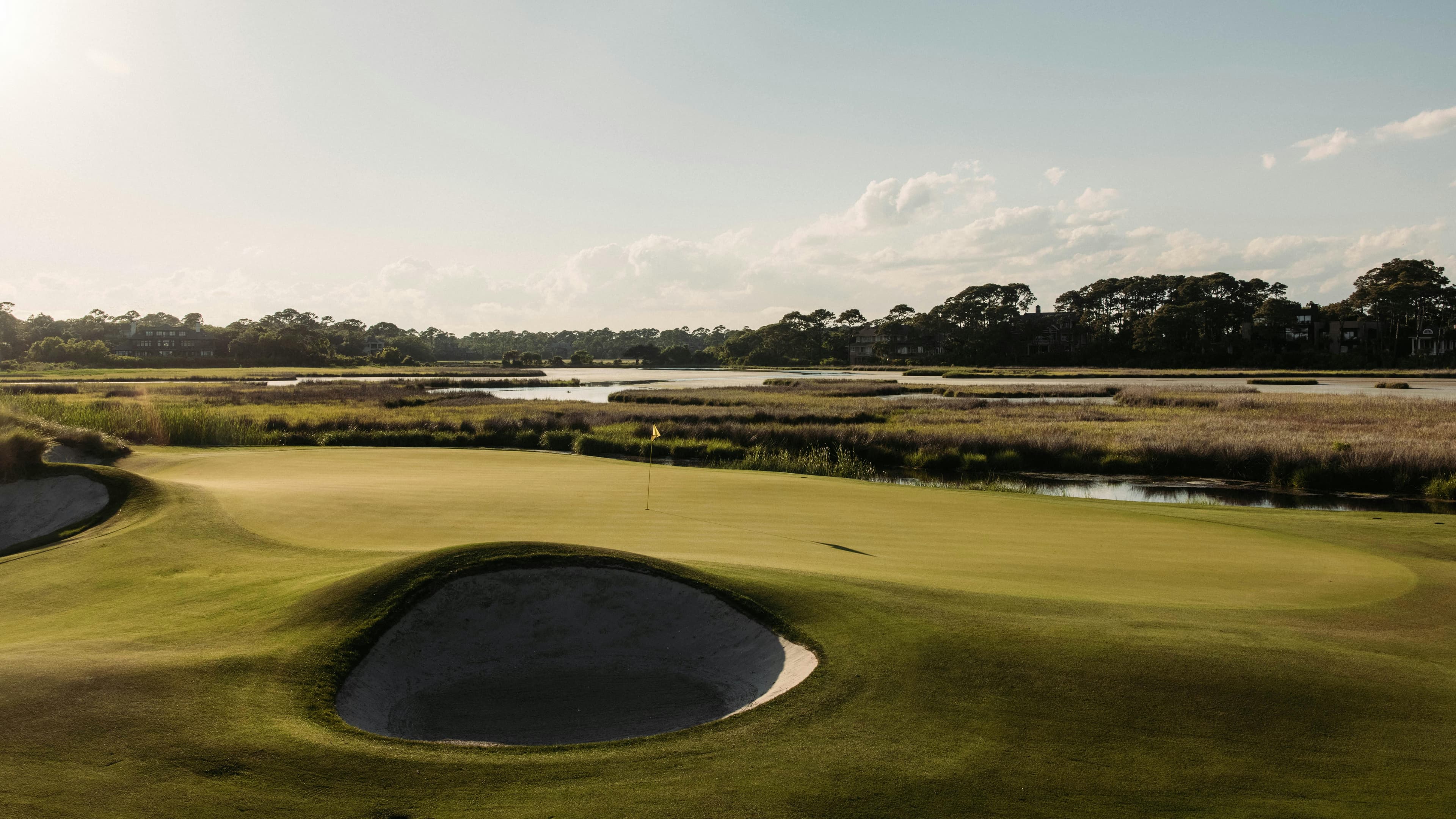
Wind is not a periodic nuisance at Kiawah. It is a constant. Pete Dye deliberately elevated the Ocean Course fairways to maximize exposure, and on a typical day the wind runs ten to twenty miles per hour with gusts above that. Club selection shifts by two to three clubs depending on direction, and shots that would hold a fairway on an inland course get pushed into waste areas or marsh without warning. The practical adjustment: book the earliest available morning tee time for the Ocean Course. Wind tends to build through the day, and conditions at 7:30 a.m. are often meaningfully calmer than at noon. An afternoon round on a breezy day can feel like a different course entirely.
Hire a Caddie on the Ocean Course
The Ocean Course green fee already represents a premium investment. Adding a caddie increases the cost, but the return is disproportionate. Caddies who work the Ocean Course daily understand the wind patterns hole by hole, know which sections of the greens drain toward the water, and can read putts on surfaces that tilt in ways first-time visitors struggle to decode from their own angle. They also keep pace moving on a layout where the distances between greens and tees can surprise walkers and cart riders alike. For the one round on the trip that carries the highest stakes, local knowledge removes guesswork at the moments it matters most.
Budget Four Rounds, Not Two
Kiawah's five-course inventory is its underappreciated strength. The Ocean Course absorbs the attention, but Osprey Point, Turtle Point, Cougar Point, and Oak Point each offer distinct design character at green fees between $100 and $250. A four-round trip that pairs one Ocean Course round with three mid-tier rounds captures the island's full architectural range and spreads the budget across a more sustainable total. For the complete course breakdown, see the Kiawah Island best courses guide.
Oak Point, located just off the island on Johns Island, is the most accessible price point and plays through moss-draped live oaks and tidal marsh that feel distinctly Lowcountry.
Account for the Charleston Drive
Kiawah sits twenty-five miles south of Charleston, roughly forty minutes by car via US-17 South and the Kiawah Island Parkway. That distance matters in both directions. Groups staying on-island who want to dine in Charleston need to plan for the round trip, and groups based in Charleston who plan to play Kiawah daily will feel the commute by day three. The cleanest approach for a four-day trip: spend two or three nights on-island for golf, then shift to Charleston for the final night to enjoy the city without watching the clock.
Eat on the Island, but Dine in Charleston
Tip
Time the Trip to the Shoulder Seasons
Summer heat in the Lowcountry is aggressive, with humidity that makes afternoon rounds genuinely uncomfortable. Winter is mild enough to play but carries the risk of dormant bermudagrass and occasional cold fronts that push temperatures into the forties. The spring window, in particular, aligns with azalea season and longer daylight hours that make twilight rounds viable.
Late March through May and mid-September through November deliver the best combination of playable weather, manageable humidity, and reasonable rates.
Know the Dress Code and Practice Facilities
Kiawah Resort enforces a collared-shirt policy across all five courses. Denim is not permitted. The resort's practice facilities, located near Osprey Point, include a full driving range, short game area, and putting green. Arriving thirty minutes before a tee time to warm up is standard, and the range is the right place to recalibrate after a travel day before heading to the first tee.
The Short Version
The verdict