Kiawah Island / Charleston, SC: The Complete Golf Trip Guide
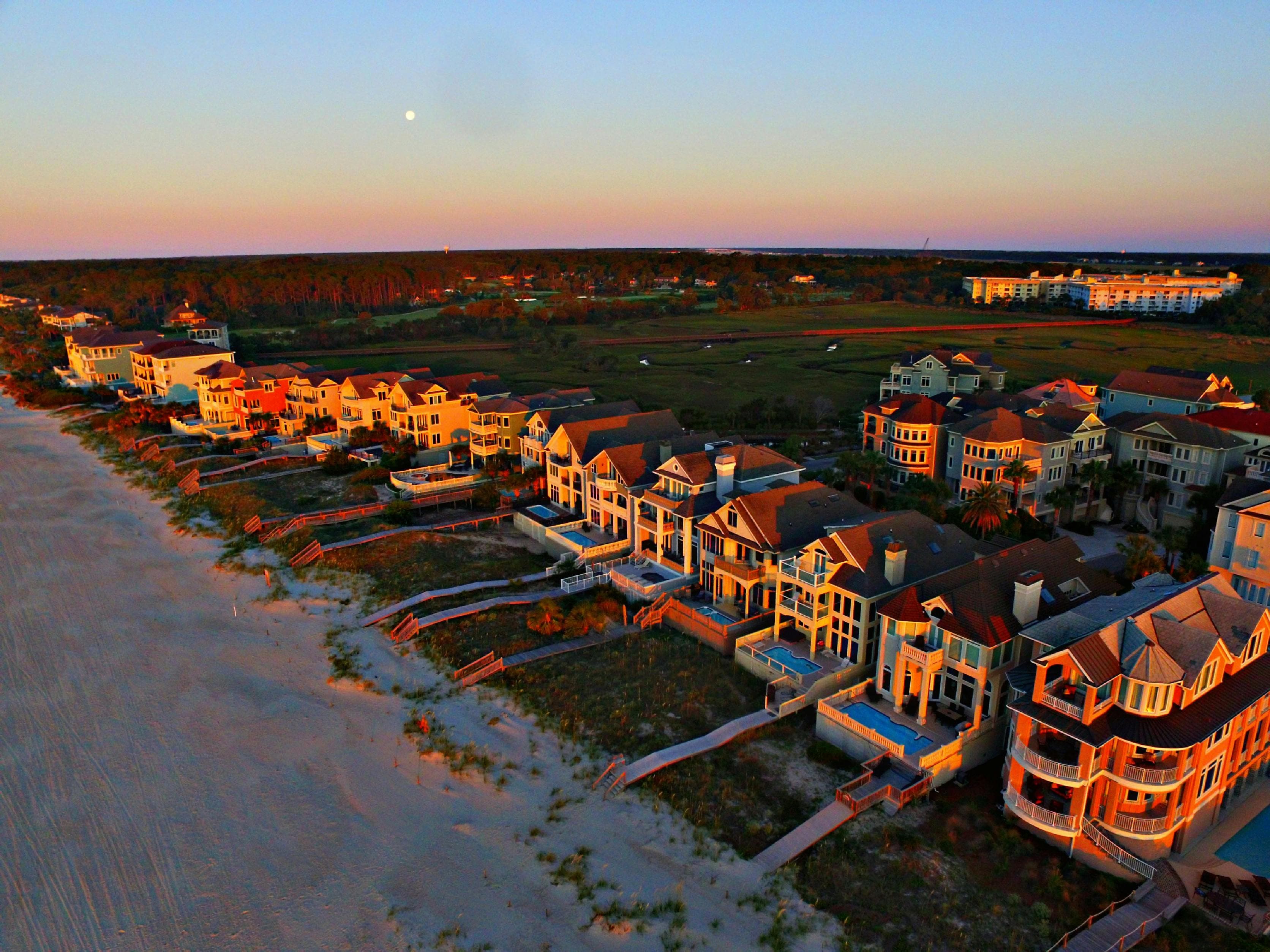
Kiawah Island sits twenty-five miles south of Charleston on a narrow barrier island that runs roughly ten miles along the South Carolina coast. The island is not visible from the highway. The approach crosses salt marsh and tidal creek on a two-lane causeway, and the landscape shifts register gradually: live oaks replace strip malls, egrets stand in the shallows beside the road, and the commercial world recedes before the resort gate comes into view. The island has been a private and resort community since the 1970s, and that controlled development means the golf courses, beaches, and maritime forest exist in a state that feels closer to preservation than construction.
The Ocean Course, designed by Pete Dye and opened in 1991, is the reason most golfers first learn the name Kiawah. But a trip to Kiawah built solely around one course misses the broader proposition. The resort operates five courses across the island, Charleston is a forty-minute drive north, and the combination of championship golf, barrier island ecology, and one of America's finest food cities creates a trip that holds together whether the group plays two rounds or five.
The "War by the Shore" Ryder Cup that year produced one of the most dramatic finishes in the event's history, and the course has since hosted the 2012 and 2021 PGA Championships.
Where to stay in Charleston & Kiawah Island
Planning the trip? Compare live prices across every nearby hotel and rental in one search.
Prices and availability from Booking.com, Expedia and others via Stay22. GolfTrailsHQ may earn a commission at no additional cost to you.
The Courses
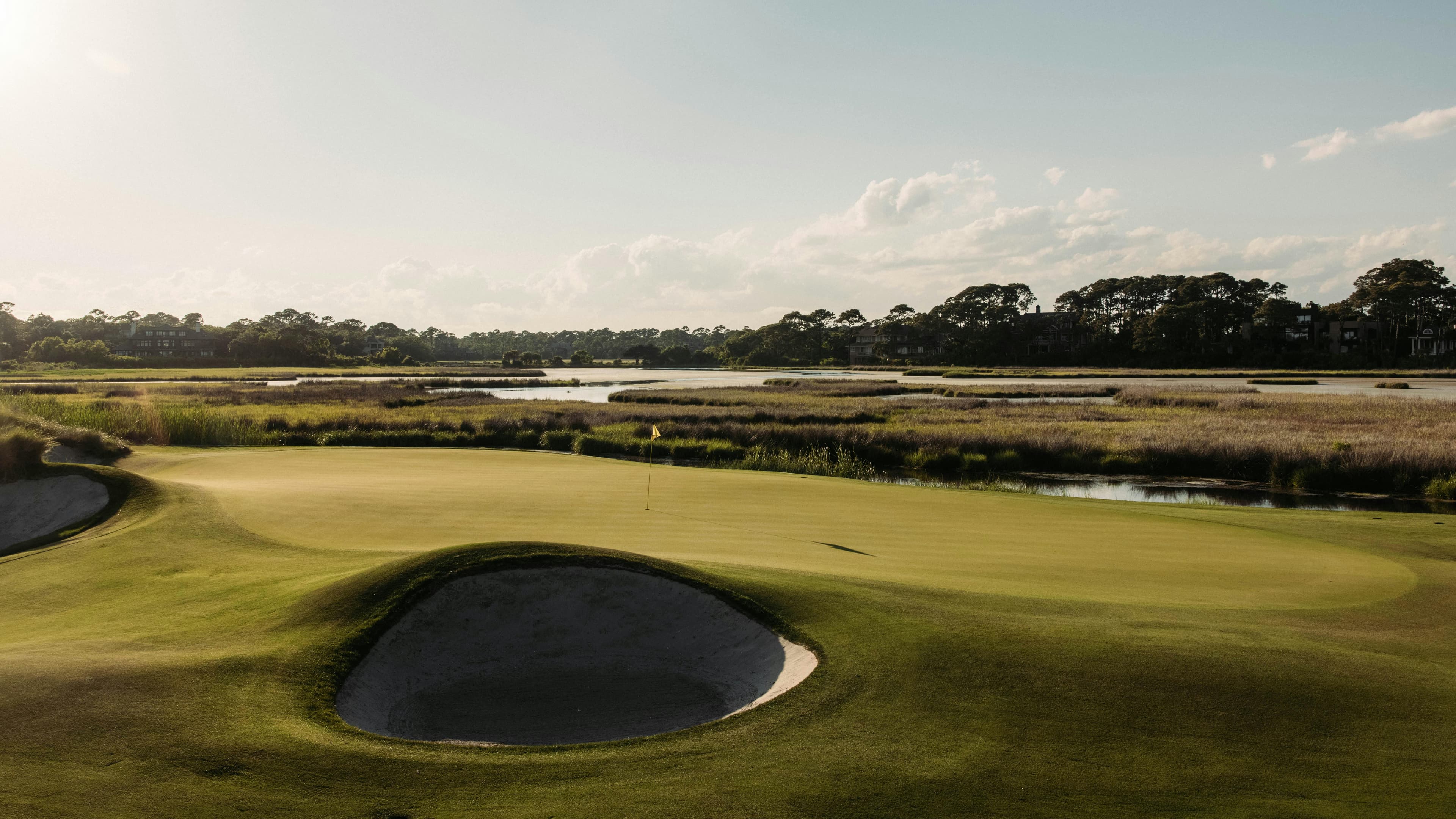
The Ocean Course commands the conversation and the budget. Pete Dye routed all eighteen holes with views of the Atlantic Ocean or the surrounding marsh, making it the only course in the country where every hole has a sight line to the water. The layout is exposed to coastal wind in a way that most resort courses are not. When the wind blows, which is most days, the course plays substantially longer and more demanding than its yardage suggests. Dye's pot bunkers, undulating greens, and strategic bunkering reward shot-making over power. The green fee runs $400 to $500 and higher during peak season, and access is restricted to resort guests. For golfers who have studied the course on television, the in-person experience adds a dimension that broadcasts cannot convey: the sound of wind through the sea oats, the firmness of the turf, the way the dunes frame each hole as a discrete challenge.
Osprey Point, designed by Tom Fazio in 1988, is the resort's most balanced layout and the course most groups should play first. Fazio routed it through lakes, natural marsh, and dense stands of oak and pine, producing a course that feels more sheltered than the Ocean Course and more varied in its demands. At $150 to $250, it represents strong value within the resort portfolio and plays well across a range of handicaps.
Turtle Point, a Jack Nicklaus design from 1981, occupies land along the island's southern shore. Three holes play directly along the ocean, and the routing alternates between open coastal terrain and tighter inland corridors lined with palmetto and live oak. Nicklaus greens are large and contoured, rewarding approach play that accounts for pin positions. Green fees range from $150 to $250. The course underwent a renovation in 2016 that improved drainage and restored several of Nicklaus's original design features.
Oak Point and Cougar Point round out the five-course inventory. Oak Point, located just off the island in nearby Johns Island, is a Clyde Johnston design that plays through moss-draped oaks and tidal marsh. It offers the most accessible green fees in the Kiawah portfolio at $100 to $180 and serves as a solid option for the day when the group wants quality golf without the premium price point. Cougar Point, an Arthur Hills design renovated in 2019, runs through maritime forest and salt marsh along the Kiawah River. At $130 to $200, it occupies the middle tier and rewards accuracy more than length.
The practical approach for a four-round trip is to book the Ocean Course as the centerpiece, play Osprey Point and Turtle Point on flanking days, and use Oak Point or Cougar Point for the fourth round. That sequence moves through the architectural range of the island and manages the budget by concentrating the premium spend on a single round.
Where to Stay
Kiawah Island Golf Resort is the primary accommodation provider, and the decision tree is straightforward: hotel or villa.
The Sanctuary at Kiawah Island is the resort's flagship hotel, a 255-room oceanfront property that operates at a level consistent with its reputation. Nightly rates run $500 to $900 depending on season and room category. The hotel's location on Kiawah's beach, combined with its spa, pool complex, and dining options, makes it the natural choice for couples and groups where the non-golfing companion's experience carries equal weight in the planning.
Resort villas and private homes offer the alternative. Multi-bedroom villas range from $200 to $500 per night and provide kitchens, living space, and proximity to the courses. For a foursome splitting costs, a three-bedroom villa brings the per-person nightly rate into a range that leaves more room in the budget for green fees. Villas are scattered across the island, and location matters: units near the Ocean Course or Osprey Point reduce transit time between rounds and lodging.
The other option is to base in Charleston and drive to Kiawah for golf. The forty-minute drive is manageable for a day or two of rounds, and staying in Charleston opens the trip to the city's hotels, restaurants, and cultural life in a way that staying on the island does not. This approach works best for groups playing two or three rounds rather than four or five, and for travellers who value Charleston's urban texture over Kiawah's island quiet. Downtown Charleston hotels range from $150 to $500 depending on property and season.
Getting There
Charleston International Airport (CHS) is the gateway. Direct flights connect to most major hubs on the East Coast, Midwest, and Southeast. The drive from the airport to Kiawah Island takes approximately forty minutes via US-17 South and the Kiawah Island Parkway. A rental car is necessary. The island has no ride-share presence to speak of, and the distance between courses, the resort gate, and any off-island dining or activities makes personal transportation essential.
For groups flying in, coordinating arrival times to share a rental car simplifies logistics. The airport is small enough that ground transportation is straightforward, and the drive to Kiawah crosses the same marsh and tidal landscape that characterizes the island itself.
When to Go
Spring and fall are the clear premium windows. March through May delivers temperatures in the mid-60s to low 80s, low humidity by coastal South Carolina standards, and courses in peak condition. Azaleas bloom through the maritime forest in March and April, and the combination of comfortable playing conditions and visual richness makes this the season that justifies peak-season pricing.
September through November offers a similar temperature profile with lower rates and smaller crowds. The Ocean Course's exposed routing makes fall wind patterns a meaningful factor in course difficulty, but the tradeoff is fewer groups on every tee sheet. Hurricane season runs through November, and while direct hits on the South Carolina coast are infrequent, monitoring forecasts in the weeks before travel is prudent.
Tip
Winter is mild relative to most of the East Coast. Temperatures range from the mid-40s to low 60s, and most courses remain open. Green fees reach their annual lows. The trade-off is shorter days and the occasional cold front that can make the Ocean Course's exposed routing genuinely uncomfortable for a day or two.
Where to Eat
The city has produced more James Beard Award winners than any comparably sized city in the South, and the culinary identity is built on Lowcountry ingredients: shrimp, oysters, stone-ground grits, and rice varieties with roots in the region's agricultural history.
Charleston's restaurant scene is the strongest asset a golf trip to this region can claim beyond the courses themselves.
On King Street and in the surrounding blocks, restaurants range from white-tablecloth establishments to counter-service spots operating at a level that most cities reserve for their top tier. The Ordinary, a seafood hall in a converted bank building, serves oysters and crudo that set the standard for the genre in the region. Husk built its reputation on a rule that every ingredient must come from the South, and the menu shifts daily to reflect what is available. FIG has operated since 2003 with a farm-to-table approach that predates the term's overuse. For groups staying on Kiawah, the drive to Charleston for dinner is worth making at least once.
On the island, The Ocean Room at The Sanctuary offers refined seafood with ocean views and a wine list that matches the setting. Jasmine Porch, also at The Sanctuary, serves Lowcountry cuisine in a less formal environment. Tomasso at Turtle Point handles Italian with fresh ingredients and a patio that works on mild evenings.
Beyond the Fairway
Kiawah's beach runs ten miles along the island's Atlantic side, and unlike many resort beaches, it is wide, uncrowded, and backed by dunes rather than development. The beach alone sustains a non-golfing companion for multiple days, particularly when combined with the island's bike paths and nature trails.
Kayaking through the tidal creeks and salt marshes surrounding the island is the signature non-golf activity. Guided tours depart from the resort's marina and paddle through ecosystems where bottlenose dolphins surface regularly and osprey hunt overhead. The Heron Park Nature Center on the island offers naturalist-led walks through the maritime forest and along the beach, covering the island's ecology from loggerhead turtle nesting to alligator habitat.
Charleston itself is the most compelling off-course asset. The historic district's cobblestone streets, antebellum architecture, and public gardens reward a full day of walking. Fort Sumter, accessible by ferry from the harbor, provides the Civil War history that frames the city's identity. The Charleston City Market, operating since the 1800s, sells sweetgrass baskets woven in a tradition that traces to West Africa. For a travelling companion or a rest day from golf, Charleston offers enough depth to fill multiple visits.
Planning Your Trip
Cost framing for a four-day, three-night trip helps set expectations. A premium version built around the Ocean Course, two additional resort rounds, and three nights at The Sanctuary runs $2,500 to $3,500 per person. A mid-range version playing Osprey Point, Turtle Point, and Oak Point with villa lodging comes in at $1,200 to $1,800 per person. A Charleston-based version with two rounds at Kiawah and downtown hotel lodging drops to $900 to $1,500 per person. All three deliver golf and setting that reward the trip.
Booking the Ocean Course requires the most lead time. Peak-season tee times can fill weeks in advance, and resort guest status is a prerequisite. Building the trip around a confirmed Ocean Course date and filling in the remaining rounds afterward is the most efficient planning sequence. The other four courses rarely require more than a week of advance booking outside of holiday weekends.
The full Kiawah Island destination guide covers the complete course and accommodation inventory.
The verdict