Kiawah Ocean Course vs Whistling Straits: Championship Links
Pete Dye designed both courses. Both hosted the Ryder Cup. Both play along the water's edge on links-style terrain with enough difficulty to break a golfer's spirit and enough beauty to make the pain worthwhile. The Ocean Course at Kiawah Island, on the South Carolina barrier island, and Whistling Straits, on the Lake Michigan shore near Sheboygan, Wisconsin, represent the two greatest public-access championship courses in America. Playing one is a bucket-list experience. Playing both in the same year is an education in what Dye's architecture can achieve across different landscapes.
Where to stay in Charleston & Kiawah Island
Planning the trip? Compare live prices across every nearby hotel and rental in one search.
Prices and availability from Booking.com, Expedia and others via Stay22. GolfTrailsHQ may earn a commission at no additional cost to you.
The Courses
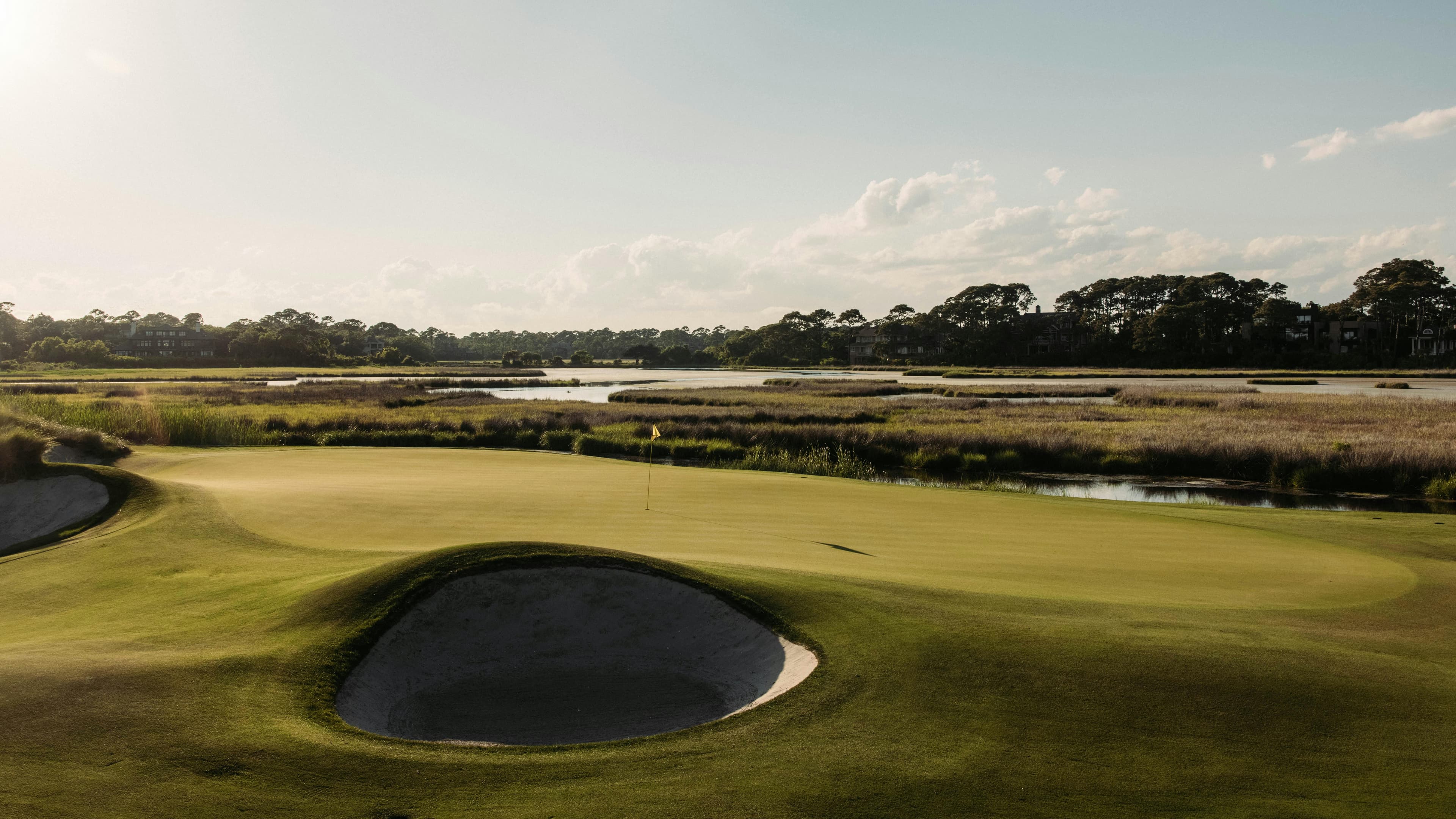
The Ocean Course plays 7,937 yards from the back tees with a course rating of 79.6 and a slope of 155. All 18 holes have views of the Atlantic Ocean; 10 run directly along the coastline. Pete Dye designed it in 1991 specifically to host that year's Ryder Cup, the "War by the Shore" that Bernhard Langer's missed putt decided. It hosted PGA Championships in 2012 (Rory McIlroy by eight strokes) and 2021 (Phil Mickelson becoming the oldest major champion at 50), and it will host the 2031 Ryder Cup. Green fees run $350 to $685 depending on season and resort guest status. Walking with caddie is standard; carts are permitted in summer after 10 AM.
Whistling Straits plays 7,288 yards with a course rating of 76.7 and a slope of 151. The course occupies two miles of Lake Michigan shoreline, with over 1,000 bunkers across terrain that Dye shaped to resemble the links of Ireland. It hosted PGA Championships in 2004, 2010, and 2015, and the 2021 Ryder Cup (Europe's first competition on American soil since Kiawah). Green fees are $645 in peak season (June through early October). Walking only; no carts permitted. Caddies are strongly recommended.
The numbers tell part of the story. The Ocean Course is nearly 650 yards longer from the tips with a higher slope. It is, statistically, the harder course.
But Whistling Straits' walking-only format and the relentless wind off Lake Michigan create a physical challenge that the numbers understate.
The Architecture
Both courses showcase Dye's ability to manufacture links-style terrain from non-links land, but the methods differ.
The Ocean Course is elevated. Dye built the course on dredged sand to lift every hole above the dune line, ensuring ocean views from every fairway. The result is a course exposed to Atlantic wind from all directions. The holes are long, the greens are firm, and the wind determines shot selection to a degree unusual in American golf. The fairways are wider than they appear from the tee, a Dye characteristic, but the consequences of missing them are severe.
Whistling Straits is manufactured spectacle. Dye transformed flat farmland along the Lake Michigan shore into a moonscape of bunkers, fescue, and artificial dunes. The construction involved moving 13,000 truckloads of sand. The result looks like it has been there for centuries, which is the highest compliment for a manufactured links. The bunkering is so extensive and irregular that determining which sandy areas are bunkers and which are waste areas became the subject of Dustin Johnson's infamous 2010 PGA Championship penalty on the 72nd hole.
Neither rewards the player whose only tool is the high ball flight.
Both courses reward the golfer who can manage wind, hit low shots, and think strategically about angles and ground game.
The Trip Around the Course
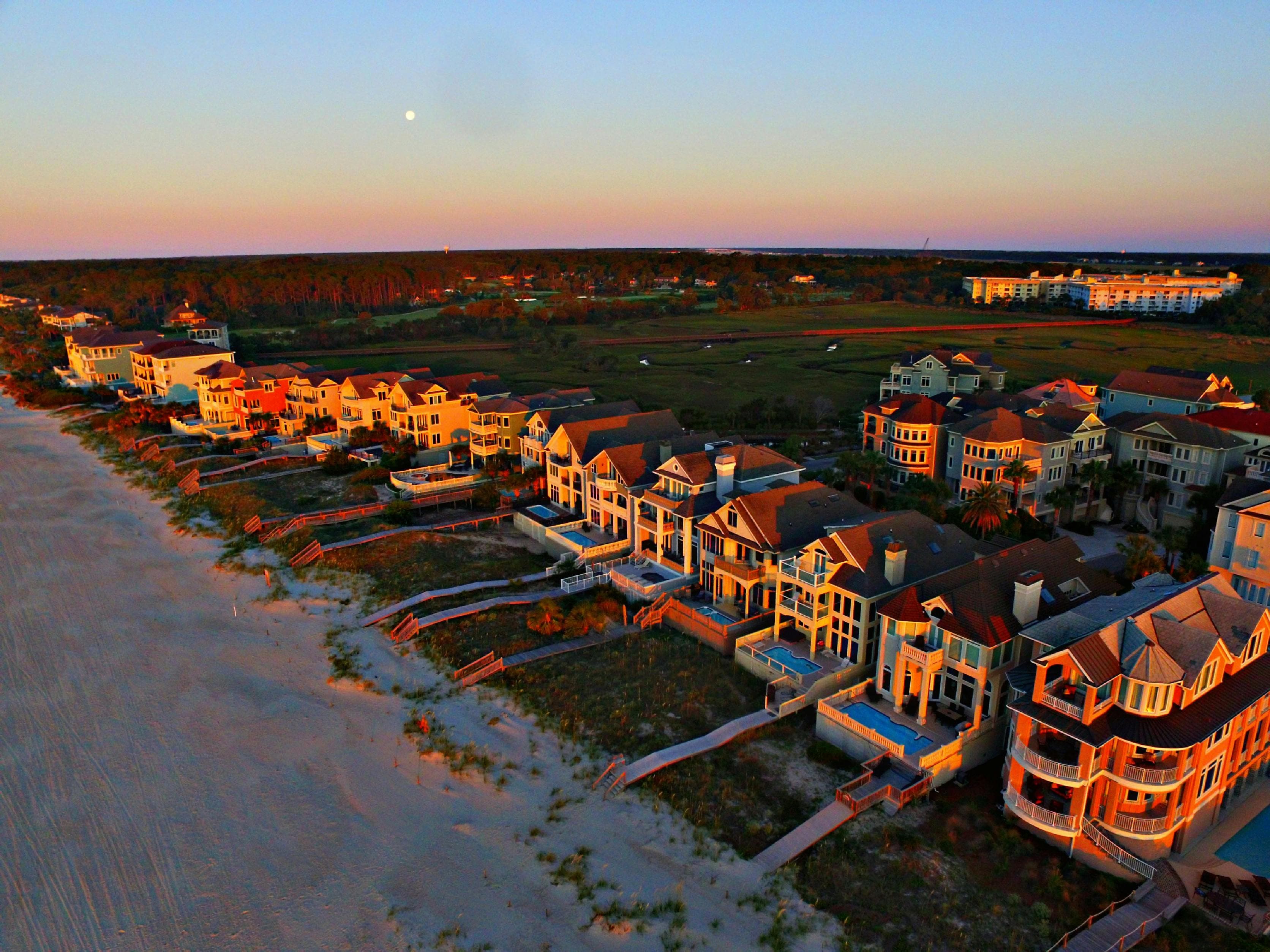
Kiawah Island is a gated resort community with five additional golf courses, 10 miles of beach, The Sanctuary hotel ($328 to $1,200 per night), and proximity to Charleston (30 miles, 40 minutes). The Ocean Course round exists within a broader Lowcountry vacation. A non-golfing partner has the beach, the resort spa, the bike trails through maritime forest, and Charleston's restaurants and history to fill the days.
Kohler is a golf-focused campus. The American Club hotel ($200 to $350 per night) provides luxury accommodation. Three additional Pete Dye courses at Blackwolf Run and the Irish Course at Whistling Straits complete the golf roster. But the non-golf content is limited to the resort spa, the shops of Kohler village, and the small-town charm of Sheboygan. Milwaukee (60 miles south) and the Erin Hills 2017 U.S. Open venue (60 miles southwest) provide day-trip options.
For the complete vacation, Kiawah has the advantage. For the golf-focused trip, Kohler matches or exceeds it: four Pete Dye courses, walking encouraged across all of them, with the kind of concentrated intensity that appeals to the serious golfer.
Season and Climate
Tip
Whistling Straits plays May through October. Peak season runs June through September, with July and August providing the warmest conditions (70s to low 80s). The Lake Michigan wind is cooler and more variable than Kiawah's Atlantic breeze. Early and late season rounds can be cold.
Price
An Ocean Course round at peak ($550 to $685) plus caddie ($50 to $100 per bag plus tip) totals $600 to $785 per person. A two-round Kiawah trip adding Osprey Point or Turtle Point ($250 to $315) with two nights at The Sanctuary runs $2,000 to $3,000 per person.
A Whistling Straits round ($645) plus caddie ($90 per person, recommended; tip $60 to $80) totals $795 to $815 per person. A two-round Kohler trip adding Blackwolf Run River ($495) with two nights at The American Club runs $2,200 to $3,200 per person.
The price is comparable. Kohler is marginally more expensive due to the combined green fee structure across the four courses, but the difference is modest at this tier.
The Decision
Choose the Ocean Course for the complete package. The Atlantic setting, the year-round playability, the Charleston proximity, and the resort infrastructure create a trip that serves every type of traveller. The course itself is arguably the hardest accessible round in American golf, and the oceanfront exposure is unmatched.
Choose Whistling Straits for the pure championship golf experience. The walking-only format, the Lake Michigan wind, and Dye's extraordinary manufactured links create an atmosphere closer to Irish or Scottish golf than anything else in America. The four-course Kohler campus provides multiple days of Pete Dye architecture without moving hotel rooms. For the golfer who wants to walk a Ryder Cup course into the wind with a caddie at their side, Whistling Straits delivers that experience on every round.
The verdict