Kiawah Island vs Hilton Head: Lowcountry Golf Head to Head
South Carolina's Lowcountry produces two of the finest resort golf destinations in the country, separated by roughly 100 miles of coastal highway. Kiawah Island and Hilton Head Island share live oaks, salt marshes, and Atlantic breezes. They share a Lowcountry aesthetic that favours nature over neon. But they occupy different positions in the golf landscape, and the trip that suits one may not suit the other.
Where to stay in Charleston & Kiawah Island
Planning the trip? Compare live prices across every nearby hotel and rental in one search.
Prices and availability from Booking.com, Expedia and others via Stay22. GolfTrailsHQ may earn a commission at no additional cost to you.
Championship Pedigree vs Consistent Depth
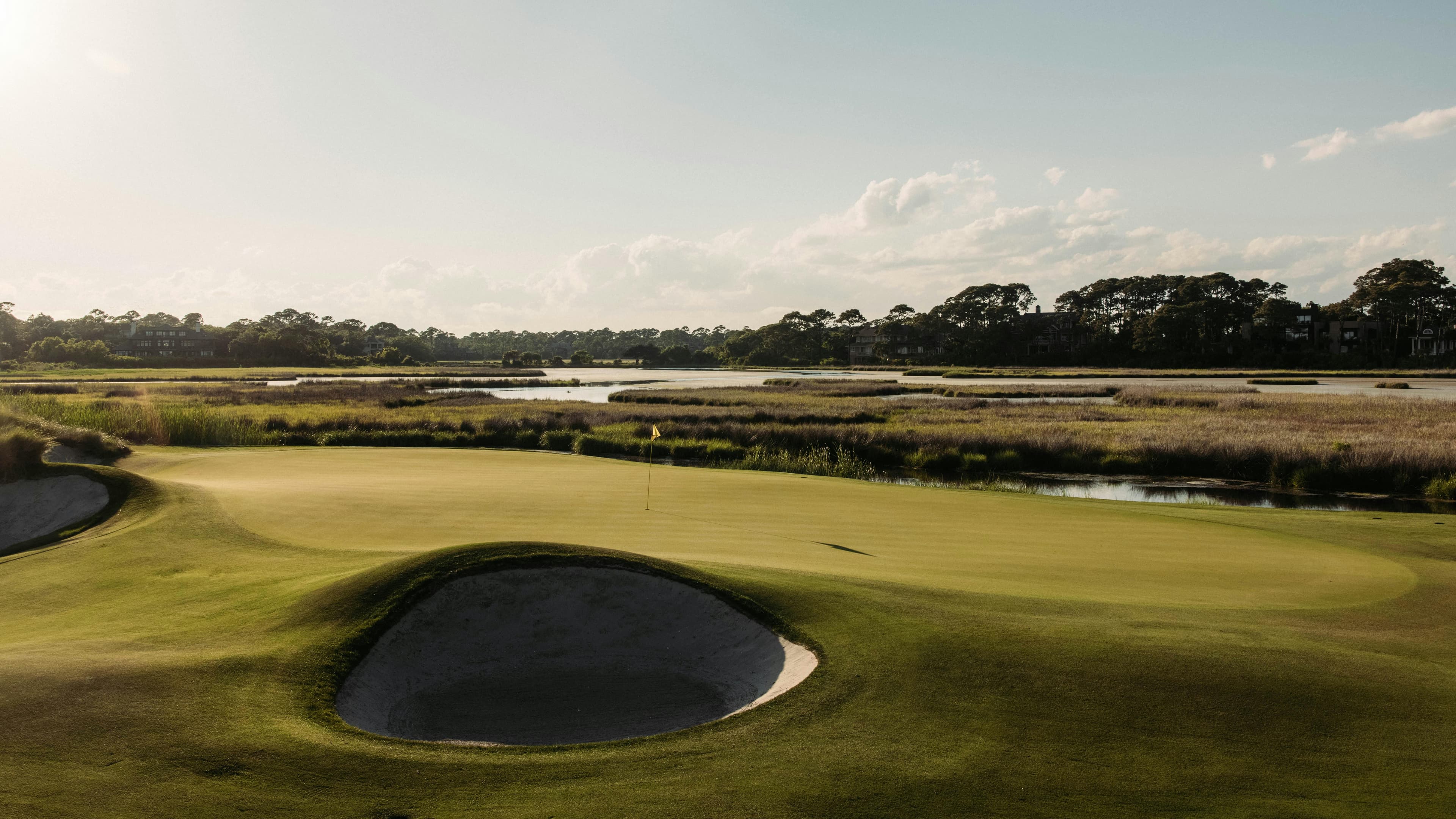
Kiawah's identity is built around a single course. All 18 holes have views of the Atlantic, ten run directly along the coastline, and it claims more oceanfront holes than any course in the Northern Hemisphere. At 7,937 yards from the back tees with a slope of 155, it is also one of the most difficult. The 2021 PGA Championship (Phil Mickelson) and the scheduled 2031 Ryder Cup confirm its ongoing relevance to championship golf.
The Ocean Course, Pete Dye's 1991 design constructed specifically for the Ryder Cup's "War by the Shore," is one of the most dramatic courses in American golf.
Playing the Ocean Course costs $350 to $685 depending on season and guest status. Walking with a caddie is mandatory during cooler months; carts are permitted in summer after 10 AM. Caddie fees are additional. A single round here, with caddie gratuity, can approach $900.
The rest of Kiawah's portfolio is strong but less singular. Osprey Point (Tom Fazio) is the resort favourite, playing through four freshwater lakes for $262 to $315. Turtle Point (Jack Nicklaus, renovated 2016) has three oceanfront holes. The River Course (Fazio again) offers sheltered inland golf along the Kiawah River.
Oak Point, the most affordable option, sits just outside the main gate.
Hilton Head does not have a single course that matches the Ocean Course's intensity. What it has instead is depth. Harbour Town Golf Links, Pete Dye's 1969 design at Sea Pines Resort, hosts the PGA Tour's RBC Heritage and completed a major restoration in 2025. At $399 to $518, it is the island's premium round. But the experience is fundamentally different from the Ocean Course: Harbour Town is compact, tree-lined, and strategic, demanding placement over power. The lighthouse at the 18th is one of golf's most recognisable finishes, but the course succeeds through subtlety rather than spectacle.
Below Harbour Town, Hilton Head provides three Sea Pines courses, three Palmetto Dunes courses, and scattered options at Palmetto Hall, Hilton Head National, Shipyard, and Port Royal. The value tier includes Old South Golf Links ($55 to $100) and Crescent Pointe ($34 to $74), an Arnold Palmer design in Bluffton. A visiting golfer can play five rounds on Hilton Head without repeating a course and stay under $200 per round for each.
The Islands
Kiawah is a gated island community 25 miles south of Charleston. Access requires a resort reservation or gate pass. The Sanctuary, a Forbes Five Star, 255-room hotel, is the flagship property, with rates from $328 to $1,200 per night. Villa rentals through the resort or VRBO offer more space at slightly lower cost.
The island is quiet by design. There is no commercial district, no downtown, no nightlife beyond the resort's restaurants and bars. Night Heron Park has a nature centre and 30 miles of bike trails through maritime forest. The beach is excellent but uncrowded. Kiawah feels private in a way that most resort destinations do not.
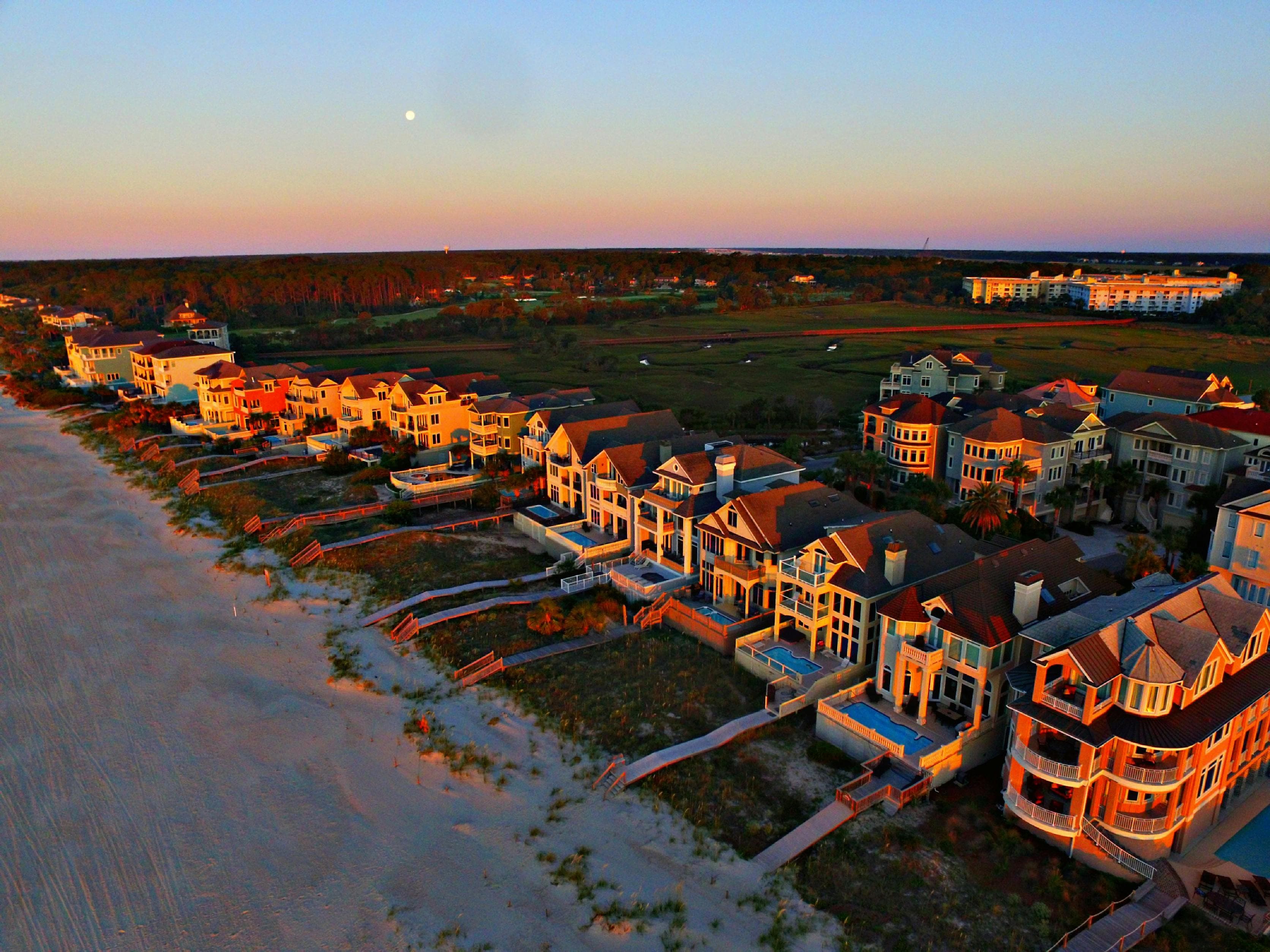
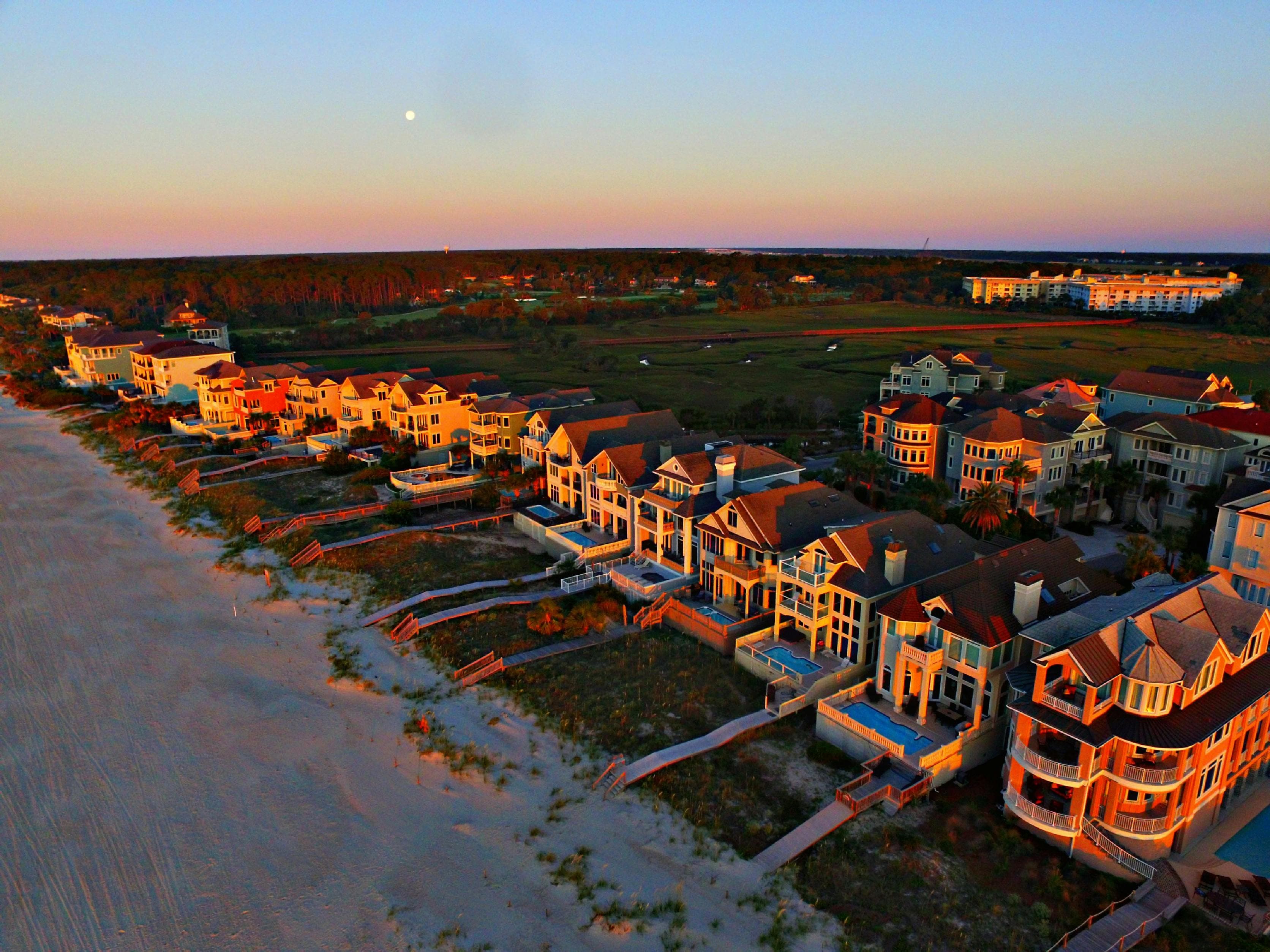
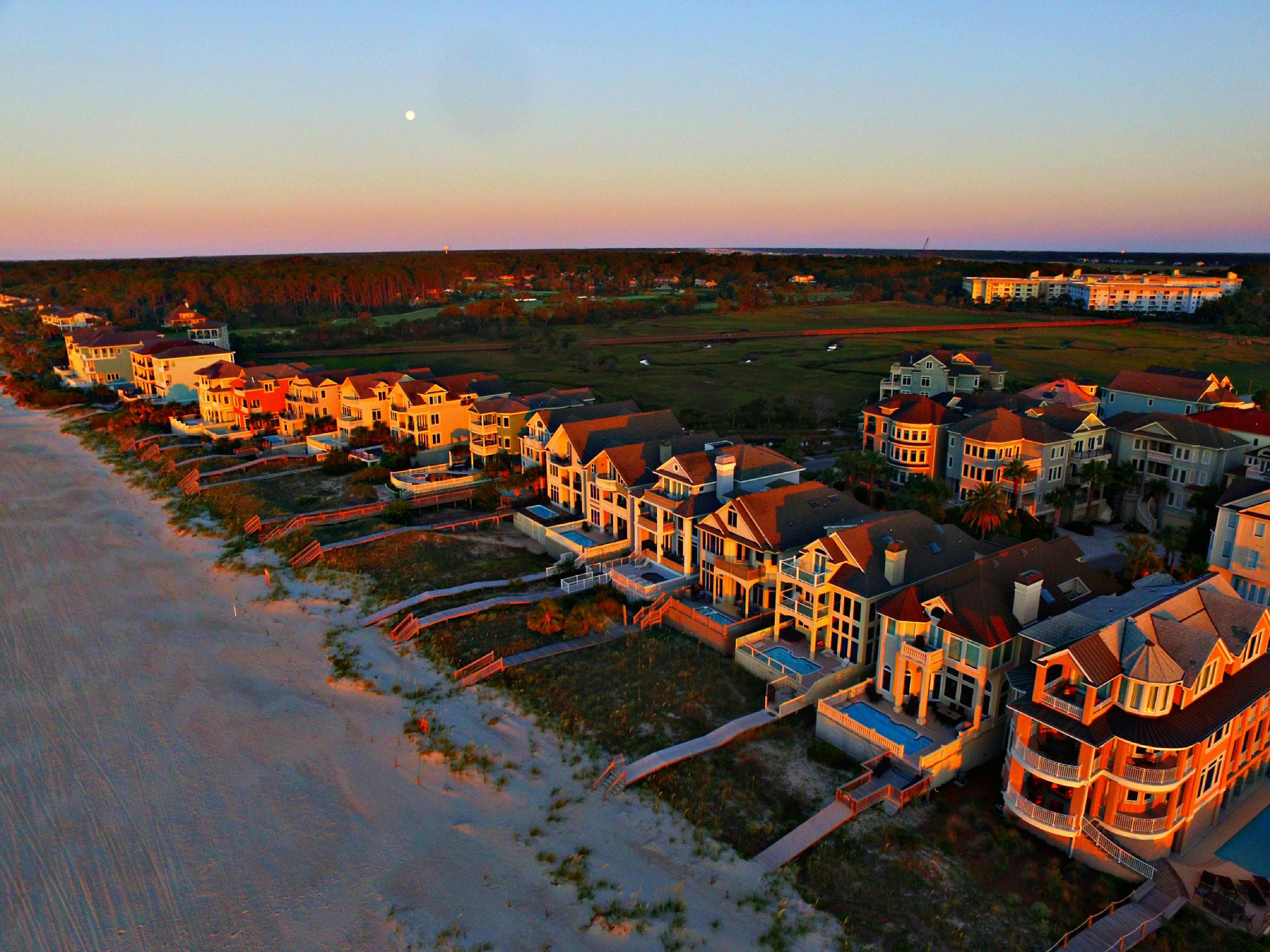
Hilton Head is larger, more developed, and more self-sufficient. The island has its own commercial areas, restaurants independent of the resorts, and 60 miles of paved bike paths. Sea Pines, Palmetto Dunes, and Port Royal are separate gated communities within the island, each with its own courses and resort infrastructure. Accommodation ranges from Montage Palmetto Bluff ($514 to $1,200 in Bluffton) to the Red Roof Inn ($55 to $100), with a wide mid-range market between.
The island sustains a genuine non-golf lifestyle: dolphin cruises, kayak tours through Broad Creek, the Harbour Town Lighthouse, a ferry to Savannah, and the kind of restaurant scene that has evolved well beyond resort dining. For a travelling companion who does not golf, Hilton Head provides a full week of activity. Kiawah provides a beautiful beach and excellent walking trails. The difference matters.
Charleston Factor
Kiawah's proximity to Charleston is a significant advantage. The city is 30 miles north, a 40-minute drive, and it is one of America's great food cities. A horse-drawn carriage tour through the Historic District, dinner on King Street, a morning at Fort Sumter, or a walk through Middleton Place's 1741 gardens can all be accomplished in a half-day excursion from Kiawah. The combination of Kiawah's golf with Charleston's culture creates a trip that transcends the typical resort experience.
Hilton Head has Beaufort (30 minutes) and Savannah (one hour by car, or a two-hour boat ride from Harbour Town Marina). Both are worth visiting, but neither provides the culinary or cultural depth of Charleston.
Price Comparison
A three-night, four-round Kiawah trip staying at a villa and playing the Ocean Course plus three resort courses runs approximately $2,500 to $3,500 per person. Skip the Ocean Course and the number drops to $1,800 to $2,500.
The same trip on Hilton Head, staying at a Palmetto Dunes villa and playing Harbour Town plus three mid-range courses, runs $1,800 to $2,800 per person. Replace Harbour Town with Palmetto Dunes RTJ and the total drops to $1,500 to $2,000.
Hilton Head offers more flexibility at the lower end. Kiawah's pricing structure is anchored by the resort's premium positioning, and there are fewer budget alternatives on or near the island.
The Decision
Choose Kiawah if the Ocean Course is on your list. There is no equivalent experience on Hilton Head, and there are few equivalent experiences anywhere. The course is genuinely special, the resort setting is polished and private, and the proximity to Charleston adds a dimension that most golf resorts lack.
Choose Hilton Head for a more varied trip with better value across the full range. The island provides more courses, more price points, more non-golf activity, and a livelier atmosphere. Harbour Town is a legitimate top-tier course with genuine architectural merit, and the depth below it means you can build a four-round itinerary that covers Dye, Love, RTJ Sr., and Arthur Hills without straining the budget.
The verdict
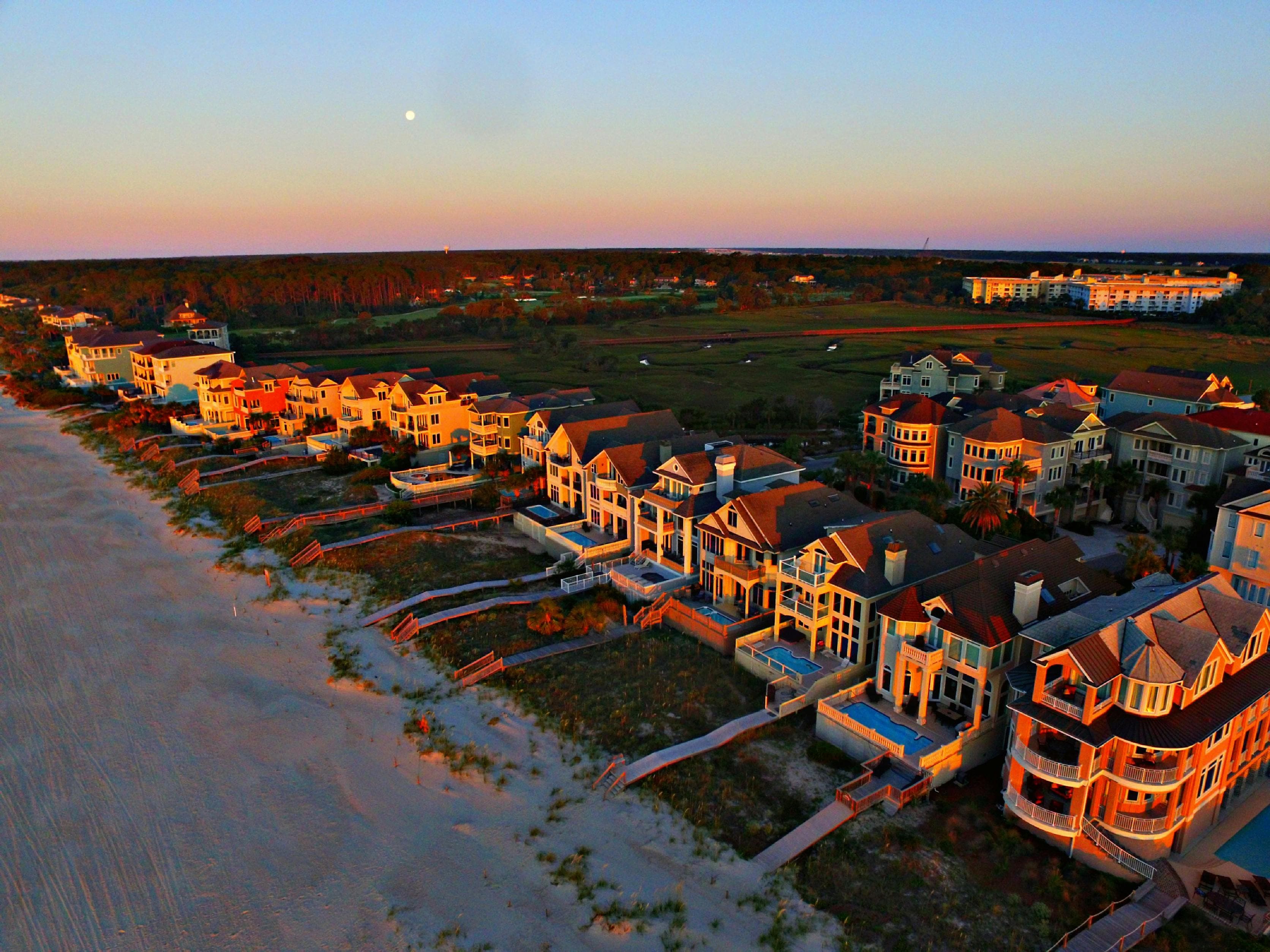
Harbour Town Golf Links