RTJ Trail vs Myrtle Beach: Best Value Golf in America
Two destinations compete for the title of best value in American golf, and they approach it from entirely different directions. Myrtle Beach delivers volume: 90 courses along the Grand Strand, with green fees that start at $40 and a tourism infrastructure designed for visiting golfers. The Robert Trent Jones Golf Trail delivers championship-calibre courses across eleven sites spanning the entire state of Alabama, with green fees that rarely exceed $105. One is a beach resort corridor. The other is a road trip through the Deep South. Both deliver more golf per dollar than any comparably ambitious destination in the country.
Where to stay in Robert Trent Jones Golf Trail, Alabama
Planning the trip? Compare live prices across every nearby hotel and rental in one search.
Prices and availability from Booking.com, Expedia and others via Stay22. GolfTrailsHQ may earn a commission at no additional cost to you.
Course Quality per Dollar
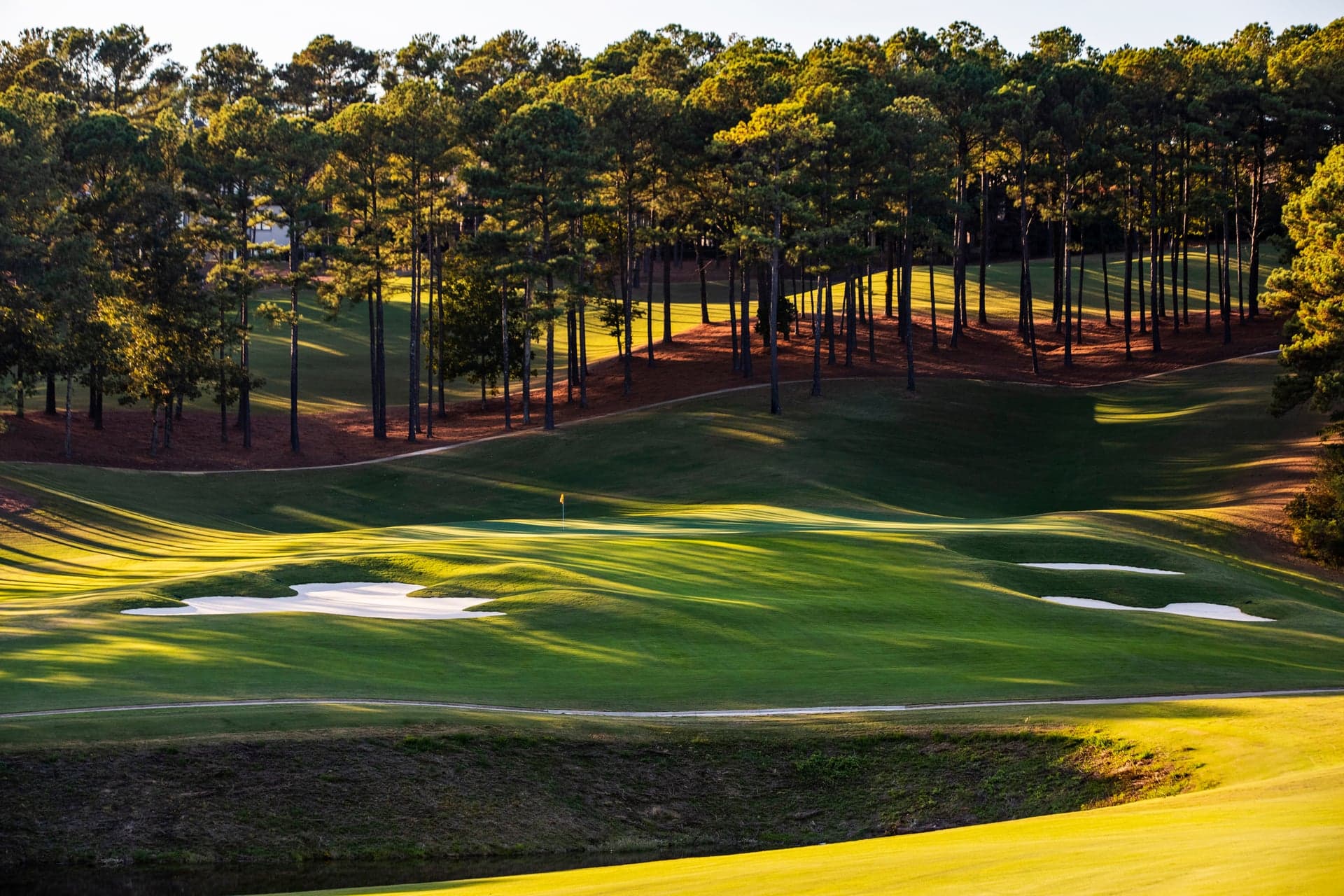
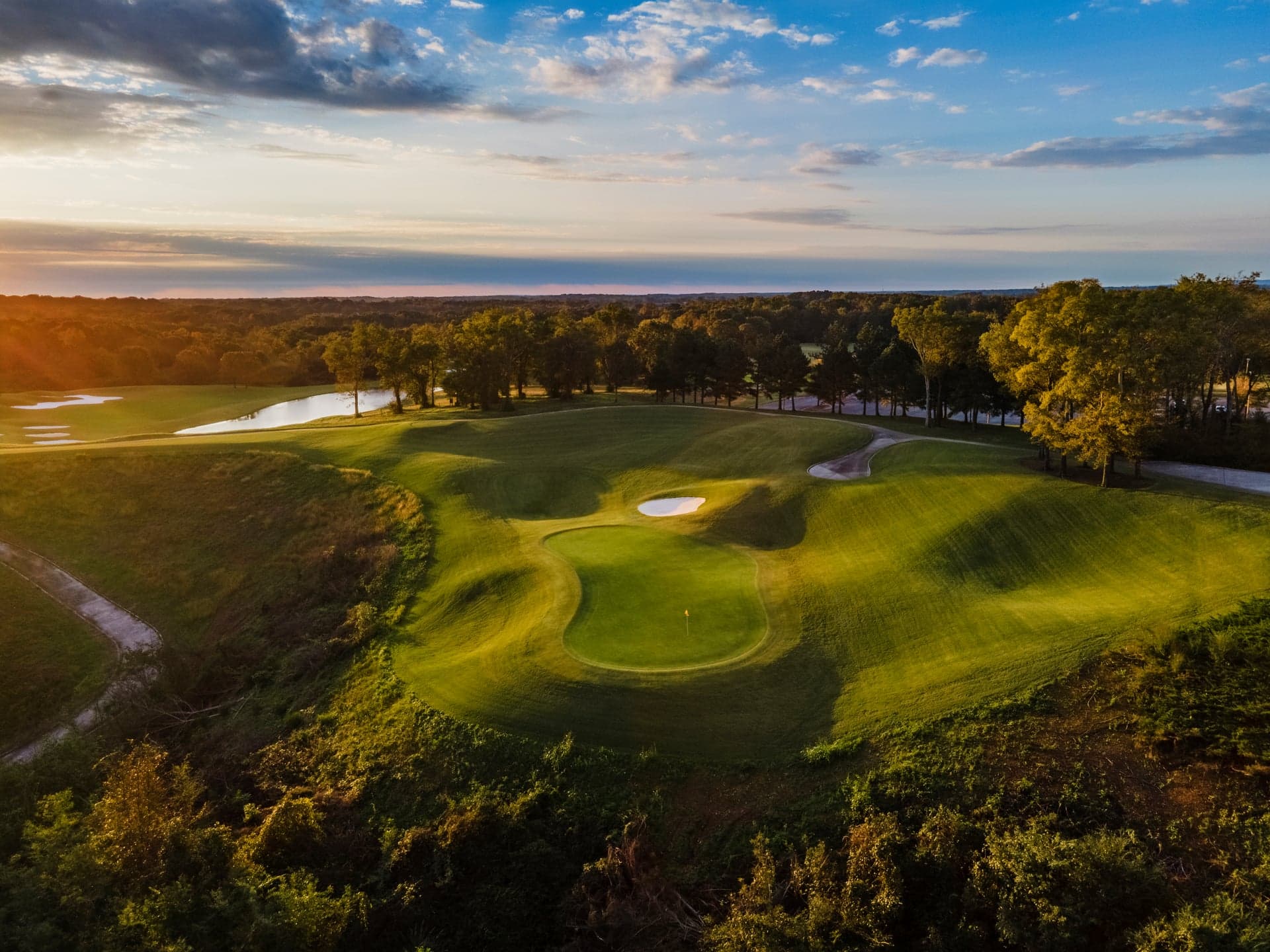
Twenty-six courses across eleven sites, all designed under the Robert Trent Jones design organisation, charge $45 to $105 per round with cart included. Only Ross Bridge, the flagship resort course in Hoover, commands a premium at $125 to $190 in peak season. The courses are not modest layouts. Capitol Hill's Judge, at 7,813 yards with a slope of 147, was named by GOLF Magazine as one of ten public courses in America worthy of hosting a U.S. Open. Fighting Joe at The Shoals, the first Trail course to exceed 8,000 yards, plays across exposed ridgeline terrain above Wilson Lake. Ross Bridge itself measures 8,191 yards from the tips, one of the longest courses in the world at its opening.
The RTJ Trail's value proposition is unique in American golf.
These are serious courses at prices that Myrtle Beach's mid-range cannot match for the same quality level.
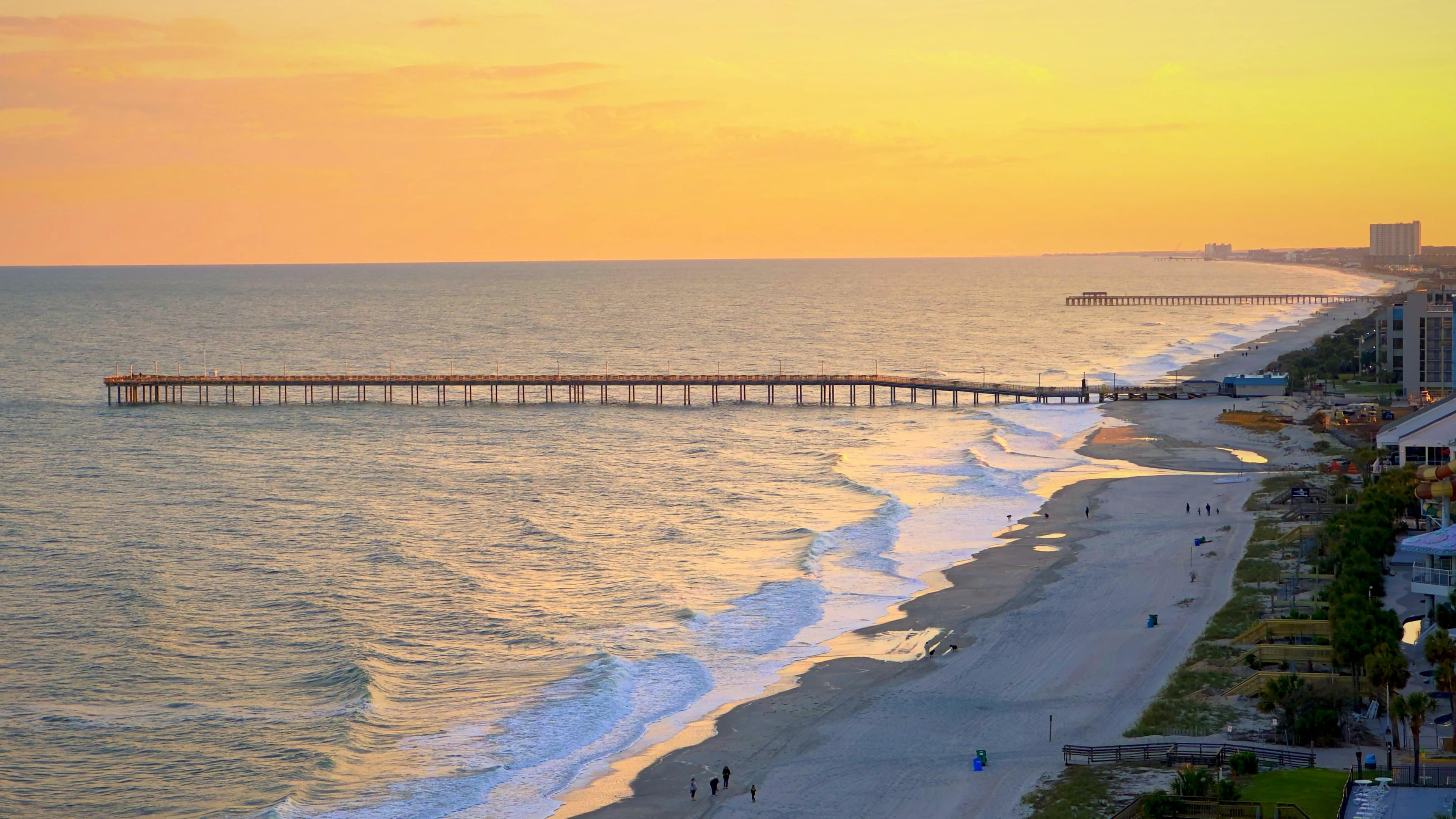
The floor is lower: Beachwood at $40 to $79, Crow Creek at $45 to $79. The ceiling is higher: Caledonia Golf and Fish Club at $200 to $249, TPC Myrtle Beach at $250 to $350. The mid-range sweet spot runs $80 to $168 at Barefoot Resort (four courses), Legends Resort, and Tidewater. A group can play four solid rounds for $400 to $600 per person in green fees.
Myrtle Beach's strength is range rather than singular value.
On a per-round basis at championship quality, the RTJ Trail is cheaper. On sheer volume and variety, Myrtle Beach offers more options at every tier.
The Trip Structure
This is the fundamental difference. Myrtle Beach is a single-base destination. You check into a beachfront condo or hotel, and every course on the Grand Strand is within 40 minutes. The logistics are simple: tee time, short drive, round, return to base, dinner, repeat.
The RTJ Trail is a road trip. The eleven sites span Alabama from Muscle Shoals in the northwest to the Gulf Coast. The six courses in the GolfTrailsHQ selection are spread across a 130-mile corridor from Birmingham to Opelika to Prattville, with Fighting Joe another two hours north in Muscle Shoals. A full Trail trip covering all six selected courses requires five to six nights minimum and significant driving between stops.
This structure is a feature or a flaw depending on the group. For the golfers who enjoy a road trip, the Trail delivers changing scenery: Birmingham's industrial-heritage landscape, the university town of Auburn and Opelika, the Alabama lowlands around Prattville, and the Tennessee River valley at The Shoals. For the group that wants to park the car and play, Myrtle Beach is simpler.
Accommodation
Myrtle Beach has the deepest accommodation market of any American golf destination. Beachfront condos start at $90 per night shared. Marina Inn at Grande Dunes ($250 to $450) provides the luxury tier. Legends Resort villas at $90 to $160 put you on the course. Budget chains drop to $60 per night. The options are nearly limitless.
The RTJ Trail offers fewer choices. Renaissance Birmingham Ross Bridge Golf Resort and Spa ($180 to $300) is the only property directly on a Trail course. Auburn Marriott Opelika Resort and Spa ($120 to $200) at Grand National provides a second on-course option. Embassy Suites in Montgomery ($110 to $180) and Hampton Inn in Prattville ($90 to $140) serve Capitol Hill. Mid-range chains are the standard across the state.
Neither destination lacks for places to sleep, but Myrtle Beach's variety is significantly greater.
Beyond Golf
Myrtle Beach offers more off-course content. Brookgreen Gardens provides a genuine cultural attraction. The MarshWalk at Murrells Inlet delivers waterfront dining with live music. Broadway at the Beach has a 350-acre entertainment complex. Charleston, 95 miles south, is a popular day trip. The beach itself provides the default rest-day activity.
The RTJ Trail offers Alabama's cultural attractions as rest-day options. The Birmingham Civil Rights Institute, adjacent to the 16th Street Baptist Church and Kelly Ingram Park, is a National Historic Landmark that provides powerful historical context. The U.S. Space and Rocket Center in Huntsville, featuring a Saturn V rocket and shuttle simulator, is a genuine half-day attraction near The Shoals. Montgomery's Legacy Museum and Rosa Parks Museum provide significant civil rights history. The Auburn and Opelika college-town atmosphere near Grand National offers walkable restaurants and shops.
These are serious cultural sites, and for the golfer interested in American history, the Trail provides rest-day content that Myrtle Beach cannot approximate. The Civil Rights Institute alone is worth a morning.
Climate
Alabama's mild year-round climate is an underappreciated advantage. January highs average 53F in Birmingham with playable conditions most days. Peak golf weather arrives March through May and September through November. Summer is hot and humid (90F in July) but brings deep discounts.
Myrtle Beach follows a similar pattern: best golf in spring and fall, hot and humid summers, mild winters. The practical difference is minimal.
The Budget Comparison
RTJ Trail, five nights, five rounds at selected courses: Five championship rounds at $55 to $190 each, mid-range hotels at $90 to $200 per night, rental car for the road trip. Total: $1,000 to $1,800 per person.
Myrtle Beach, four nights, four rounds at mid-range courses: Four rounds at $80 to $168 each, beachfront condo at $90 to $170 per night shared. Total: $700 to $1,100 per person.
Myrtle Beach is cheaper in absolute terms for a shorter trip. The RTJ Trail delivers more championship-quality rounds per dollar over a longer trip. A five-round RTJ Trail trip at an average of $85 per round delivers championship golf at a price Myrtle Beach reserves for its budget tier.
The Decision
Choose the RTJ Trail for championship courses at prices that border on absurd. Playing courses that exceed 7,800 yards with slopes above 145 for $65 to $105 is a value proposition unmatched in American golf. The road-trip structure adds variety, and Alabama's civil rights history provides rest-day content with genuine substance. The 2026 Trail Card ($49.95) provides additional discounts across all eleven sites.
Choose Myrtle Beach for simplicity, volume, and beach. The single-base format eliminates driving logistics. The 90-course inventory means the group never runs out of options. The Strantz designs at Caledonia and True Blue provide the architectural highlight. The beach, the restaurants, and the entertainment infrastructure serve the group that wants golf as the centrepiece of a broader vacation.
The verdict
TPC Myrtle Beach