Robert Trent Jones Golf Trail: Best Courses Guide
The RTJ Trail destination guide covers the logistics of planning a trip along Alabama's 468-mile golf corridor. This guide examines the individual sites and courses that merit priority when time is limited, because the Trail's scale presents a genuine planning challenge. Eleven sites, twenty-six courses, and 468 holes spread across a state that stretches from the Tennessee Valley to the Gulf Coast. No golfer can play them all in a single trip, and no golfer should try. The better approach is to identify the four or five strongest sites, build a route between them, and accept that a return trip will be necessary.
The RTJ Trail opened in 1992 as an economic development project funded by the Retirement Systems of Alabama. Robert Trent Jones Sr. and his associate Roger Rulewich designed the original sites, with additional courses added through the 2000s. The premise was simple and audacious: build championship-caliber golf across Alabama at public-access green fees that undercut resort destinations by 60 to 80 percent. Three decades later, the premise has been validated. The Trail hosts over 800,000 rounds annually, and its green fees, which range from $50 to $80 for most courses, remain among the most competitive in American golf for the quality of design and conditioning delivered.
Year-round play is the other advantage. Alabama's climate supports golf in every month, though the optimal windows are March through May and September through November, when temperatures stay in the 60s and 70s. Summer rounds are available at reduced rates but require tolerance for heat and humidity that regularly pushes into the 90s from June through August.
Where to stay in Robert Trent Jones Golf Trail, Alabama
Planning the trip? Compare live prices across every nearby hotel and rental in one search.
Prices and availability from Booking.com, Expedia and others via Stay22. GolfTrailsHQ may earn a commission at no additional cost to you.
Ross Bridge
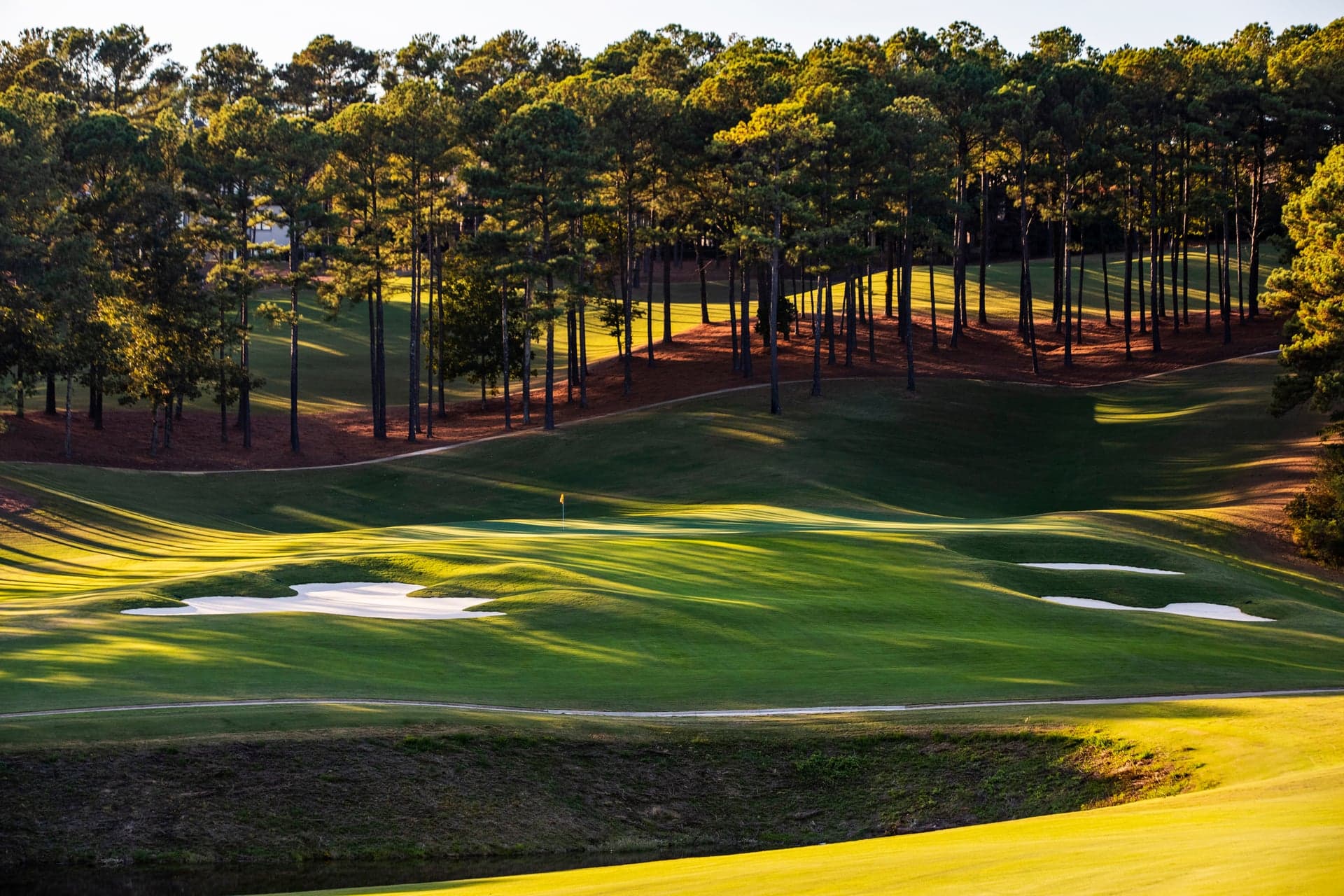
Ross Bridge, located in the Birmingham suburb of Hoover, is the Trail's premium property and the one course that commands green fees above the Trail's typical range. Robert Trent Jones Jr. designed the layout, which opened in 2005 alongside the Renaissance Ross Bridge Resort. At 8,191 yards from the championship tees, it is one of the longest courses in the world. From the regular tees at 6,800 yards, it plays as a demanding but fair resort course with water on 12 holes and a finishing stretch along a large lake that provides the Trail's most dramatic closing sequence.
Ross Bridge

Capitol Hill Judge
The conditioning at Ross Bridge consistently exceeds the Trail standard, with bentgrass greens that putt truer and faster than the TifEagle surfaces used elsewhere on the Trail. The resort integration means that lodging, dining, and golf operate as a single package, and the spa and pool facilities make Ross Bridge the Trail's best option for traveling golfers whose companions may not play.
Green fees run $75 to $130, higher than the Trail average but still a fraction of what a comparable resort course charges in Florida, Arizona, or the Carolinas. Ross Bridge is the course to play if a golfer has only one round on the Trail and wants to see what the system can produce at its highest level.
Capitol Hill (Prattville)
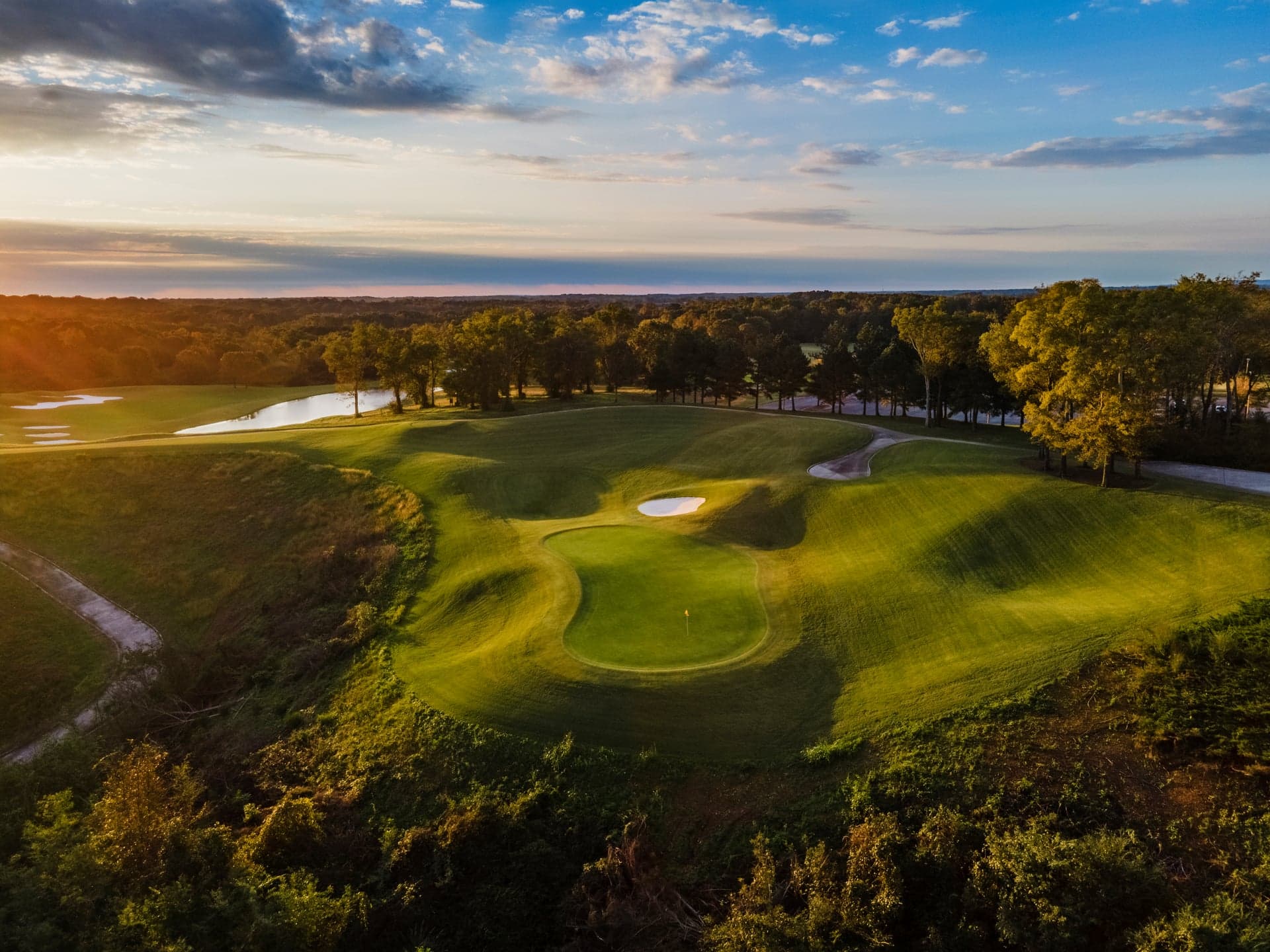
Capitol Hill, located in Prattville just north of Montgomery, operates three 18-hole courses on a single site overlooking the Alabama River. The combination of three distinct designs on one property, each with its own character, makes Capitol Hill the site that best represents the Trail's ambition.
The Judge is the marquee course. At 7,794 yards from the tips with a slope of 142, it is the most demanding layout on the Trail. The par-3 seventh plays from an elevated tee across a wetland to a green that rejects anything less than a committed iron shot. The Judge has hosted U.S. Open qualifying and is the course that Trail regulars identify most consistently as the strongest 18 holes in the system.
Jones and Rulewich routed it across the most dramatic terrain on the property, with severe elevation changes, deep bunkers, and greens perched on ridgelines and above ravines.
The Senator provides the contrast. Routed on flatter terrain near the river, it plays through wetlands and along the water's edge in a layout that emphasizes positioning over power. At 7,614 yards, it is long but less penal than the Judge, with wider fairways and fewer forced carries. The Senator is the better choice for mid-handicap golfers who want a full-length test without the Judge's severity.
The Legislator, a par-72 layout designed primarily by Rulewich, features a links-influenced design with firm, fast conditions and fewer trees than the other two courses. It is the shortest of the three and the one that walkers should choose.
Green fees at Capitol Hill run $50 to $72 per round regardless of which course is played. The value is staggering. Three rounds of championship golf at Capitol Hill cost less than a single round at most top-100 courses in the country.
Grand National (Opelika)
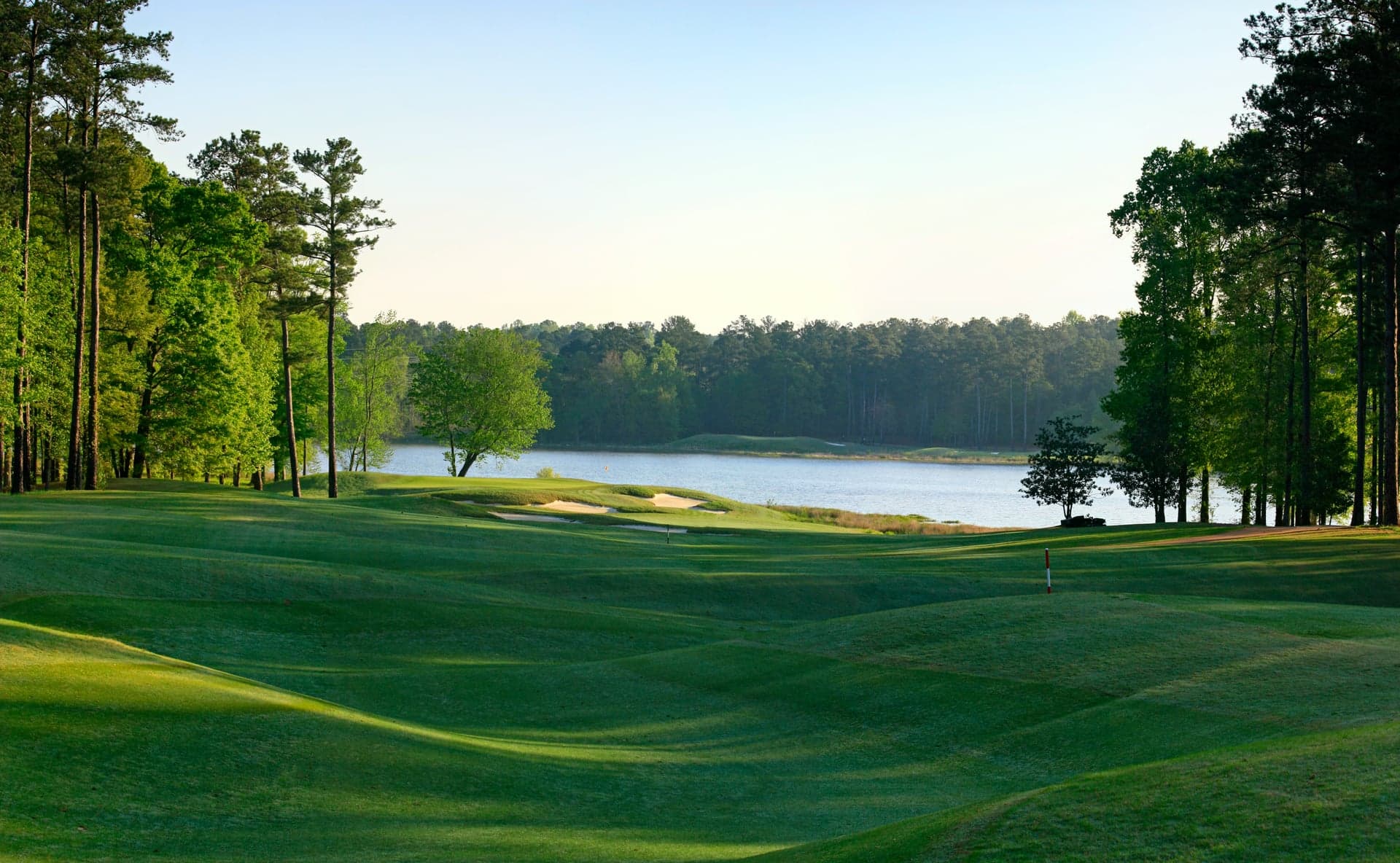
Jones routed several holes along the lake's edge, and the par-3 fifteenth, played across a corner of the lake to a green on a narrow peninsula, produces the Trail's signature image.
Grand National sits on the shores of Lake Saugahatchee near Auburn and Opelika, and the Lake Course is the most photographed layout on the entire Trail.
The Lake Course plays 7,149 yards from the back tees with a slope of 138. Water is visible from every hole and comes directly into play on a dozen. The course rewards controlled shot shapes and precise distance management, particularly on approach shots to greens that are guarded by the lake on one side and bunkers on the other.
The Links Course at Grand National takes its name from its open, treeless terrain and firm playing surfaces, though the term is more aspirational than literal. At 7,311 yards, it is the longer of the two Grand National courses and the one that rewards power hitters who can take advantage of wide fairways and carry deep bunkers with long irons and woods.
Green fees run $50 to $65 per course. Grand National's proximity to Auburn University makes it a convenient stop for golfers traveling the I-85 corridor between Atlanta and Montgomery, and the lakeside setting is the most scenic on the Trail.
Oxmoor Valley (Birmingham)
Oxmoor Valley is the Birmingham area's second Trail site, complementing Ross Bridge with a different character and a lower price point. The Ridge Course is the standout, routing across the Appalachian foothills with elevation changes that create dramatic tee shots and elevated green sites. At 7,055 yards with a slope of 136, the Ridge Course offers the Trail's best combination of accessibility and architectural interest outside of the premium properties.
The Valley Course plays through a tighter corridor of hardwood forest, with more tree-lined fairways and less dramatic elevation change. It is the more traditional parkland layout of the two and the better choice for golfers who prefer defined corridors to open ridgeline golf.
Oxmoor Valley also includes a Short Course, an 18-hole par-3 layout designed by Bobby Vaughan that plays through heavily wooded terrain with holes ranging from 80 to 200 yards. At $20 to $30, the Short Course provides the best pure entertainment value on the Trail and a useful warm-up or cool-down round for groups playing the Ridge and Valley on the same day.
Green fees for the full-length courses run $47 to $62, making Oxmoor Valley the strongest value in Birmingham-area golf.
Magnolia Grove (Mobile)
Magnolia Grove anchors the southern end of the Trail near Mobile, and the Crossings Course is its primary draw. At 7,151 yards, the Crossings routes through wetlands, pine forest, and across the Magnolia River in a layout that presents the most diverse set of ecosystems within a single round on the Trail. The Falls Course plays shorter and tighter through a more wooded corridor.
Green fees of $48 to $60 make Magnolia Grove the logical starting or ending point for golfers building a Trail route that includes the Gulf Coast.
Hampton Cove (Huntsville)
Hampton Cove serves golfers entering the Trail from the north. The River Course routes along the Flint River with several holes playing directly along the water. At 7,294 yards, it provides a legitimate test of golf in a river-valley setting that contrasts with the ridgeline and lake terrain found further south on the Trail. Green fees of $45 to $58 make it the Trail's most affordable premium layout.
Planning a Trail Route
The most efficient multi-day Trail trip covers four sites over five days: Birmingham (Ross Bridge and Oxmoor Valley on Days 1 and 2), Prattville (Capitol Hill Judge and Senator on Day 3), Opelika (Grand National Lake and Links on Days 4 and 5). This route follows the I-65 and I-85 corridors with no drive exceeding two hours. Total green fees for six to eight rounds fall between $350 and $550 per golfer. The RTJ Trail complete golf guide provides detailed routing options, lodging at each Trail site, and the seasonal pricing that makes January through March the deepest-value window for Trail golf.