Las Vegas, NV: Insider Tips for First-Time Visitors
Las Vegas golf operates on different rules than virtually every other American golf destination. The courses are spread across a metropolitan area the size of Rhode Island. The desert air changes how the ball behaves. The calendar has a five-month window that is genuinely dangerous to play through. And the city's primary industry, which runs loudly until 4 AM, is fundamentally at odds with a 7:00 AM tee time. First-time visitors who arrive without adjusting their expectations tend to leave with stories about heat, hangovers, and rounds that cost more than they planned.
The following tips address the gap between what Las Vegas golf looks like from a distance and what it demands up close. The Las Vegas complete golf guide and the Las Vegas best courses cover the destination and its courses in full. This is the practical layer.
Where to stay in Las Vegas
Planning the trip? Compare live prices across every nearby hotel and rental in one search.
Prices and availability from Booking.com, Expedia and others via Stay22. GolfTrailsHQ may earn a commission at no additional cost to you.
The Calendar Is Not Optional
October through April is the window. Peak season rates apply from February through early May and again in September through November at most courses, with green fees 30 to 50 percent higher than summer pricing.
Within that window, November and March offer the best combination of comfortable temperatures and reasonable pricing.

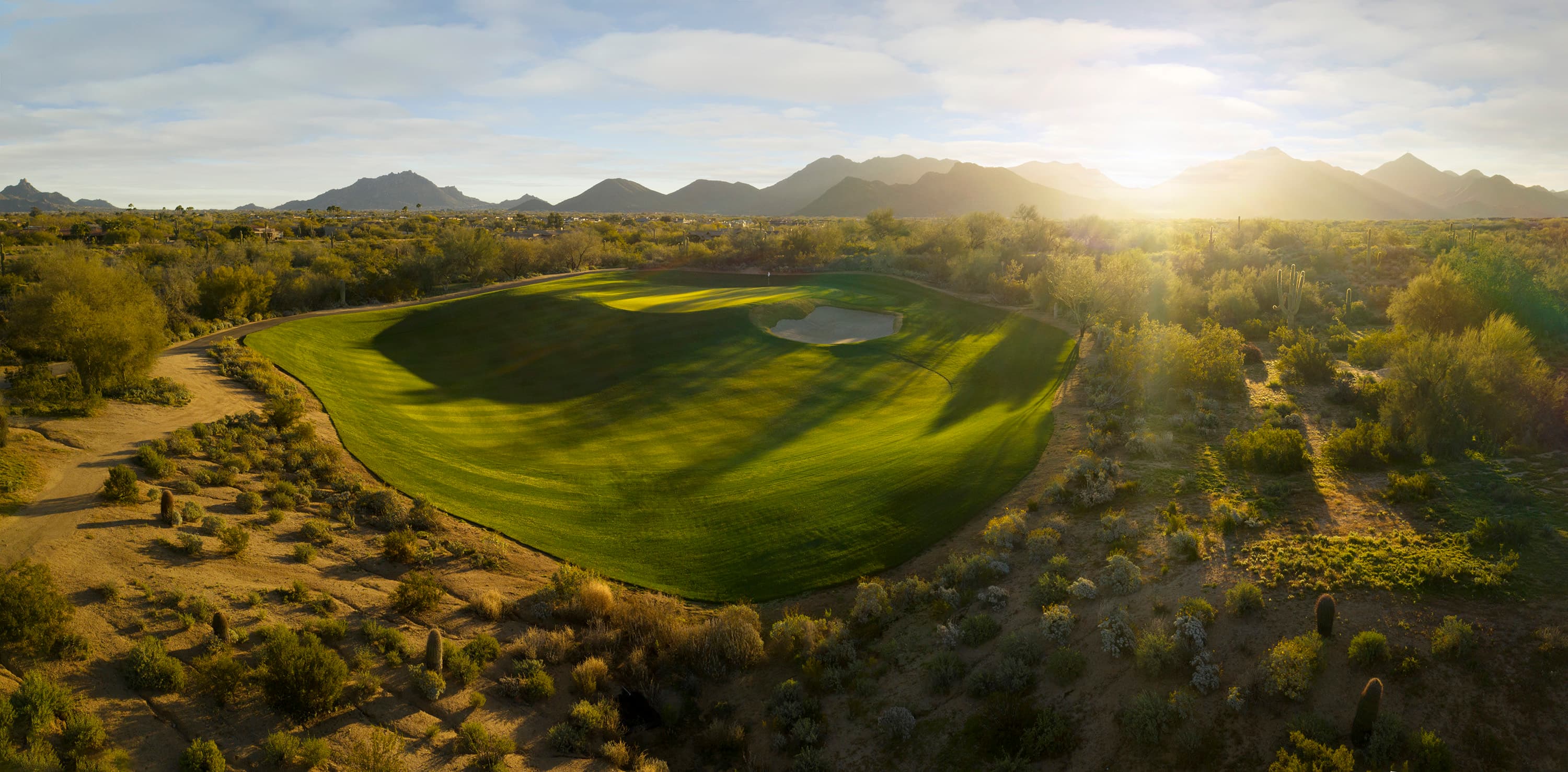
TPC Las Vegas
Summer in Las Vegas is not a matter of discomfort. From June through August, afternoon temperatures routinely exceed 115 degrees Fahrenheit. Courses that remain open in summer offer dawn tee times, sometimes as early as 5:00 AM, and even then the back nine plays in rising heat that turns a golf round into an endurance event. Unless budget is the only consideration, plan the trip for cooler months and play a different game entirely.
The Ball Flies Long
Dry desert air at 2,000 feet of elevation produces measurably longer ball flight. Humidity in Las Vegas frequently sits below 10 percent, and the thin, dry air offers less resistance than what most golfers encounter at home. Expect 8 to 12 percent additional carry on full shots. A stock 150-yard iron becomes a 163-yard shot. A driver that carries 240 at sea level may carry 265 here.
The adjustment is straightforward: club down on approaches and recalibrate throughout the first nine. The golfers who resist the numbers spend the day flying greens. Wind compounds the effect. Afternoon gusts of 15 to 25 miles per hour are common in the desert valley, particularly in spring, and a downwind shot in dry air can travel distances that feel implausible. Check the forecast before the round and add wind to the distance equation.
Geography Requires Planning
Las Vegas golf is not concentrated. The Paiute Golf Resort sits 35 miles northwest of the Strip. Cascata is 30 minutes southeast in Boulder City. TPC Las Vegas is in Summerlin, 20 minutes west. Reflection Bay is at Lake Las Vegas, 30 minutes east. The only course on the Strip itself is Wynn Golf Club.
Playing two courses in one day at opposite ends of the valley is technically possible and practically miserable. Group rounds geographically. If the Paiute courses are on the itinerary, play two of the three Pete Dye layouts on the same day and avoid the 70-minute round trip twice. If Cascata is planned, commit the full day to Boulder City rather than trying to squeeze a Strip activity between the drive and the round.
Shadow Creek Has Rules
Tip
For golfers who want a premium experience without the Shadow Creek commitment, Wynn Golf Club charges $550 all-inclusive with no additional costs beyond the forecaddie gratuity. The catch is identical: Wynn and Encore hotel guests only.
The Best Public Value Is 35 Minutes Away
The Wolf, Snow Mountain, and Sun Mountain courses are all Pete Dye designs on open tribal land northwest of the city. Peak-season rates range from $179 to $289 depending on the course and day. Off-peak rates drop as low as $99. Multi-round packages are available for golfers playing two or all three layouts.
The three courses at Las Vegas Paiute Golf Resort represent the strongest value proposition in the market.
The drive deters some visitors, and that works in favor of those who make it. Tee time availability at Paiute is generally better than at Strip-adjacent courses, particularly on weekdays.
Weekday Rounds Save Real Money
Las Vegas course pricing follows a clear weekday-weekend split. At most courses, Monday through Thursday rates run $30 to $75 less per round than Friday through Sunday. For a group of four playing three rounds, that difference amounts to $360 to $900 in total savings. The weekday advantage extends beyond pricing: pace of play is faster, tee time availability is broader, and the courses are less crowded.
The Strip and the Tee Sheet Are in Conflict
This is the tip that sounds obvious and catches first-time visitors anyway. Las Vegas nightlife runs late, and a 7:00 AM tee time after a 2:00 AM evening produces a round that no one enjoys. The experienced approach is to separate golf days from nightlife days rather than attempting both on the same calendar date. Front-load the golf, schedule the evenings out for the second half of the trip, and treat the transition day as a rest day.
The verdict