Las Vegas, NV: Best Courses Guide
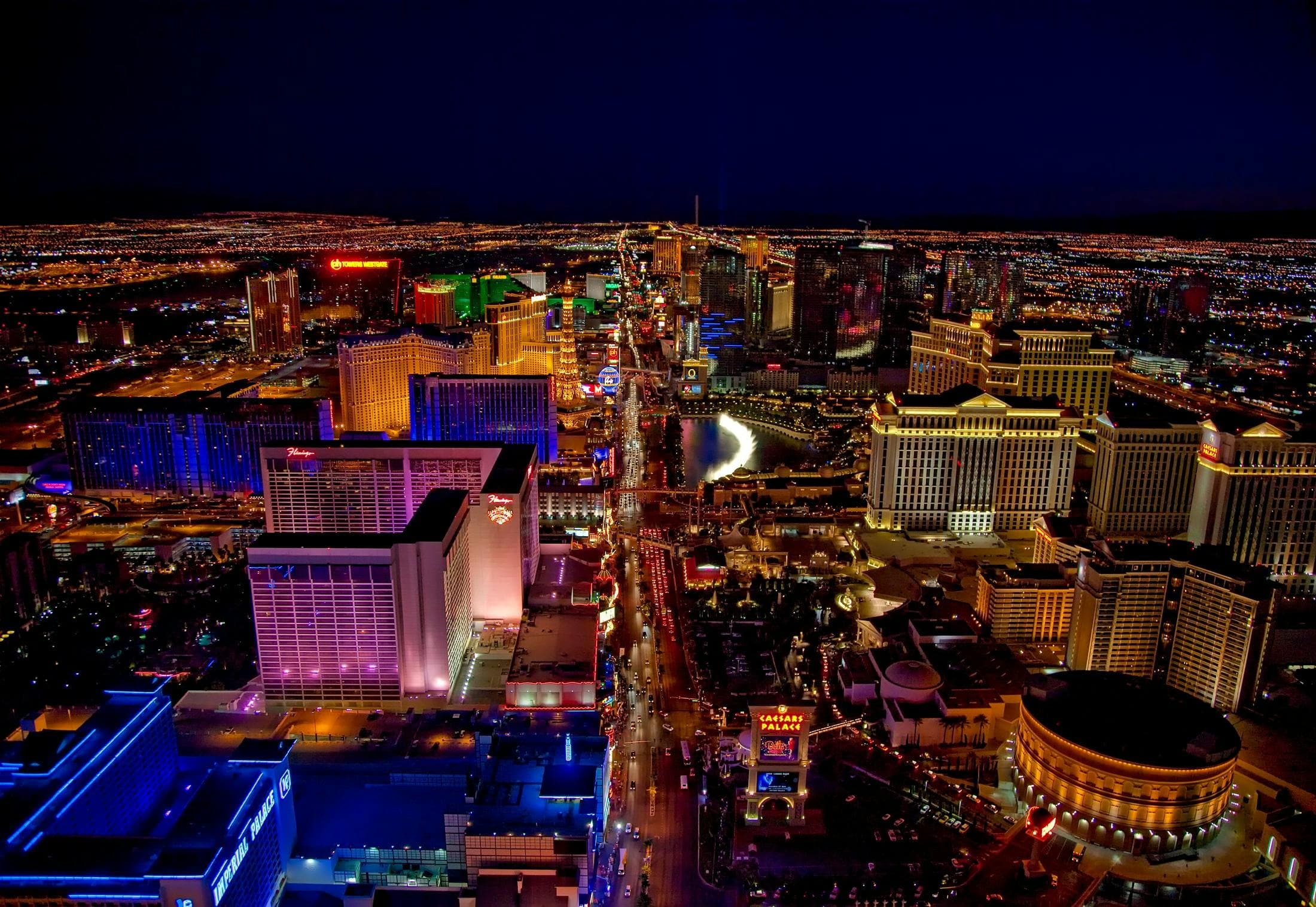
Las Vegas is a golf market that operates on a different set of rules. The city imports everything: the water, the grass, the topography. Tom Fazio spent $60 million building hills and forests on flat Mojave scrubland. Pete Dye laid out desert links on tribal land 30 miles from the Strip. Jack Nicklaus routed fairways along a man-made lake. The courses here are feats of engineering as much as design, and the range of price and experience is wider than in any other American golf destination. A golfer can spend $1,250 on a single round with a limousine transfer or play 54 holes of Pete Dye golf in a day for under $300 in the off-season. Both options are legitimate. The full picture of Las Vegas golf requires understanding what sits at each level and what each price point actually delivers.
Where to stay in Las Vegas
Planning the trip? Compare live prices across every nearby hotel and rental in one search.
Prices and availability from Booking.com, Expedia and others via Stay22. GolfTrailsHQ may earn a commission at no additional cost to you.
Shadow Creek
Shadow Creek is the course that defines Las Vegas golf at its most ambitious. Tom Fazio completed it in 1989 on featureless desert north of the Strip, creating an entire landscape from scratch: rolling terrain, mature trees, creek beds, and water features where none existed. Golf Digest ranks it among the top 25 courses in America and 3rd among public-access layouts, though "public access" overstates the availability. Tee times are restricted to guests of MGM Resorts properties, Monday through Thursday only. Friday through Sunday rounds are by invitation.
TPC Las Vegas
The $1,250 green fee is flat year-round and includes a limousine transfer from the hotel, mandatory caddie service, and a level of individual attention that resembles a private club more than a resort. The routing moves through Fazio's manufactured environment with a sophistication that belies its origins. The elevation changes feel natural. The par 3s play across water to well-defended greens. Shadow Creek is not a course that fits into a casual itinerary. It is the centerpiece of one.
The conditioning, aided by limited daily play, is among the best in American resort golf.
Wynn Golf Club
Wynn Golf Club is the only golf course on the Las Vegas Strip, occupying 129 acres directly behind the Wynn Las Vegas hotel. Tom Fazio designed the original layout in 2005; his son Logan led the 2019 redesign that reconfigured the routing into its current form, a par 70 with six par 3s that gives the round a distinctive rhythm favoring iron play over distance.
The $550 green fee covers everything: cart, mandatory forecaddie, food and beverage on the course, and rental clubs if needed. That all-inclusive structure eliminates the incremental costs that inflate a round at most resort properties. The 18th, a par 3 played beneath a waterfall visible from the hotel, is pure Las Vegas theatricality, but the green complex around it is a legitimate test. The USGA does not officially rate the course, so handicap posting is not straightforward. For most visiting golfers, that is beside the point. The proximity to the hotel room and the quality of the experience are what drive the decision.
Cascata
Thirty minutes southeast of the Strip, in the canyon country near Boulder City, Cascata occupies a narrow valley between desert ridgelines. Rees Jones completed the design in 2000, and Golf Digest currently ranks it Nevada's 8th-best course and the 74th-best public-access layout nationally. The clubhouse features a 418-foot engineered waterfall that establishes the property's ambitions before the first tee shot.
Jones routed the course through the canyon floor with holes climbing ridgelines and dropping into valleys. The elevation changes are constant and substantial, giving each hole a distinct visual character that flat desert courses cannot replicate. At 7,137 yards with a slope of 143, the course plays long and demands accuracy. Green fees range from $295 in off-peak months to $415 during peak season, with a mandatory forecaddie included. The drive from the Strip requires committing most of the day to the experience, but the quality of the setting and the golf justify the time.
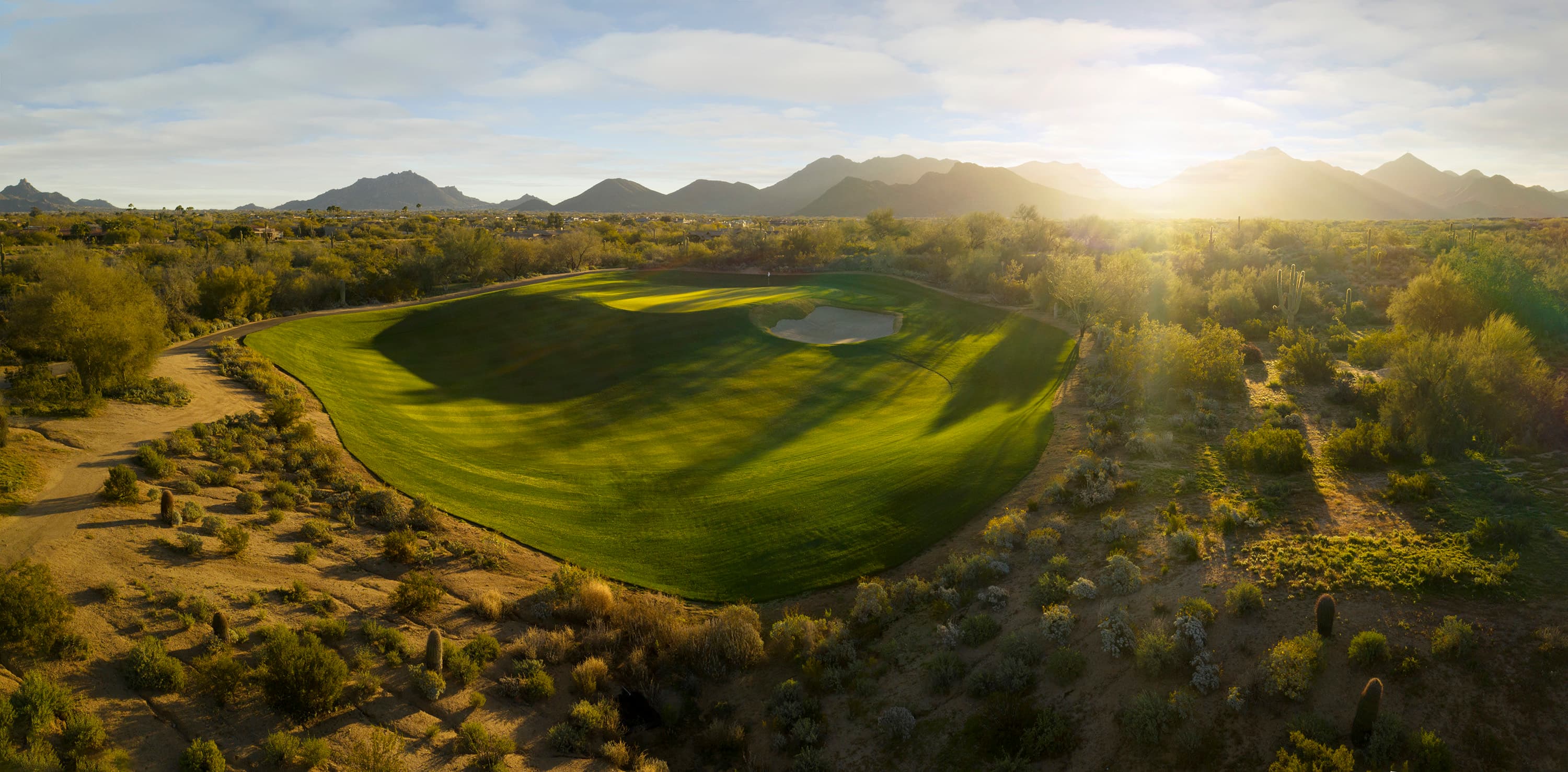
TPC Las Vegas
TPC Las Vegas carries the PGA TOUR facility designation, and the conditioning reflects it. Bobby Weed and Raymond Floyd routed the course through desert canyons northwest of the Strip in 1996, with six sets of tees that make it one of the most accessible layouts in the market for groups with mixed handicaps. The par 71 design plays to 7,104 yards from the tips with a moderate slope of 128, reflecting wide fairways and an absence of forced carries.
Green fees of $175 to $395 depending on season and day of week place TPC Las Vegas at a price point where it competes with the lower end of the premium tier. The value proposition rests on TPC-standard maintenance, professional-grade practice facilities, and a course that rewards strategic play without punishing moderate misses. Caddies are available on request. The 20-minute drive from the Strip is manageable for any itinerary.
Las Vegas Paiute Golf Resort
The Paiute resort is where Las Vegas golf delivers its best value-to-quality ratio. Three Pete Dye courses on tribal land 35 minutes northwest of the Strip, set on open desert terrain that evokes Scottish links transplanted to the Mojave. No trees. No manufactured scenery. Just Dye's trademark design language: railroad-tie bunker walls, undulating greens, and optical illusions that complicate distance judgment.
The Wolf (2001) is the longest course in Las Vegas at 7,604 yards with a slope of 149, built for low-handicap players who want a serious examination. Sun Mountain (1996) occupies the middle ground at 7,112 yards and a slope of 140. Snow Mountain (1995), the original, is the most forgiving at a slope of 126 and the best entry point for mid-handicap golfers encountering Dye's work for the first time. Peak rates of $249 to $289 are competitive with TPC Las Vegas. Off-peak rates, available by calling the resort directly, drop to an estimated $99 to $179. Multi-round packages make playing two or all three courses in a trip financially practical.
Reflection Bay
Reflection Bay is the only Jack Nicklaus Signature Design in Nevada, routed along the shoreline of Lake Las Vegas, a 320-acre man-made lake in Henderson roughly 25 miles east of the Strip. Multiple holes play along or toward the water, and the lake provides a visual counterpoint to the surrounding desert mountains that is genuinely unexpected in this landscape. At 7,261 yards with a slope of 150, it is the most demanding course in the Las Vegas premium tier by slope rating.
Tip
Building Your Trip
The Las Vegas golf market organizes itself into clear budget tiers, and the most satisfying trips tend to stay within one or mix strategically between two.
A premium trip built around Shadow Creek or Wynn requires MGM or Wynn hotel accommodations, respectively, and the green fees alone place a single round in the $550 to $1,250 range. Pairing either with Cascata creates a two-day itinerary that covers the highest end of the market at roughly $800 to $1,700 in green fees alone.
The mid-range sweet spot combines TPC Las Vegas with one or two Paiute courses. Three days of golf across three distinct layouts, all at tournament-quality or Pete Dye-pedigree conditioning, for a total green fee outlay of $500 to $900 in peak season and considerably less in summer or late fall.
The value-conscious traveler should focus on Paiute and Reflection Bay. Both properties offer quality design from major architects at prices that drop significantly in off-peak months. A three-round trip covering Wolf, Sun Mountain, and Reflection Bay in the summer could total under $400 in green fees.
The verdict