Kiawah Island / Charleston, SC: 4-Day Golf Trip Itinerary
Kiawah Island compresses a remarkable amount of serious golf into a narrow barrier island twenty-five miles south of Charleston. Five resort courses span four decades of design philosophy, from Jack Nicklaus's coastal routing at Turtle Point to Pete Dye's Ocean Course, which remains one of the most demanding layouts in American resort golf. A four-day trip is enough to play the courses that matter most, spend an afternoon in Charleston, and return home with a clear sense of what makes this stretch of the South Carolina Lowcountry distinct from the state's other golf corridors. For a full breakdown of every course on the island, the Kiawah Island complete golf guide covers the details.
The structure below sequences the four days to manage both energy and budget. It opens with an accessible round to calibrate after travel, reserves the second day for the Ocean Course when legs and concentration are fresh, pairs a morning round with Charleston exploration on day three, and closes with a relaxed final round before departure.
Where to stay in Charleston & Kiawah Island
Planning the trip? Compare live prices across every nearby hotel and rental in one search.
Prices and availability from Booking.com, Expedia and others via Stay22. GolfTrailsHQ may earn a commission at no additional cost to you.
Day 1: Arrival and Osprey Point
Fly into Charleston International Airport and collect the rental car. The drive to Kiawah Island takes forty minutes via US-17 South and the Kiawah Island Parkway, crossing salt marsh and tidal creek before the resort gate appears. Check into your villa or hotel and settle in before an afternoon tee time at Osprey Point.
Tom Fazio designed Osprey Point in 1988, routing it through lakes, natural marsh, and dense stands of live oak and pine. The course is the most balanced layout in the Kiawah portfolio and the right place to start the trip. The tree-lined corridors provide shelter from the coastal wind that defines the Ocean Course, and the strategic variety across eighteen holes allows a group with mixed handicaps to find their footing without the pressure of a $450 green fee. Osprey Point runs $150 to $250 depending on season. Walking is permitted but uncommon in the Lowcountry climate.
Dinner on the first evening stays on the island. The resort's dining options at The Sanctuary hotel or the Ocean Room provide a composed arrival meal without requiring the forty-minute drive back to Charleston. Keep it early. The Ocean Course tee time tomorrow morning is the round the trip is built around.
Day 2: The Ocean Course
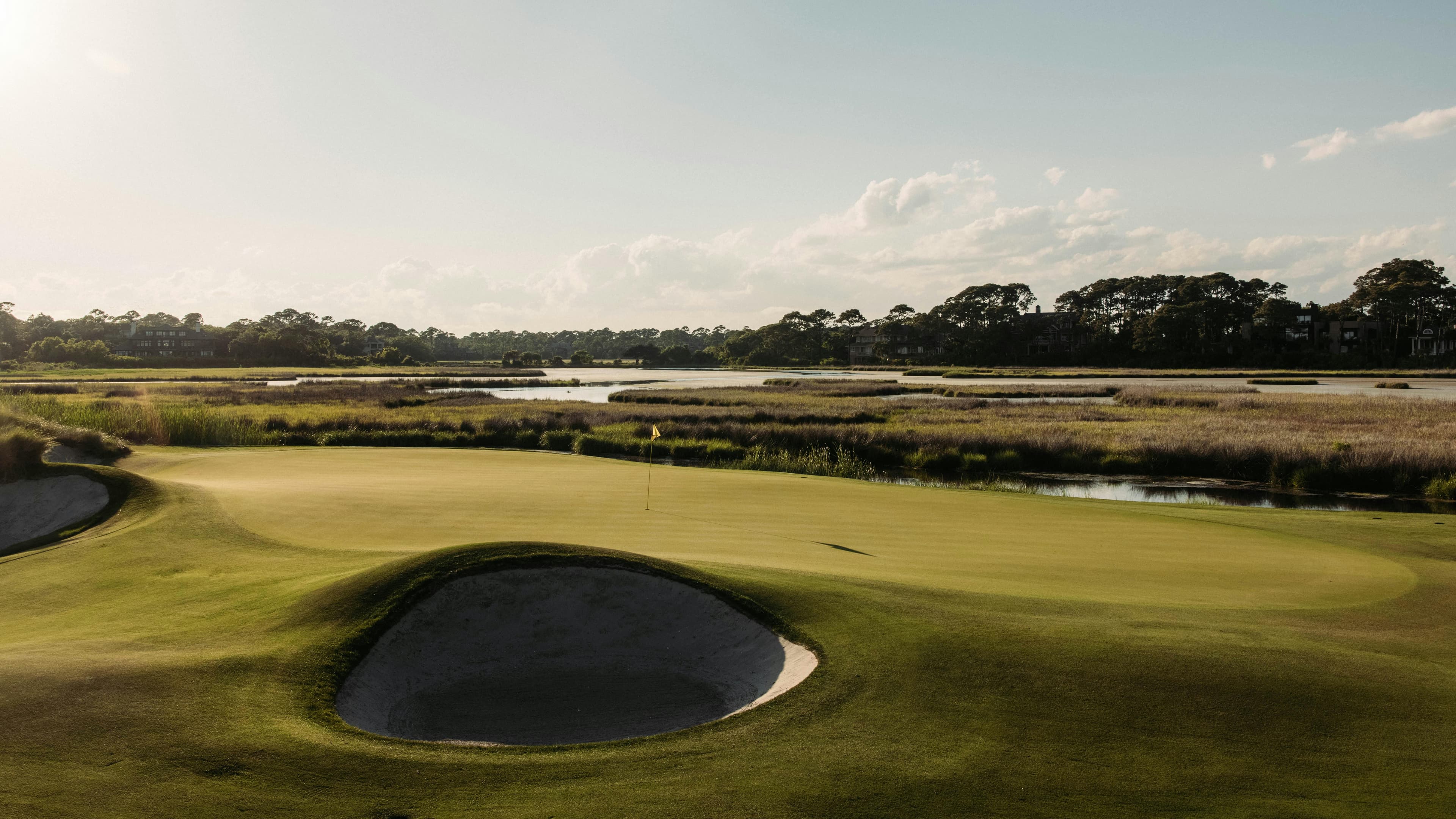
This is the centerpiece day. Book a morning tee time and plan to arrive at the clubhouse with time to spare. Pete Dye opened the Ocean Course in 1991 for the Ryder Cup, and the layout has since hosted two PGA Championships. Every hole offers a sight line to either the Atlantic Ocean or the surrounding marsh, and the wind that moves across the exposed dunes transforms the course's character from one day to the next. When conditions are calm, the Ocean Course is demanding.
When the wind blows, it is among the most difficult resort rounds in the country.
Green fees run $400 to $500 and higher during peak periods. The course is restricted to resort guests. The caddie program is strong, and a walking round with caddie is the way the course was intended to be experienced. Dye's pot bunkers, waste areas, and green complexes reveal their depth gradually over eighteen holes, and the closing stretch along the ocean delivers the kind of finish that justifies the green fee and the early wake-up call.
Reserve the rest of the afternoon for recovery. The resort's beach, pool complex, and spa exist precisely for the hours after a round that took more out of the group than expected. The Sanctuary's terrace bar serves as a natural debrief location. Among the Kiawah Island best courses, the Ocean Course stands alone in its ability to test every dimension of the game simultaneously.
Day 3: Turtle Point and Charleston
Book a morning tee time at Turtle Point. Jack Nicklaus designed this course in 1981, and a 2016 renovation restored several of his original features while improving drainage across the property. Three holes play directly along the ocean, and the routing alternates between exposed coastal terrain and tighter corridors lined with palmetto and live oak. The greens are large and contoured in the Nicklaus tradition, rewarding approach shots that account for pin positions rather than merely hitting the putting surface. Green fees range from $150 to $250.
After the round, drive north to Charleston for the afternoon and evening. The forty-minute trip is straightforward, and the shift from barrier island quiet to the density and energy of Charleston's historic district provides a welcome change of pace on the third day of a golf trip. Walk the streets south of Broad, browse the shops along King Street, and work up an appetite for dinner.
Charleston's restaurant scene operates at a level that extends the trip beyond golf. Husk, FIG, and The Ordinary represent different approaches to Lowcountry cooking, each worth the reservation. The city's culinary infrastructure has matured to the point where a walk-in at a second-tier restaurant still produces a meal that would be the best dinner in most American cities. Return to Kiawah after dinner or, for groups willing to absorb an extra night's lodging, stay in downtown Charleston and drive back to the island in the morning.
Day 4: Oak Point or Cougar Point, Then Depart
The final round depends on the group's preferences and energy. Oak Point, a Clyde Johnston design located just off the island on Johns Island, routes through moss-draped oaks and tidal marsh at the most accessible price point in the Kiawah portfolio ($100 to $180). Cougar Point, an Arthur Hills design renovated in 2019, runs through maritime forest and salt marsh along the Kiawah River at $130 to $200. Both courses deliver quality golf without the physical or financial intensity of the previous three days.
Book a morning tee time at either course, leaving the afternoon open for the drive to the airport. Charleston International is forty minutes from the resort, and most return flights depart in the afternoon or early evening.
A lunch stop in Charleston on the way to the airport closes the trip with one final reminder of the city's contribution to what makes a Kiawah trip more than a golf trip.
Budget Overview
A four-day itinerary with three nights of accommodation and four rounds runs approximately $1,800 to $2,800 per person based on double occupancy.
| Category | Estimated Range |
|---|---|
| Accommodation (3 nights) | $500-$1,000 |
| Green fees (4 rounds) | $800-$1,200 |
| Rental car (4 days) | $160-$280 |
| Dining | $250-$400 |
| Caddie (Ocean Course) | $100-$150 |
Tip
When to Go
The strongest windows are March through May and September through November. Spring on Kiawah brings mild temperatures, blooming azaleas, and course conditions that benefit from winter recovery. Fall offers the most reliable weather, reduced green fees compared to spring peak, and tee sheet availability that the March-through-May corridor does not provide.
Summer is playable but punishing. Highs reach the low 90s with oppressive humidity, and afternoon thunderstorms arrive with regularity from June through August. Early morning tee times become mandatory rather than preferable.
Winter green fees drop considerably, and the courses are quiet. Daytime temperatures in the 50s and low 60s are comfortable enough for golf, though the damp cold on exposed holes at the Ocean Course can make a January round feel harsher than the forecast suggests. For budget-conscious groups willing to layer up, winter represents the best value on the island.
The verdict