The Best Coastal Golf Courses in America
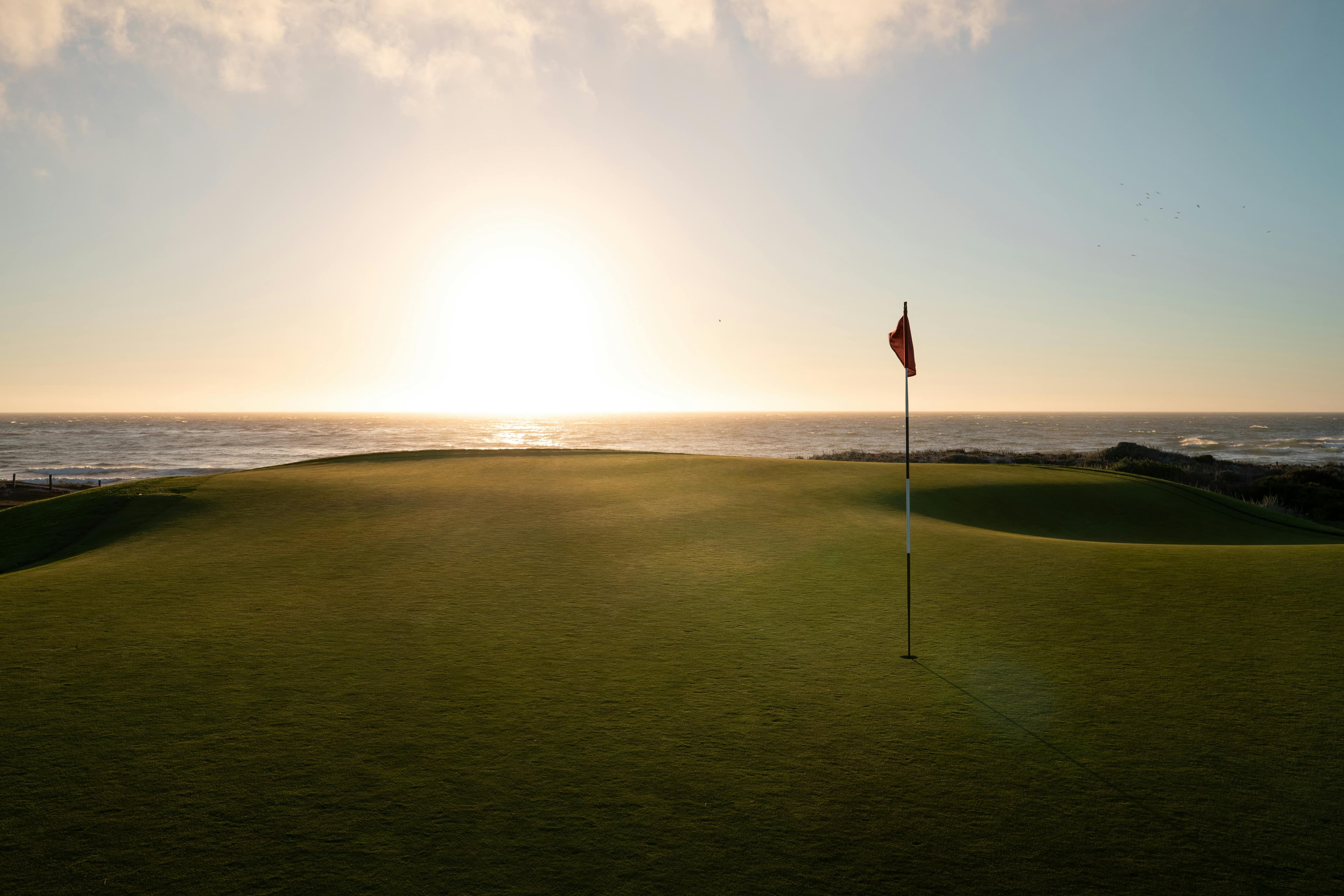
Coastal golf occupies a particular space in the imagination of American golfers. The combination of ocean views, salt air, and wind that arrives without warning or apology produces a playing experience that inland courses cannot replicate. But the category is broader than it appears. Coastal golf in America ranges from the Pacific bluffs of Oregon to the barrier islands of South Carolina, from the volcanic shores of Hawaii to the glacial coast of Lake Michigan. The common element is water at the margin, shaping both the setting and the strategy.
The courses on this list sit close enough to the coast that the ocean or its equivalent is a genuine presence during play, not a distant backdrop visible from one elevated tee. These are courses where the wind comes off the water, where salt air affects turf conditions, and where the proximity to the shoreline is central to the playing experience rather than incidental to it.
Pebble Beach Golf Links, Pebble Beach, California
Pebble Beach needs no introduction, but it merits one observation that gets lost beneath the fame: the course is genuinely excellent, not merely iconic. The 7th, a par-3 of less than 110 yards from the back tee, plays directly into the ocean wind to a tiny green perched on a rock promontory. The 8th, a par-4 that requires a blind tee shot over a chasm, is the kind of hole that could only exist on this specific piece of land. The green fee exceeds $600 and the wait for a public tee time can stretch for months. The price reflects the setting as much as the design, and the setting has no peer.
The stretch from the 6th through the 10th, played along the cliffs above Carmel Bay, is the finest sequence of coastal holes in American golf.
Pacific Dunes, Bandon, Oregon
Pacific Dunes sits closer to the ocean than any other course at Bandon Dunes, and several holes play directly along the coastal bluffs. Tom Doak's routing uses the clifftop terrain to create dramatic ocean-side holes without ever feeling forced. The 4th, a short par-4 with the Pacific directly to the left, and the 11th, a par-3 on a promontory above the surf, are among the finest coastal holes built in the last fifty years. The firm fescue turf and persistent ocean wind make Pacific Dunes a genuine links-style experience, and the coastal setting elevates it beyond the architectural.
Kiawah Island (Ocean Course), Kiawah Island, South Carolina
Pete Dye designed the Ocean Course at Kiawah for the 1991 Ryder Cup, and the course delivers on its name more completely than any other American layout. Every hole offers a view of the Atlantic or the adjacent marsh, and the wind off the ocean is so constant and variable that the course effectively plays differently every day. From the forward tees, it remains demanding but manageable. The 17th, a par-3 played over a marsh to a green backed by the ocean, is the defining hole, and the entire closing stretch along the beach is remarkable.
From the championship tees, the Ocean Course is among the most difficult public-access courses in the country.
Spyglass Hill, Pebble Beach, California
Robert Trent Jones Sr. designed Spyglass Hill on terrain that transitions from coastal dunes to Monterey pines, and the opening five holes through the dunes along the ocean are among the finest in California golf. The 1st tee sits above the Pacific with views across the bay, and the short par-3 3rd plays through sand dunes that recall Scottish links land. The course moves inland after the 5th, but the coastal opening is so strong that it defines the experience. Spyglass Hill is frequently cited as the most challenging of the three public courses on the Monterey Peninsula, and the combination of oceanside golf and forest golf within a single routing is unique.
Harbour Town Golf Links, Hilton Head, South Carolina
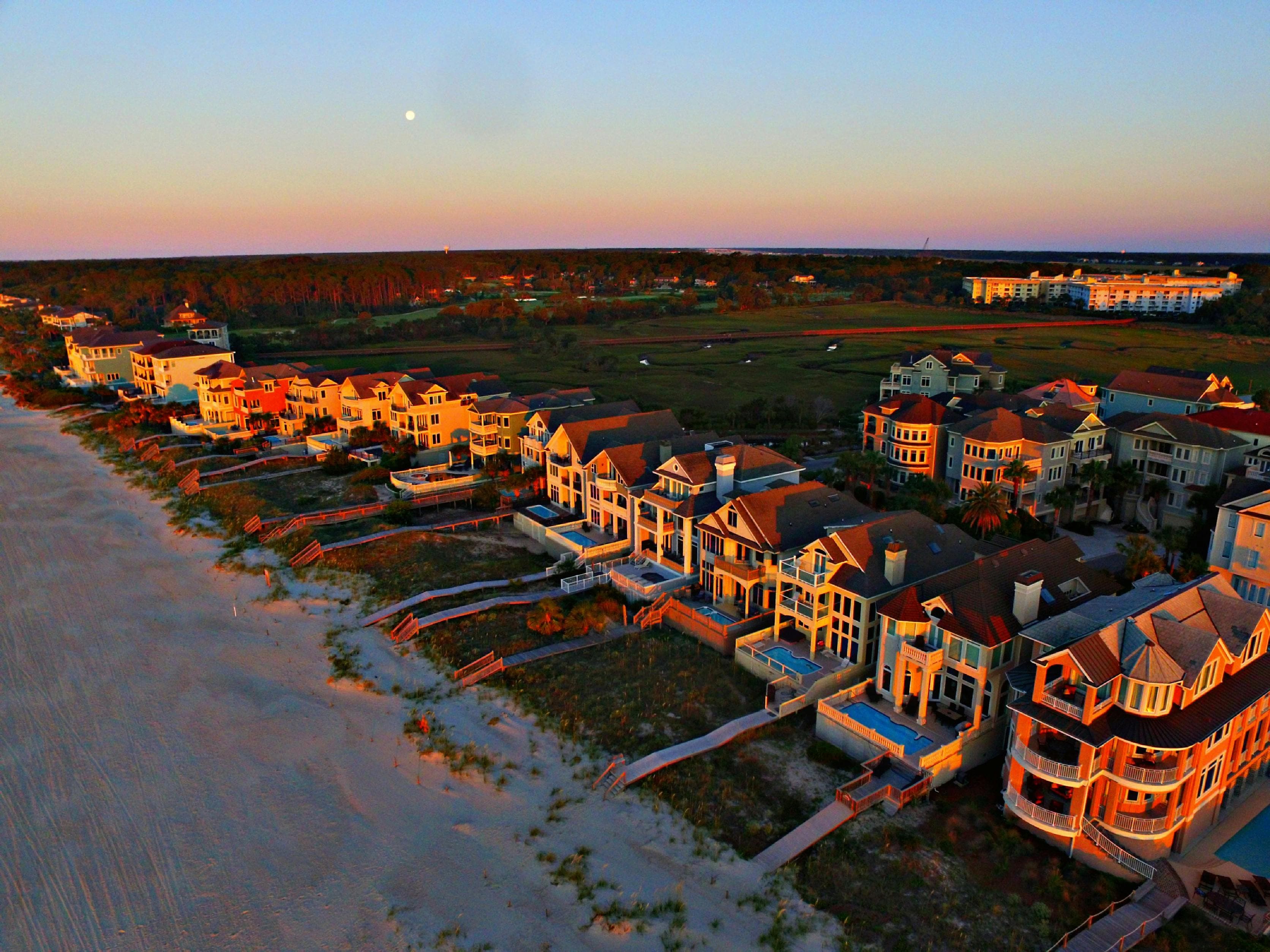
Harbour Town sits along Calibogue Sound on the southern tip of Hilton Head Island, and Pete Dye's compact design uses the waterfront setting with characteristic precision. The course is not an oceanfront layout in the dramatic sense. It is a strategic course that happens to finish along one of the prettiest tidal waterways on the East Coast. The 18th, a par-4 that plays along the harbour to a green beside the iconic lighthouse, is one of the most recognizable finishing holes in professional golf. Harbour Town rewards precision over power, and the Lowcountry setting, with live oaks draped in Spanish moss, gives the course a character that no other coastal course replicates.
Arcadia Bluffs (Bluffs Course), Arcadia, Michigan
Lake Michigan is not the ocean, but from 200 feet above the water on the Arcadia Bluffs course, the distinction is academic. The lake stretches to the horizon in every direction, and the wind comes off the water with the same force and unpredictability as any ocean breeze. Warren Henderson's design uses the blufftop terrain to create a links-style course with genuine coastal character, and the fescue turf reinforces the connection to seaside golf. Arcadia Bluffs is the finest coastal course on the Great Lakes, and for golfers east of the Mississippi, it offers a links-style experience that does not require a flight to Oregon.
Whistling Straits (Straits Course), Kohler, Wisconsin
Pete Dye built the Straits Course on the shore of Lake Michigan north of Kohler, sculpting the flat lakefront terrain into something that resembles the coast of County Clare more than Sheboygan County. The course hosted three PGA Championships and the 2021 Ryder Cup, and its coastal identity is central to its character. The wind off the lake, the fescue rough, and the hundreds of bunkers create a playing environment that demands adaptability. The Straits Course is manufactured in a way that the Bandon courses are not, but the playing experience is authentically coastal.
Kapalua (Plantation Course), Maui, Hawaii
The Plantation Course on Maui's northwest coast hosts the PGA Tour's season-opening Sentry Tournament of Champions, and the setting is unlike anything on the mainland. Ben Crenshaw and Bill Coore redesigned the course in 2019, and the routing moves across volcanic ridgelines with the Pacific Ocean visible on three sides. The wide fairways accommodate the wind that sweeps across the West Maui Mountains, and the downhill 18th, with Molokai visible across the channel, is one of the great finishing holes in Hawaiian golf. The scale of the landscape dwarfs the golf, which is both the appeal and the challenge.
Bandon Dunes, Bandon, Oregon
The original Bandon Dunes course by David McLay Kidd deserves separate mention from Pacific Dunes because its relationship to the coast is different. The course touches the ocean at several points along its routing, with holes playing along, toward, and away from the bluffs. The 16th, a par-4 played along the cliff edge, is the most dramatic coastal hole on the property, and the back nine's proximity to the Pacific means the ocean is a constant visual and strategic presence. Kidd's routing makes the coastline feel like a natural boundary of the course rather than a feature grafted onto it.
Teeth of the Dog, Casa de Campo, Dominican Republic
Pete Dye's masterpiece in the Dominican Republic is not technically in America, but its place in the broader American golf travel market justifies inclusion. Seven holes play directly along the Caribbean coast, with coral rock, crashing waves, and shots that carry over open ocean. The 5th, a par-3 played across a rocky inlet to a green surrounded by Caribbean surf, is one of the most photographed holes in the world. Teeth of the Dog is the course that established the Caribbean as a serious golf destination, and the coastal holes remain the standard against which Caribbean golf is measured.
The Links at Spanish Bay, Pebble Beach, California
Robert Trent Jones Jr., Sandy Tatum, and Tom Watson designed Spanish Bay on the former sand dunes of the Monterey Peninsula, and the course was intended as a links-style counterpoint to the parkland character of Pebble Beach and Spyglass Hill. The front nine moves through coastal scrub and dunes, and the back nine offers several holes along the ocean with views toward Point Joe and the distant Carmel coastline. Spanish Bay is the third course in the Pebble Beach rotation, and while it does not match the other two in architectural acclaim, its coastal links character provides a useful contrast.
The Case for Coastal Golf
The appeal of coastal golf extends beyond aesthetics. Courses along the water tend to play firmer and faster, because the sandy soil that accumulates near coastlines drains better than inland clay. The wind is a more constant factor, which adds a strategic dimension that calm, tree-lined courses do not offer. And the sensory experience, the sound of surf, the smell of salt air, the quality of light over open water, engages parts of the brain that a round at an inland course, however well designed, simply cannot reach. Coastal golf is not inherently better than inland golf. But it is different in ways that make the trip worthwhile.
Harbour Town Golf Links