 Pin it
Pebble Beach Golf Links
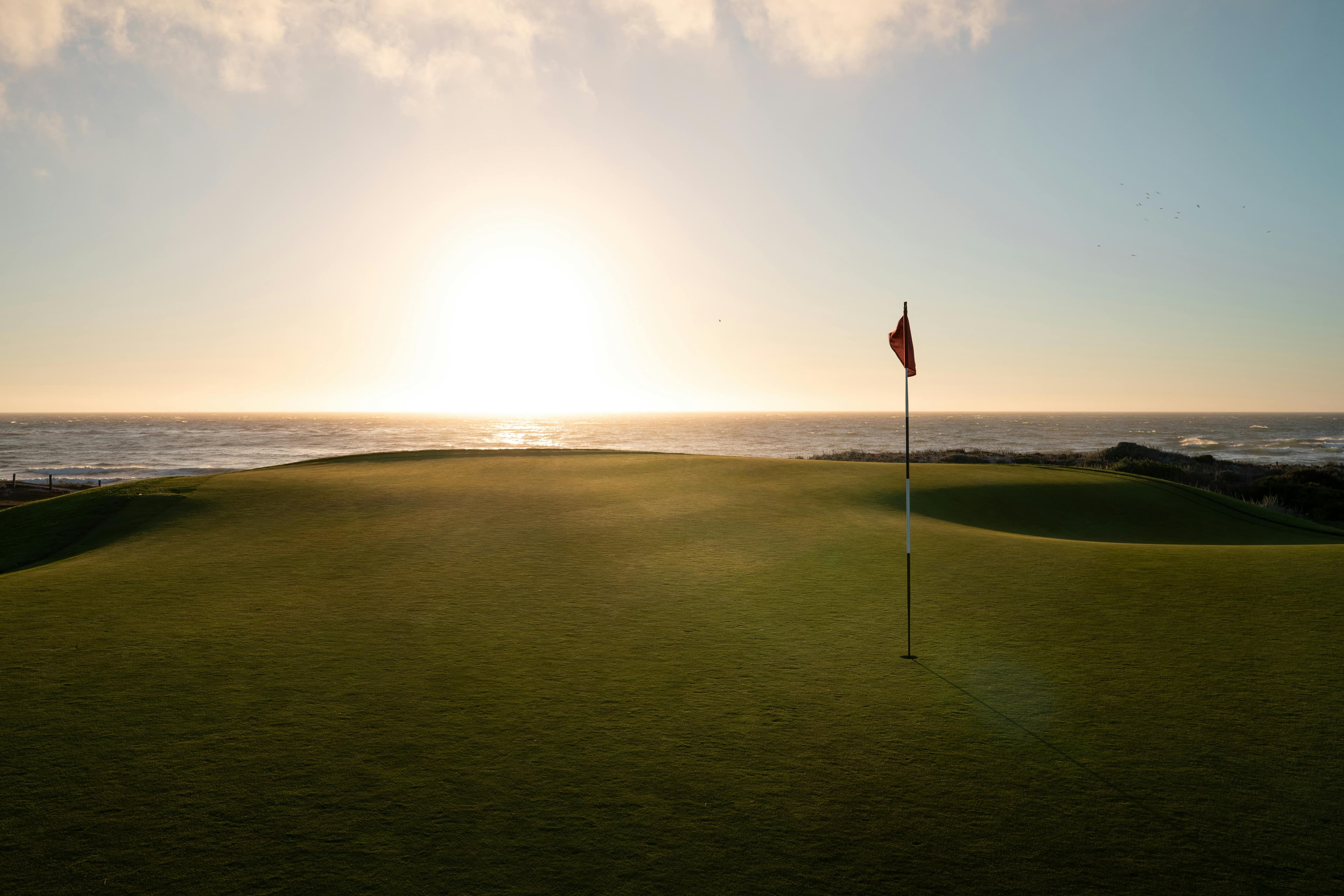
Nine holes along the Pacific, six U.S. Opens, and the green fee that everyone has an opinion about.
Bart Keagy · Pebble Beach Company press kit
Designed by Jack Neville & Douglas Grant (1919)
From $695
Booking via Direct
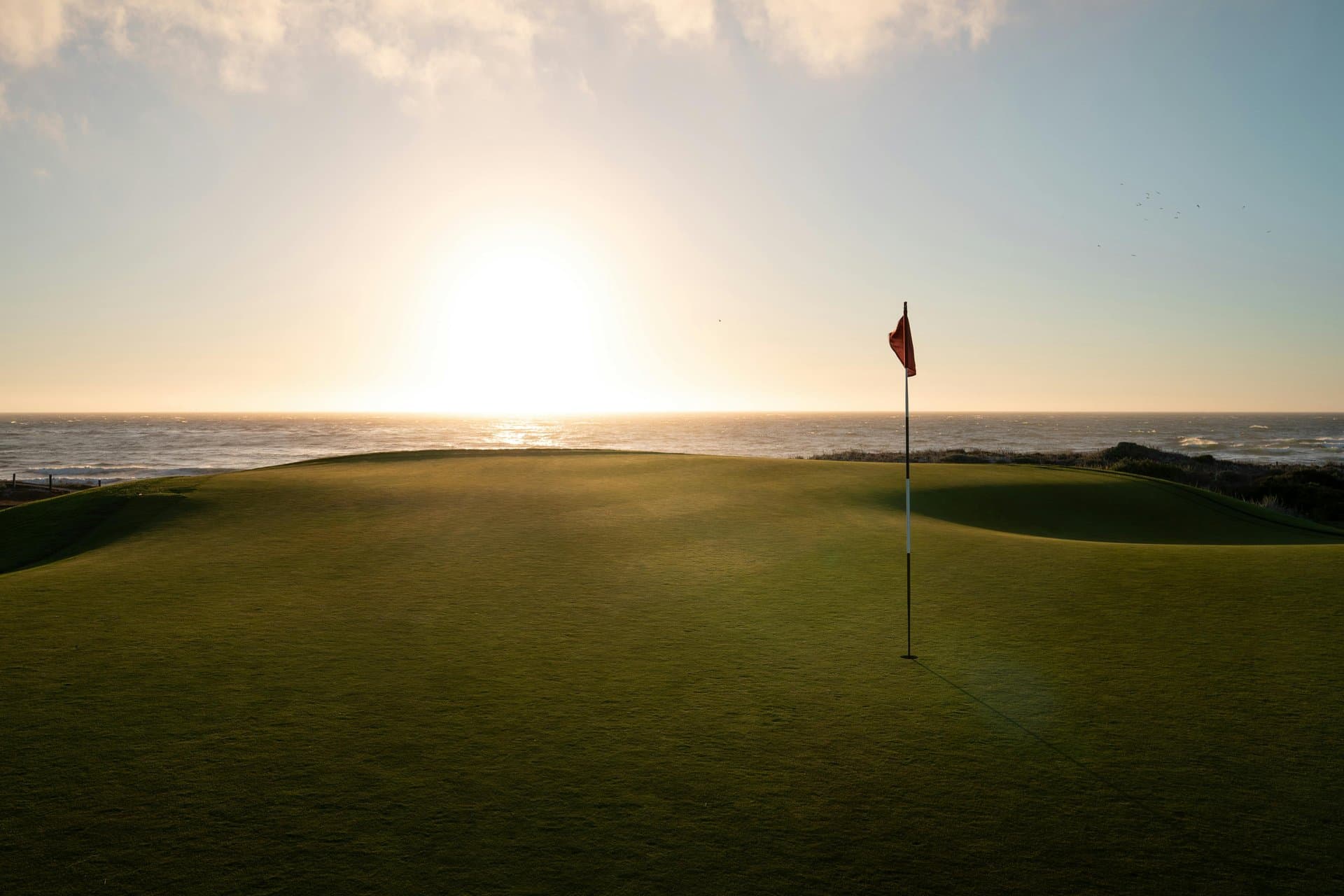
Pebble Beach Golf Links is the course Jack Neville and Douglas Grant routed along the Monterey Peninsula in 1919, with nine holes hugging the Pacific cliffs and the rest weaving through Monterey cypress. Neville was a two-time California Amateur champion with no architecture experience when Samuel Morse asked him to build it. His ambition was simple: place as many holes as possible along the water. The result is a figure-eight routing that has hosted six U.S. Opens, with a seventh scheduled for 2027, and remains the most discussed green fee in American golf.
What to expect
The course reveals itself in stages. The opening holes sit back from the coast, pleasant but unremarkable. That changes at the 6th, a downhill par 5 that pitches toward Stillwater Cove, and changes permanently at the 7th. At 106 yards, the 7th is one of the shortest holes on any championship course in the world. The green sits on a rocky shelf above the ocean with nothing around it but air and the sound of waves on rock.
The 8th is where the course reaches full intensity. The approach carries across a chasm in the cliffs to a green perched on the far side with the Pacific immediately behind. The 7th and 8th played back to back are among the finest consecutive holes in American golf. The middle stretch turns inland; these holes would be the signature holes on most courses.
The finish brings you back to the coast. The 17th is the par 3 famous for Tom Watson's chip-in during the 1982 U.S. Open. The 18th curves left along the rocky shoreline with the Pacific in play for the entire length of the hole. It is one of the great closing holes in the sport, not because it is excessively difficult, but because it asks you to hold composure in a setting that makes composure genuinely difficult.
The greens average roughly 3,500 square feet, the smallest on the PGA Tour. Length is not the challenge. Precision is.
By the numbers
- Par
- 72
- Yardage
- 6,828
Is it worth the green fee?
Green fees rise to $695 on April 1, 2026, with a mandatory $60 cart fee. Once you factor in the resort stay required for advance booking, the total cost typically starts around $2,500 for a single day. No one who has stood on the 7th tee with the Pacific below has described the experience as ordinary.
Booking and trip fit
Tee times are available through the booking link on this page. Resort guests booking a minimum two-night stay at The Lodge, Casa Palmero, or The Inn at Spanish Bay can reserve up to 18 months in advance. Non-resort guests can book within 48 hours of play. A caddie can be arranged through the resort and is recommended for first-time players. Morning fog is common from June through August. Pace can run to five hours during peak season.
For a Monterey trip, pair it with Spyglass Hill Golf Course as the second round. The Links at Spanish Bay completes the Pebble Beach Company three-course rotation. Pacific Grove Golf Links has Jack Neville's other Monterey routing for $53. Black Horse and Bayonet provide inland options.
Where to Stay
Accommodations near Pebble Beach Golf Links

Hotel
Carmel Valley Ranch
Monterey Peninsula, California
Five hundred valley acres with a 10,500 sq ft spa, equine program, and enough non-golf activities to fill a week.
From $70/nightOn-site golf
ExpediaCheck availability
Hotel
Casa Palmero at Pebble Beach
Monterey Peninsula, California
Twenty-four rooms, a personal concierge, and the most private address on the Monterey Peninsula.
From $1200/nightPebble Beach Golf Links (adjacent)
Direct websiteVisit website
Hotel
Hofsas House Hotel
Monterey Peninsula, California
Family-run Carmel boutique with included breakfast and parking, ten minutes from the first tee.
From $160/nightPacific Grove Golf Links (~5 miles)
ExpediaCheck availability

Hotel
Hyatt Regency Monterey Hotel & Spa
Monterey Peninsula, California
The peninsula's practical mid-range base, with Hyatt points, a free airport shuttle, and a starting rate of $170.
From $35/nightOn-site golf
ExpediaCheck availability
Compare all stays near Pebble Beach Golf Links
Live prices from Booking.com, Expedia and more — every nearby hotel and rental in one search.
Prices and availability from Booking.com, Expedia and others via Stay22. GolfTrailsHQ may earn a commission at no additional cost to you.
Other Courses Nearby
Mid-Range
Bayonet Golf Course
Monterey Peninsula, California
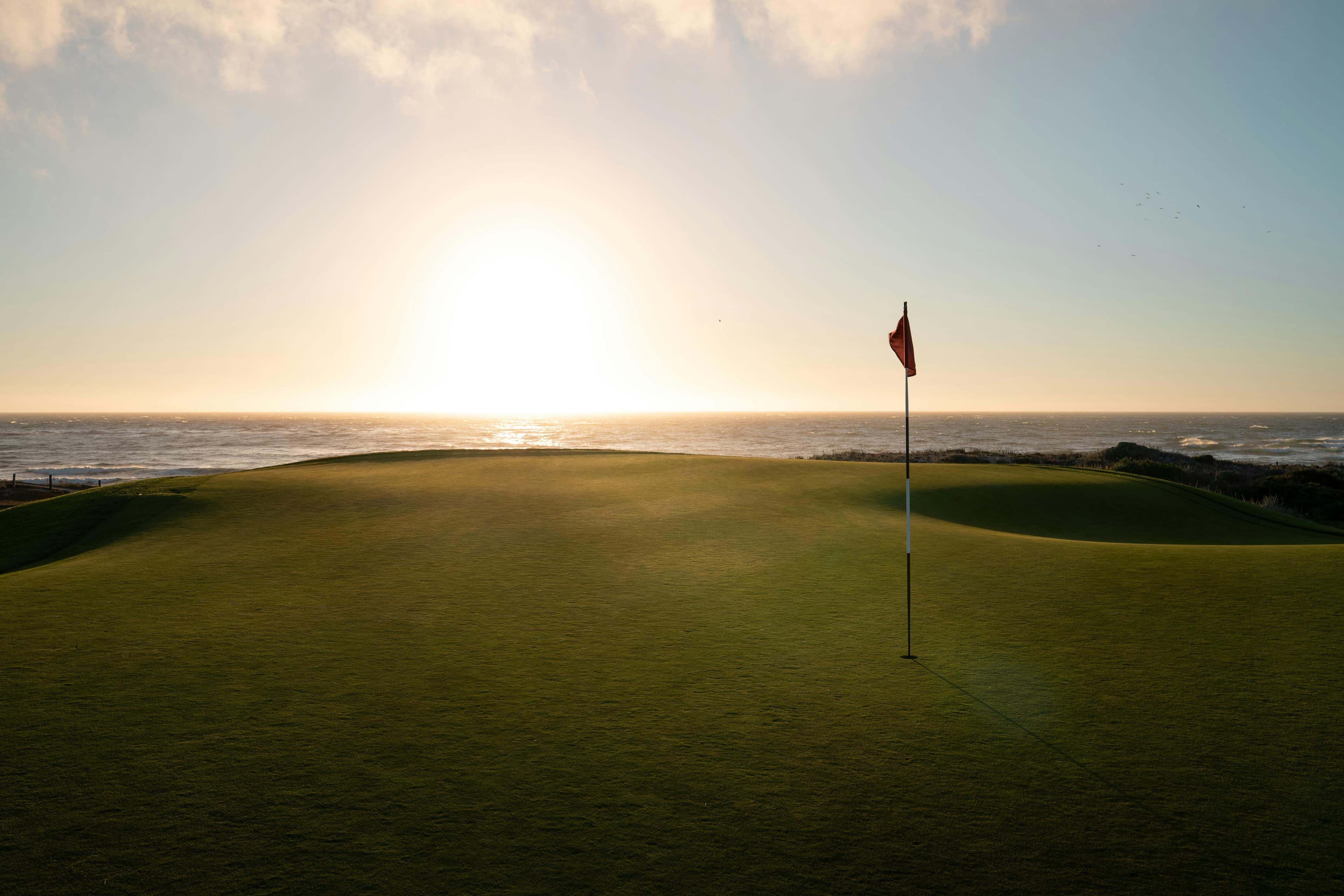
A former military course that still fights back, especially over the final four holes.
$79–$119PublicGeneral Robert McClure (1954)
GolfNowBook tee time
Mid-Range
Black Horse Golf Course
Monterey Peninsula, California
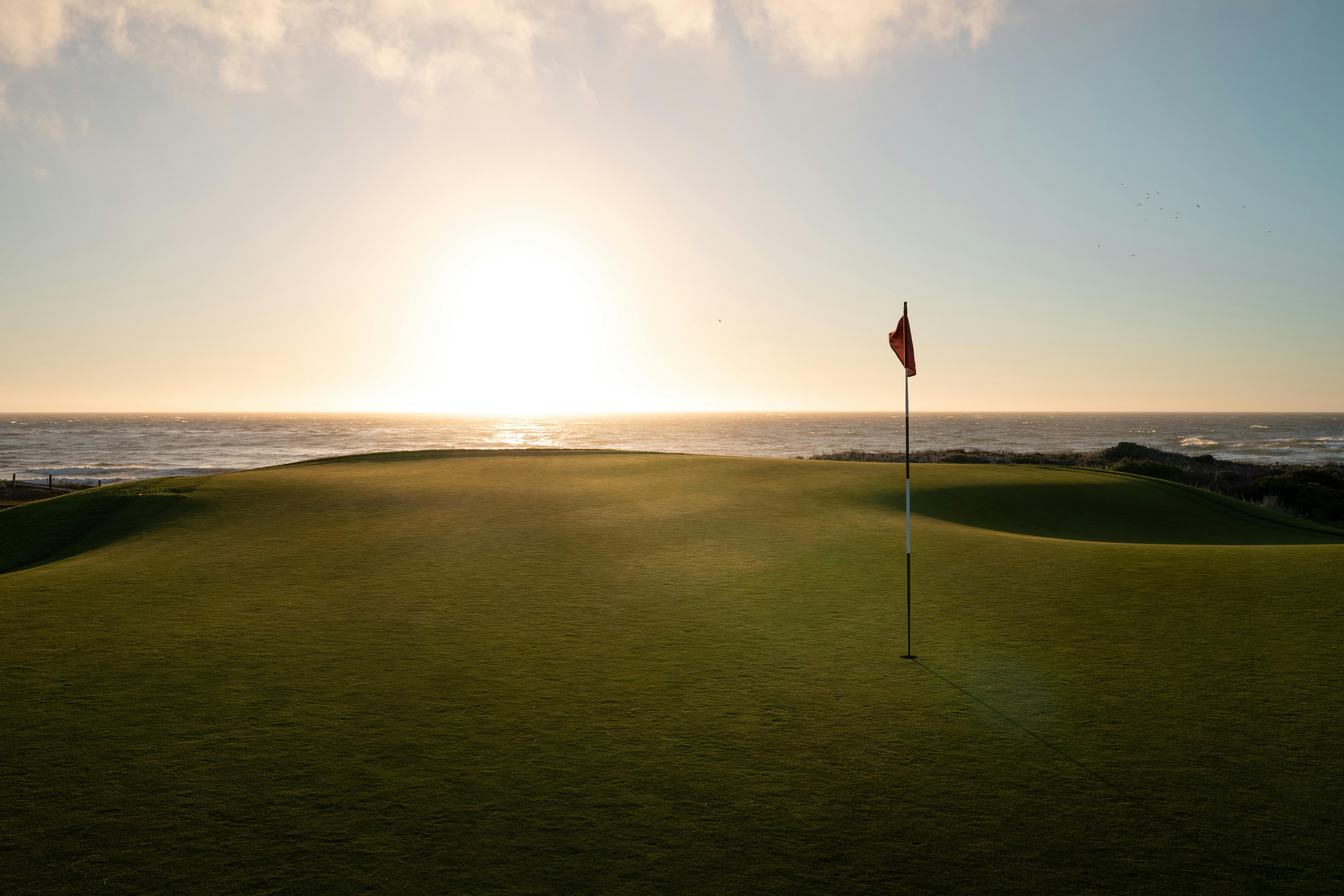
The younger sibling at Fort Ord, with Pacific views from the elevated tees and a modern renovation underneath.
$79–$119PublicGeneral Edwin Carnes (1964; renovated by Gene Bates, 2008)
GolfNowBook tee time
Mid-Range
Pacific Grove Golf Links
Monterey Peninsula, California
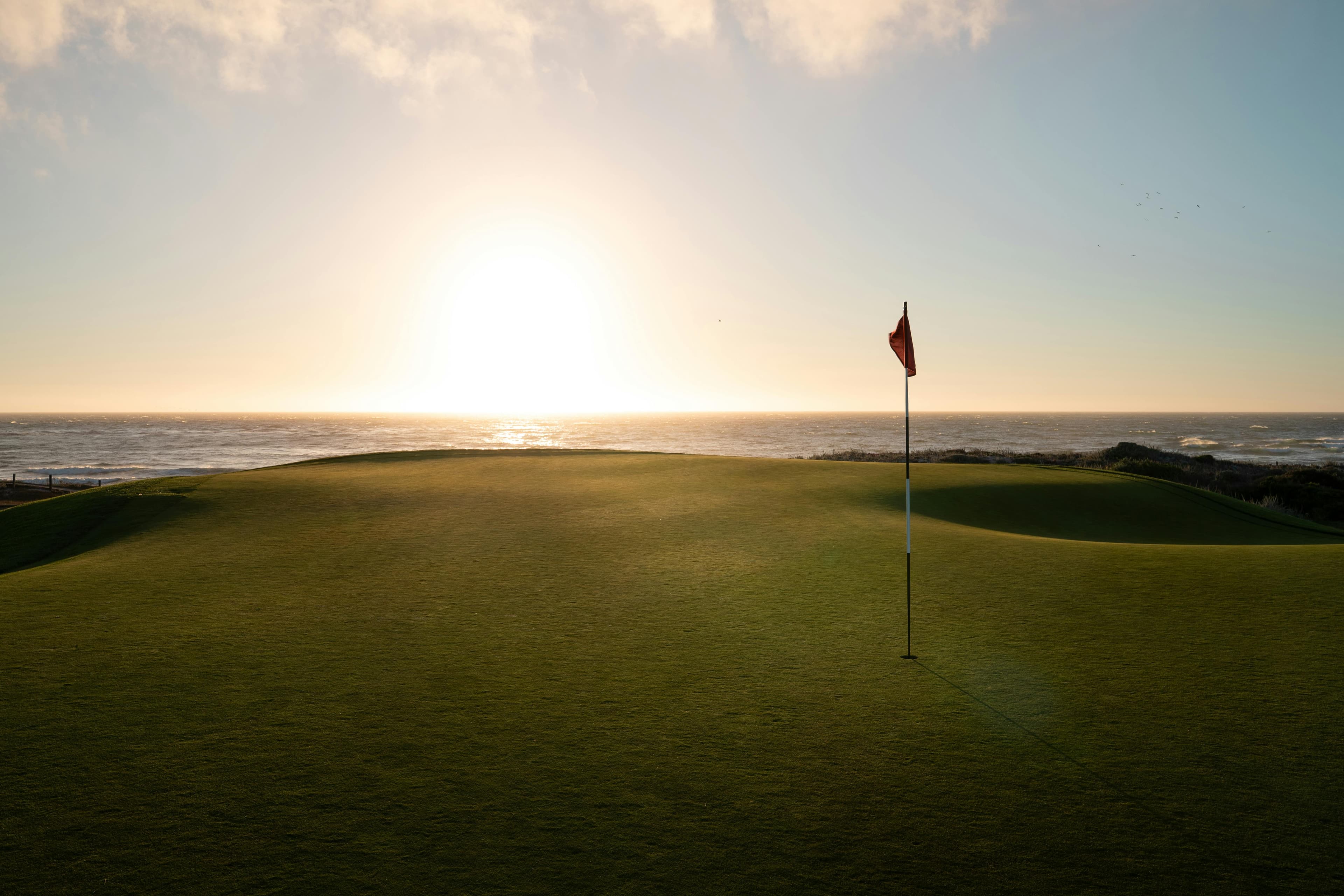
Jack Neville's other course on the Monterey Peninsula, where the ocean views cost $53.
$53–$58PublicH. Chandler Egan (front 9, 1932) / Jack Neville (back 9, 1960)
GolfNowBook tee time
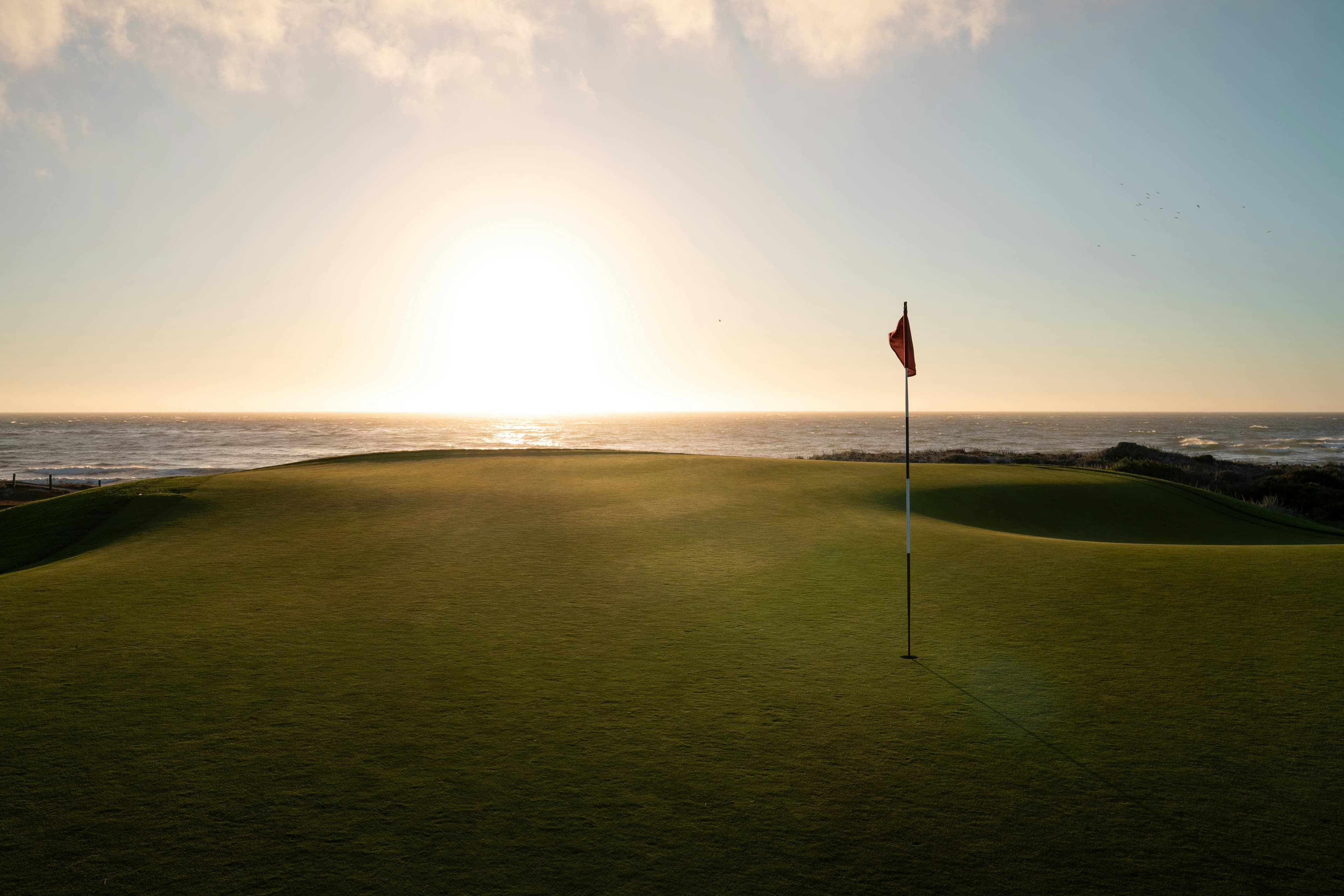
Premium
Poppy Hills Golf Course
Monterey Peninsula, California
The NCGA's own course in Del Monte Forest, and the peninsula's best value for members who know to ask.
$75–$225PublicRobert Trent Jones Jr. (1986; renovated 2014 by Jones Jr. & Bruce Charlton)
PartnerBook tee time
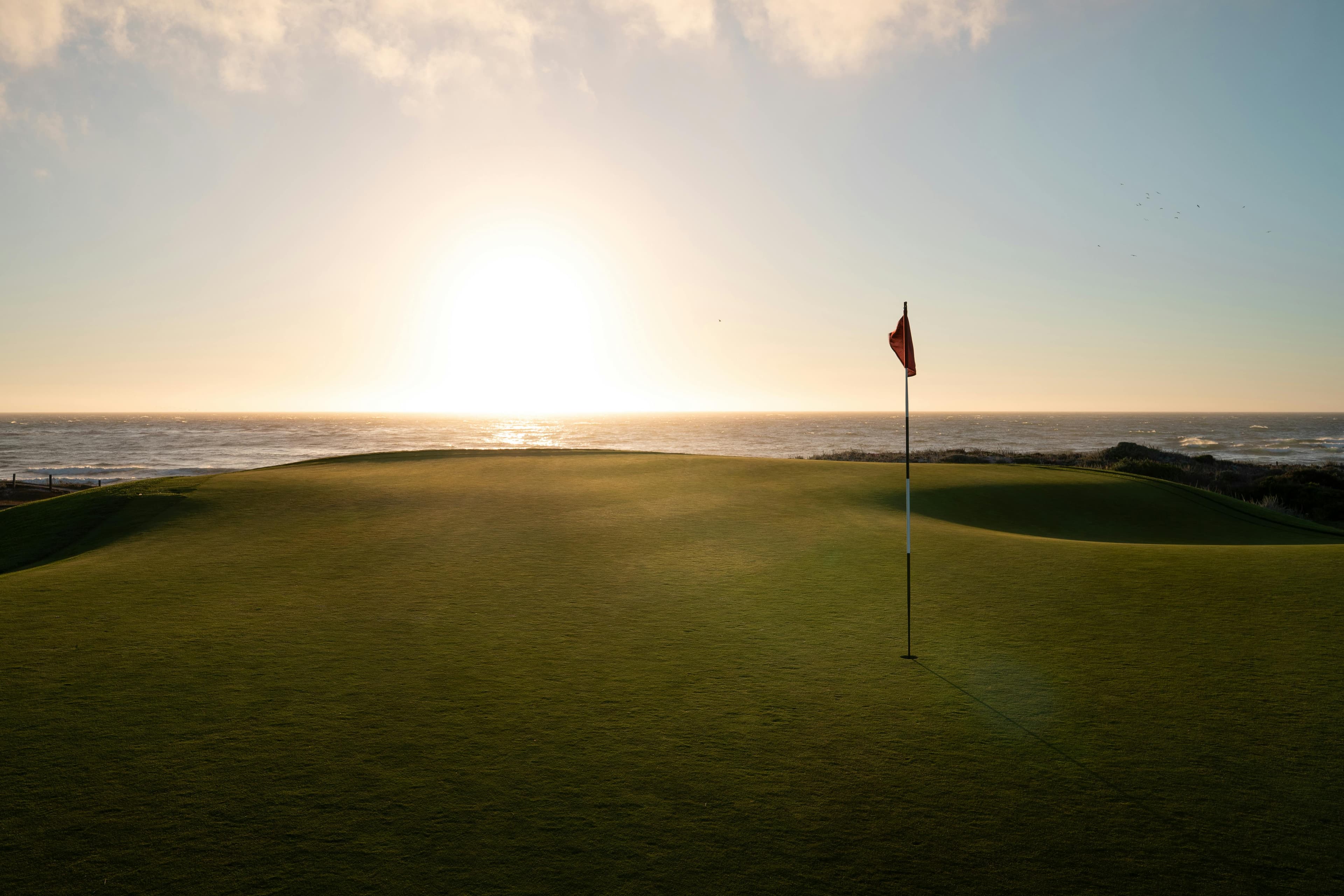
Premium
Quail Lodge & Golf Club
Monterey Peninsula, California
Carmel Valley's quiet alternative, where the fog lifts earlier and the pace slows down.
From $300ResortRobert Muir Graves (1963; refined by Todd Eckenrode)
GolfNowBook tee time
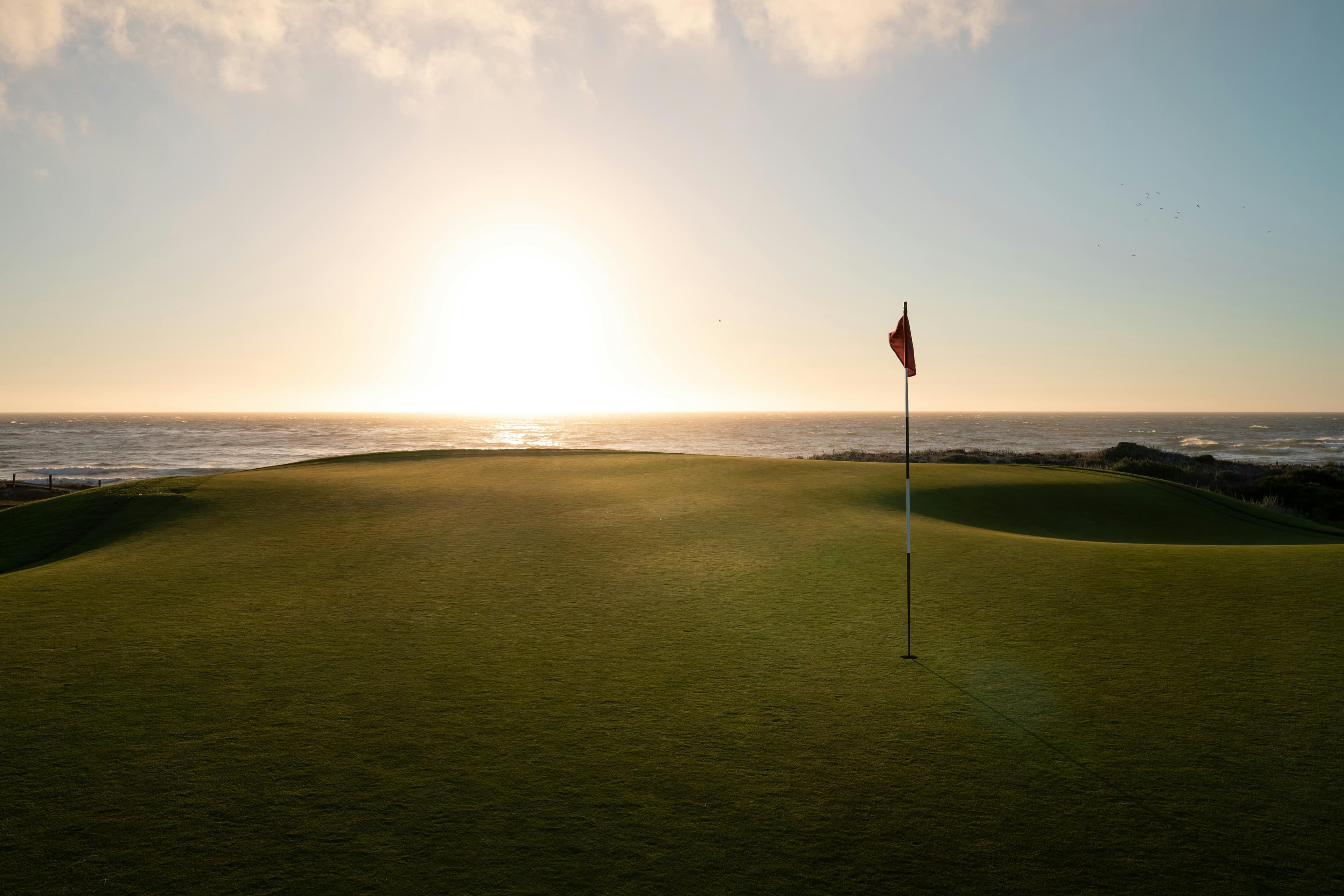
Bucket List
Spyglass Hill Golf Course
Monterey Peninsula, California
The hardest course most golfers will ever play on the Monterey Peninsula, and possibly the most honest.
From $525ResortRobert Trent Jones Sr. (1966)
PartnerBook tee time
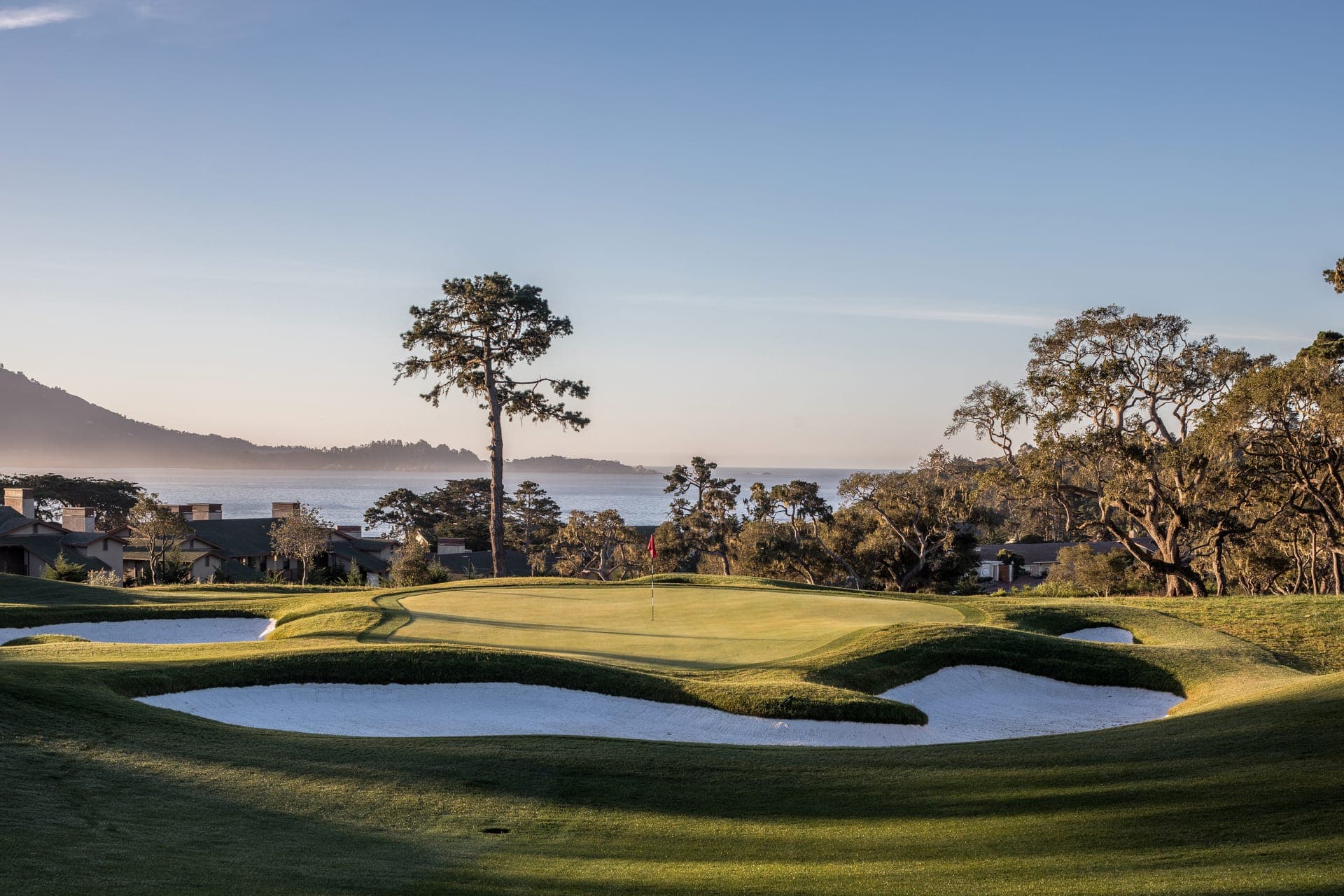
Premium
The Hay Short Course
Monterey Peninsula, California
A genuine Tiger Woods design at family-friendly scale, with the same coastal backdrop as the resort’s flagship courses.
ResortTiger Woods (TGR Design)
No booking neededRead more
Premium
The Links at Spanish Bay
Monterey Peninsula, California
A links course on the Pacific, a bagpiper at sunset, and a Hanse renovation that will redefine it.
From $350ResortRobert Trent Jones Jr., Tom Watson & Sandy Tatum (1987)
PartnerBook tee time
Plan Your Trip
Explore Monterey Peninsula
Full guide: courses, stays, getting there.
Continue →3 Itineraries
Pre-planned trips to Monterey Peninsula.
Continue →Off the Fairway
10 non-golf activities at Monterey Peninsula.
Continue →Some links on this page are affiliate links. If you book through these links, we may earn a small commission at no extra cost to you. This does not influence our editorial recommendations.