Tom Fazio's Best Courses You Can Play
Tom Fazio has designed more highly ranked golf courses than any living architect in America. That fact alone would make him significant. What makes him interesting is the consistency of his approach: Fazio builds courses that look expensive, play fair, and present well from the first visit. His detractors call this formula predictable. His admirers, who include the owners of several hundred private clubs and resorts across the country, call it excellent.
The debate about Fazio's place in American golf architecture is real and worth having. Minimalists argue that his courses impose too heavily on the land, that the earthmoving budgets are too large and the results too polished. Fazio's supporters counter that his courses are beloved by the people who actually play them, that visual beauty and playability are not flaws, and that moving earth to create great golf is what architects have done since the profession began. Both sides have legitimate points.
What is not debatable is that Fazio's accessible courses, spread across a dozen states, offer some of the most consistently enjoyable rounds in American golf.
Shadow Creek, Las Vegas
Shadow Creek is the course that best illustrates both Fazio's ambition and his skill. Built in 1989 for Steve Wynn on a flat, featureless patch of desert north of the Las Vegas Strip, the course required the creation of an entirely artificial landscape: 21,000 trees, rolling terrain manufactured from scratch, a creek system that did not previously exist. The result is a course that feels like it belongs in the Carolina Piedmont, not in the Nevada desert. That dissonance is part of the experience.
TPC Myrtle Beach
Links Course at Wild Dunes Resort
Shadow Creek plays as a private sanctuary removed from everything Las Vegas represents. The routing moves through dense tree corridors that block all views of the surrounding desert, creating a microclimate of shade and quiet that is remarkable given the location. The course asks for controlled tee shots through doglegs, precise approaches into well-defended greens, and a patience that the city beyond the property line does not encourage.
Access requires a stay at an MGM Resorts property, and the green fee, currently $600, includes limousine transfer from the Strip. It is a production, deliberately so. The golf justifies the presentation.
Barton Creek: The Fazio Foothills
If Shadow Creek is Fazio working against the landscape, Barton Creek's Fazio Foothills course in Austin is Fazio working with it. The Texas Hill Country provides dramatic elevation changes, exposed limestone, and dense cedar and oak cover, and Fazio routed the course to use all of it. The result is one of his most compelling public designs: a course where the terrain does much of the visual and strategic work.
The elevation changes are significant. Several tee shots play downhill to fairways that bend around ravines, and the approaches on a handful of holes require carries over Hill Country canyons that are beautiful and consequential. The par-3 holes are particularly strong, each one using elevation and natural features to create a distinct challenge. The Fazio Canyons course at the same resort offers a second Fazio design on similar terrain, and the two courses together make Omni Barton Creek one of the best 36-hole resort experiences in the South.
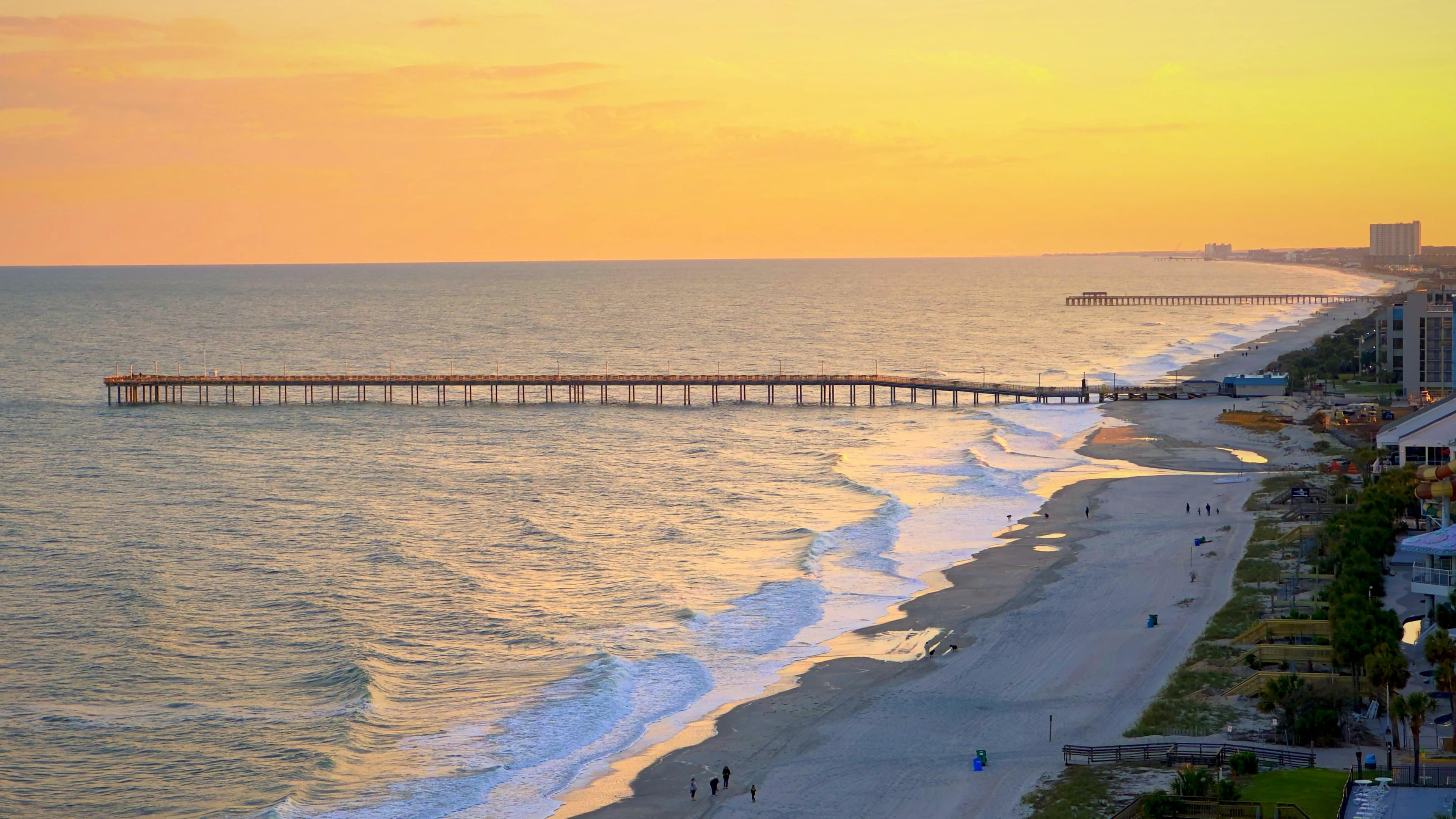
TPC Myrtle Beach
Fazio has several courses on the Grand Strand, but TPC Myrtle Beach is the one that best represents his architectural values in a public setting. The course sits on a site with more natural character than most Myrtle Beach properties, with wetlands, mature trees, and enough topographic variety to give each hole a distinct identity. Fazio's routing takes advantage of the site's best features without overwhelming them.
The conditioning at TPC Myrtle Beach is consistently among the best on the Grand Strand, and the course offers the kind of strategic variety that rewards multiple visits. The par 4s range from drivable to demanding, the par 3s vary in length and orientation, and the par 5s present genuine risk-reward decisions on the second shot. For visiting golfers assembling a Myrtle Beach itinerary, this course belongs near the top of the list.
Osprey Point and the Kiawah Island Courses
Fazio's presence at Kiawah Island is substantial. Osprey Point, the River Course, and Oak Point collectively offer three different expressions of his design philosophy on the same resort property. The greens are receptive enough for resort play but contoured enough to reward golfers who pay attention to pin positions.
Osprey Point is the strongest of the three, a course that moves through maritime forest and along tidal marshes with the controlled beauty that is Fazio's trademark.
The River Course is shorter and more accessible, a good choice for golfers who want Kiawah's landscape without the intensity of Pete Dye's Ocean Course. Oak Point is the most relaxed of the three. Together, they demonstrate Fazio's ability to calibrate difficulty and character to serve different segments of a resort's clientele, a practical skill that explains his popularity with resort developers.
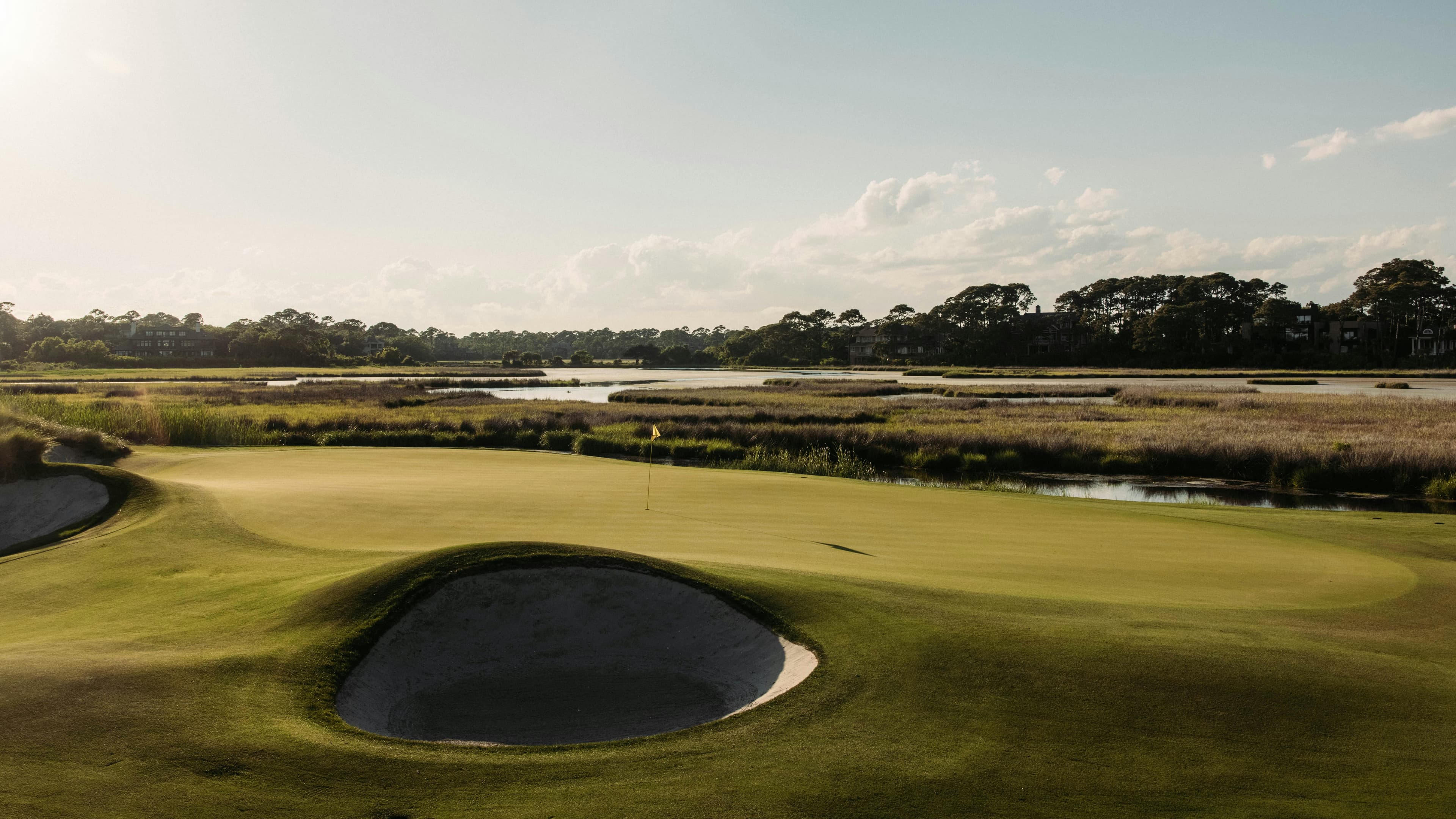
Wild Dunes: The Links Course
The Links Course at Wild Dunes Resort on the Isle of Palms, outside Charleston, is Fazio working in a coastal idiom. The final two holes play directly along the Atlantic, exposed to wind and salt air, and the course's closing stretch has the feel of links golf adapted for the American Southeast. The front nine is more sheltered, moving through maritime forest, and the contrast between the two halves gives the round a narrative arc that Fazio clearly designed with intention.
Wild Dunes is more accessible and more affordable than the Kiawah courses, and the location outside Charleston adds dining, history, and cultural offerings that make it a strong choice for trips where golf is not the only priority.
Pinehurst No. 8 and Sea Island Seaside
Fazio's portfolio of accessible courses extends further. Pinehurst No. 8, the Centennial Course, is a solid addition to a Pinehurst itinerary, offering a different character from the Ross and Hanse courses on the same property. It is wider and more forgiving than No. 2, a useful counterpoint for golfers who want to experience the Sandhills without four consecutive rounds of penal green complexes.
At Sea Island, the Seaside Course is among the finest resort courses in the Southeast. Fazio redesigned it in 1999, creating a layout that plays along the marshes and waterways of St. Simons Island with the kind of polish and strategic interest that characterize his best work. The course has hosted the RSM Classic on the PGA Tour since 2010, and the tournament conditioning carries over to the rest of the year.
Buffalo Ridge, Big Cedar Lodge
In the Missouri Ozarks, Fazio designed Buffalo Ridge for Johnny Morris's Big Cedar Lodge property. The course sits on Ozark ridgeline terrain, with views across wooded valleys and rock formations that are unlike anything in Fazio's coastal or desert work. It is a less discussed course in his portfolio but one that rewards the trip, particularly when combined with Payne's Valley and Ozarks National on the same property.
The Fazio Experience
What unites these courses is not a single design feature but an approach. Fazio courses are meticulously conditioned, visually dramatic, and designed to be enjoyed from the first round. The green complexes tend toward the moderate rather than the extreme. The bunkering is visible and comprehensible. The routing uses the best features of each site without requiring the golfer to search for them.
This legibility is sometimes mistaken for simplicity. It is not simple to design courses that play well for both scratch golfers and 18-handicappers, that photograph well from every angle, and that generate the kind of repeat play that sustains resort economics. Fazio does this better than almost anyone, and his accessible courses, from the manufactured paradise of Shadow Creek to the natural Hill Country terrain of Barton Creek, offer proof of a design philosophy that prioritizes the golfer's experience above all else.
The verdict