 Pin it
Payne's Valley Golf Course
Tiger Woods' first public-access course, an 18-hole championship layout with a bonus 19th par-3 carved through Ozarks ridgelines above Table Rock Lake.
Photo courtesy of Big Cedar Lodge · Big Cedar Lodge · Partner
Designed by Tiger Woods / TGR Design (2020)
From $400
Book direct via the course website
Payne's Valley is Tiger Woods' first public-access course, an 18-hole championship layout with a bonus 19th par 3 carved through the Ozarks ridgelines above Table Rock Lake. Woods and TGR Design completed the course in 2020, named it for Springfield, Missouri native and two-time major champion Payne Stewart, and earned Golf Digest's Best New Public Course in 2021. The course has held a position in the magazine's top-100 public rankings since.
What to expect
The routing covers 7,370 yards across terrain that rises and falls through Ozarks hardwood forest and exposed limestone ridgelines. Elevation changes are substantial and constant. Several tee shots play downhill across wooded valleys to fairways that emerge from the canopy, and approaches frequently play uphill to greens cut into hillsides or perched on ridge edges. Yardage numbers alone will mislead you; the difference between an approach playing 15 yards uphill and one playing level is a full club or more.
The green complexes are the course's primary defence. TGR Design built large, multi-tiered putting surfaces with significant internal movement. Pin positions can shift a hole's playing length by 20 yards without moving a tee marker.
The par 3s are the standout collection. The 5th plays 243 yards downhill to a green fronted by a pond with a limestone cliff face behind it. The 13th plays across a valley to a narrow green with a deep bunker left and a steep drop right. The visual quality is high, but the strategic content matches the scenery, and each par 3 demands a specific shot shape and trajectory.
The 19th hole, called The Big Rock, is a bonus par 3 played by nearly every group. It runs from an elevated tee to a green at the base of a massive limestone bluff with a waterfall cascading down the rock face. Playing it as a coda to eighteen serious holes is theatrical in the best sense.
By the numbers
- Par
- 72
- Yardage
- 7,370
Is it worth the green fee?
At $400 for resort guests at peak rates, Payne's Valley sits at the top of the Big Cedar Lodge pricing structure, with non-guest rates higher still. Shoulder-season discounts of up to 39 percent in April and October bring the cost down meaningfully. For golfers who have played the major bucket-list courses in America, Payne's Valley belongs in that conversation. Achieving that status within five years of opening tells you something about both the design and the seriousness of the execution.
Booking and trip fit
Tee times are available through the booking link on this page. Walking is required; caddies are available and recommended for first-time visitors, both for yardage management across the elevation changes and for local knowledge about pin positions and wind.
This is the anchor of any Big Cedar Lodge trip. Pair it with Ozarks National Golf Course, the Coore and Crenshaw layout next door, for the strongest two-day combination on the property. Buffalo Ridge Springs Golf Course, Top of the Rock Golf Course, and Mountain Top Golf Course round out the wider Big Cedar offering.
Where to Stay
Accommodations near Payne's Valley Golf Course
Resort
Big Cedar Lodge
Big Cedar Lodge, Missouri, Missouri
The 326-room wilderness resort on Table Rock Lake that anchors the entire Big Cedar golf collection, with on-site courses, eight restaurants, and a full-service spa.
From $200/nightTop of the Rock (on-site); Payne's Valley & Ozarks National within 10 min
ExpediaCheck availability
Lodge
Top of the Rock Cottages
Big Cedar Lodge, Missouri, Missouri
Private cottages at the Top of the Rock complex with full kitchens, stone fireplaces, and views of the Payne's Valley course.
From $250/nightTop of the Rock (adjacent); Payne's Valley within 5 min
Direct websiteVisit website
Compare all stays near Payne's Valley Golf Course
Live prices from Booking.com, Expedia and more — every nearby hotel and rental in one search.
Prices and availability from Booking.com, Expedia and others via Stay22. GolfTrailsHQ may earn a commission at no additional cost to you.
Other Courses Nearby
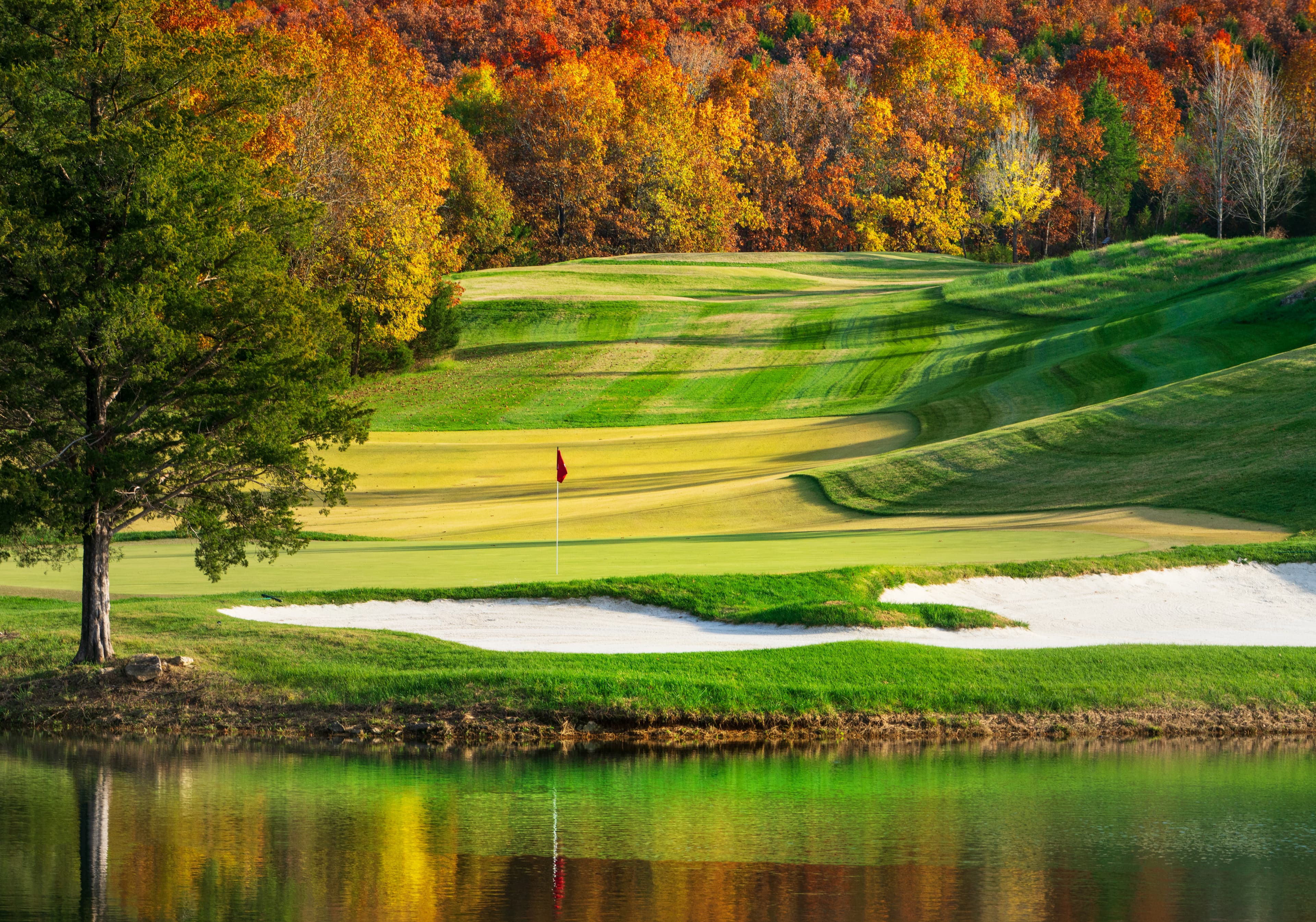
Mid-Range
Buffalo Ridge Springs Golf Course
Big Cedar Lodge, Missouri, Missouri
Tom Fazio's 18-hole design through rolling Ozarks grassland, where a resident bison herd grazes alongside the fairways. Ranked among Golf Digest's Top 100 Public.
$225–$275ResortTom Fazio (1999, redesigned 2014)
Direct websiteVisit website

Mid-Range
Mountain Top Golf Course
Big Cedar Lodge, Missouri, Missouri
Gary Player's 13-hole par-3 course routed through Ozarks rock formations at elevation. Walking only, designed to be accessible across all skill levels.
$80–$95ResortGary Player (2017)
Direct websiteVisit website
Premium
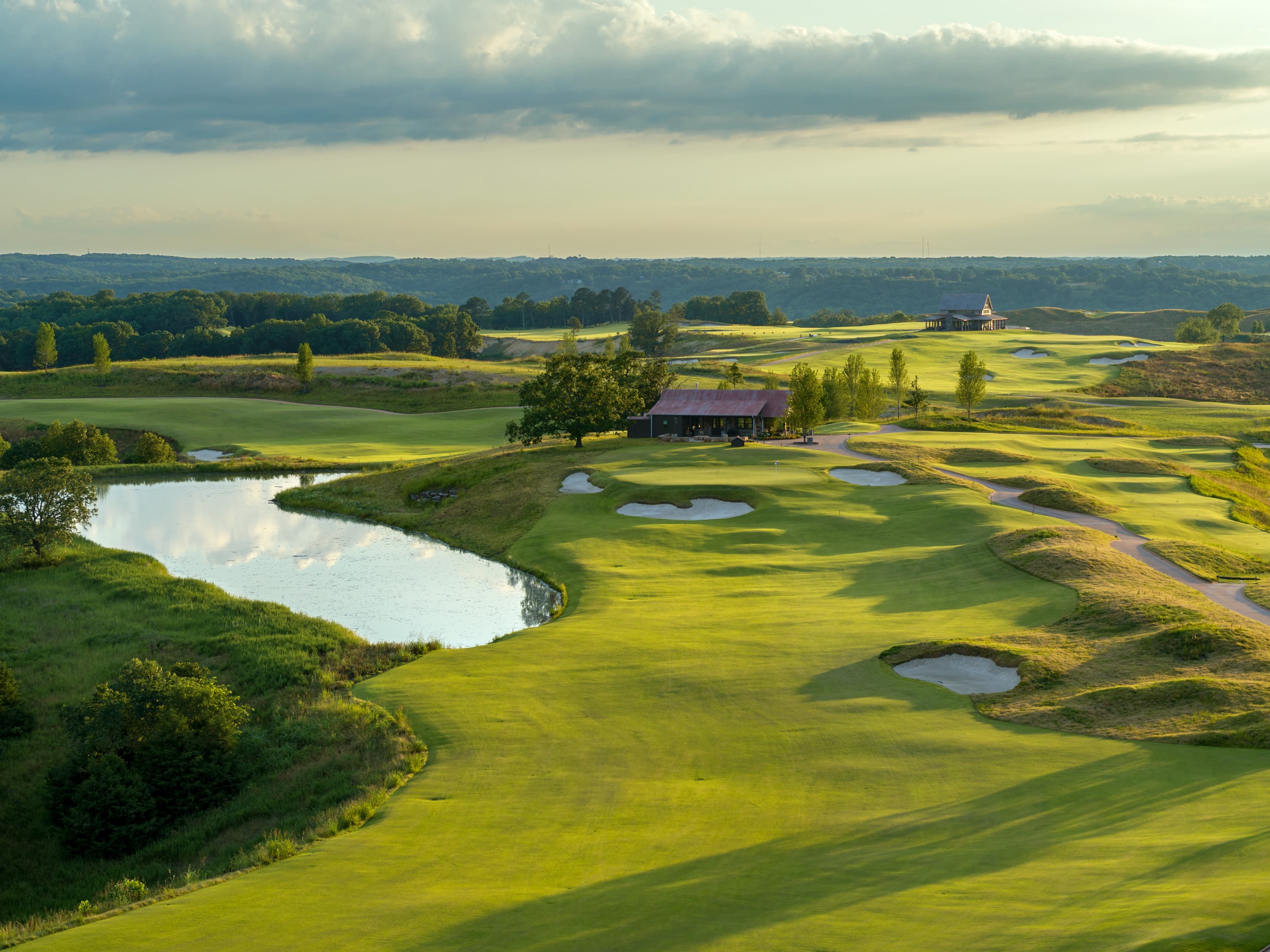
Ozarks National Golf Course
Big Cedar Lodge, Missouri, Missouri
Coore and Crenshaw's ridgeline routing through the Ozarks, featuring panoramic views and a 400-foot wooden bridge on the 13th hole. Golf Digest Best New Public 2019.
$225–$525ResortBill Coore & Ben Crenshaw (2019)
Direct websiteVisit website

Premium
Top of the Rock Golf Course
Big Cedar Lodge, Missouri, Missouri
The only par-3 course ever used by the PGA Tour, a Jack Nicklaus design through limestone cliffs above Table Rock Lake.
From $135ResortJack Nicklaus (1996)
Direct websiteVisit website
Plan Your Trip
Explore Big Cedar Lodge, Missouri
Full guide: courses, stays, getting there.
Continue →3 Itineraries
Pre-planned trips to Big Cedar Lodge, Missouri.
Continue →Off the Fairway
6 non-golf activities at Big Cedar Lodge, Missouri.
Continue →