Las Vegas Golf vs Scottsdale Golf: Desert Destination Compared
Las Vegas and Scottsdale are separated by five hours of desert highway and a significant gap in golf philosophy. Both cities serve the winter golf market, both draw groups looking to combine golf with evening activity, and both offer desert terrain that produces visually striking courses. But the character of each destination, the quality ceiling of the golf, and the texture of the non-golf experience differ enough that the choice between them should be deliberate rather than defaulted.
Where to stay in Las Vegas
Planning the trip? Compare live prices across every nearby hotel and rental in one search.
Prices and availability from Booking.com, Expedia and others via Stay22. GolfTrailsHQ may earn a commission at no additional cost to you.
Course Quality and Variety
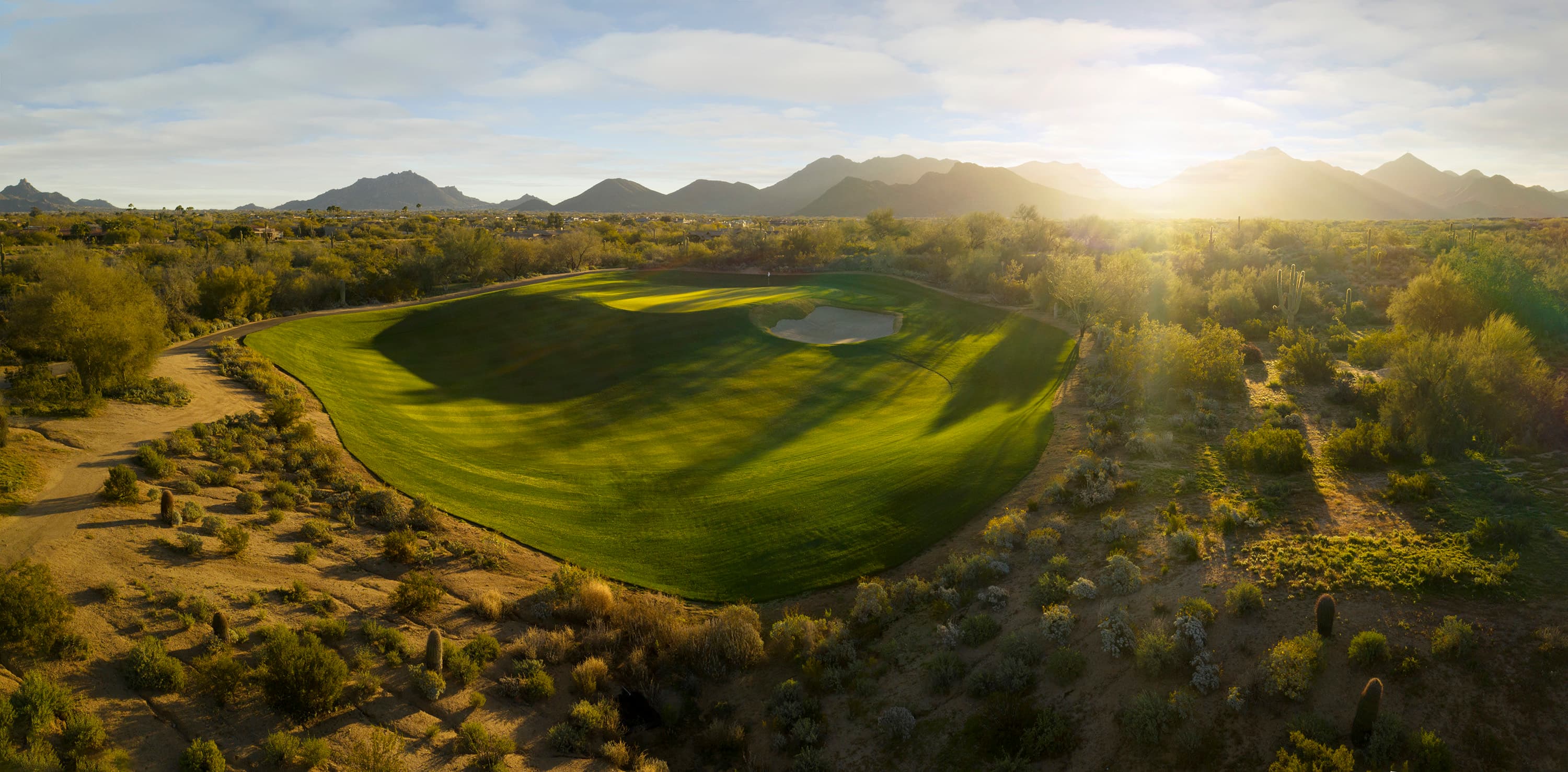
Scottsdale's golf roster is deeper and stronger at the top. The architecture leans toward dramatic Sonoran Desert terrain, with saguaro cacti, exposed granite, and significant elevation changes defining the visual and strategic identity. Each of these courses would anchor a trip independently; collectively, they allow a group to play four or five days without a weak round.
We-Ko-Pa Saguaro, Troon North Monument, Quintero, Grayhawk Raptor, and TPC Scottsdale Stadium represent a concentration of elite public desert golf that no other American city can match.

TPC Las Vegas
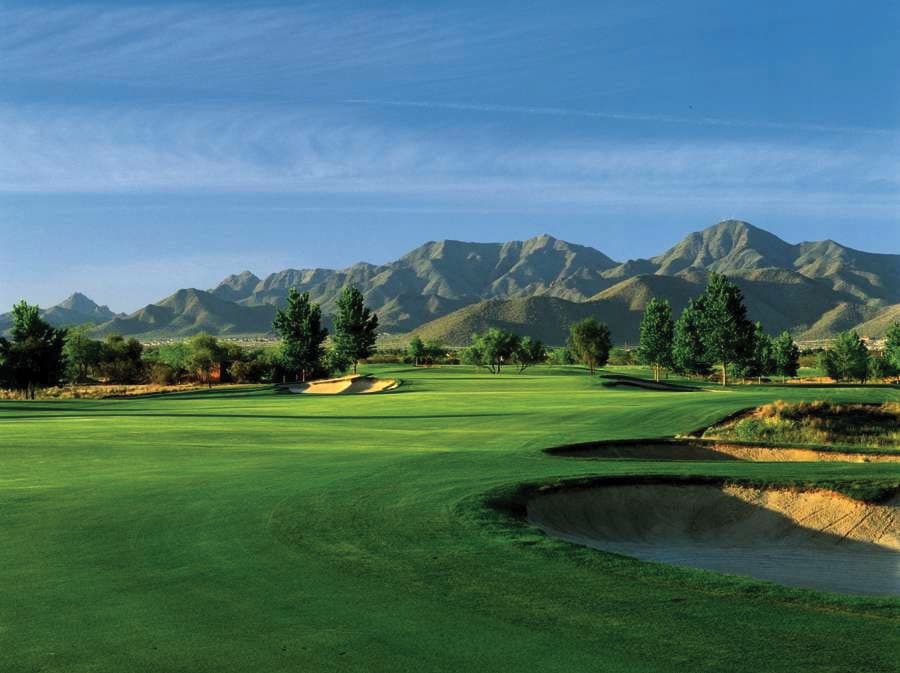
Las Vegas distributes its quality differently. But access requires a guest relationship with an MGM property and a green fee that reflects its exclusivity. Below Shadow Creek, the public options include Cascata (elevated and dramatic, in Boulder City), Reflection Bay (Jack Nicklaus, at Lake Las Vegas), the three Paiute courses (Snow Mountain, Sun Mountain, Wolf), and TPC Las Vegas. These are solid resort courses, well-maintained and enjoyable, but the architectural ambition and terrain quality sit a tier below Scottsdale's best. The gap between the marquee course and the rest of the market is wider in Las Vegas than in Scottsdale, where quality is distributed more evenly across a larger pool.
Shadow Creek, the Tom Fazio design north of the Strip, is the single best course in the Las Vegas market and stands among the finest in the country.
For groups whose primary objective is playing the best possible golf, Scottsdale is the stronger destination.
Price and Value
Scottsdale's premium courses command peak-season green fees between $250 and $350, with modest shoulder-season discounts. The pricing floor remains high from November through April. Las Vegas green fees for comparable public courses generally run $100 to $200, with Shadow Creek and Cascata at the top of the range. The per-round savings in Las Vegas are real, though they are often offset by higher dining and entertainment spending on the Strip.
Accommodation costs vary. Scottsdale resort properties are consistently expensive during peak season. Las Vegas hotel pricing is volatile, driven by conventions, events, and weekday-versus-weekend dynamics, which means a Tuesday night on the Strip can cost a fraction of a Saturday. Groups that schedule strategically can find Las Vegas lodging at rates well below Scottsdale equivalents.
For pure golf value, Las Vegas delivers more rounds per dollar. For total trip value, the answer depends on how the group spends its evenings.
Non-Golf Experience
This is where Las Vegas holds its most definitive advantage, at least for a specific type of group. The Strip provides an evening infrastructure that no golf destination in the country can rival: restaurants from virtually every prominent American and international chef, entertainment ranging from residency shows to nightclubs, and an energy that extends well past midnight. For groups where the golf is one component of a broader trip, Las Vegas delivers programming that Scottsdale cannot match in scale or variety.
Scottsdale's non-golf experience is more refined and less frenetic. Old Town Scottsdale offers a dining district with a high quality ceiling and a range of cocktail bars and lounges that cater to the after-dinner crowd without the volume of the Strip. The scene is polished, walkable, and oriented toward food and conversation rather than spectacle. For groups that prefer a quieter evening with a strong restaurant and an early bedside, Scottsdale's pace is the better fit.
The distinction matters. Groups that will spend as much energy on evening plans as on tee time selections should lean toward Las Vegas. Groups that want dinner and a good night's sleep before an early tee time should lean toward Scottsdale.
Getting There
Both cities are served by major airports with extensive domestic networks. Phoenix Sky Harbor (PHX) sits twenty minutes from central Scottsdale, with nonstop service from virtually every significant American city. Harry Reid International (LAS) offers similar breadth, with the added benefit of being one of the busiest airports in the country, which translates to competitive fares and frequent flight options.
Transit times from the airport to the first tee are comparable: twenty to forty minutes in both markets, depending on which course is first on the schedule. Neither destination has a logistical advantage worth weighting in the decision.
Weather and Season
Both destinations share a peak window from late October through early April. Scottsdale sits at a slightly higher elevation and runs a few degrees cooler in winter mornings, occasionally dipping into the low 40s. Las Vegas winter mornings can be brisk as well, with temperatures in the 40s and 50s that warm through the morning. Both cities are reliably sunny during the peak golf months.
Tip
Best For
Scottsdale is the stronger pure golf destination. The top-end courses are better, the depth of quality is greater, and the non-golf experience is tuned to golfers who want excellent dinners and early mornings. The Scottsdale guide covers the full picture.
Las Vegas is the better choice for groups that want solid golf alongside an evening scene that competes with the courses for the trip's most memorable moments. The Las Vegas guide provides detailed planning.
The verdict