Best Golf Destinations on the West Coast
The Pacific coastline produces golf of a character that the rest of the country cannot replicate. The terrain is more varied, the landscapes more extreme, and the design philosophies more willing to embrace the natural ground. From the windswept dunes of southern Oregon to the desert floors of the Coachella Valley, the West Coast offers a geographic and architectural range that rewards the golfer willing to cover some distance.
The destinations are more spread out than their East Coast counterparts, and fewer of them cluster into dense corridors of options. But the individual experiences tend to be more singular. A round at Pacific Dunes does not feel like a round anywhere else. Neither does Pebble Beach. The West Coast trades convenience for distinctiveness, and for most traveling golfers, the trade is worth making.
Pebble Beach, California
Pebble Beach occupies a position in American golf that transcends rankings and ratings. The course has hosted six U.S. The setting is genuinely extraordinary, with the Pacific crashing against rock formations below tee boxes and greens that perch on headlands.
Opens, and the stretch from the 6th through the 10th holes along the Carmel Bay cliffs represents the most photographed sequence of holes in the game.
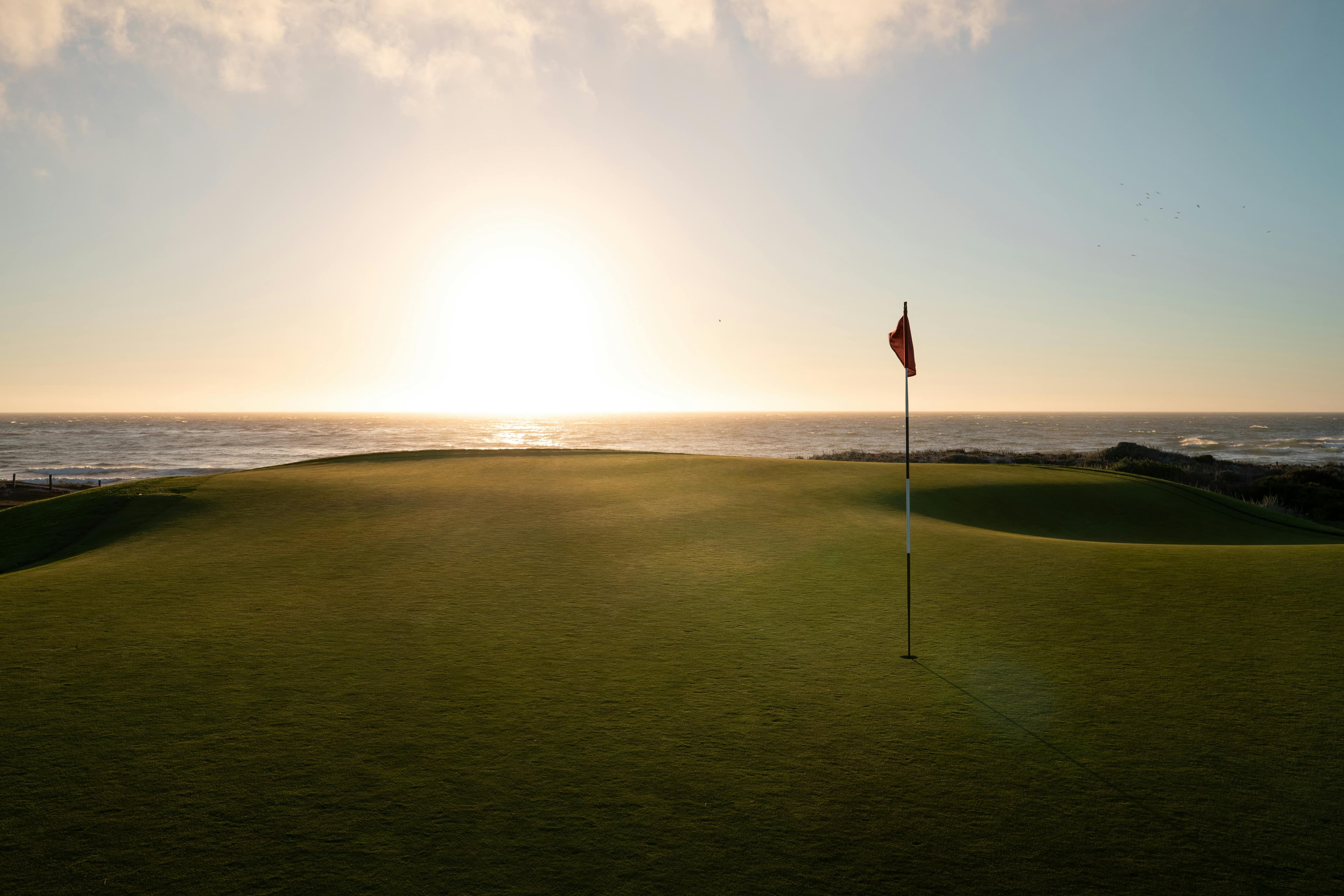
The Links at Spanish Bay
The green fee at Pebble Beach Golf Links sits above $500, and resort guests receive priority booking. Spyglass Hill and The Links at Spanish Bay complete a three-course rotation that justifies a three-night stay at the Lodge or the Inn at Spanish Bay. Spyglass, designed by Robert Trent Jones Sr., is arguably the more demanding test, with its opening holes cutting through Monterey pines before descending to dunes near the coast.
The Monterey Peninsula also supports courses beyond the resort. Poppy Hills, Pacific Grove Golf Links, and Bayonet and Black Horse at Fort Ord provide options at lower price points, though the quality gap between Pebble Beach and its neighbors is substantial. The Pebble Beach destination guide covers planning logistics in detail.
The practical consideration is cost. For golfers who have the budget, this is a trip that delivers on its reputation. For those seeking value, the money stretches further elsewhere.
A Pebble Beach trip is among the most expensive golf experiences available in the United States, and the area's hotel and dining prices reflect the broader Monterey Peninsula premium.
Bandon Dunes, Oregon
Bandon Dunes has reshaped the conversation about American golf since it opened in 1999. The resort, perched on coastal bluffs above the Pacific in rural Coos County, Oregon, operates five full-length courses and a 13-hole par-3 layout, all built on sandy, links-style terrain that drains quickly and plays firm. The walking-only policy is not a restriction but a design choice; these courses were built to be walked, and the experience is materially different from cart golf.
Pacific Dunes (Tom Doak) and Old Macdonald (Doak and Jim Urbina) anchor the rotation, with Bandon Dunes (David McLay Kidd), Bandon Trails (Coore and Crenshaw), and Sheep Ranch (Coore and Crenshaw) completing a collection that has no domestic equivalent in architectural depth. Green fees range from $125 to $375 depending on season and residency status, with the June through October window commanding peak rates and the best weather.
Getting to Bandon requires effort. The nearest commercial airport is in North Bend, with limited service. Most visitors fly to Portland or Eugene and drive, a commitment of four to five hours. The remoteness filters the audience. Bandon attracts golfers who care about architecture, walking, and the quality of the golf itself, without the resort amenities that characterize most American golf destinations. The Bandon complete golf guide and the Bandon Dunes destination guide provide comprehensive planning resources.
Palm Springs, California
The Coachella Valley is the West Coast's volume golf market. More than 100 courses span the corridor from Cathedral City through La Quinta, offering a density of options that absorbs groups of any size and budget. PGA West Stadium Course is the marquee layout, a Pete Dye design that has hosted professional events and carries genuine difficulty. Indian Wells, Escena, and SilverRock provide strong public-access alternatives at lower price points.
Tip
Palm Springs offers more off-course character than most golf destinations. The city's mid-century modern architecture is internationally recognized, Joshua Tree National Park is less than an hour east, and the restaurant scene in Palm Desert and La Quinta has matured considerably. For groups that want golf as a primary activity rather than the exclusive one, the valley delivers. The Palm Springs destination guide has complete details.
Lake Tahoe, California and Nevada
Lake Tahoe's golf season is compressed but rewarding. The mountain courses open in May and close by October, with July through September representing the prime window. Edgewood Tahoe, host of the celebrity tournament on the lake's south shore, is the signature layout, with holes that play along the water against a backdrop of granite peaks. Old Greenwood, Gray's Crossing, and Coyote Moon provide additional options that use the elevation and pine forests to create a mountain golf experience distinct from anything on the coast.
Green fees range from $100 to $250, with Edgewood commanding the premium. The altitude, typically 6,000 to 7,000 feet, adds distance to every club and makes ball flight a genuine strategic consideration. Mornings are cool even in summer, and afternoon thunderstorms can develop quickly.
The non-golf case for Tahoe is self-evident. The lake itself is one of the most visually striking bodies of water in North America, and the hiking, cycling, and water recreation options compete for attention with the golf. For a summer trip that balances the game with outdoor activity in a mountain setting, Tahoe has few domestic competitors.
Hawaii
Hawaii offers golf in a setting that requires no elaboration. The volcanic terrain, the trade winds, and the ocean frontage combine to produce courses that play unlike anything on the mainland. Maui's Kapalua Plantation Course, host of the PGA Tour's season-opening Sentry, is the flagship public-access layout, with dramatic elevation changes and ocean views from virtually every hole. On the Big Island, Mauna Kea and Mauna Lani South occupy lava landscapes that frame fairways against black rock and blue Pacific.
Oahu adds Turtle Bay and Ko Olina, while Kauai's Poipu Bay and Princeville Makai provide options on the Garden Isle. Green fees at premium Hawaiian courses range from $200 to $400, with resort-guest rates offering modest discounts. The cost of flights, accommodations, and dining makes Hawaii one of the more expensive golf destinations available, though the experience is proportionally singular.
The optimal golf window is broad. Hawaii's climate supports year-round play, with the dry season from April through October offering the most consistent conditions. Winter months bring intermittent rain, particularly on windward coasts, but rarely enough to cancel a round entirely.
Choosing the Right West Coast Trip
The West Coast golf decision is shaped by geography and intent. Pebble Beach is the prestige trip, priced accordingly. Bandon Dunes is the architectural pilgrimage. Palm Springs is the value-conscious desert trip with volume and off-course appeal. Lake Tahoe offers the best summer mountain golf in the West. And Hawaii provides something no mainland destination can approximate.
The verdict