Bandon, OR: The Complete Golf Trip Guide
Five hours south of Portland, where Highway 101 bends through coastal forest and the cell signal thins to nothing, the Oregon coast reveals the most deliberate act of golf course development in modern American history. Mike Keiser, who made his fortune in the greeting card business, bought a stretch of sand dunes and gorse above the Pacific in the late 1990s with an idea that ran contrary to every prevailing trend in resort golf: no real estate, no carts, no clubhouse opulence. Just golf, on foot, in a landscape that could pass for the west coast of Ireland.
That bet has produced five full-length courses, a 13-hole par-three, a putting course, and a quiet consensus among architects and serious players that Bandon Dunes Golf Resort is the most important golf destination built in the United States in the past fifty years. The remoteness is not a drawback to be managed. It is the organizing principle.
Where to stay in Bandon
Planning the trip? Compare live prices across every nearby hotel and rental in one search.
Prices and availability from Booking.com, Expedia and others via Stay22. GolfTrailsHQ may earn a commission at no additional cost to you.
The Golf Landscape
Every course at Bandon is walking only. Carts do not exist on the property. Caddies are available on all five main courses, and first-time visitors should hire one without hesitation. The caddie program is strong, the local knowledge matters in the wind, and the experience of walking links golf with a bag on someone's shoulder is the way these courses were meant to be consumed.
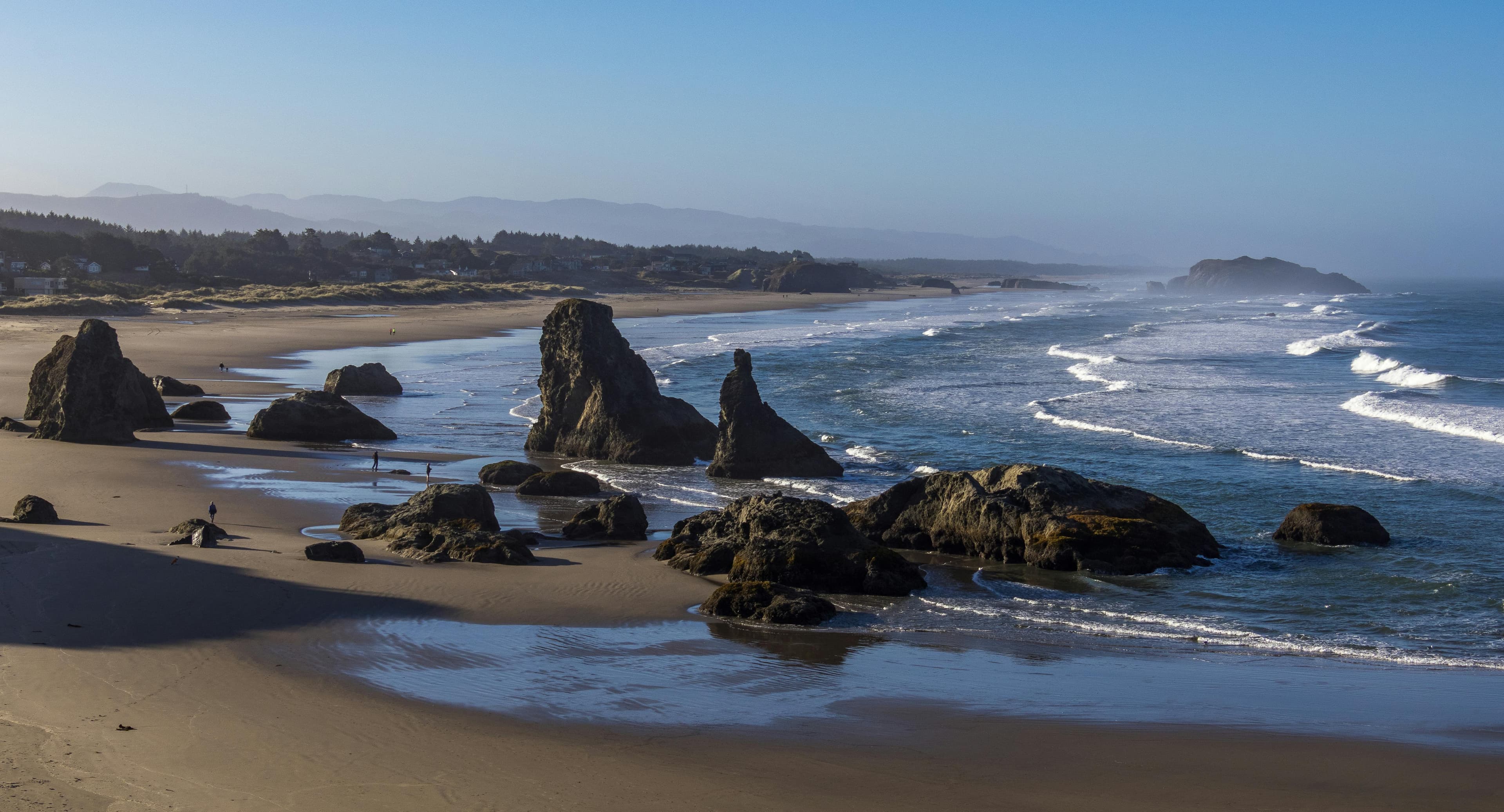
Bandon Trails
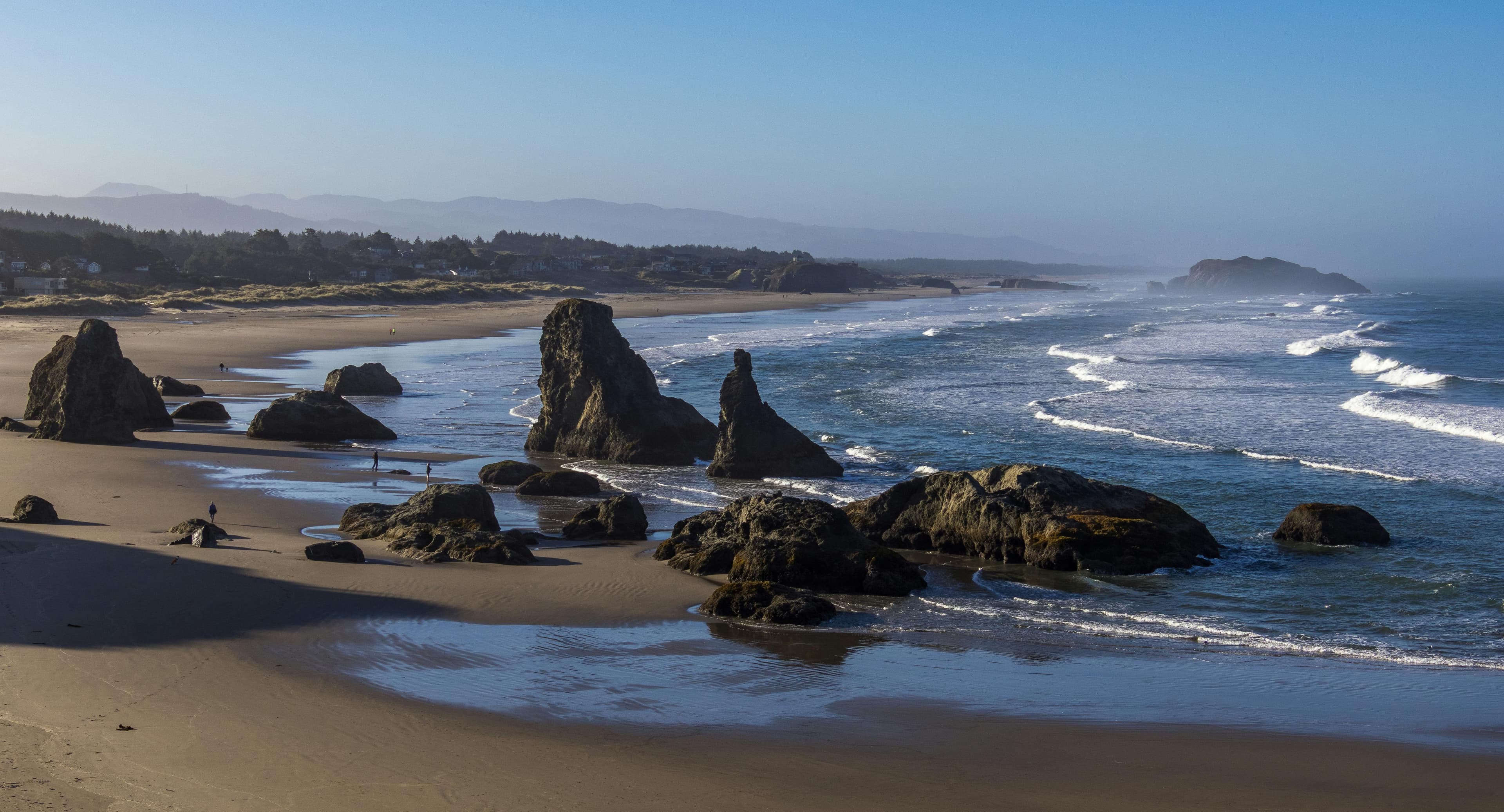
Bandon Preserve
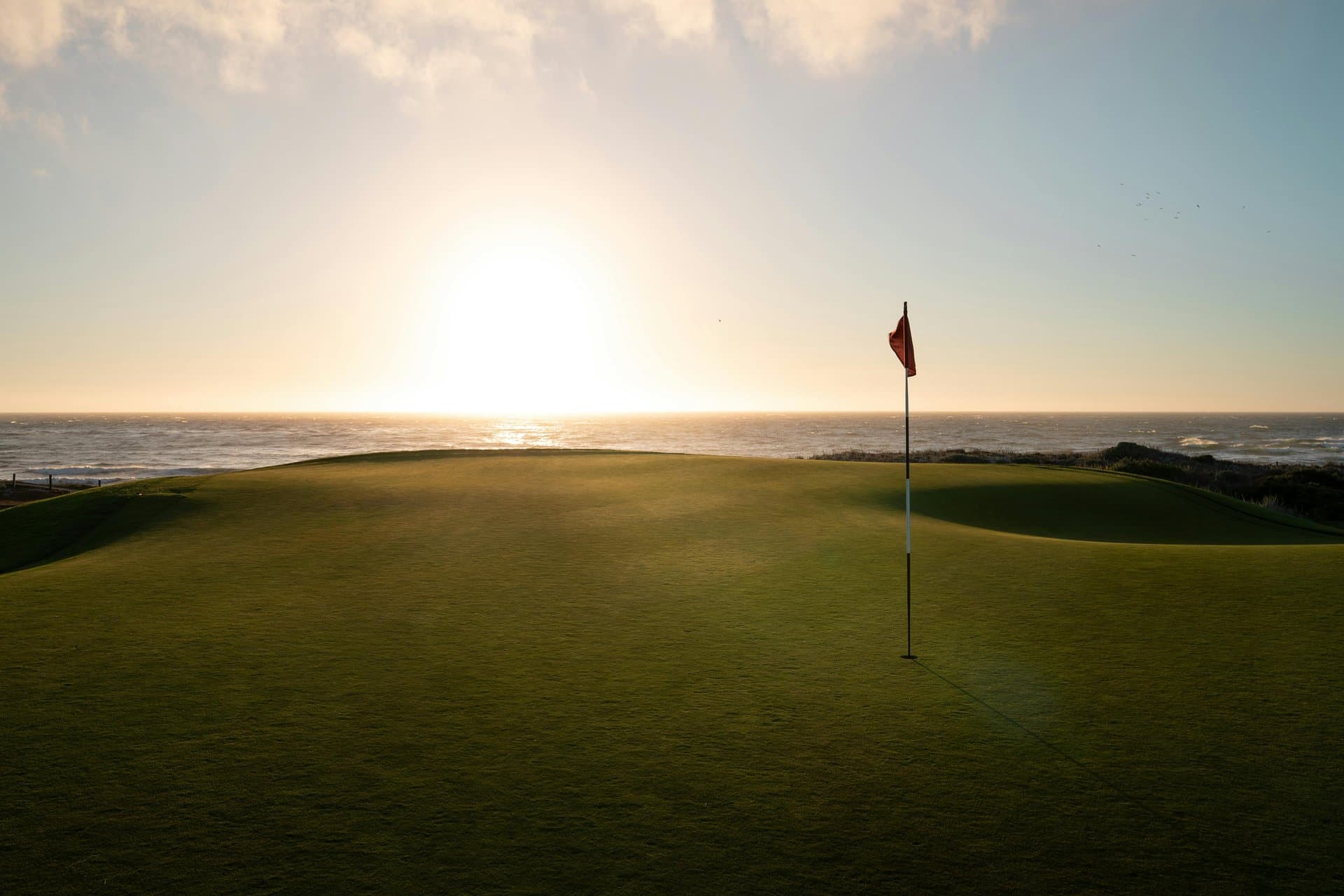
Pacific Dunes, Tom Doak's 2001 design, sits at the top of the hierarchy. Consistently ranked first or second among public courses in the country, it earns that position through routing rather than spectacle. Eleven holes offer ocean views, but the course never resorts to gimmickry. The thirteenth, a par four that plays along the cliff edge with the Pacific crashing below, is the signature moment, though the less photographed par-three sixth and the short par-four eleventh are equally accomplished. Greens are firm, fairways are wide enough to accommodate the ground game, and the strategic options multiply as the wind shifts. At $125 to $375 depending on season, Pacific Dunes represents the kind of value that Pebble Beach, at nearly double the peak rate, cannot match.
Bandon Dunes, David McLay Kidd's original 1999 course, is the one that started everything. The routing climbs to clifftop holes on the back nine where the Pacific stretches to the horizon, and the Scottish character of the design is evident in the turf, the bunkering, and the way the wind reshapes every hole depending on direction. Kidd was twenty-seven when he built it. The course does not play like a young architect's work. It plays like something that has been there for a century, which is the highest compliment links golf can offer.
Old Macdonald, a collaboration between Tom Doak and Jim Urbina completed in 2010, takes a different approach entirely. The course is a tribute to Charles Blair Macdonald, the father of American golf architecture, and each hole replicates or reinterprets one of his famous template designs. The Redan, the Biarritz, the Cape, the Alps — players familiar with Macdonald's vocabulary will recognize the strategic puzzles immediately. The greens are enormous, some exceeding 15,000 square feet, and putting becomes a discipline unto itself. Old Macdonald rewards study. A second round reveals layers that the first round obscured.
Sheep Ranch, the newest of the five main courses, opened in 2020 under Bill Coore and Ben Crenshaw's hand. Every hole offers a view of the Pacific, and the absence of formal rough or defined edges gives the course a wild, almost pre-architectural quality. The routing feels discovered rather than designed, which is precisely the Coore and Crenshaw signature. For golfers who have played their work at Sand Hills or Streamsong, the DNA is unmistakable.
It occupies the stretch of property with the most sustained ocean exposure.
Bandon Trails, also by Coore and Crenshaw and completed in 2005, provides the inland counterpoint. The routing moves through coastal forest and open meadows, with the ocean visible from only a handful of elevated points. The character here is different from the other four courses, quieter and more contemplative, and the variety it introduces to a multi-day visit is essential. Playing nothing but exposed links courses for four straight days can numb the senses. Bandon Trails recalibrates them.
Bandon Preserve, a 13-hole par-three course by Coore and Crenshaw, occupies a stunning piece of coastal ground and functions as an ideal afternoon addition. The holes range from 80 to 170 yards, every one of them with ocean views, and the pace allows completion in under two hours. The Punchbowl, Tom Doak's 18-hole putting course, is free to play and more compelling than it has any right to be. Shorty's, the practice course, rounds out the short-game options.
Green fees across the main courses range from $125 to $375 depending on season. Resort guests receive priority booking and lower rates, which alone justifies staying on the property.
Where to Stay
The accommodation decision at Bandon is simpler than at most golf destinations, because the correct answer for most visitors is to stay on-site.
The Lodge at Bandon Dunes is the resort's original building and its social center. Seventeen single rooms and three four-bedroom suites offer views of the course, the coast, or the surrounding forest. The Lodge houses six restaurants and lounges, and dinner here after a day of walking 36 holes has a ritual quality that off-site lodging cannot replicate. Rates run from roughly $100 to $390 per night, lower than comparable resort properties because the entire financial model at Bandon prioritizes golf over lodging revenue.
The Grove Cottages, clustered in the forest between courses, offer more privacy and space at $250 to $500 per night. Groups traveling together tend to prefer these, as the multi-bedroom configurations allow four or eight players to share common space without the formality of a hotel corridor. Chrome Lake Cottages provide another on-site option at $200 to $400, with a quieter setting near the resort's interior.
Staying on the property eliminates the need for a car during your visit, places you within walking distance of your first tee, and keeps the evening social. The lodge restaurants serve as the de facto gathering spot for every group on the property, and the conversations that happen over post-round drinks with strangers are part of the Bandon experience. This is not a resort where people retreat to their rooms.
For golfers on a tighter budget, the town of Bandon sits about twenty minutes south. The Bandon Inn offers rooms from $100 to $180 and provides a clean, functional base. Best Western Inn at Face Rock, at $90 to $160, occupies a coastal setting near the beach. Sunset Oceanfront Lodging, at $120 to $200, adds ocean views at a moderate price. The trade-off is the daily drive and the separation from the resort's social atmosphere, but the savings are real.
Off the Fairway
Honesty matters here. Bandon is a golf destination, and the non-golf offering reflects that priority.
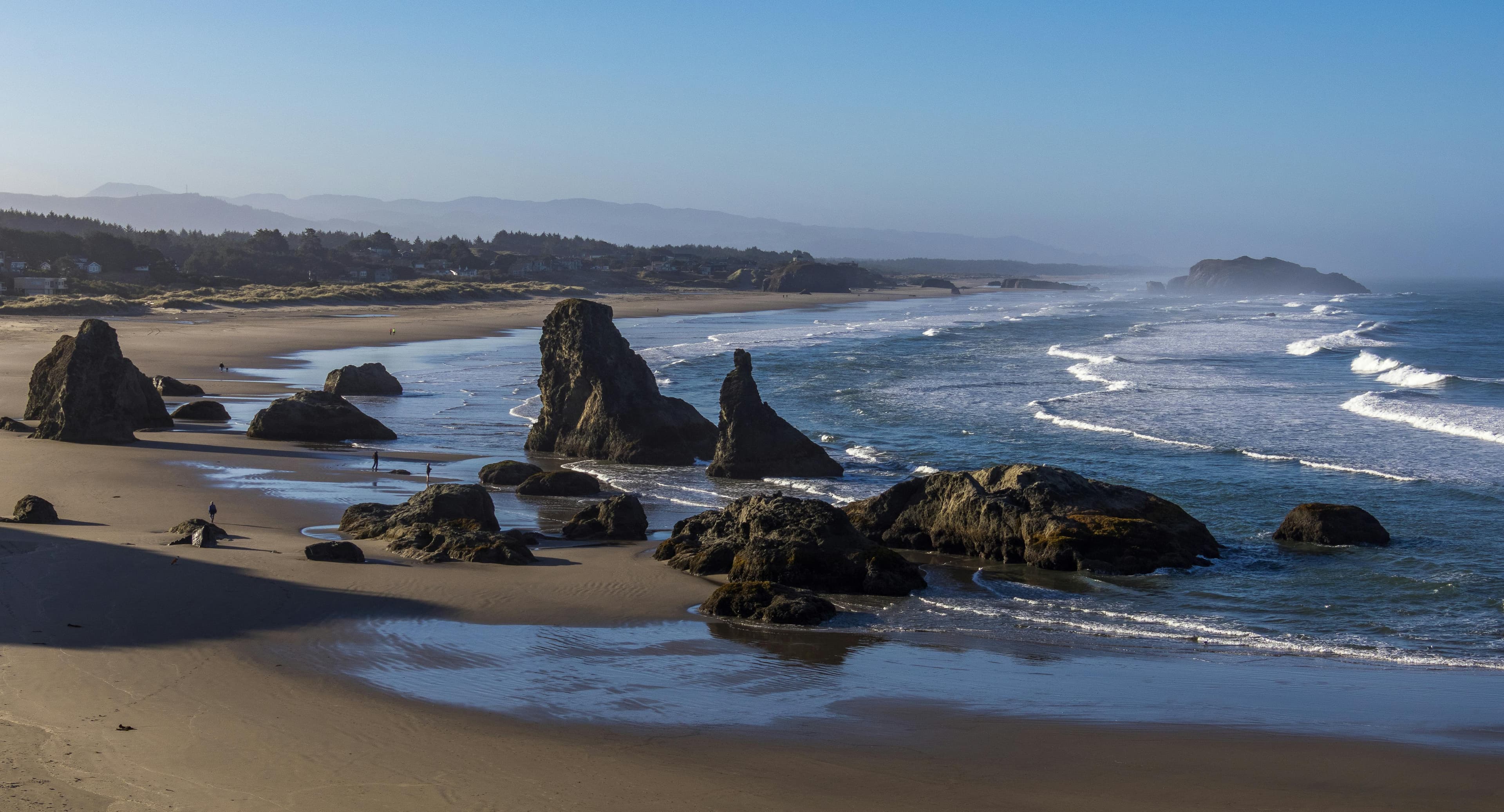
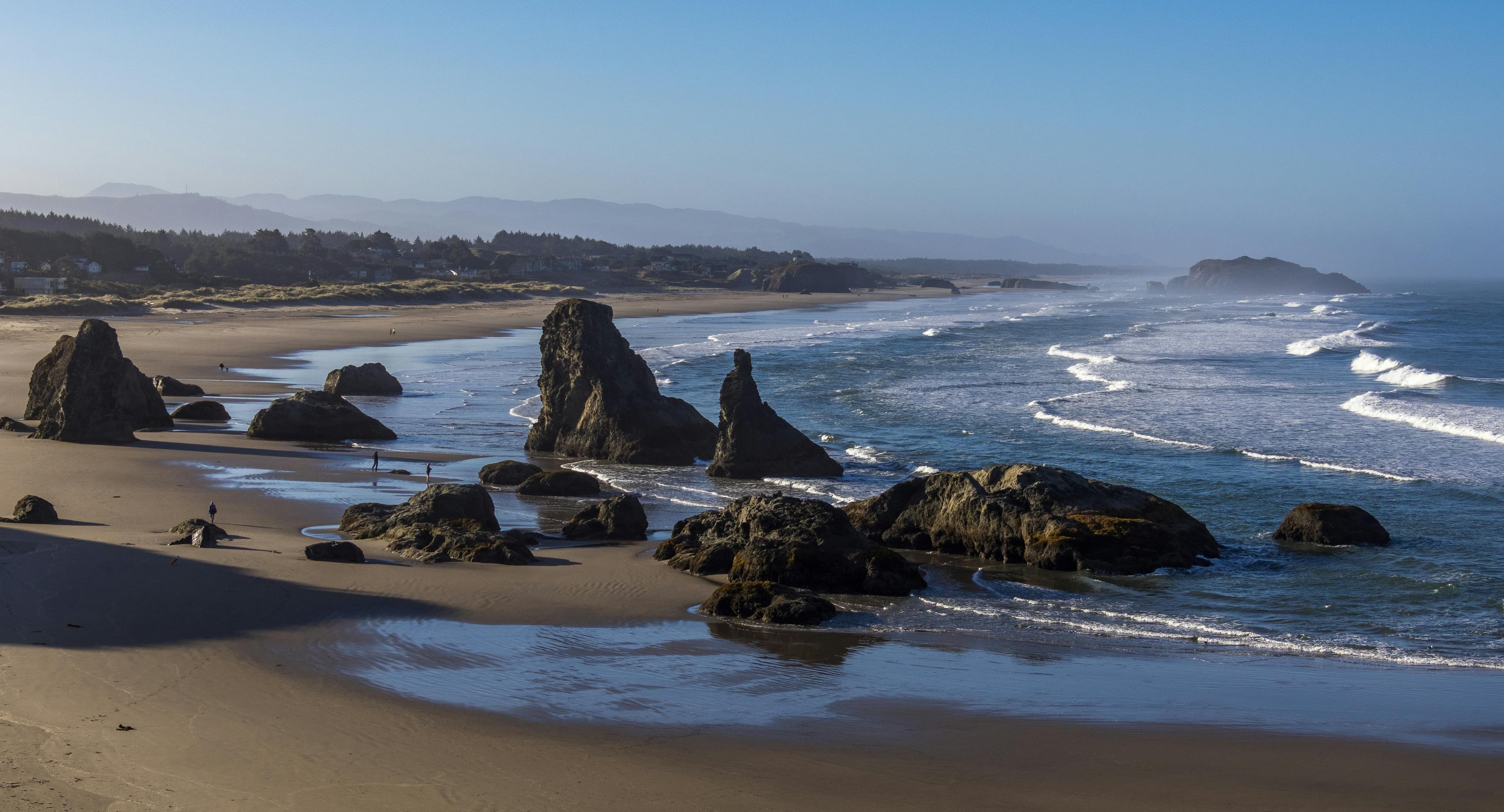
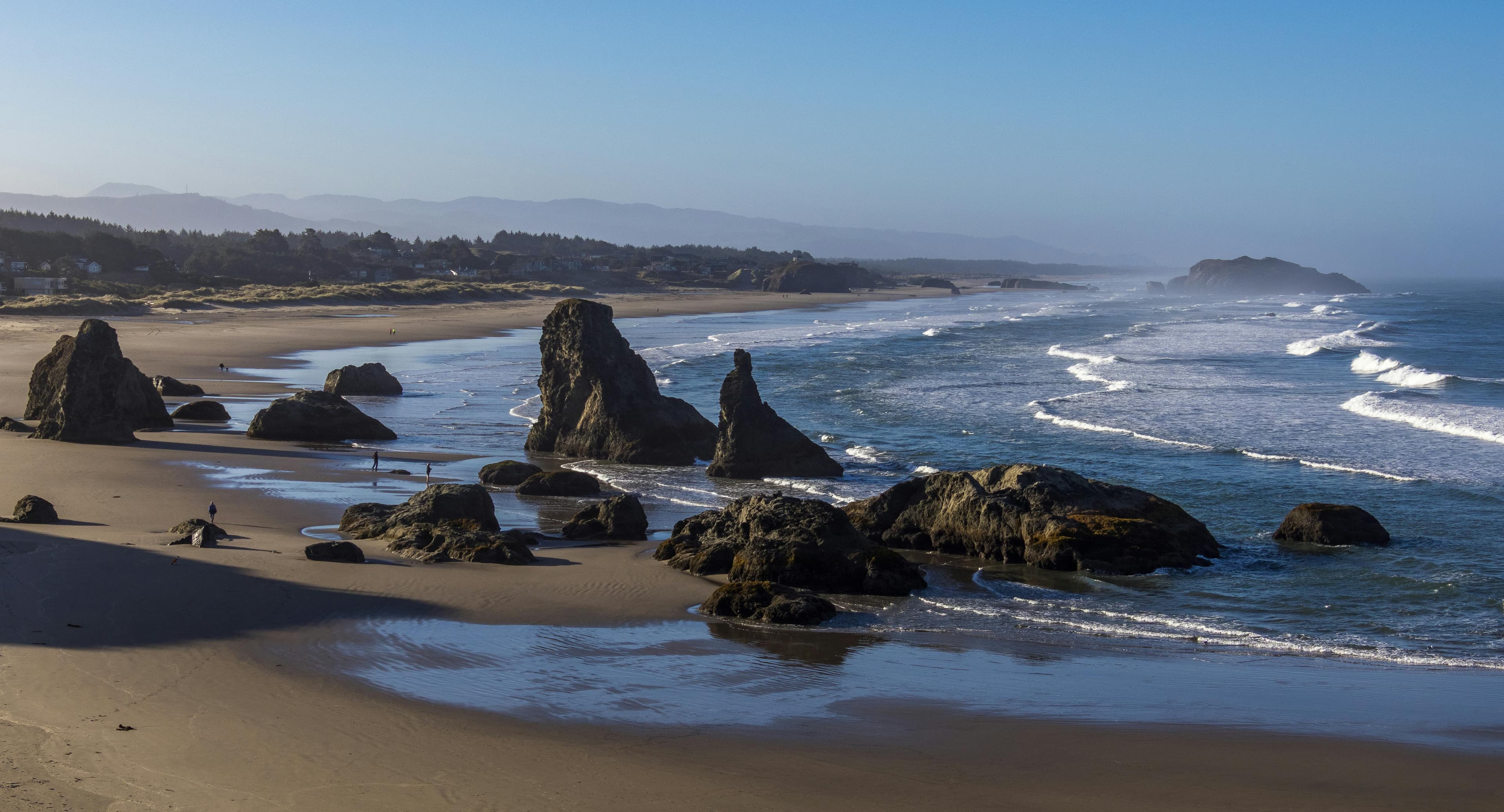
The Oregon coast itself is the primary attraction for companions who are not playing. Beach walks along miles of undeveloped shoreline, Face Rock viewpoint, and the Coquille River Lighthouse provide a day of exploration. The landscape is dramatic in a way that differs entirely from California's manicured coastline. This is raw, windswept Pacific Northwest terrain with sea stacks, tide pools, and weather that changes by the hour.
The town of Bandon is small and quiet. A handful of restaurants, a brewpub or two, and a commercial district that can be walked in twenty minutes. Bandon holds the distinction of being Oregon's cranberry capital, and the surrounding bogs are an unexpected landscape feature worth seeing in harvest season.
Companions who thrive on self-directed exploration and solitude will find the coast genuinely rewarding. Those who expect the dining, shopping, and cultural infrastructure of a Monterey or a Charleston will find Bandon limited. That assessment is not a criticism. It is a description of a place that chose its identity clearly. For the golfer, the remoteness and lack of distraction is the entire point. For the non-golfer, it requires a specific temperament.
When to Go
May through October is the primary season, with June through September offering the most reliable conditions.
Summer on the southern Oregon coast follows a predictable pattern: morning fog rolls in off the Pacific overnight and typically burns off by mid-morning, giving way to temperatures in the mid-60s. Wind is constant and variable, ranging from 10 to 25 mph on most days, and it is not an inconvenience to be tolerated but a core element of the playing experience. Links golf without wind is a different sport. Bandon delivers the authentic version.
September and early October bring clearer skies, softer light, and slightly reduced green fees. These shoulder weeks are arguably the finest time on the property, with fewer groups on the courses and weather that has shed the heavier fog patterns of midsummer.
The resort operates year-round, and winter golf at Bandon has its devotees. Conditions are cold, wet, and genuinely windy, but green fees drop significantly and the courses take on a rugged character that appeals to players with a tolerance for discomfort. Pack rain gear that you trust, not rain gear that you own.
Spring arrives slowly on the Oregon coast. April and May bring gradually lengthening days and improving conditions, though rain remains common. The value proposition in spring is strong, with lower rates and open tee sheets.
Regardless of season, pack layers. A morning that starts at 52 degrees in fog can reach 68 degrees in sunshine by noon and drop again if the wind shifts. Bring a wind shirt, a light rain jacket, and a warm mid-layer. Leave the shorts at home unless July confirms otherwise.
Practical Details
Getting to Bandon requires acceptance of the remoteness that defines it. Southwest Oregon Regional Airport in North Bend/Coos Bay (OTH) is the closest commercial airport, receiving connecting flights from Portland, San Francisco, and Denver. The airport sits about thirty minutes from the resort. Flight options are limited, and connections add time, but OTH eliminates the long drive.
The alternatives are Eugene (EUG), a three-and-a-half-hour drive south through the Cascades foothills, and Portland (PDX), a five-and-a-half-hour drive down Highway 101 or Interstate 5. The 101 routing from Portland follows the coast and is scenic in the way that demands a word stronger than scenic, but the drive is long and winding. Interstate 5 is faster and less interesting.
Tip
Budget reality for a Bandon Dunes golf trip falls into a clear range. A three-night, four-round trip staying on-site during peak season runs $2,500 to $4,000 per person, covering lodging, green fees, caddie fees, and meals. Shoulder season drops that by 20 to 30 percent. Staying off-site and reducing to three rounds brings the floor closer to $1,500 to $2,000. Caddie fees, typically $100 to $130 per bag plus tip, are an additional line item that first-time visitors sometimes underestimate.
Book early. Peak-season tee times, particularly at Pacific Dunes and Sheep Ranch, fill months in advance for resort guests and further out for outside play. Stay-and-play packages through the resort's direct booking are the most efficient path to a complete itinerary.
The full course and accommodation inventory is covered in our Bandon destination guide.
Every great golf destination carries an implicit promise. Pebble Beach promises beauty. Augusta promises tradition. St Andrews promises history. Bandon promises something harder to articulate and more difficult to replicate: the experience of golf stripped to its essentials, played on foot across terrain that does not care whether you are impressed by it. The wind blows, the turf is firm, and the ocean provides the only soundtrack. Golfers who make the trip to this remote stretch of Oregon coast tend to return, not because the courses have changed but because each visit reveals how much they missed the first time. The place rewards attention. It does not compete for it.