Best Winter Golf Destinations in America
The calculus is simple. Sometime around late October, temperatures in the Northeast, Midwest, and Pacific Northwest drop below the threshold where golf remains a reasonable proposition. Courses close. Daylight contracts. The season ends not with a final flourish but with a quiet acknowledgment that the ground is too cold and the light too thin.
For the golfer who refuses to accept a five-month hiatus, the response is equally straightforward: go where the weather cooperates. The United States offers a remarkably deep bench of warm-weather golf destinations that operate at their best precisely when northern courses go dormant.
What follows is an honest ranking of the best options, organized by the quality of the golf, the reliability of the weather, and the overall value of the trip.
Tier 1: The Premier Winter Destinations
Scottsdale, Arizona
Scottsdale is the default answer to the winter golf question for good reason. From November through March, the Sonoran Desert delivers daily highs between 65 and 78 degrees, minimal rainfall, and the kind of relentless sunshine that makes it difficult to remember what overcast looks like. The course roster is deep and uniformly strong.
We-Ko-Pa Saguaro, Troon North Monument, Quintero, and TPC Scottsdale Stadium represent a concentration of elite public desert golf that no other market can match.
The trade-off is cost. This is peak season in Scottsdale, and the market prices accordingly. Expect green fees between $200 and $400 for premium courses, with accommodations and dining following the same trajectory. January through March represents both the best weather window and the highest pricing tier. Groups willing to book in November or late March will find modestly lower rates without sacrificing conditions. The Scottsdale destination guide provides a full breakdown of courses, pricing, and logistics.
Palm Springs, California
The Coachella Valley runs warmer than Scottsdale in midwinter, with January highs averaging 70 to 75 degrees and overnight lows that rarely dip below 45. The wind can be a factor, particularly in the western end of the valley near Palm Springs proper, but the temperature consistency is excellent. More than 100 courses populate the corridor from Cathedral City to La Quinta, offering a volume of options that accommodates every handicap and budget.
PGA West Stadium Course anchors the top of the market, with Indian Wells, Escena, and SilverRock providing strong supporting options. Peak-season green fees range from $150 to $300 for courses worth traveling for, generally running $50 to $80 below comparable Scottsdale rates. The mid-century modern aesthetic, the proximity to Joshua Tree, and the relaxed pace of the valley give Palm Springs a character distinct from the desert golf norm. See the Palm Springs destination guide for full details.
Naples and Southwest Florida
Naples occupies a tier that few American golf markets can reach: genuinely warm winter weather combined with course quality that rewards serious play. December through March delivers highs in the mid-70s to low 80s, with the dry season limiting rainfall to a few days per month. The humidity that makes summer golf in Florida an endurance test is largely absent during the winter window.
The concentration of premium private-turned-semi-private and upscale daily-fee courses is impressive. Tiburon, Hammock Bay, and Lely Resort represent the accessible end of a market that extends deep into private clubs. Green fees at the top tier run $150 to $300, comparable to Palm Springs and modestly below Scottsdale. Naples is the least budget-friendly destination in Florida, but the combination of weather reliability, course conditioning, and the overall refinement of the area justifies the premium for golfers who prioritize quality over volume. The Naples destination guide covers the full landscape.
Tier 2: Excellent Alternatives
Myrtle Beach, South Carolina
Myrtle Beach occupies an unusual position in the winter golf conversation. It is not warm in the way that Arizona or Florida are warm. January highs average 55 to 60 degrees, and mornings can start in the upper 30s. But the Grand Strand rarely freezes, courses stay open year-round, and the pricing structure during winter months is the most favorable in American golf. Green fees that run $120 to $180 in peak spring season drop to $60 to $100 during December and January.
The course inventory is enormous. More than 80 layouts span the corridor, with Caledonia Golf and Fish Club, True Blue, and the Barefoot Resort courses representing a quality ceiling that competes nationally. For the golfer who owns a base layer and does not mind a brisk first few holes, Myrtle Beach offers more golf per dollar than any destination on this list. The value case is overwhelming, even if the weather requires a concession or two.
Orlando, Florida
Orlando's winter golf profile benefits from geography and infrastructure. Highs from December through March sit in the low to mid-70s, with less humidity and fewer afternoon thunderstorms than the summer months that define the tourist calendar. The course supply is deep, anchored by Arnold Palmer's Bay Hill, which hosts a PGA Tour event annually and remains one of the strongest resort courses in the Southeast. Reunion Resort, Orange County National, and ChampionsGate provide additional options that justify the flight.
Green fees at the premium tier range from $100 to $250, with a functional mid-market between $60 and $120 that offers solid conditioning and reasonable design. The airport is a major hub with competitive fares from virtually everywhere in the country. For families where golf is part of the trip rather than the entirety of it, Orlando's non-golf infrastructure is unmatched.
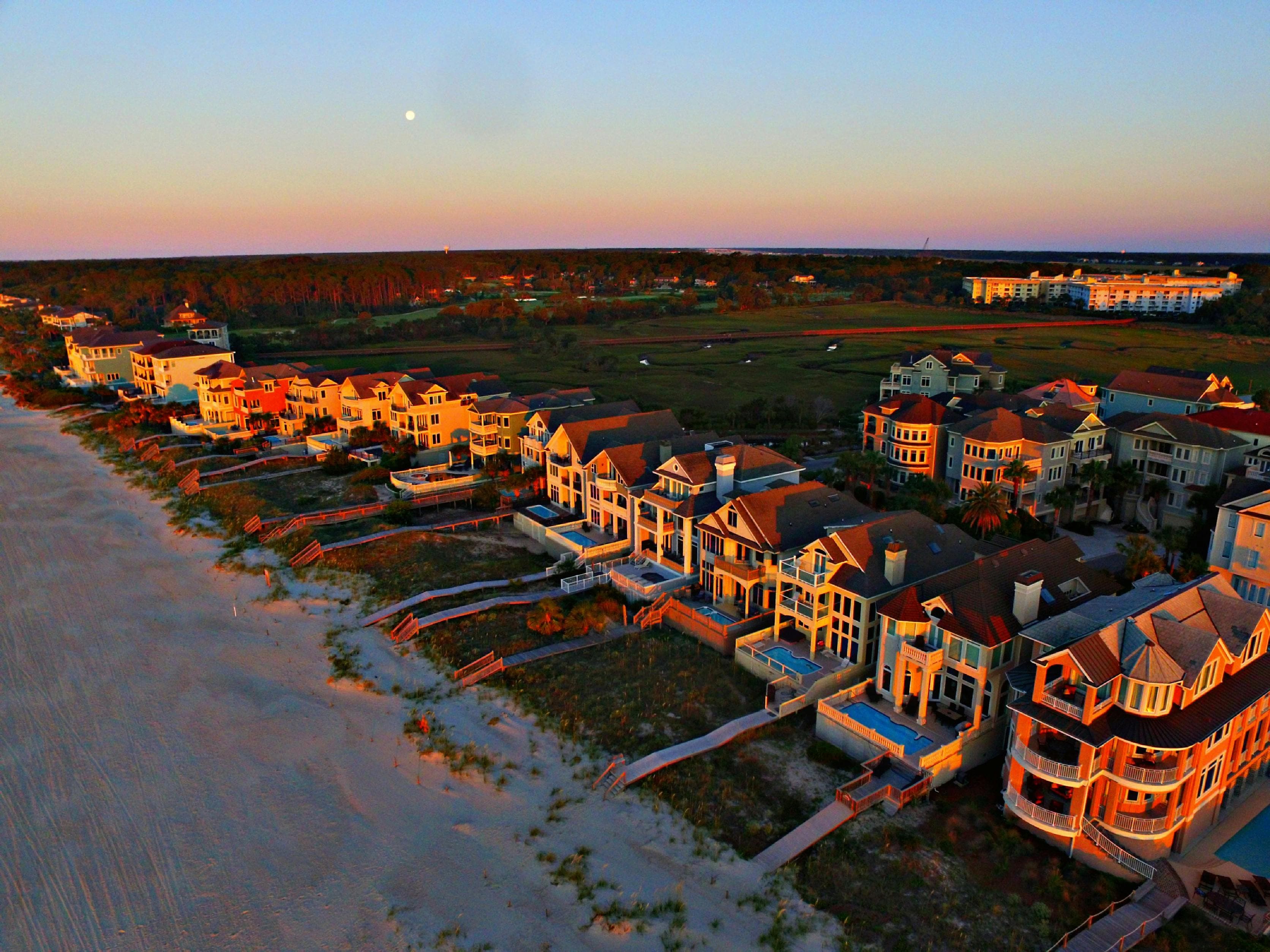
Hilton Head Island, South Carolina
Hilton Head shares Myrtle Beach's latitude but operates in a different register. Winter highs average 58 to 63 degrees, and the island's maritime influence keeps temperatures slightly more stable than inland locations. January and February can deliver cool mornings and the occasional day where a jacket stays on through the back nine, but genuinely cold rounds are uncommon.
Tip
Tier 3: Specialist Picks
Las Vegas, Nevada
Las Vegas operates as a winter golf destination almost by accident. The city's identity centers on entertainment, but the surrounding desert supports a collection of courses that ranges from competent to exceptional. Shadow Creek, Cascata, and the three Paiute courses anchor a market that plays best from October through April, when temperatures range from the mid-50s to the mid-70s.
The value proposition is strongest in late fall and early spring, when shoulder-season hotel rates and midweek tee-time discounts align. January can produce days in the low 50s with wind, which is less appealing than the marketing suggests. Green fees range from $80 for the Paiute courses to $500 for Shadow Creek, with the mid-market offering strong quality around $150 to $200. For a group that wants to combine golf with a few nights of non-golf activity, Las Vegas fills a niche that pure golf destinations cannot.
Streamsong Resort, Central Florida
Streamsong is not a destination in the conventional sense. It is a single property, isolated in the central Florida phosphate country south of Lakeland, offering three courses designed by Tom Doak, Bill Coore and Ben Crenshaw, and Gil Hanse. The architectural pedigree is as strong as any resort in the country, and the walking-only ethos sets it apart from the cart-dependent Florida norm.
October through May represents the ideal window. Winter highs in the low to mid-70s and minimal rainfall create conditions that the courses were designed to showcase. The remoteness is the point. There are no surrounding attractions, no restaurant row to explore after dinner. The trip is the golf, the lodge, and the landscape. Green fees with resort stay packages run $200 to $350 per round, positioning Streamsong as a premium experience that competes with Bandon Dunes for the serious golfer's winter attention.
The Comparison Framework
| Destination | Winter Highs (F) | Green Fee Range | Best Months | Best For |
|---|---|---|---|---|
| Scottsdale | 65-78 | $200-$400 | Nov-Mar | Premium desert golf |
| Palm Springs | 70-75 | $150-$300 | Nov-Mar | Desert golf, better value |
| Naples | 75-82 | $150-$300 | Dec-Mar | Warm weather, refined experience |
| Myrtle Beach | 55-60 | $60-$100 (winter) | Year-round | Volume and value |
| Orlando | 70-75 | $100-$250 | Dec-Mar | Families, airport access |
| Hilton Head | 58-63 | $100-$200 | Year-round | Quality over quantity |
| Las Vegas | 55-70 | $80-$500 | Oct-Apr | Golf plus entertainment |
| Streamsong | 70-75 | $200-$350 | Oct-May | Architecture, walking golf |
Choosing the Right Trip
The winter golf decision ultimately reduces to three variables: how warm the golfer needs it to be, how much the golfer is willing to spend, and how important course quality is relative to volume. Scottsdale and Naples deliver the most complete packages at the highest price points. Palm Springs and Orlando offer nearly equivalent weather at lower cost. Myrtle Beach wins the value argument outright for golfers who can tolerate temperatures that would qualify as a pleasant autumn day rather than genuine warmth. And Streamsong stands alone as the architectural pilgrimage that happens to align perfectly with the season.
Harbour Town Golf Links
The verdict