Pinehurst vs Williamsburg: Historic East Coast Golf
Two East Coast destinations combine American history with golf worth travelling for. Pinehurst is a golf village, purpose-built for the game in 1895, where the institutional weight of the USGA, the World Golf Hall of Fame, and nine Donald Ross courses converge in the North Carolina Sandhills. Williamsburg pairs colonial American history with modern resort golf, offering a different kind of heritage trip where the game shares the itinerary with 18th-century taverns and living history museums.
Where to stay in Pinehurst & the Sandhills
Planning the trip? Compare live prices across every nearby hotel and rental in one search.
Prices and availability from Booking.com, Expedia and others via Stay22. GolfTrailsHQ may earn a commission at no additional cost to you.
The Golf
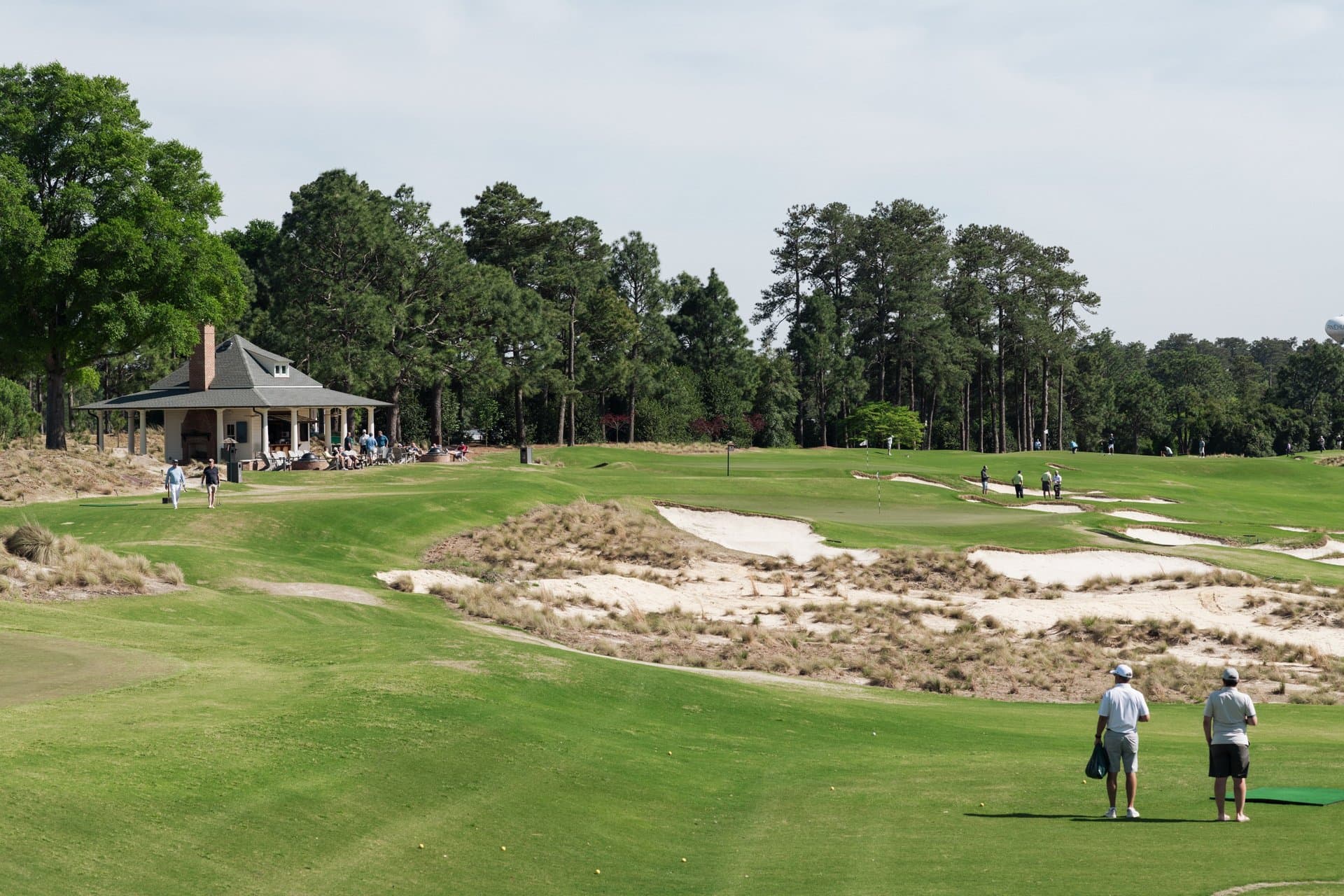
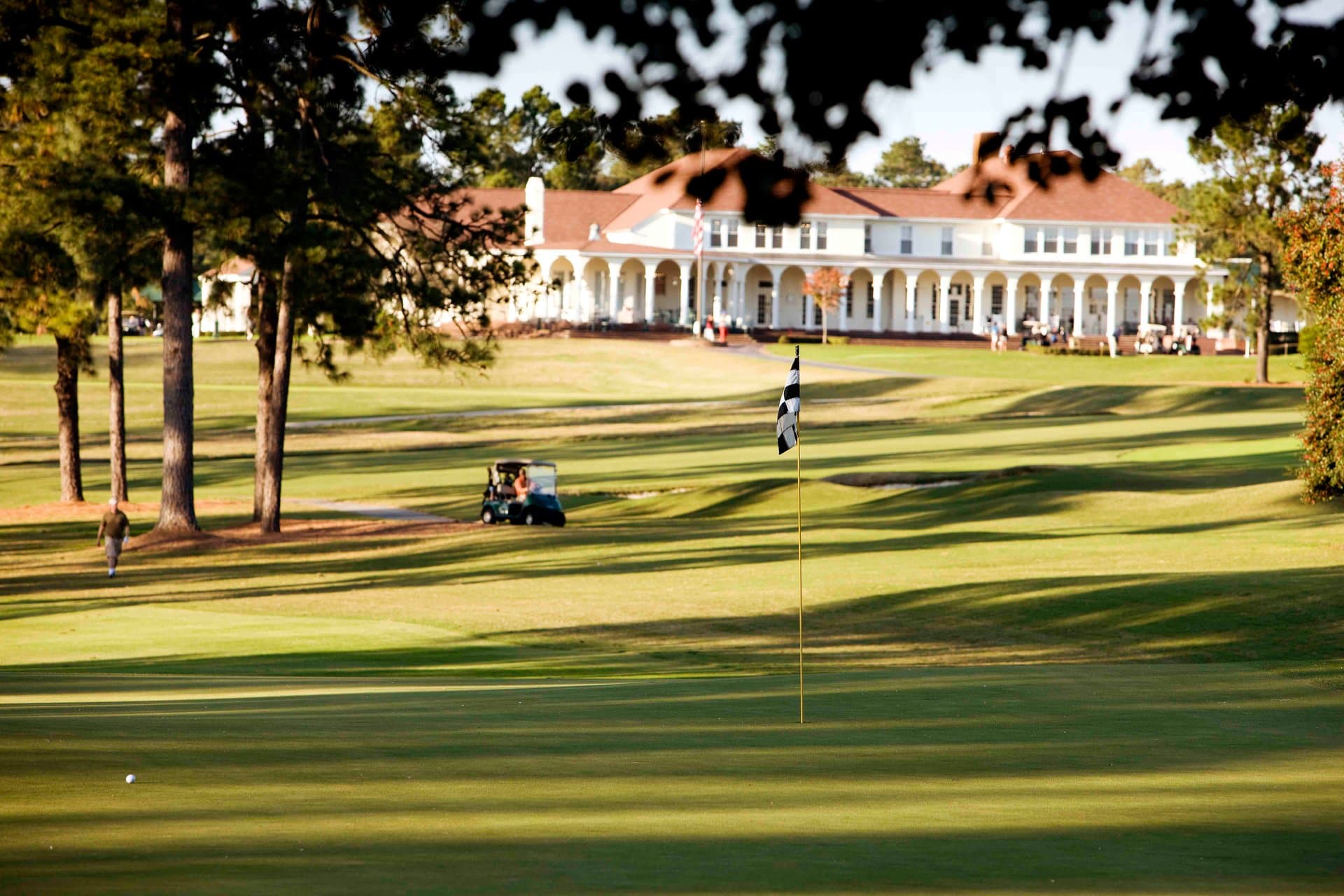
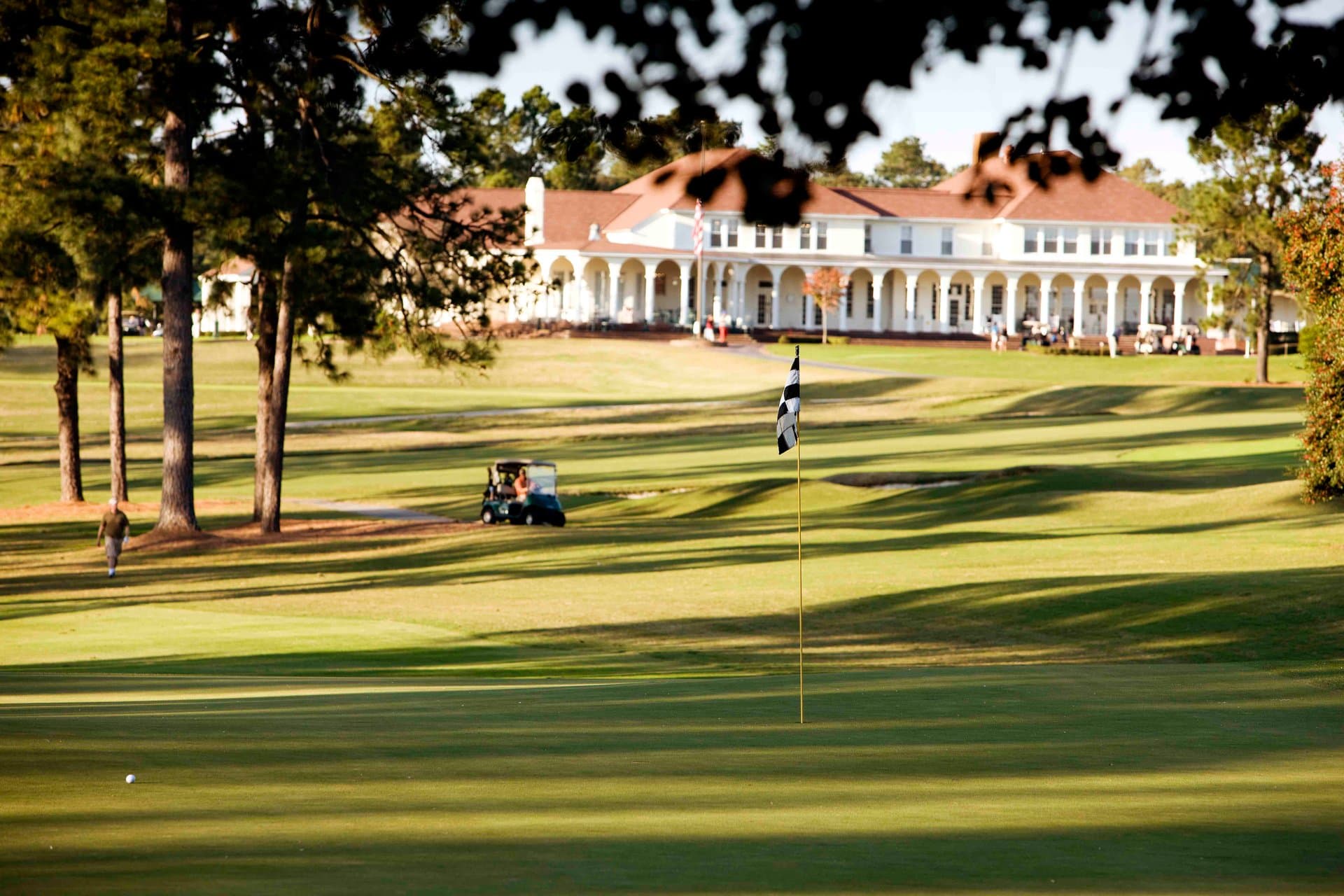
Pinehurst's claim is architectural significance. Pinehurst No. 2, Donald Ross's masterpiece refined over four decades from 1907 to 1948, has hosted six U.S. Opens, most recently in 2024. The Coore and Crenshaw restoration in 2011 stripped away rough and returned native wiregrass, revealing the strategic demands Ross intended. Access requires a resort stay with a two-night minimum, plus a $250 surcharge or a second-round fee of $595 in peak season. Pinehurst No. 4, Gil Hanse's 2018 redesign that won Golf Digest's Best New Course, provides a modern counterpoint at $395 for an additional round.
Beyond the resort, Tobacco Road, Mike Strantz's 1998 design carved from a sand quarry in Sanford, plays 6,554 yards with a slope of 150 and a visual intensity that polarises visitors. Mid Pines and Pine Needles, sister Donald Ross properties across the street from each other on Midland Road, offer refined Sandhills golf at $155 to $295.
Williamsburg's golf infrastructure centres on the Kingsmill Resort and Colonial Williamsburg Foundation courses. Kingsmill's River Course, a Pete Dye design that hosted the LPGA Tour for decades, provides tournament-level golf on the James River. The overall selection is smaller than Pinehurst, and no single course approaches the architectural importance of No. 2, but the quality at the top is solid.
The Golden Horseshoe Gold Course, a Rees Jones design on the Colonial Williamsburg campus, is one of the most underrated resort courses on the East Coast.
For golfers who care about course architecture and design heritage, Pinehurst is in a different category. The density of important courses in the Sandhills, from Ross to Strantz to Hanse, is unmatched on the East Coast.
History Beyond the Course
Williamsburg's non-golf historical content is extraordinary. Colonial Williamsburg, the 301-acre living history museum, recreates 18th-century Virginia with costumed interpreters, working tradespeople, and original buildings from the colonial capital. The Historic Triangle connects Williamsburg to Jamestown (the first permanent English settlement, 1607) and Yorktown (the final battle of the American Revolution, 1781). For the companion who does not play golf, Williamsburg can fill a full week without repetition.
Pinehurst's history is golf history. The USGA Golf House and World Golf Hall of Fame, opened at Pinehurst in May 2024 after relocating from New Jersey and St. Augustine respectively, provides a genuine attraction for golf enthusiasts. Pinehurst Village itself is a walkable community with a charming, planned-community character dating to 1895. Beyond that, Weymouth Woods Nature Preserve offers free hiking, and Seagrove pottery studios (30 minutes north) provide a half-day excursion. Southern Pines has a developing downtown.
The comparison is stark: Williamsburg offers one of America's great cultural destinations alongside its golf. Pinehurst offers golf history at a depth no other American destination can match, but limited cultural content beyond the game.
Accommodation and Price
Pinehurst Resort's three properties anchor the village: The Carolina Hotel ($400 to $530 per night in package rates), The Holly Inn ($300 to $500), and The Manor ($200 to $350). Golf packages are the standard booking model, with standalone room rates harder to isolate. Off-resort, Homewood Suites provides a $136 to $160 mid-range option, and Quality Inn in Aberdeen anchors the budget tier at $58 to $72.
Williamsburg offers broader range. Kingsmill Resort provides an on-course option from roughly $200 to $400 per night. Colonial Williamsburg's own hotels (Williamsburg Inn, Williamsburg Lodge) range from $150 to $500. Standard chains in the Williamsburg corridor provide options from $80 to $150.
A four-round, three-night Pinehurst trip with a No. 2 round runs $2,500 to $4,000 per person. A comparable Williamsburg trip, with Colonial Williamsburg admission and three rounds at quality courses, runs $1,500 to $2,800.
Getting There
Pinehurst is served by Raleigh-Durham International Airport (RDU), 73 miles and roughly 80 minutes from the village. The drive is straightforward.
Williamsburg sits between Richmond International Airport (RIC, 60 miles west) and Norfolk International Airport (ORF, 60 miles southeast), both offering strong commercial service. Richmond is the more common choice.
The Decision
Choose Pinehurst for golf as the primary purpose. No. 4 is among the best modern resort courses, and Tobacco Road provides architectural theatre that no Williamsburg course attempts. The USGA Golf House adds context that deepens the trip for golf enthusiasts. The village is quiet by design, and the focus is absolute.
2 is one of the most important courses in American golf, the Hanse redesign of No.
The verdict
Pinehurst No. 2