Pinehurst vs Myrtle Beach: Heritage vs Volume
These two North Carolina neighbours occupy opposite ends of the golf trip spectrum. Pinehurst is a village built around golf, where the game came first and everything else followed. Myrtle Beach is a beach city that accumulated courses the way coastal towns accumulate restaurants: rapidly, competitively, and with an eye on accessibility. They are 120 miles apart and might as well be different countries.
Where to stay in Pinehurst & the Sandhills
Planning the trip? Compare live prices across every nearby hotel and rental in one search.
Prices and availability from Booking.com, Expedia and others via Stay22. GolfTrailsHQ may earn a commission at no additional cost to you.
The Core Distinction
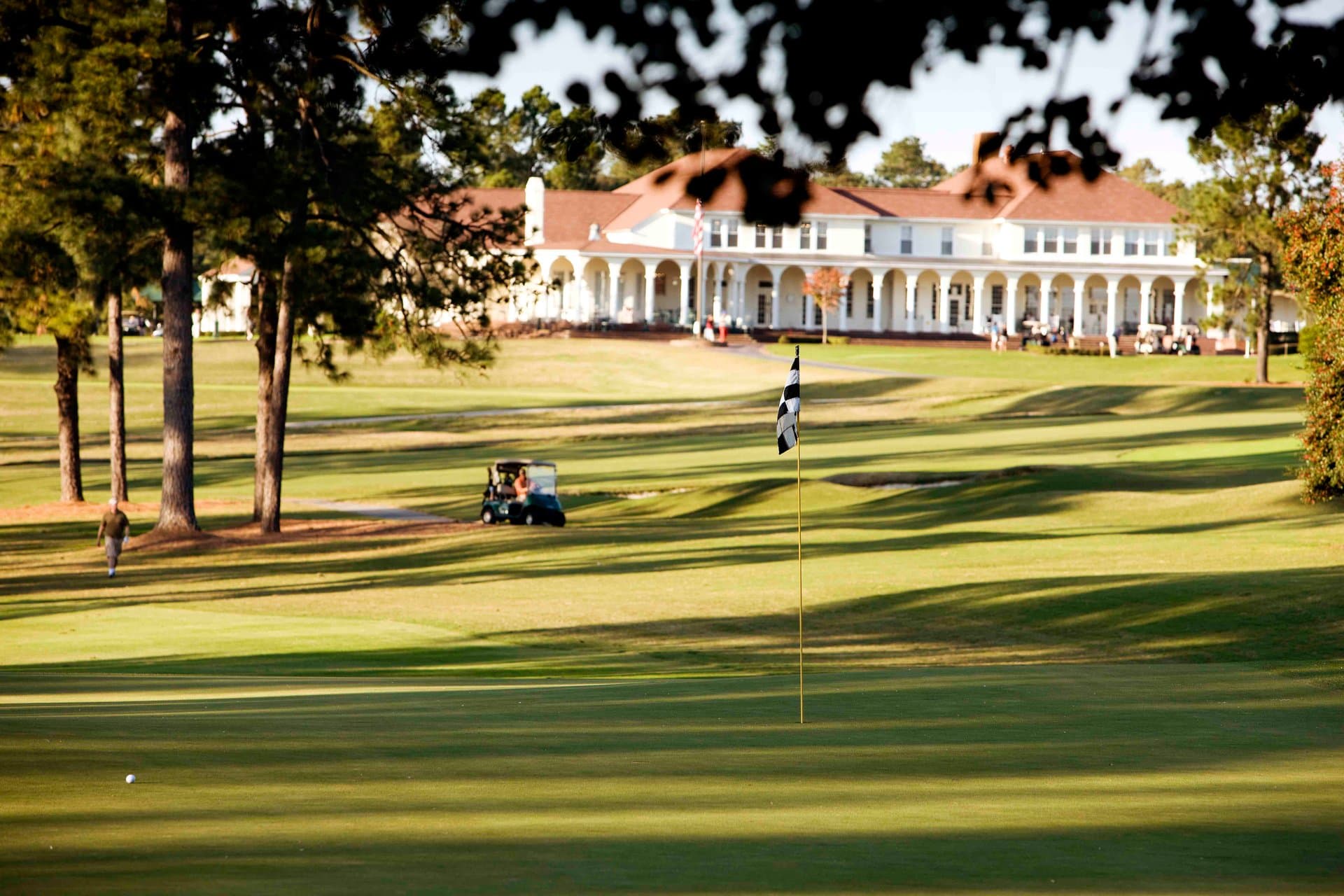
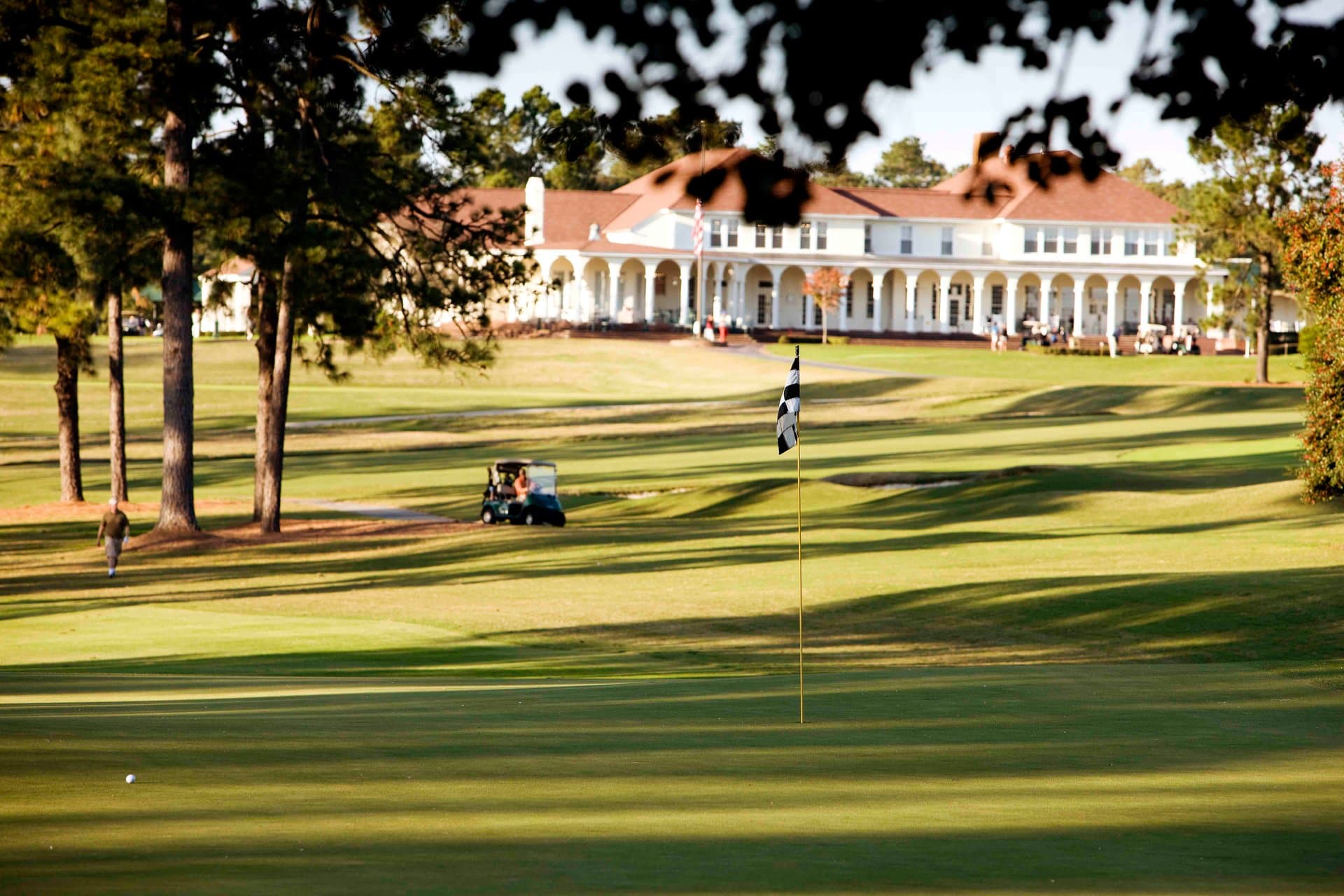
Pinehurst is a pilgrimage. The resort has ten numbered courses, including No. 2, Donald Ross's 1907 masterpiece that has hosted the U.S. Open in 1999, 2005, 2014, and 2024, with future championships locked in through 2047. Bill Coore and Ben Crenshaw restored it in 2011, removing rough and returning native wiregrass to the sandy corridors Ross originally intended. Playing it requires a minimum two-night stay at the resort and a package that runs well north of $500 per person per night.
The greens are crowned, the approaches are open, and the course asks you to think in terms of angles and ground game rather than target golf.
Pinehurst No. 4, redesigned by Gil Hanse in 2018 and named Best New Course by Golf Digest, is the second essential round. Nearby, Tobacco Road, Mike Strantz's 1998 design carved from a sand quarry in Sanford, has a slope of 150 and plays like nothing else in the Sandhills. Mid Pines, a Donald Ross course restored by Kyle Franz in 2013, offers the quieter Ross experience at a fraction of No. 2's price.
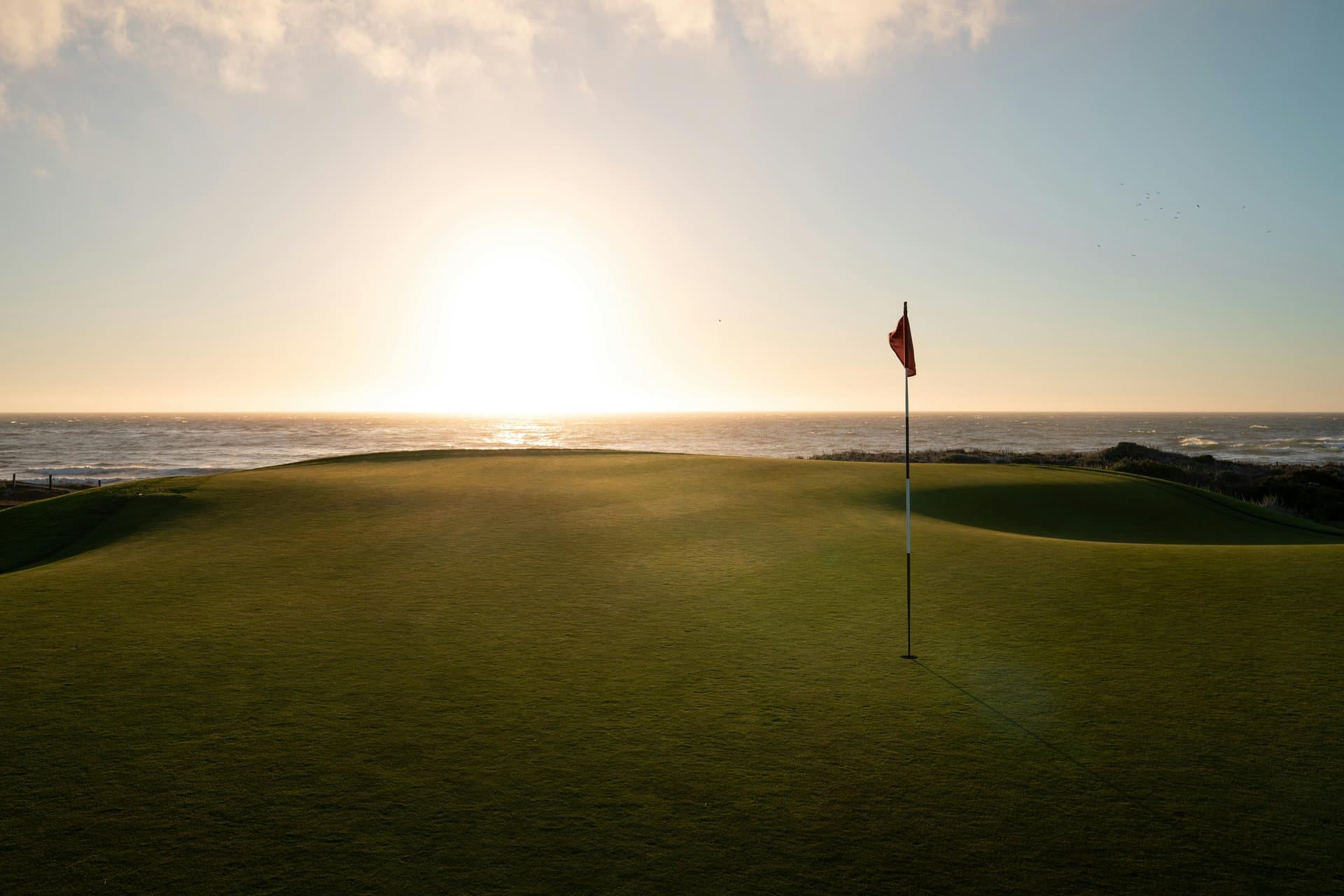
Myrtle Beach counters with sheer range. Twenty-two profiled courses span every tier from Bucket List to Hidden Value. Caledonia Golf & Fish Club, ranked among Golfweek's top 100 resort courses, provides genuine architectural distinction at $200 to $249. True Blue, its sister course from the same Mike Strantz, delivers drama for $150 to $196. But the volume play is the point: Barefoot Resort's four courses all charge $90 to $168, Legends Resort's Tom Doak design costs $65 to $93, and Crow Creek plays for under $80.
The Money
This is the sharpest contrast. Pinehurst is expensive. The resort does not publish simple green fees because everything is bundled into packages. A two-night stay at The Carolina Hotel with access to No. 2 starts around $500 per person per night. A second round on No. 2 costs $595 in peak season. Adding No. 4 is another $395. A three-night, four-round Pinehurst trip can easily exceed $2,500 per person.
The same trip to Myrtle Beach, with four rounds at mid-range to premium courses and a beachfront condo, costs $800 to $1,200 per person. Even choosing Myrtle Beach's best courses exclusively (Caledonia, True Blue, TPC Myrtle Beach, Dunes Club) and staying at a four-star resort, the total rarely exceeds $2,000.
For the golfer comparing the two purely on value, Myrtle Beach wins by a decisive margin. But value is not the only consideration.
The Experience
Pinehurst feels like visiting an institution. The Village of Pinehurst, designed by Frederick Law Olmsted in 1895, is a quiet community of 16,000 people centred around the resort. The USGA relocated its headquarters here in 2024, and the World Golf Hall of Fame moved from St. Augustine to Pinehurst the same year. Golf House Pinehurst, the combined campus, charges $10 for general admission and is one of the more compelling golf-adjacent attractions in the country.
The dining options in the Sandhills are limited relative to a larger destination, but the resort itself operates eight restaurants, and Southern Pines (five miles away) has a developing downtown dining scene. The non-golf activities lean toward nature: Weymouth Woods Nature Preserve, Sandhills Horticultural Gardens, and the equestrian trails at Walthour-Moss Foundation.
Myrtle Beach is not quiet. The central strip hums with energy, Broadway at the Beach draws millions annually, and the MarshWalk in Murrells Inlet provides waterfront dining with live music. The non-golf activities list is long: Brookgreen Gardens is a National Historic Landmark, deep-sea fishing charters leave from Hurricane Fleet and Voyager, and the Waccamaw River offers kayaking through cypress-lined blackwater channels. For groups where not everyone golfs, Myrtle Beach provides substantially more to do.
When Each Makes Sense
Choose Pinehurst when the golf is the trip. The ideal Pinehurst trip is three to four nights, four to five rounds, and a caddie on No. 2 who knows every contour of the crown greens.
When playing Donald Ross's most celebrated course is the reason you are travelling, when architecture and history matter more than volume, and when you are prepared to pay what the experience costs.
Choose Myrtle Beach when you want to play as much golf as possible across a wide variety of courses, when the budget needs to stay reasonable, and when the group wants beach time, nightlife, or family activities between rounds. A four-round Myrtle Beach trip can include a Strantz design, a Fazio, a Dye, and a Doak for less than the cost of two rounds at Pinehurst No. 2.
Planning Notes
Pinehurst is a 73-mile drive from Raleigh-Durham International Airport (RDU), roughly 80 minutes. A rental car is essential; there is no reliable ride-share in the Sandhills. Best weather arrives in April, May, September, and October, with October widely regarded as the single best month.
Myrtle Beach International Airport (MYR) is five minutes from the hotel strip and receives direct flights from 50-plus cities. The Grand Strand is car-dependent, but the distances between courses are shorter than you might expect. Best golf weather matches Pinehurst: spring and autumn, with summer bringing heat and families.
Tip
The verdict