 Pin it
Pinehurst No. 4
Gil Hanse rebuilt a Donald Ross original into the resort's most complete modern test. Golf Digest agreed.
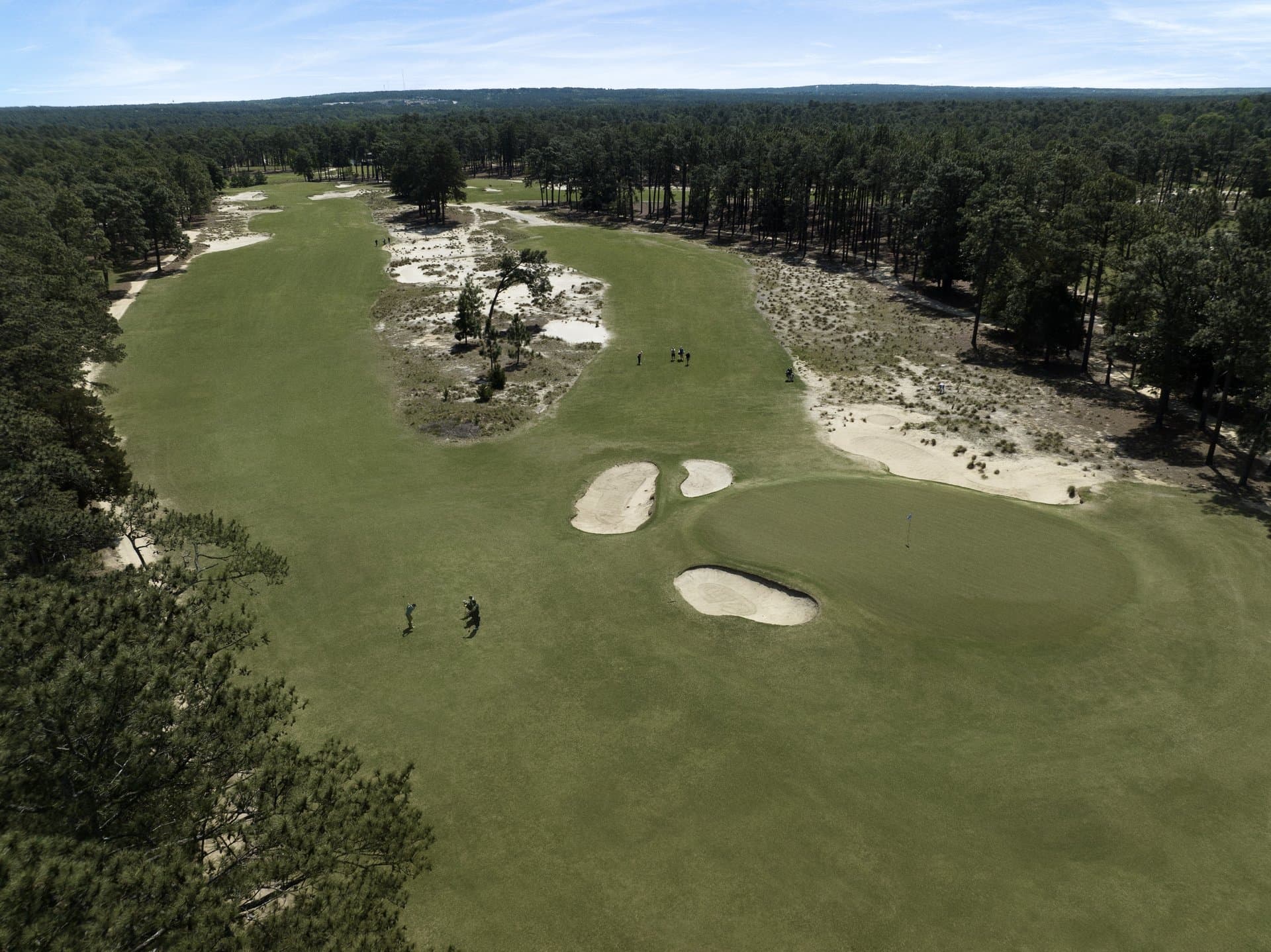
Photo courtesy of VisitNC.com · Visit North Carolina
Designed by Gil Hanse (2018 redesign; orig. Donald Ross 1919)
From $395
Booking via Direct
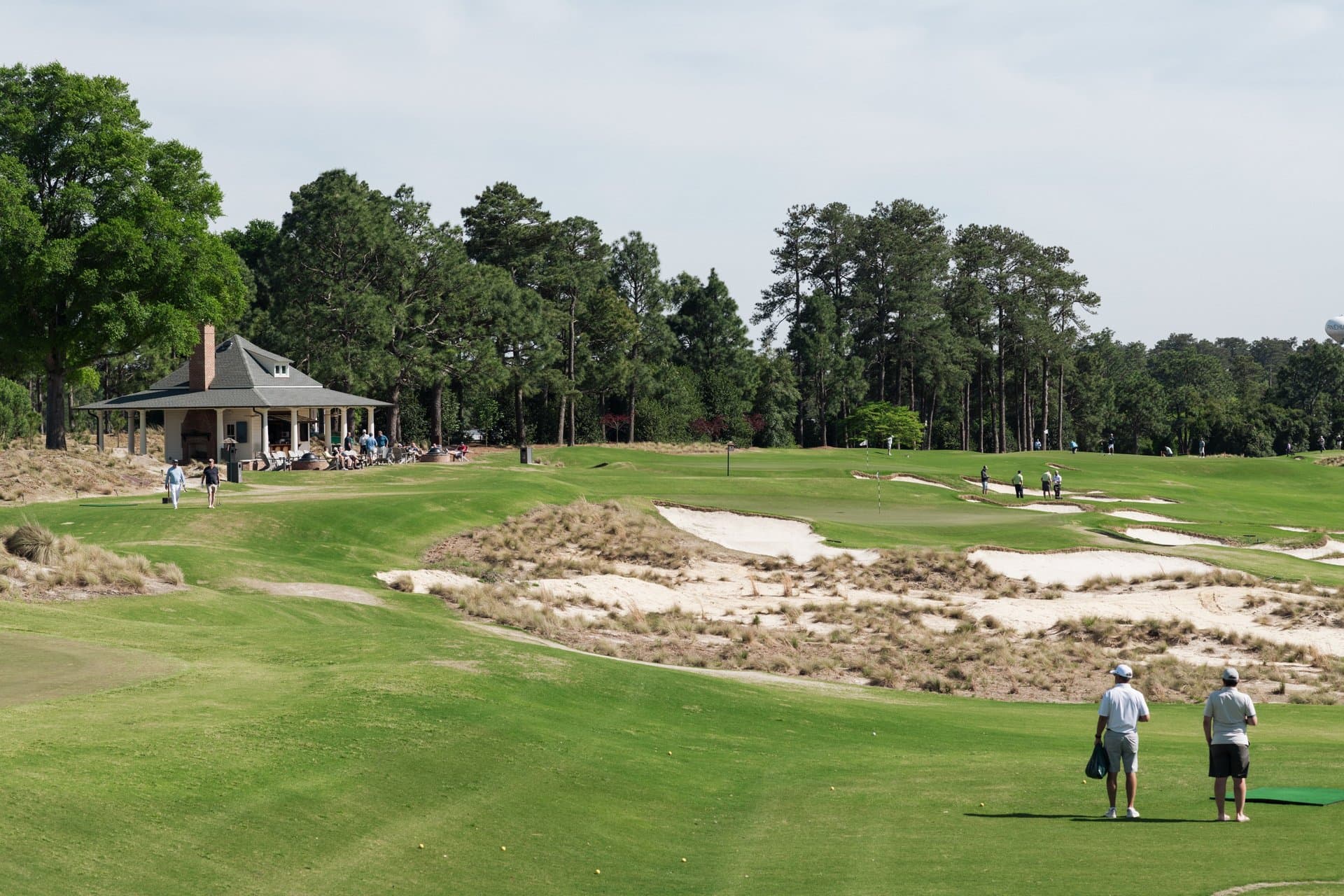
Pinehurst No. 4 is Gil Hanse's 2018 redesign of an original Donald Ross routing from 1919, and Golf Digest named it the Best New Course in America that year. The award typically goes to entirely new builds, which makes the recognition unusual. It acknowledged what Hanse accomplished on an existing footprint: a course that plays as modern, strategic, and visually compelling as anything built in the past decade while occupying land that has hosted golf for more than a century.
What to expect
The design philosophy diverges from Pinehurst No. 2 in important ways. Where Ross's masterwork concentrates its defence in the greens, Hanse distributes the challenge across the entire hole. Tee shots matter. Fairway positioning matters. Approach angles are not merely preferable but consequential. Fairways are wide enough to accommodate a range of strategies, with mounding, bunkers, and native sandy areas creating internal structure that rewards golfers who study each hole from the tee box.
The greens are large by Pinehurst standards, running on Champion Ultradwarf Bermuda, and they accept a wider variety of approaches than No. 2's crowned surfaces. That does not make them easier. The putting surfaces carry significant contour, and pin positions on the edges of tiers can produce putts that require genuine imagination. The difference is that Hanse gives you multiple ways to play each hole. The course feels fair even when it is demanding.
The par 3s are frequently cited as the strongest collection on the resort campus. Each plays to a different length and demands a different ball flight. The variety within a single shot type across four holes demonstrates the depth of Hanse's routing, which uses the natural sand ridges and pine corridors to create distinct environments within a compact property. The 2019 U.S. Amateur, held just months after reopening, validated the design under competitive conditions.
By the numbers
- Par
- 72
- Yardage
- 7,227
Is it worth the green fee?
No. 4 carries a $395 additional-round surcharge beyond the base resort package, which puts it in the premium tier of Pinehurst's pricing structure. It is the second most expensive course on the campus after No. 2, and the ranking reflects both the quality of the redesign and the demand it generates. For golfers visiting Pinehurst on a two- or three-course trip, No. 4 belongs in the rotation. It offers a different challenge from No. 2, a more contemporary aesthetic, and a round that rewards the full range of your game rather than concentrating the test in one area.
Booking and trip fit
Tee times and packages are available through the booking link on this page. Resort guest access only. Walking is encouraged. The course rewards study from the tee box; a moment spent reading each hole before selecting a club is time well invested. Returning players who remember the Tom Fazio-era No. 4 from 2000 will find a fundamentally different course.
The natural pairing is Pinehurst No. 2 for the headline two-course Pinehurst experience. Pinehurst No. 8 (Centennial) sits a tier below in price and intensity. Outside the resort campus, Mid Pines Inn & Golf Club and Pine Needles Lodge & Golf Club provide the Ross immersion at meaningfully lower cost, and Tobacco Road Golf Club is the regional contrast option.
Where to Stay
Accommodations near Pinehurst No. 4
Homewood Suites by Hilton Olmsted Village
Vacation Rental
Homewood Suites by Hilton Olmsted Village
Pinehurst & the Sandhills, North Carolina
Two Miles from No. 2, Free Breakfast, and Freedom from the Package System
From $136/nightPinehurst Resort courses (~2 miles)
Direct websiteVisit website
Mid Pines Inn & Golf Club
Inn
Mid Pines Inn & Golf Club
Pinehurst & the Sandhills, North Carolina
A 1921 Golf Lodge with a Ross Course Steps from the Front Door
From $180/nightOn-site golf
Direct websiteVisit website
Pine Needles Lodge & Golf Club
Lodge
Pine Needles Lodge & Golf Club
Pinehurst & the Sandhills, North Carolina
A Four-Time U.S. Women's Open Host with Lodge Rates That Undercut the Resort
From $104/nightOn-site golf
Direct websiteVisit website
Talamore Golf Resort (Villas)
Vacation Rental
Talamore Golf Resort (Villas)
Pinehurst & the Sandhills, North Carolina
Villa-Style Lodging Where a Foursome Splits the Bill at $20 a Night Per Person
From $75/nightOn-site golf
ExpediaCheck availability
Compare all stays near Pinehurst No. 4
Live prices from Booking.com, Expedia and more — every nearby hotel and rental in one search.
Prices and availability from Booking.com, Expedia and others via Stay22. GolfTrailsHQ may earn a commission at no additional cost to you.
Other Courses Nearby
Legacy Golf Links
Hidden Value
Legacy Golf Links
Pinehurst & the Sandhills, North Carolina
A Nicklaus-family design at $119 a round. The best pure value in the Sandhills.
From $119PublicJack Nicklaus II (1991)
GolfNowBook tee time
Longleaf Golf & Family Club
Hidden Value
Longleaf Golf & Family Club
Pinehurst & the Sandhills, North Carolina
Dan Maples designed it for families. The Longleaf Tee System makes it work for everyone else, too.
From $140PublicDan Maples (1988; Bill Bergin enhancements)
GolfNowBook tee time
Mid Pines Inn & Golf Club
Premium
Mid Pines Inn & Golf Club
Pinehurst & the Sandhills, North Carolina
Donald Ross at his most natural, restored to original intent. The quieter sibling that returning players prefer.
From $225ResortDonald Ross (1921; Kyle Franz restoration 2013)
GolfNowBook tee time
Premium
Pine Needles Lodge & Golf Club
Pinehurst & the Sandhills, North Carolina
Four U.S. Women's Opens on a Donald Ross routing that proves championship golf does not require championship length.
$155–$295ResortDonald Ross (1928)
PartnerBook tee time
Bucket List
Pinehurst No. 2
Pinehurst & the Sandhills, North Carolina
The course Donald Ross spent a lifetime refining, restored to the sandy, wire-grassed original that the USGA keeps coming back to.
$195–$595ResortDonald Ross (1907, refined through 1948; Coore/Crenshaw restoration 2011)
PartnerBook tee time
Mid-Range
Pinehurst No. 8 — Centennial
Pinehurst & the Sandhills, North Carolina
Tom Fazio's centennial tribute to Donald Ross, with false fronts and collection areas filtered through Fazio's groomed sensibility.
From $275ResortTom Fazio (1996)
PartnerBook tee time
Mid-Range
Pinehurst No. 9
Pinehurst & the Sandhills, North Carolina
The only Nicklaus design in the Sandhills. A different voice in a region defined by Donald Ross.
From $275ResortJack Nicklaus (1989; renovated 2012)
PartnerBook tee time
Talamore Golf Resort
Mid-Range
Talamore Golf Resort
Pinehurst & the Sandhills, North Carolina
Rees Jones built it for Golf Digest's Top 5 in 1991. The restored greens still hold up.
From $189ResortRees Jones (1991)
GolfNowBook tee time
Tobacco Road Golf Club
Bucket List
Tobacco Road Golf Club
Pinehurst & the Sandhills, North Carolina
Mike Strantz carved a sand quarry into the most polarising course in the Southeast. The slope of 150 is not a misprint.
From $275PublicMike Strantz (1998)
GolfNowBook tee time
Plan Your Trip
Explore Pinehurst & the Sandhills
Full guide: courses, stays, getting there.
Continue →3 Itineraries
Pre-planned trips to Pinehurst & the Sandhills.
Continue →Off the Fairway
10 non-golf activities at Pinehurst & the Sandhills.
Continue →Some links on this page are affiliate links. If you book through these links, we may earn a small commission at no extra cost to you. This does not influence our editorial recommendations.