Pinehurst, NC: Insider Tips for First-Time Visitors
Pinehurst operates differently from most American golf destinations. The village is compact, the culture is walking-oriented, and the resort has been refining its routines since 1895. A first visit rewards those who understand the rhythms of the place before arriving. What follows is the practical knowledge that separates a good Pinehurst trip from a great one.
Where to stay in Pinehurst & the Sandhills
Planning the trip? Compare live prices across every nearby hotel and rental in one search.
Prices and availability from Booking.com, Expedia and others via Stay22. GolfTrailsHQ may earn a commission at no additional cost to you.
Choose Your Courses Deliberately
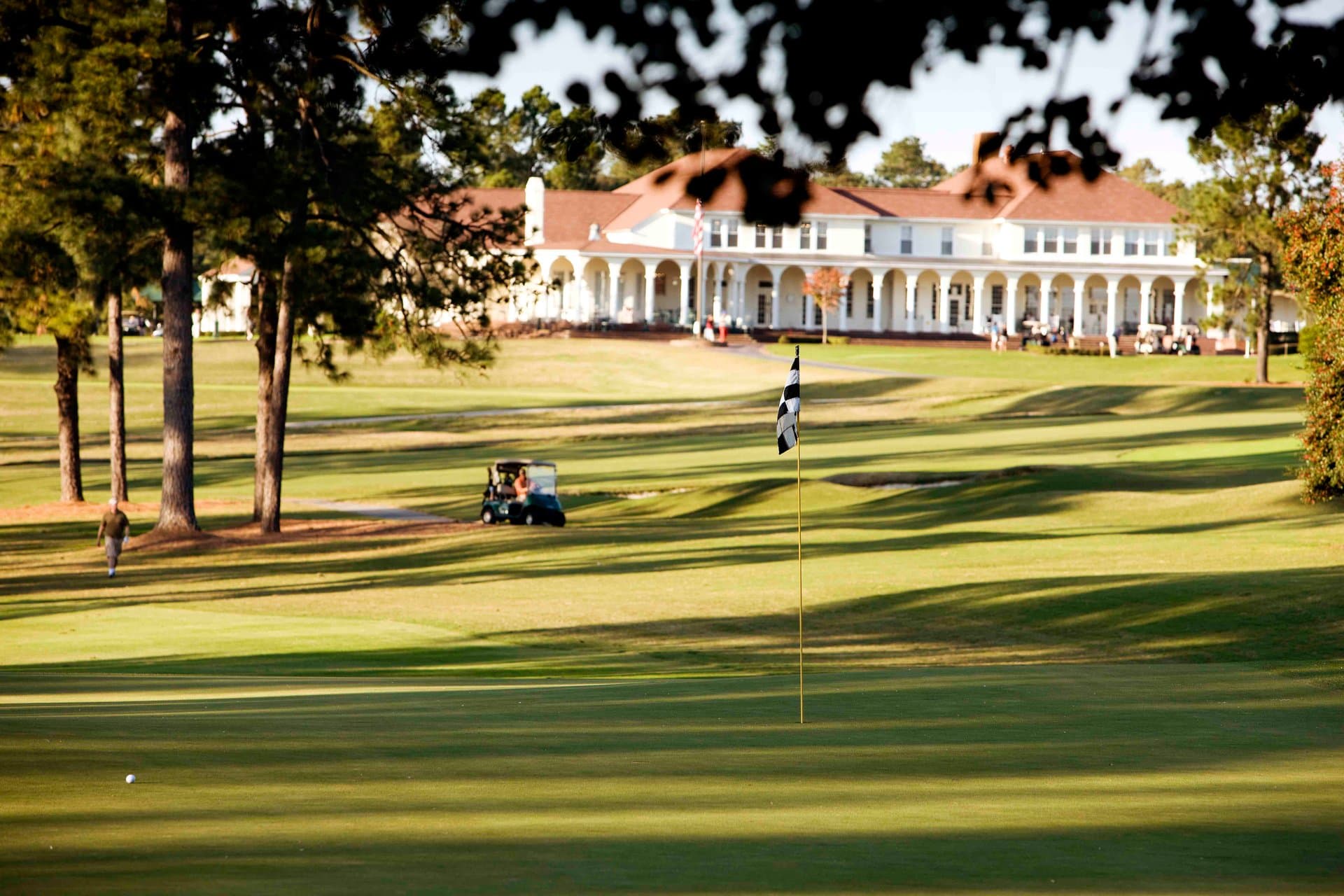
The resort operates nine courses, but a first visit does not require playing them all. Pinehurst No. 2 is the reason most golfers make the trip, and rightly so.
The Coore and Crenshaw restoration returned the course to its sandy, strategic origins, and it remains one of the most important tests in American golf.
Pinehurst No. 2
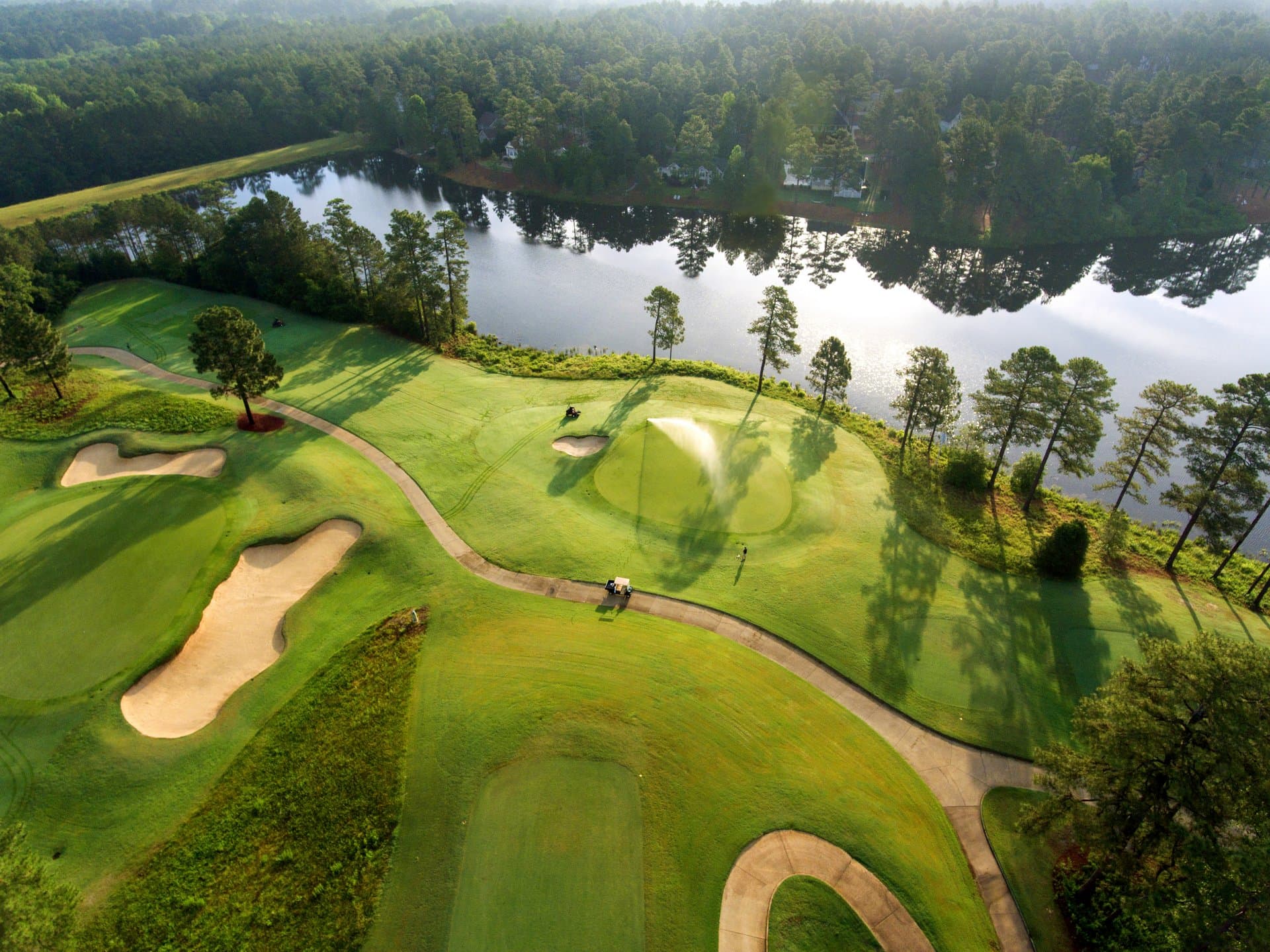
Beyond No. 2, Pinehurst No. 4 deserves serious consideration. Gil Hanse's redesign produced a course that many repeat visitors rank alongside its more famous neighbour. The routing moves through longleaf pines with a naturalness that feels inevitable rather than designed. For a three-day trip, pairing No. 2 and No. 4 with one additional round on No. 8 or No. 9 covers the essential range of what Pinehurst offers.
The Cradle, a nine-hole short course, is not an afterthought. At roughly 800 yards with holes ranging from 40 to 130 yards, it draws skilled players and beginners to the same tees. It fills up quickly in the afternoons, so plan accordingly.
Walk and Hire a Caddie on No. 2
Pinehurst is one of the few major American resorts where walking is the default rather than the exception. The terrain across most courses is gentle enough that walking 18 holes is comfortable for any reasonably fit golfer. Carts are available but unnecessary.
On No. 2, a caddie is close to essential. The turtle-back greens, Donald Ross's signature contribution, shed balls in directions that are invisible from the fairway. A caddie who works No. 2 regularly will save three to five strokes through green-reading alone. The caddie programme is well-organised; request one when booking your tee time rather than hoping for availability at the starter's window.
Understand the Sandy Waste Areas
The Coore and Crenshaw restoration replaced manicured rough with vast sandy waste areas that define the visual character of No. 2. These are not formal bunkers under the Rules of Golf. Grounding your club is permitted, and you may take practice swings that touch the sand. The playing strategy is straightforward: treat them as you would a fairway bunker, but take advantage of the freedom to settle your club behind the ball. A hybrid or long iron from firm sand is a realistic play that a traditional bunker would not allow.
Book Stay-and-Play Packages
Tip
Time Your Visit for Spring or Fall
The Sandhills region sits in the upper South, and the climate swings accordingly. Summer brings sustained heat and humidity that can make afternoon rounds punishing, and the bermudagrass rough thickens considerably. Winter is playable but cool, with dormant turf that changes the visual and strategic character of the courses.
April through early June and mid-September through November offer the best combination of comfortable temperatures and firm turf conditions.
Plan for Pace and Tee Time Strategy
No. 2 moves deliberately. A walking round typically takes four and a half to five hours, and the resort manages pace carefully. Early morning tee times, particularly in the first or second group, offer the calmest conditions and the least waiting. Afternoons can back up, especially on weekends and during peak season. If your schedule allows flexibility, a midweek round on No. 2 is noticeably more relaxed than a Saturday morning.
Getting There and Getting Settled
Raleigh-Durham International Airport is the nearest major hub, roughly 75 minutes by car. The drive is unremarkable but straightforward, mostly highway through pine country. There is no meaningful public transport option.
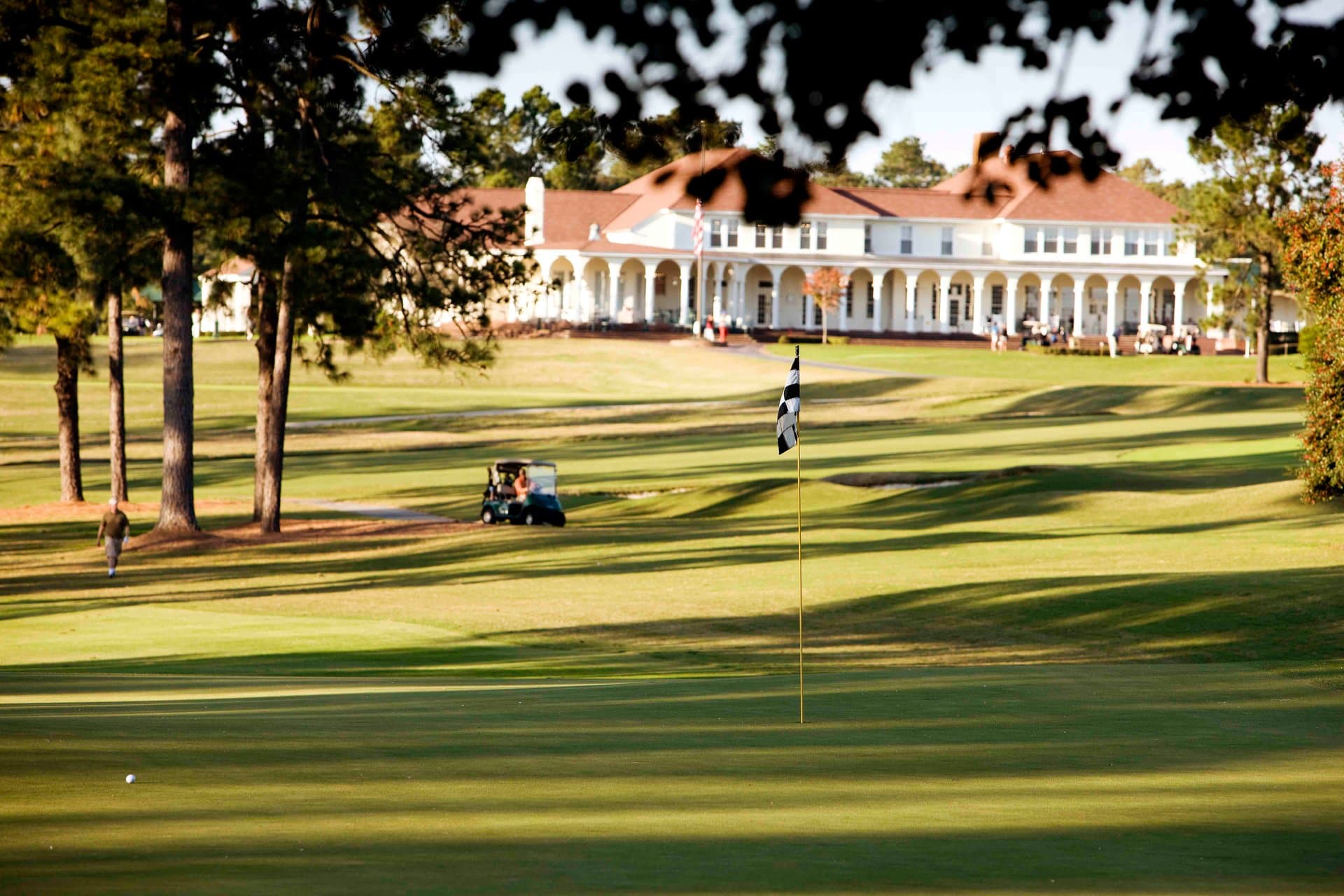
The village of Pinehurst itself is small and self-contained. A handful of restaurants, a few shops, and the resort's own dining options constitute the social scene. This is not a destination with vibrant nightlife or off-course diversions competing for attention. The quiet is a feature. Evenings settle naturally into the putting course beside the clubhouse or a few holes on Thistle Dhu, the resort's pitch-and-putt layout, where the light holds long enough for a post-dinner loop in the warmer months.
The Right Expectations
The verdict