Pinehurst, NC: Bucket List Golf Trip Itinerary (4–5 Days)
Pinehurst has hosted more single-site USGA championships than anywhere else in the country, and the explanation is straightforward: the ground is right. The North Carolina Sandhills sit on a bed of ancient sand deposits that drain fast, grow wiregrass naturally, and produce firm playing surfaces that reward shotmaking over brute distance. Donald Ross understood this in 1907. The USGA understood it when they returned for the 2024 U.S. Open and U.S. Women's Open in consecutive weeks. A serious golf trip here is not about checking a box. It is about spending time on terrain that has shaped the way American golf architecture thinks about itself.
This itinerary covers four to five days and runs $2,500 to $4,000 per person depending on accommodation choices and how many replay rounds make the cut. The budget assumes resort-level lodging, premium green fees, and proper dinners. It is a considered trip, not a frantic one.
Where to stay in Pinehurst & the Sandhills
Planning the trip? Compare live prices across every nearby hotel and rental in one search.
Prices and availability from Booking.com, Expedia and others via Stay22. GolfTrailsHQ may earn a commission at no additional cost to you.
Day 1: Arrival, The Cradle, and the Village
Fly into Raleigh-Durham (RDU) and drive 75 minutes south on US-1 through the Carolina pines. Alternatively, the Pinehurst-Southern Pines-Aberdeen Regional Airport (SOP) accepts smaller charters. Check into The Carolina Hotel, the 1901 grand dame that anchors the resort property. The long white facade and rocking-chair veranda set the register immediately. For a quieter alternative, the Manor Inn in the village offers smaller rooms and a more residential feel at a lower rate.
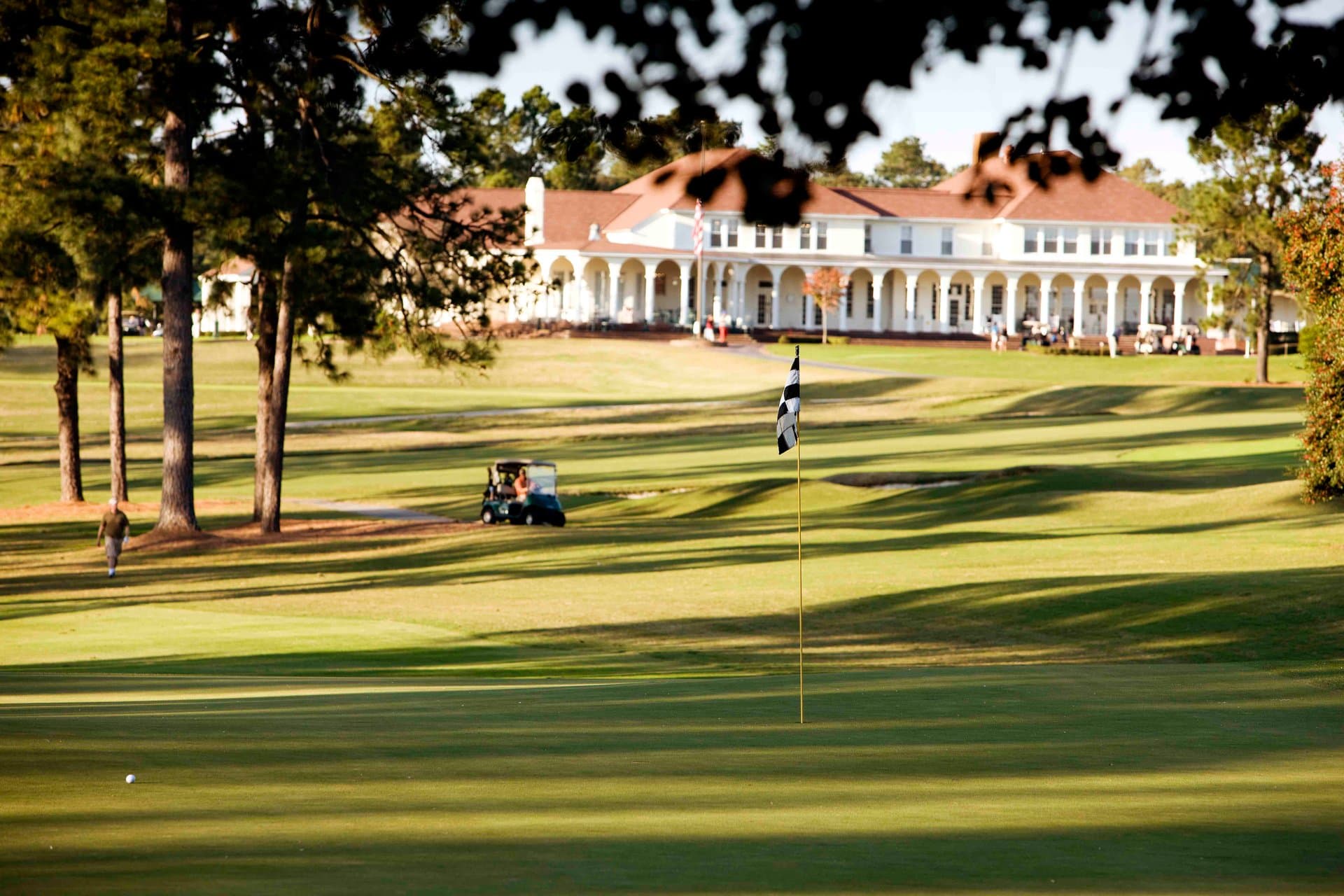
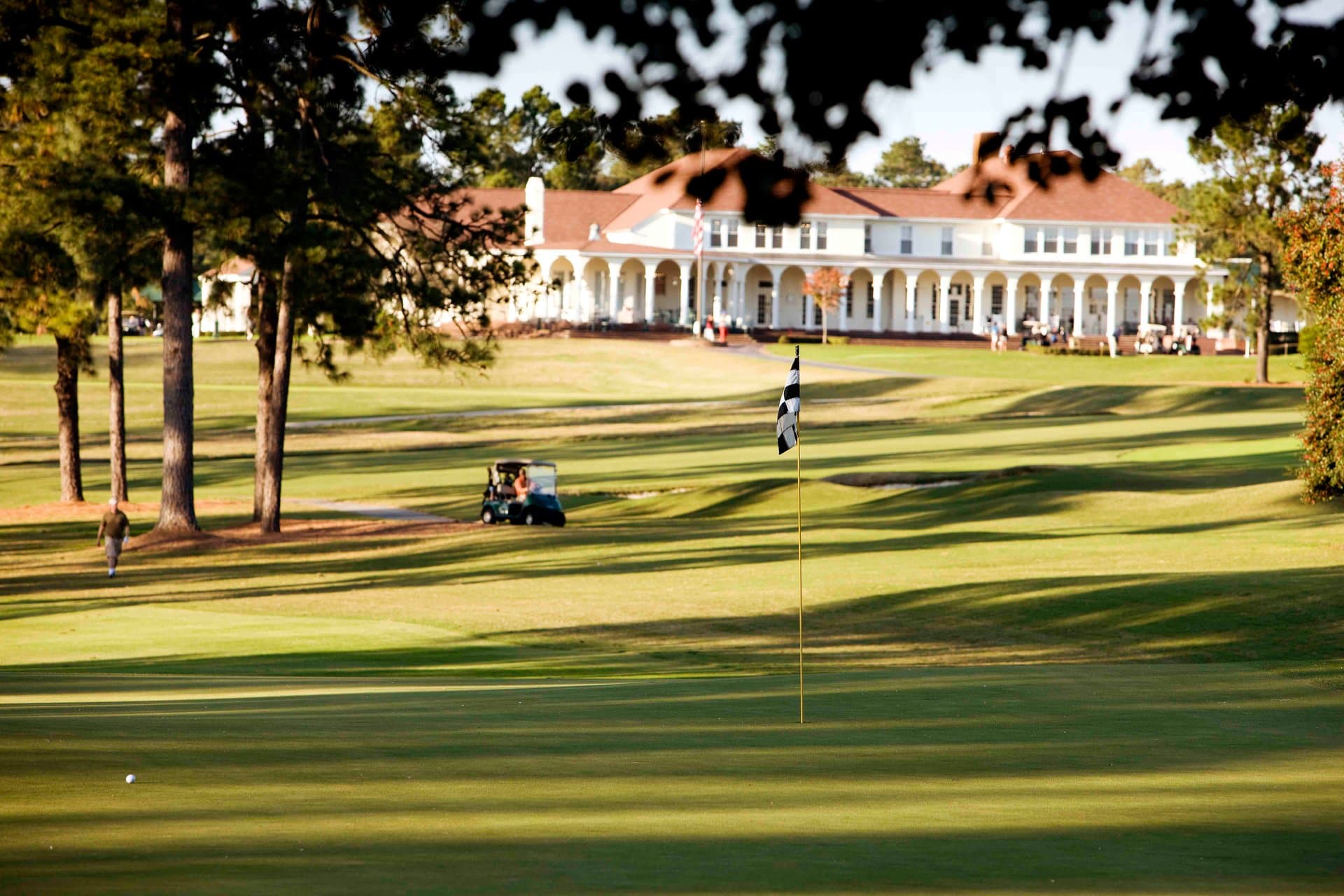
Pinehurst No. 2
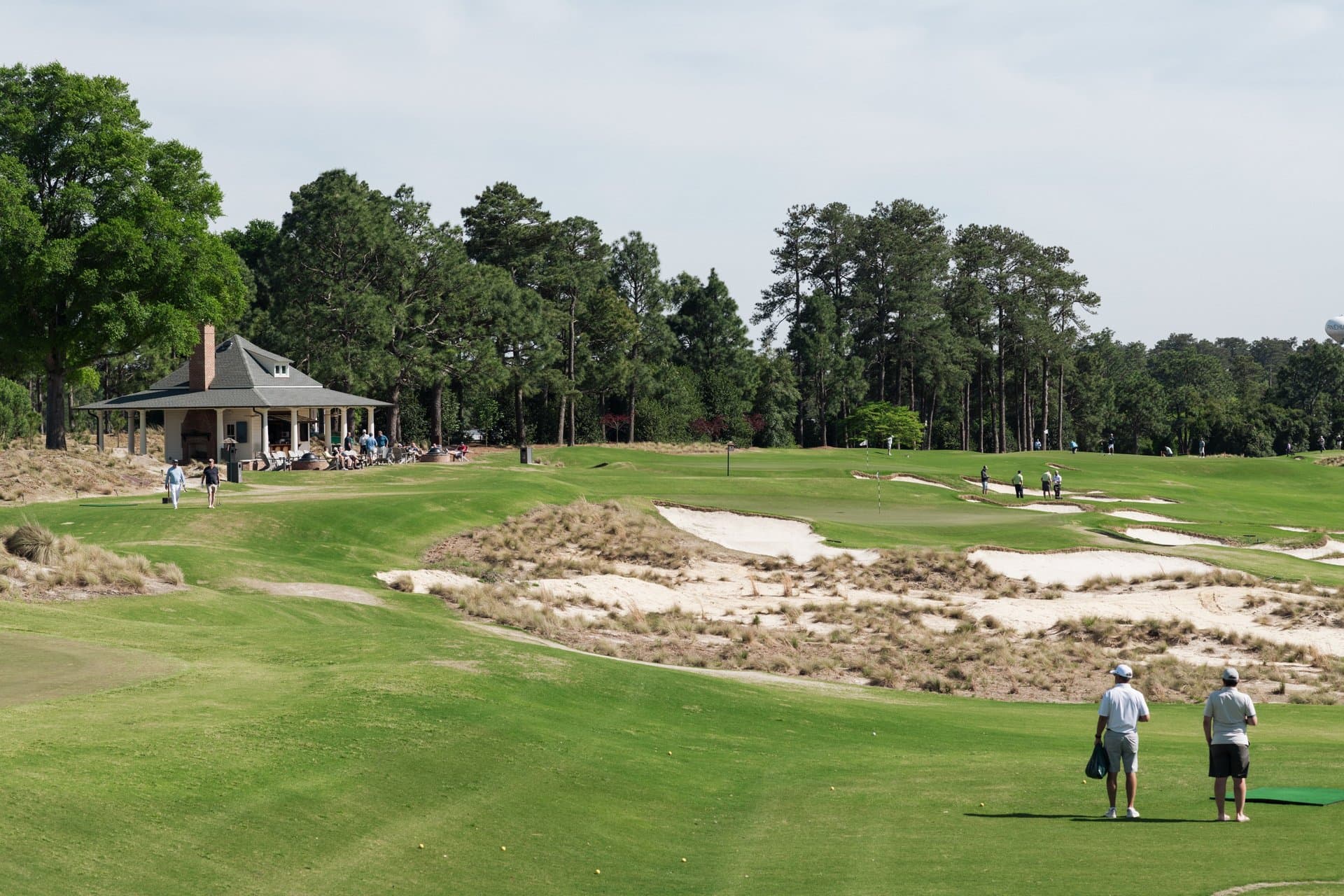
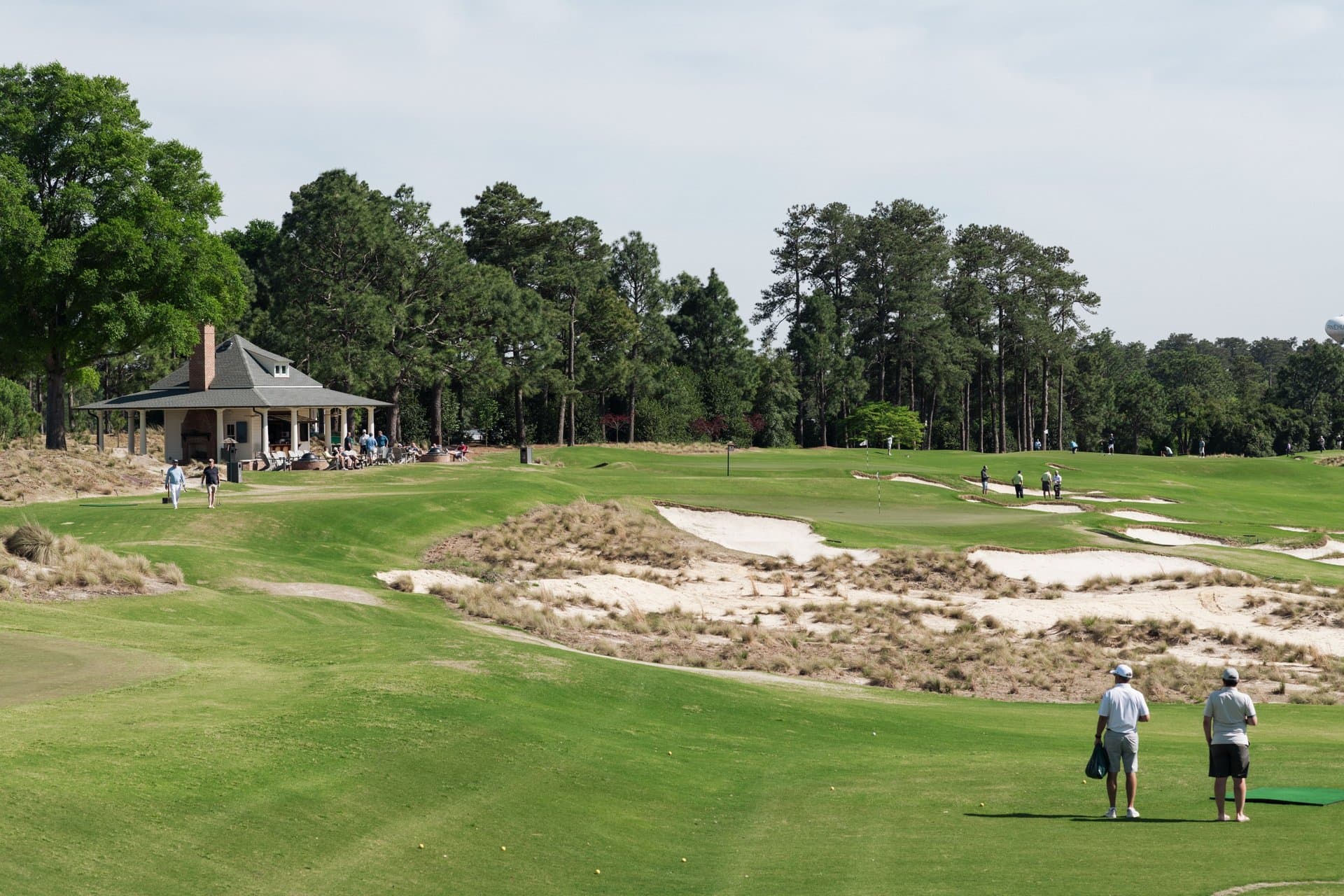
Pinehurst No. 4
The afternoon belongs to The Cradle, Pinehurst's nine-hole short course designed by Gil Hanse. At 789 yards, it plays in roughly an hour and asks for nothing longer than a wedge. This is not filler golf. The greens are genuine Pinehurst surfaces with the same crowned, fall-away contours that define No. 2, scaled down to a more forgiving footprint. For a group arriving after a flight, it recalibrates the hands and eyes without the fatigue of a full round.
After The Cradle, walk to the Thistle Dhu putting course adjacent to the clubhouse. It sounds like a novelty. It is not. The 18-hole layout with real topography and genuine strategy has a way of occupying a group for longer than anyone expects. Dinner in the village is a short walk. Pinehurst is compact and pedestrian in a way that most golf destinations are not. The Deuce, the sports bar inside the clubhouse building, is the natural landing spot for the first evening.
Day 2: Pinehurst No. 2
The main event. Pinehurst No. 2 is the course that made Donald Ross's reputation permanent, and the 2011 restoration by Coore and Crenshaw returned it to something closer to Ross's original intent. The removal of rough and the reintroduction of native wiregrass and sandy waste areas transformed the playing experience. The course no longer penalizes with thick grass. It penalizes with angles, slopes, and the relentless convexity of greens that reject anything less than precise approach work.
Request a morning tee time. The course plays best when the dew is still burning off and the greens have not yet been baked by afternoon sun. Take a caddie. The local knowledge on reads and layup lines is not a luxury here; it is the difference between a satisfying round and a frustrating one. The crowned greens on holes like the fifth and the ninth will not reveal their logic from the fairway alone.
The afternoon should be empty. No. 2 demands a certain amount of mental processing after the fact. Return to the hotel, use the spa or pool, and let the round settle. Dinner at the 1895 Grille inside The Carolina is the appropriate pace for the evening, though the village also offers several good options within walking distance.
Day 3: Pinehurst No. 4 and a Sandhills Afternoon
The morning round is Pinehurst No. 4, which Gil Hanse redesigned in 2018. Where No. 2 is a study in subtlety and restraint, No. 4 is bolder and more visually dramatic. Hanse routed the course through rolling sand ridges and scrubby pines, with wide fairways that invite aggressive lines and green complexes that punish imprecise ones. The contrast with No. 2 is instructive. Played on consecutive days, the two courses articulate different philosophies of Sandhills golf without contradicting each other.
For groups with energy remaining, the afternoon presents an excellent option: Mid Pines Inn and Golf Club or Pine Needles Lodge and Golf Club, both Ross designs within a 15-minute drive of the resort. Mid Pines underwent a Coore and Crenshaw restoration in 2021, and the result is a quieter, more intimate expression of Ross's Sandhills work. Pine Needles, which hosted three U.S. Women's Opens, is the more established name and plays through a beautiful corridor of longleaf pines. Either course provides a useful counterpoint to the resort's scale, and green fees are meaningfully lower.
Evening at the Deuce or the village. By Day 3, the rhythm of the trip should be established: golf in the morning, recovery in the afternoon, the village at night.
Day 4: Tobacco Road or Southern Pines
This is the day to leave the resort property. Tobacco Road Golf Club, a 30-minute drive east in Sanford, is Mike Strantz's most polarizing design. The blind shots, the vast sandy waste areas, the greens perched on ridgelines, and the overall visual intensity represent a radical departure from the measured restraint of Ross. Some players find it gimmicky. There is no neutral response. For a group that has spent three days immersed in Ross and Hanse, Tobacco Road provides necessary disruption.
Others consider it the most creative course in the state.
For those who prefer to stay closer and maintain a more traditional register, Southern Pines Golf Club offers a recently restored Ross design that plays through mature pines with none of the theatrics of Tobacco Road. It is a quieter round and a fine one.
Return to Pinehurst for the final evening. If the group has not yet eaten at the Italian spot in the village or explored the brewery options along Route 5, this is the night to do so.
Day 5 (Optional): Replay or Pinehurst No. 8
A fifth day is not required, but it improves the trip. The strongest option is a replay of No. 2. Second rounds on that course are categorically different from first rounds. The greens make more sense. The strategy clarifies. Shots that seemed impossible on Day 2 become manageable when the memory of the contours is still fresh.
Alternatively, Pinehurst No. 8, the Tom Fazio design on the resort property, is the most forgiving of the numbered courses and offers a pleasant final-morning round before the drive back to Raleigh. It will not rewrite anyone's understanding of golf architecture, but it is a well-conditioned, enjoyable track that sends a group home in good spirits.
Budget Overview
For a four-day trip with three to four rounds, lodging at The Carolina, and dinners in the village, expect to spend $2,500 to $3,500 per person. A five-day trip with a No. 2 replay and an additional off-property round pushes the upper range to $4,000. The largest single expense is the No. 2 green fee, which for resort guests currently runs above $400. Caddie fees add roughly $100 to $130 per round including gratuity. Mid Pines, Pine Needles, and Southern Pines all come in well under $200, which helps balance the overall spend.
Splitting lodging costs in a four-person group reduces the per-person figure substantially. The Manor Inn and several rental properties in the village offer group-friendly rates that undercut The Carolina by 30 to 40 percent without sacrificing proximity to the courses.
When to Go
The Sandhills play best in spring (late March through May) and fall (September through November). Summer is hot, humid, and long. Winter is mild enough for golf on most days, but the bermudagrass dormancy turns fairways brown, which diminishes the visual experience.
The two prime windows also align with the most comfortable evening weather for walking the village.
Avoid the weeks immediately surrounding major USGA events at the resort, when access to No. 2 may be restricted and pricing across the area spikes. Midweek arrivals on any non-event week generally produce the best tee time availability and the fewest pace-of-play issues.
The verdict