PGA West Stadium Course Review — Playing Guide
Par: 72 | Yardage: 7,300 (tips) | Designer: Pete Dye (1986) | Type: Resort | Green Fee: $175–$299 | Walking: Cart included
There is a particular kind of golf course that announces its intentions before you reach the first tee. PGA West Stadium Course in La Quinta is one of them. The practice green alone, with its severe undulations and shaved runoffs, communicates a simple message: precision will be rewarded here, and carelessness will not. Pete Dye built this course in 1986 as a stage for professional competition, and more than three decades later, it still plays that role with conviction. The question for the visiting golfer is not whether the course is good. It is whether you are prepared to meet it on its terms.
Where to stay in Palm Springs
Planning the trip? Compare live prices across every nearby hotel and rental in one search.
Prices and availability from Booking.com, Expedia and others via Stay22. GolfTrailsHQ may earn a commission at no additional cost to you.
The Design Story
The venue was purpose-built for the Skins Game, a made-for-TV event that paired four of the game's biggest names in a high-stakes shootout format. The inaugural 1986 event featured Jack Nicklaus, Arnold Palmer, Gary Player, and Lee Trevino. By the following year, Trevino had coined the phrase "Star Wars golf" to describe the experience, a line that stuck because it captured something true about the design's relentless theatricality.
Dye was commissioned to build a course that would test the best players in the world on national television.
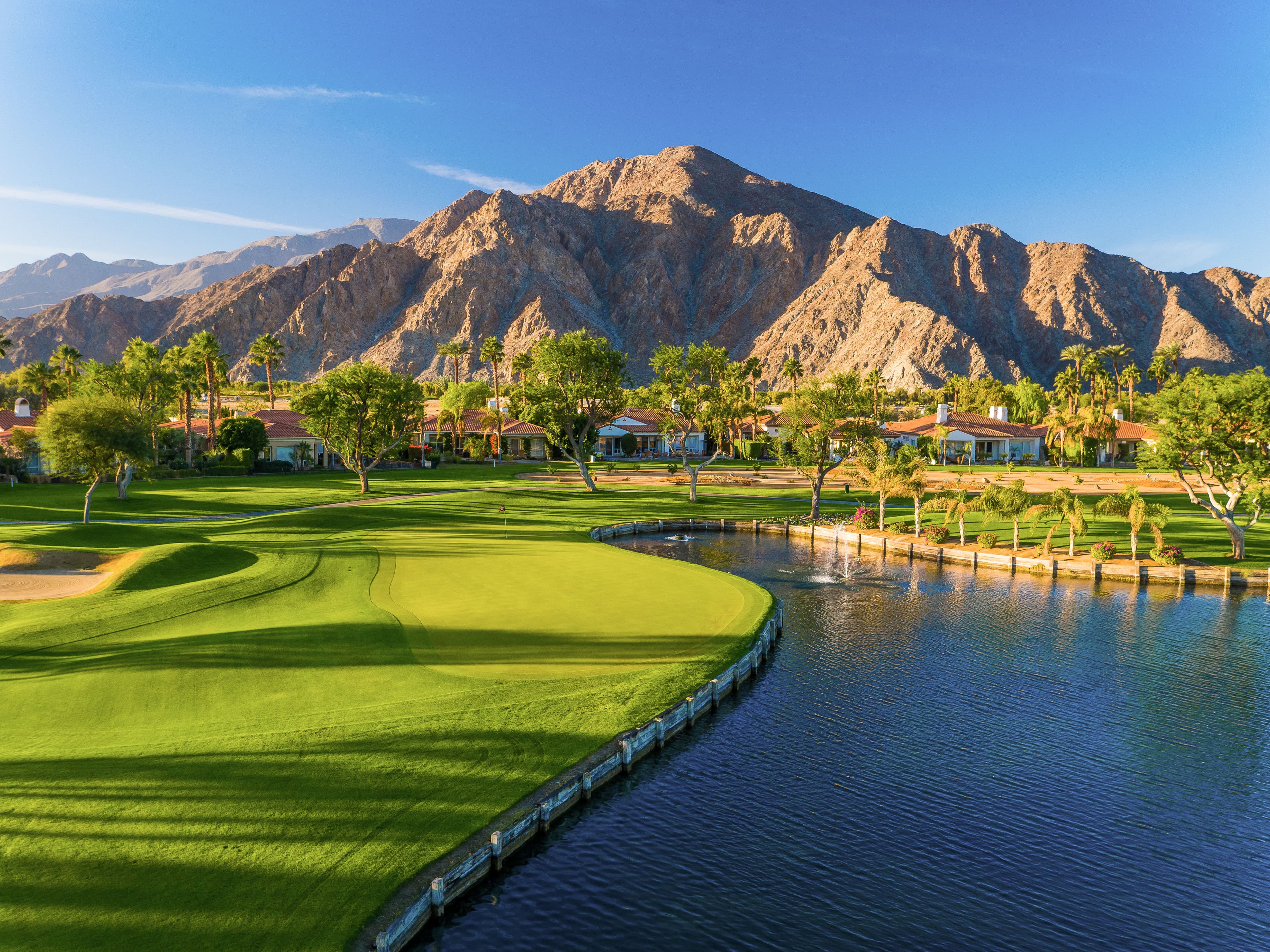
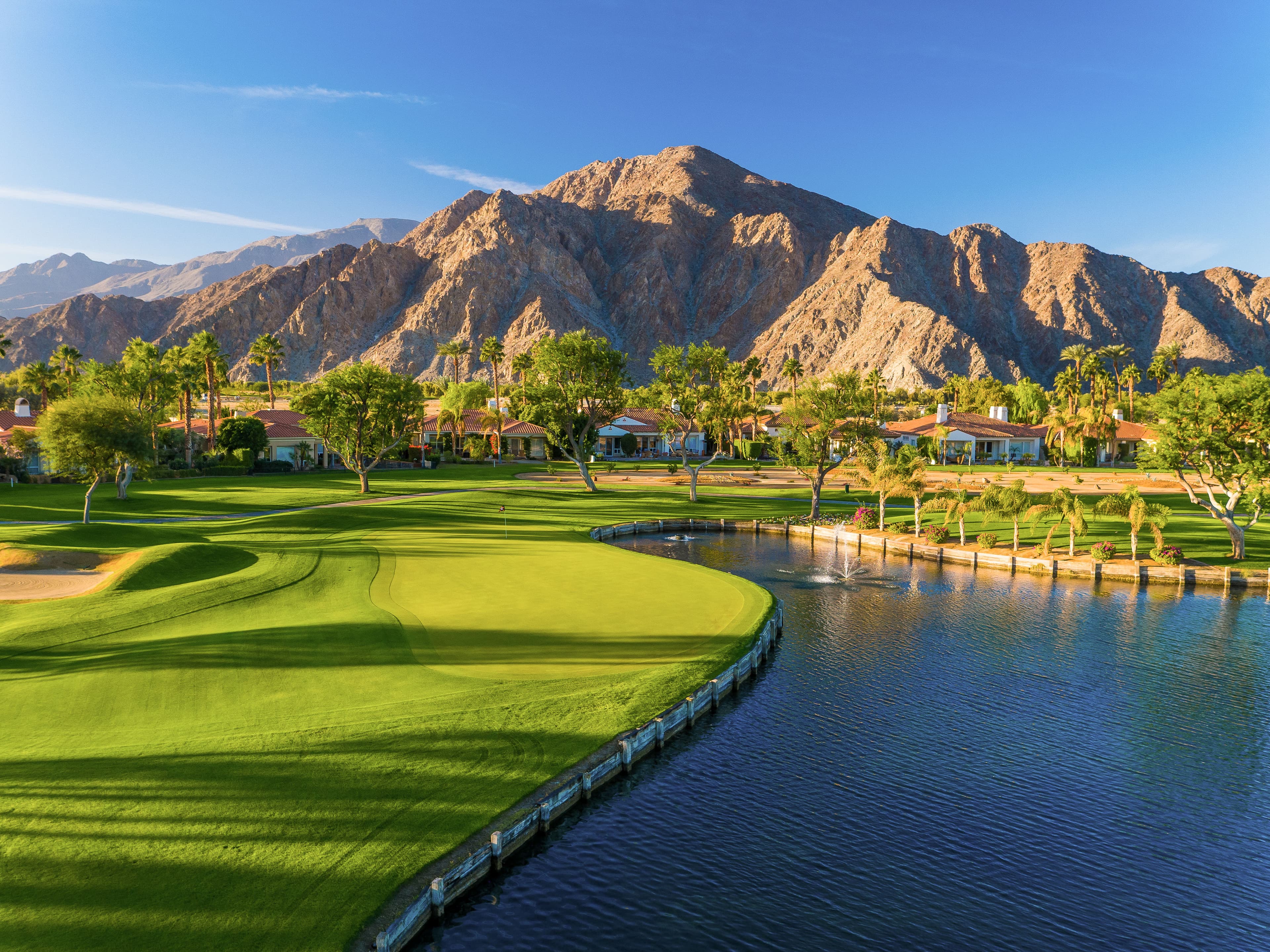
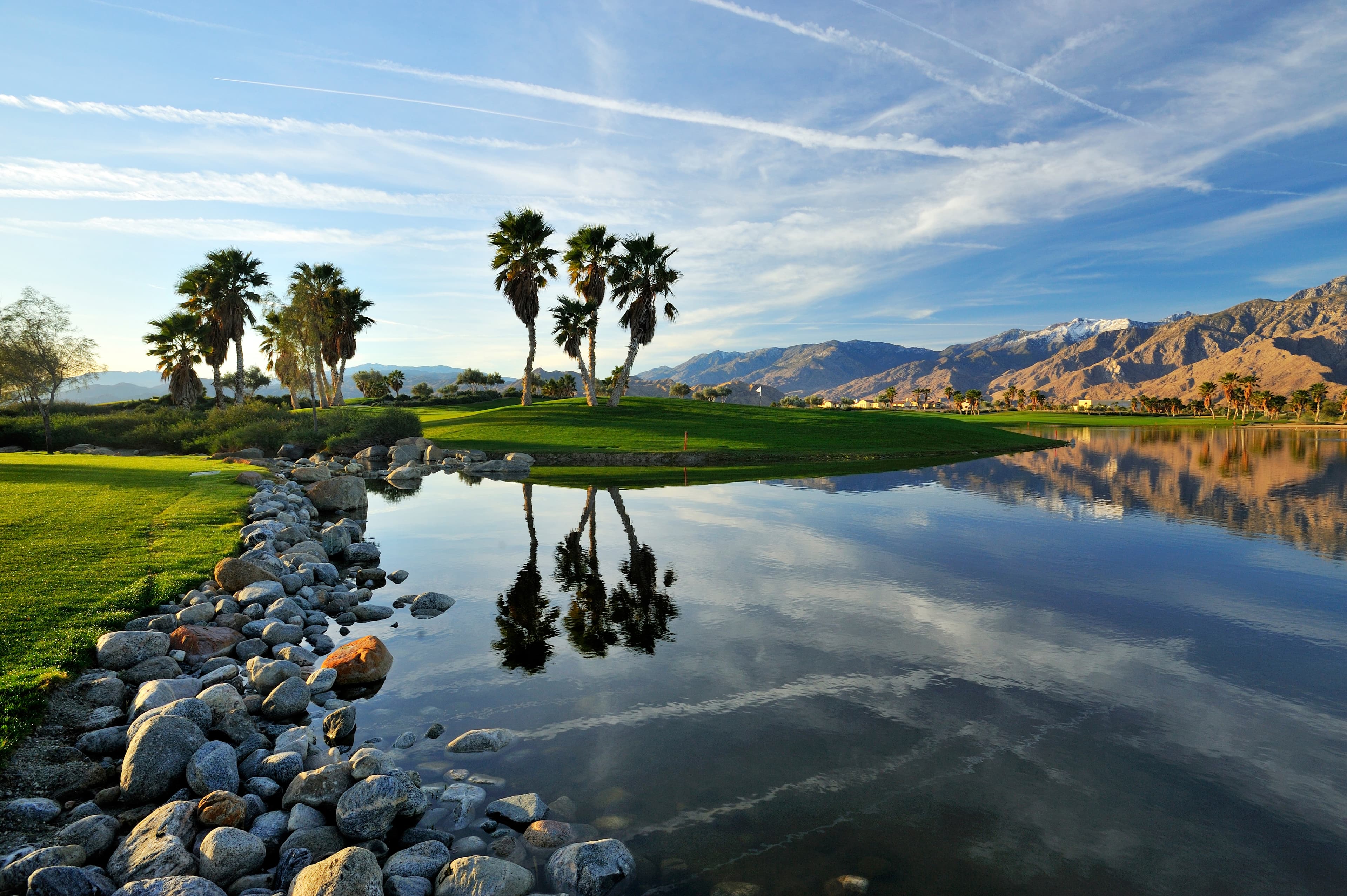
The Stadium Course sits in the Coachella Valley with the Santa Rosa Mountains forming a constant backdrop along its western edge. Dye used the desert floor as a canvas for his full repertoire: railroad ties stacked along hazard edges, pot bunkers cut deep enough to obscure a player's shoulders, and green complexes that reject anything less than a committed approach. The design borrows liberally from links golf in its use of severe bunkering and exposed green sites, but the setting is distinctly American desert. There is no tall rough to speak of. Errant shots find sand, water, or bare hardpan.
The course now operates as part of the PGA West resort complex, which includes the Nicklaus Tournament, Mountain, Dunes, and Norman courses. Among them, the Stadium Course remains the anchor. It continues to host PGA Tour competition as part of The American Express tournament rotation, a fact that keeps the conditioning at a standard few resort courses maintain year-round.
How the Course Plays
The first thing to understand about PGA West Stadium is that tee selection matters more here than at almost any course you will encounter. The tips stretch to 7,300 yards and were designed for professionals. The course rating from the back tees exceeds 76, and the slope sits well above 140. Playing from the appropriate set of tees transforms the experience from an exercise in damage control into something genuinely strategic.
From the right markers, the routing reveals its intelligence. The front nine moves through relatively open terrain, with generous landing areas off the tee that narrow as you approach the green complexes. Dye offers risk-reward decisions on nearly every hole, but the consequences are asymmetric. A good miss leaves a plausible recovery; a bad miss leaves a scramble that often costs two strokes rather than one. The pot bunkers are the primary enforcement mechanism. They are positioned to catch the shot that drifts just slightly off line, and extracting a ball from one of the deeper ones requires a steep swing and realistic expectations about the result.
The back nine increases the pressure. Water comes into play more frequently, the green complexes become more elevated and less forgiving, and the routing builds toward a sequence of finishing holes that rank among the most demanding in resort golf. The firm desert conditions add a layer of complexity: approach shots that land with any sidespin tend to release away from the pin, and putting surfaces that appear flat from a distance reveal subtle breaks once you are standing over the ball.
Course management is not optional here. Players who bring their driver to every par four will find the hazards waiting. The course rewards the player who works backward from the green, identifies the preferred angle of approach, and hits the tee shot that sets it up.
Signature Moments
The seventeenth hole is the one most visitors come to see, and it delivers. Known as "Alcatraz," it is an island green par three that sits in the middle of a manufactured lake, connected to the tee by a narrow walkway. The green is not especially small, but the absence of any bailout area creates an atmosphere that most golfers encounter rarely. There is water in every direction. The shot is typically between 140 and 170 yards depending on the pin and tee, and club selection must account for whatever wind is moving through the valley. It is a hole that produces memorable outcomes in both directions.
But reducing the Stadium Course to a single hole does it a disservice. The par-five fourth, with its split fairway and layered bunkering, offers a genuine three-shot hole that requires thought on every swing. And the closing hole, a reachable par five that tempts aggressive players with a water-guarded green, provides the kind of finish that televised golf demands.
The long par-four ninth, with water guarding the left side of a narrow green, is one of the strongest two-shot holes in the desert.
The railroad ties deserve mention. They are a Dye signature, and they line the edges of bunkers and water hazards throughout the course. They are functional — they prevent erosion and define hazard boundaries cleanly — but they also create visual tension. A ball that comes to rest against a railroad tie is frequently unplayable, and the knowledge of their presence adds a psychological layer to shot planning.
Practical Information
Tip
Tee times are available through the PGA West resort and through third-party booking platforms. Advance booking is advisable during peak season, particularly on weekends. The practice facility is strong, with a full-length driving range and a short game area that allows players to calibrate for the course's firm conditions before heading out.
The resort itself offers multiple accommodation options and dining, and La Quinta sits within easy reach of the broader Palm Springs area. Players looking to combine the Stadium Course with other top-tier desert golf should consult the Palm Springs best courses guide for a fuller picture of what the region offers.
The verdict