Pebble Beach vs Bandon Dunes: America's Two Greatest Golf Pilgrimages
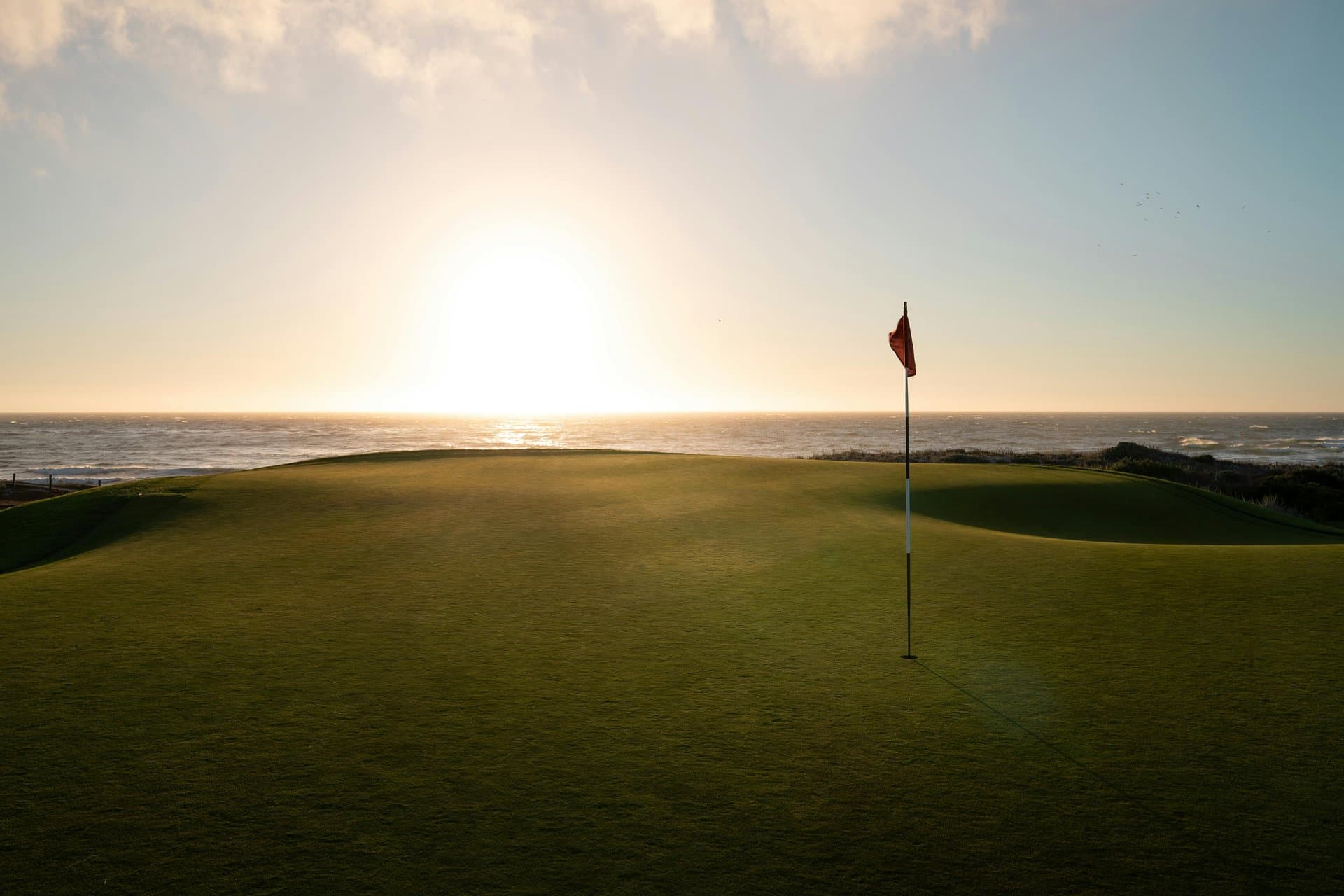
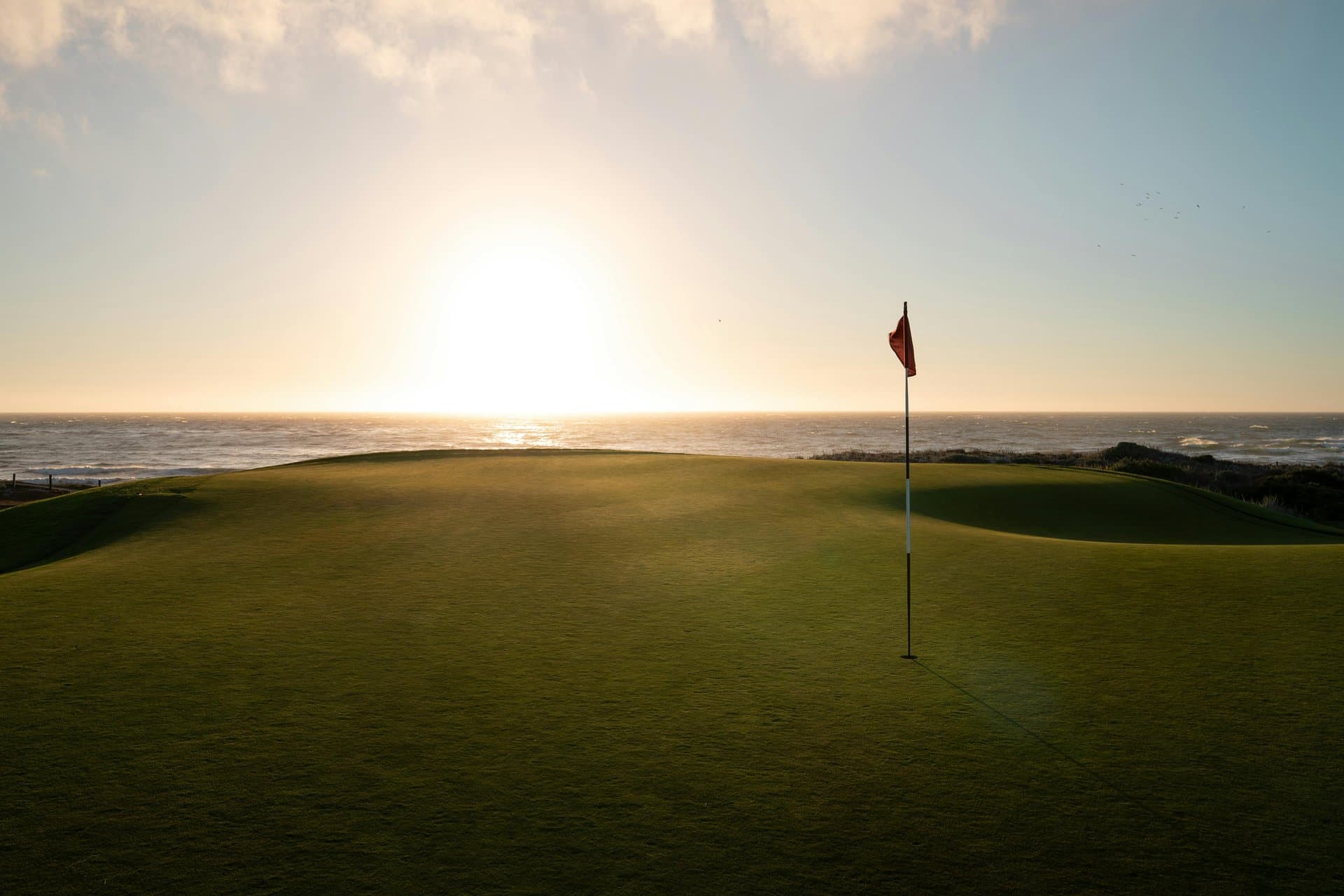
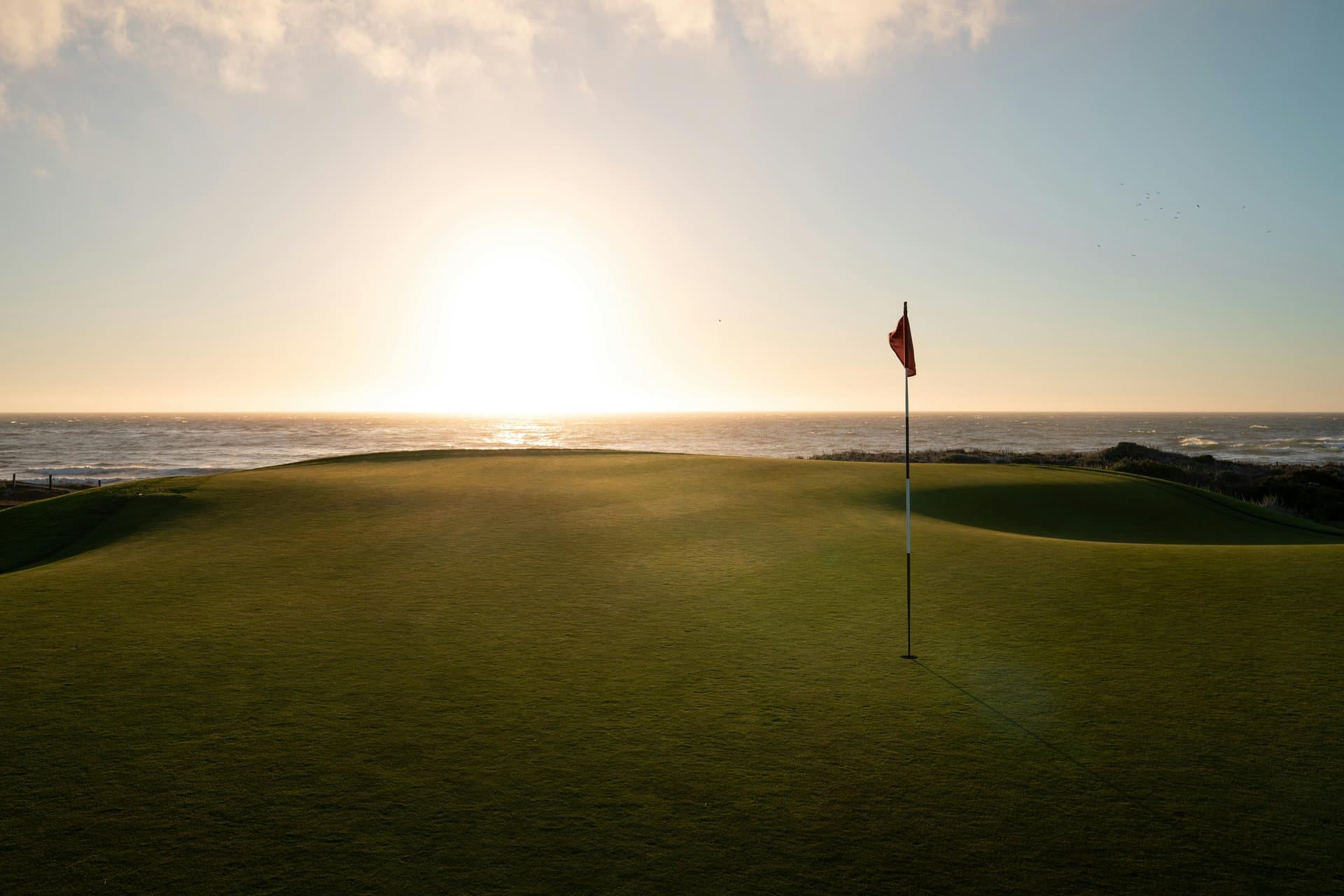
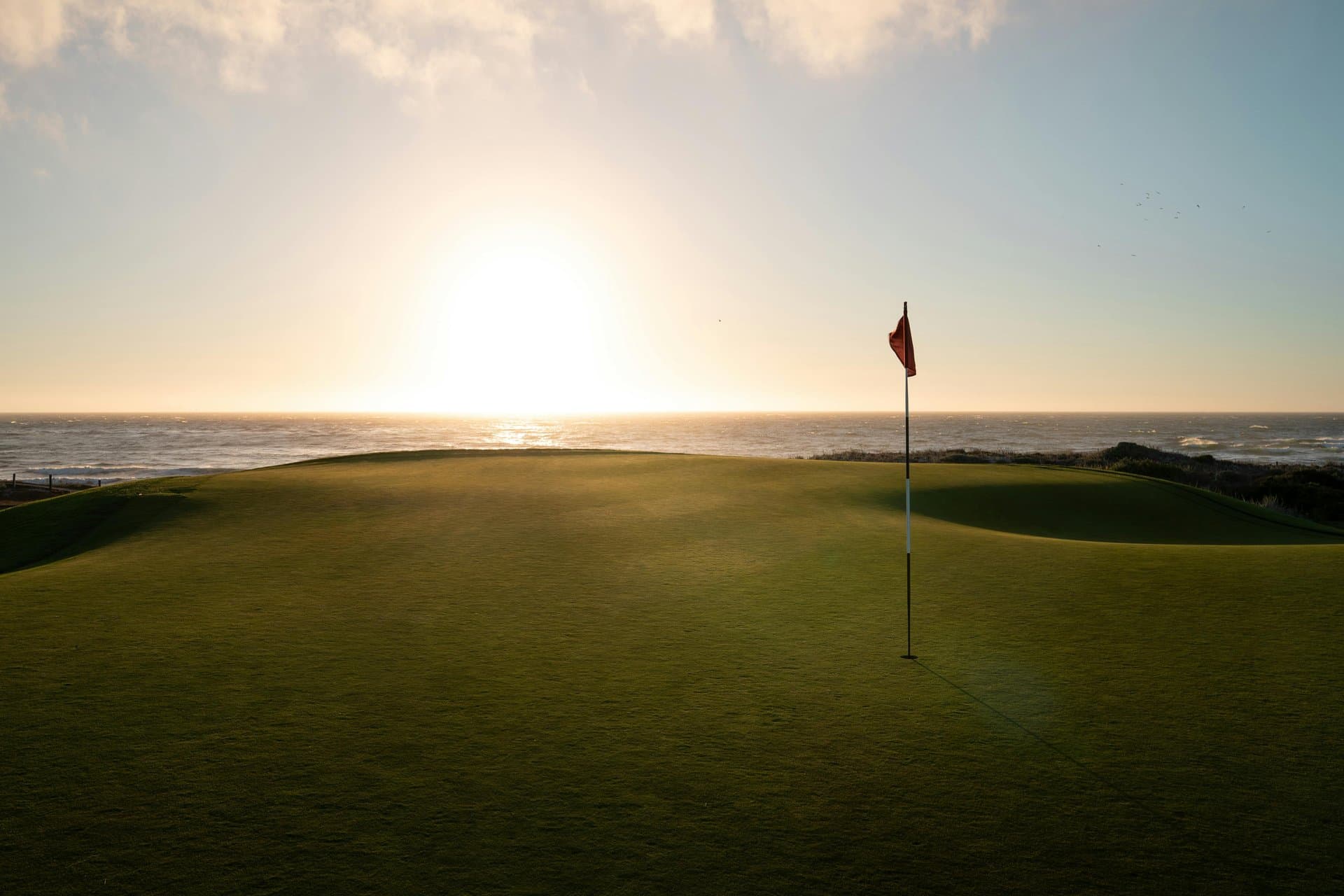
Every golfer who stays with the game long enough assembles a short list of places that feel non-negotiable. American golf has two trips that function less as vacations and more as obligations. Pebble Beach Golf Links and Bandon Dunes Golf Resort occupy the top of every serious golfer's list, but they occupy it for fundamentally different reasons. One is the single greatest round available in American public golf. The other is the greatest multi-day golf experience the country has produced. Treating them as interchangeable misunderstands what each one is actually offering.
Where to stay in Monterey Peninsula
Planning the trip? Compare live prices across every nearby hotel and rental in one search.
Prices and availability from Booking.com, Expedia and others via Stay22. GolfTrailsHQ may earn a commission at no additional cost to you.
The Courses
Pebble Beach is a one-course destination. That is not a criticism. Pebble Beach Golf Links has hosted six U.S. The par-three seventh, a downhill wedge shot to a tiny green perched above Stillwater Cove, is the most photographed hole in the country for good reason. Spyglass Hill is a strong second option with a memorable opening run through sand dunes and Monterey pines before turning inland through the Del Monte Forest. The Links at Spanish Bay provides a pleasant Scottish-style routing along the coast, complete with a bagpiper at sunset. But the hierarchy is steep. Visitors come for one course, and the supporting cast, while competent, exists in its shadow.
Opens, carries more tournament history than any public course on the planet, and delivers a stretch of coastal holes from the fourth through the tenth that no other American layout can match.
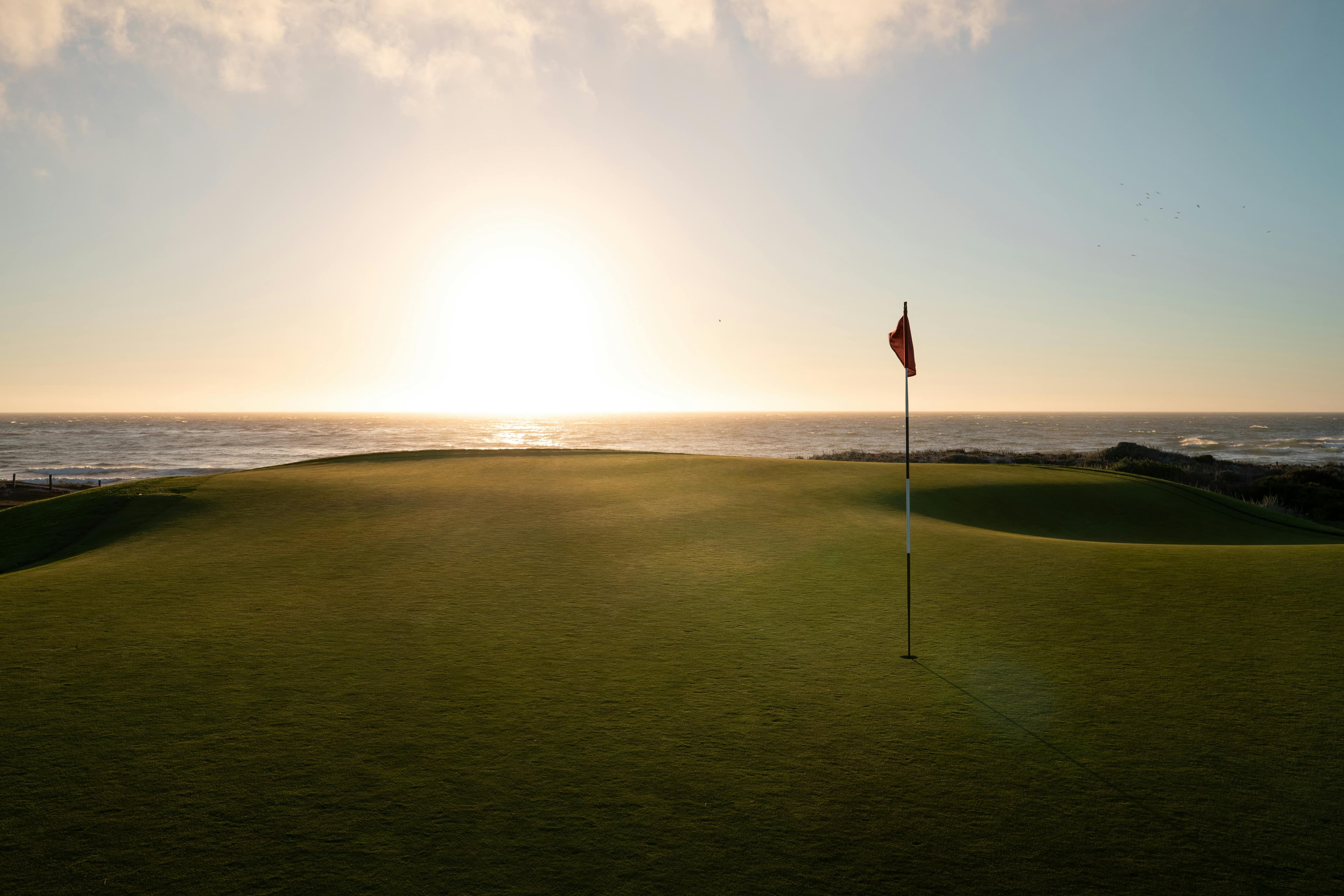
The Links at Spanish Bay
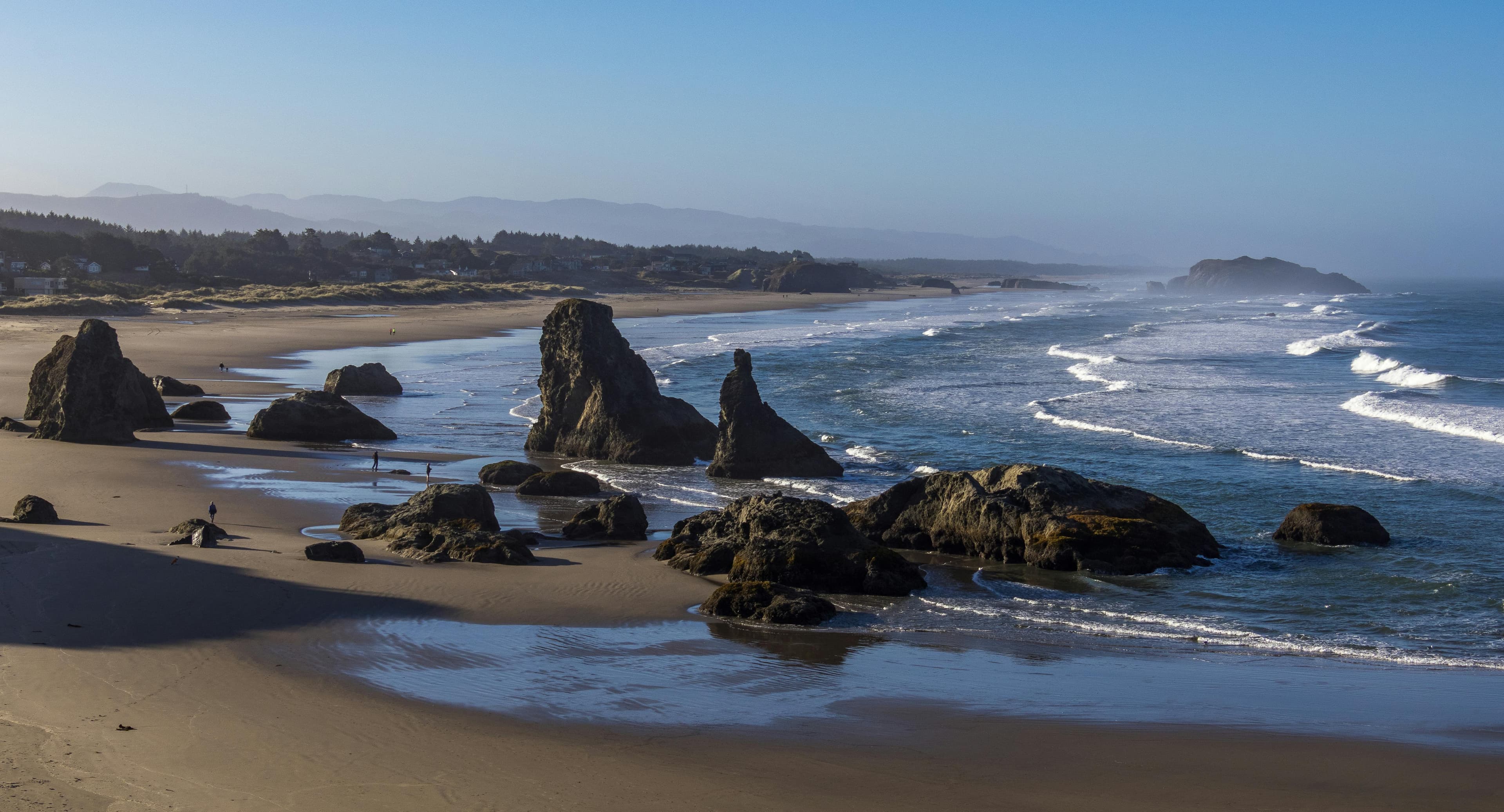
Bandon Trails
Bandon inverts that model. Five regulation courses, all ranked among the top 100 in the United States, spread across miles of Oregon coastline and coastal forest. Pacific Dunes, Tom Doak's masterwork, routinely ranks first or second among American public courses. Bandon Dunes, the David McLay Kidd original, plays like something transplanted from the Scottish coast. Old Macdonald is an architectural study in template design. Sheep Ranch, by Coore and Crenshaw, offers the most sustained ocean exposure on the property. Bandon Trails moves inland through forest and meadow. The depth is unmatched at any American resort. A four-day trip can include five distinct courses without a repeated round, and each one justifies the visit on its own.
The Walking Experience
Bandon is walking only. No carts exist on the property. This is not an inconvenience to be tolerated but the foundation of the entire experience. The caddie program is deep, the local knowledge is valuable in the coastal wind, and the rhythm of walking links golf shapes the day in a way that cart golf simply cannot replicate. By the third day, the walking feels less like exercise and more like the natural pace of the place.
Pebble Beach permits carts and most visitors take them. The terrain at Spyglass Hill, in particular, involves enough elevation change that walking requires genuine fitness. Nothing prevents a player from walking Pebble Beach Golf Links, and those who do are rewarded with a more intimate experience of the coastal holes, but the resort culture does not actively encourage it the way Bandon does.
The Setting
Both destinations sit on the Pacific coast, but the character of that coast could not be more different. Pebble Beach occupies the Monterey Peninsula, where cypress trees frame rocky coves and sea otters drift in the kelp beds below the cliffs. The landscape is photogenic in a way that borders on cinematic. Carmel-by-the-Sea is minutes away. Monterey's Cannery Row, the aquarium, and a dozen strong restaurants are all within reach. The setting is beautiful and civilized.
Bandon's Oregon coast is wilder and more austere. Gorse and sand dunes run to cliff edges above a colder, rougher Pacific. The nearest town of any size is Coos Bay, which does not feature on anyone's list of culinary destinations. The isolation is the point. There is nothing to do at Bandon except play golf, eat at the resort, and talk about the rounds that just happened. For a certain type of golfer, that absence of distraction is the highest luxury available.
Price and Access
A round at Pebble Beach Golf Links costs $575 to $625 depending on season. Resort guests receive priority access but must book a stay at The Lodge, The Inn at Spanish Bay, or Casa Palmero, where rooms start well above $500 per night. A two-round trip covering Pebble Beach and Spyglass Hill, with one night at the resort, can easily exceed $1,500 per person before meals or travel.
Bandon's green fees range from $275 to $375 per round for resort guests, with lower shoulder-season rates and reduced fees for replays. Caddie fees add $50 to $120 per bag depending on the type of caddie, but the investment pays for itself in local knowledge and pace. On-site lodging starts around $200 per night in the simpler rooms, and the resort offers configurations from single rooms to multi-bedroom cottages suited to groups. A three-day trip with four rounds and two nights on property can come in under $2,000 per person. The cost per round of top-tier golf is meaningfully lower, and the quality across those rounds is more consistent.
Logistics
Pebble Beach wins on accessibility. Monterey Regional Airport receives direct flights from several Western hubs. San Francisco and San Jose are each roughly two hours by car. The drive from the airport to the first tee is fifteen minutes.
Bandon requires commitment. The closest commercial airports are Eugene (four hours by car) and North Bend/Coos Bay (thirty minutes, but with limited and seasonal service). Most visitors fly into Portland and drive five hours south, or into Eugene and continue west through the Coast Range on winding two-lane roads. Some groups charter small planes into the local airstrip. The journey is part of the pilgrimage, but it eliminates the possibility of a quick trip. Bandon demands a minimum of three days to justify the travel, and most groups stay four or five. That remoteness filters the visitor base in a way that shapes the entire atmosphere of the resort.
The Culture
Pebble Beach carries the weight of American golf history. Nicklaus in 1972. Watson's chip on seventeen in 1982. Tiger's fifteen-stroke demolition in 2000. The course appears on television every February during the AT&T Pro-Am and occupies a permanent place in the sport's visual vocabulary. Playing it connects a golfer to that lineage in a way that few sporting venues can replicate. The atmosphere at the resort is polished, with the formal service, manicured presentation, and celebrity sightings that the price point implies.
Bandon's culture is more egalitarian. The lodge has no televisions. The dress code exists but leans informal. Conversation in the pub after a round tends toward course architecture and routing theory rather than luxury amenities. Groups of friends on annual trips mix with solo travelers who get paired together and exchange contact information by the turn. Mike Keiser built the resort for golfers who care about the game itself more than the trappings around it, and that ethos has held.
Best For
Pebble Beach is the right trip for the golfer who wants to play the most famous round in American public golf, who values the broader Monterey Peninsula as a destination, and who may be traveling with a non-golfing partner. The Pebble Beach destination guide covers the full range of what the area offers beyond the courses.
Bandon is the right trip for the golfer who wants to walk five of America's finest courses in three or four days, who finds the idea of a remote, golf-immersive retreat appealing rather than limiting, and who values architectural variety and caddie culture.
The Bandon destination guide details the logistics of getting there and making the most of the stay.
Most serious golfers should play both eventually. They are not competing for the same trip, and framing them as rivals misses the point. Pebble Beach is the single round that every American golfer owes themselves, the one course whose name recognition extends well beyond the game and whose coastal holes have defined what resort golf looks like for a century. Bandon is the place where golf, stripped to its essentials and set against a wild coast, reveals why the game sustains a lifetime of devotion. One is a pilgrimage to history. The other is a pilgrimage to the game itself. Understanding the difference before booking will determine which comes first.