Palm Springs, CA: Long Weekend Golf Getaway (2–3 Days)
Palm Springs International Airport sits in the center of the Coachella Valley, fifteen to thirty minutes from nearly every course worth playing. That geography is what makes a long weekend here work. Direct flights from LAX, SFO, SEA, and most major western hubs land at PSP in under two hours, and the terminal is small enough that baggage claim rarely takes more than ten minutes. The math is straightforward: a Thursday afternoon arrival puts clubs in the trunk by 1 p.m., with enough daylight for eighteen holes before dinner. The desert does not waste a traveler's time.
This itinerary covers two full playing days with an optional third morning round.
It keeps the scope tight, prioritizes courses that reward the trip, and builds in enough downtime to make the weekend feel like a vacation rather than a logistics exercise.
Where to stay in Palm Springs
Planning the trip? Compare live prices across every nearby hotel and rental in one search.
Prices and availability from Booking.com, Expedia and others via Stay22. GolfTrailsHQ may earn a commission at no additional cost to you.
Day 1: Arrive and Play an Afternoon Round
The Indian Wells Golf Resort operates two courses within the resort property, and both accept public tee times. The Celebrity Course, redesigned by Clive Clark, routes through open terrain with enough width off the tee to accommodate travel-day swings. The Players Course is the tighter of the two, with more pronounced bunkering and smaller greens, but either layout serves well as an arrival-day round. Afternoon rates drop considerably during peak season, and the courses rarely stack up in the late slots the way they do before noon.
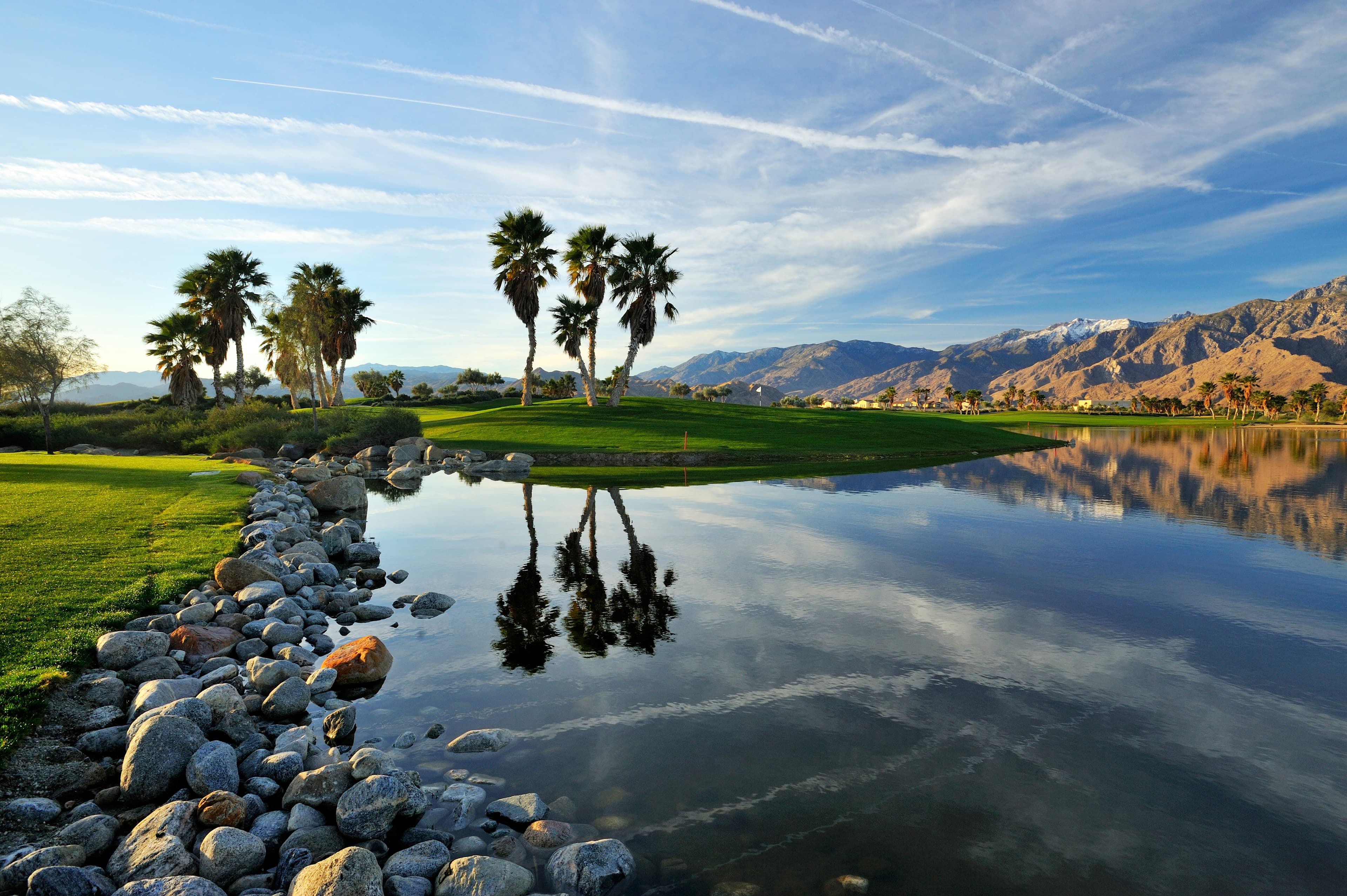
Escena Golf Club
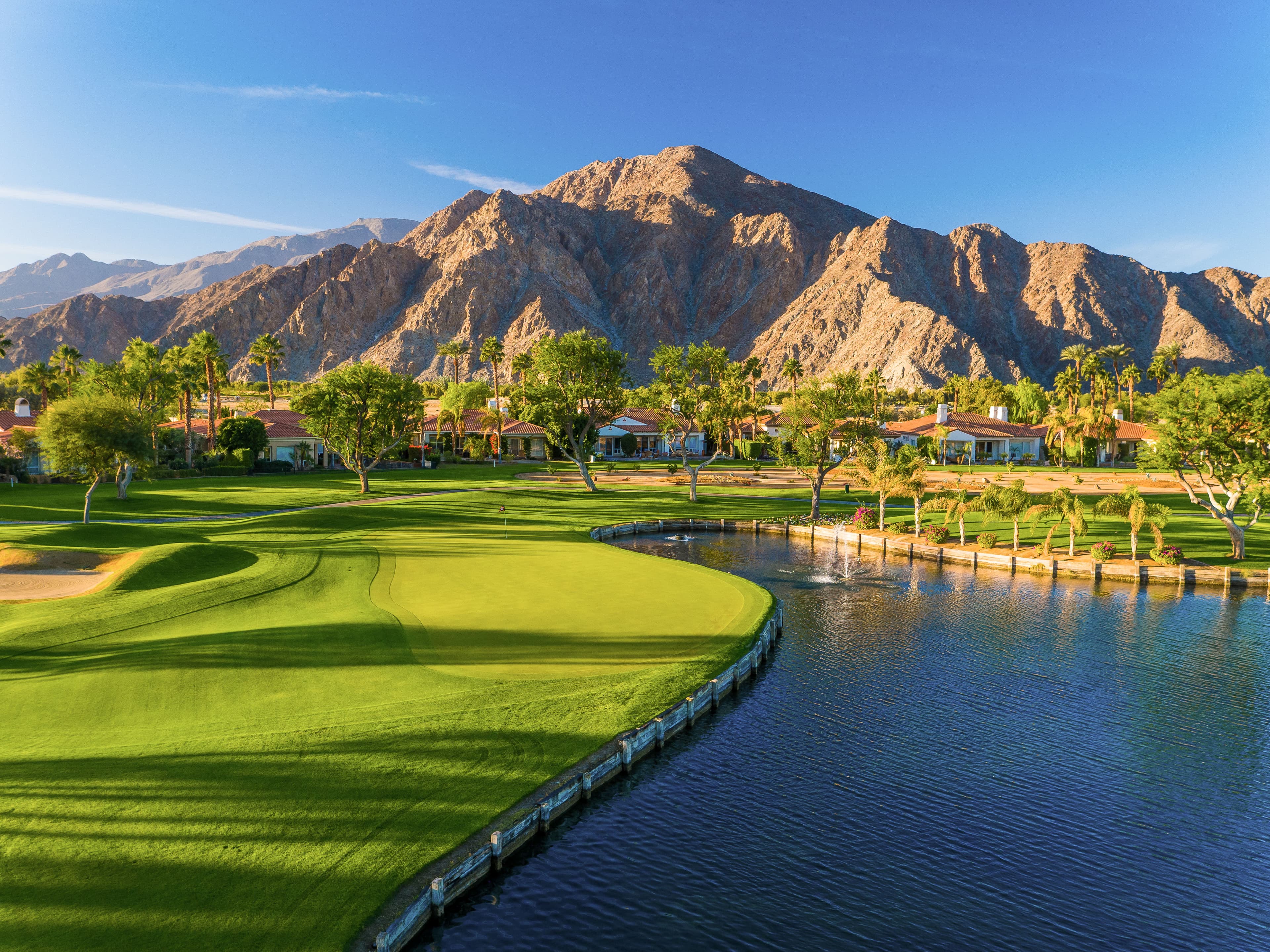
Palm Springs Art Museum
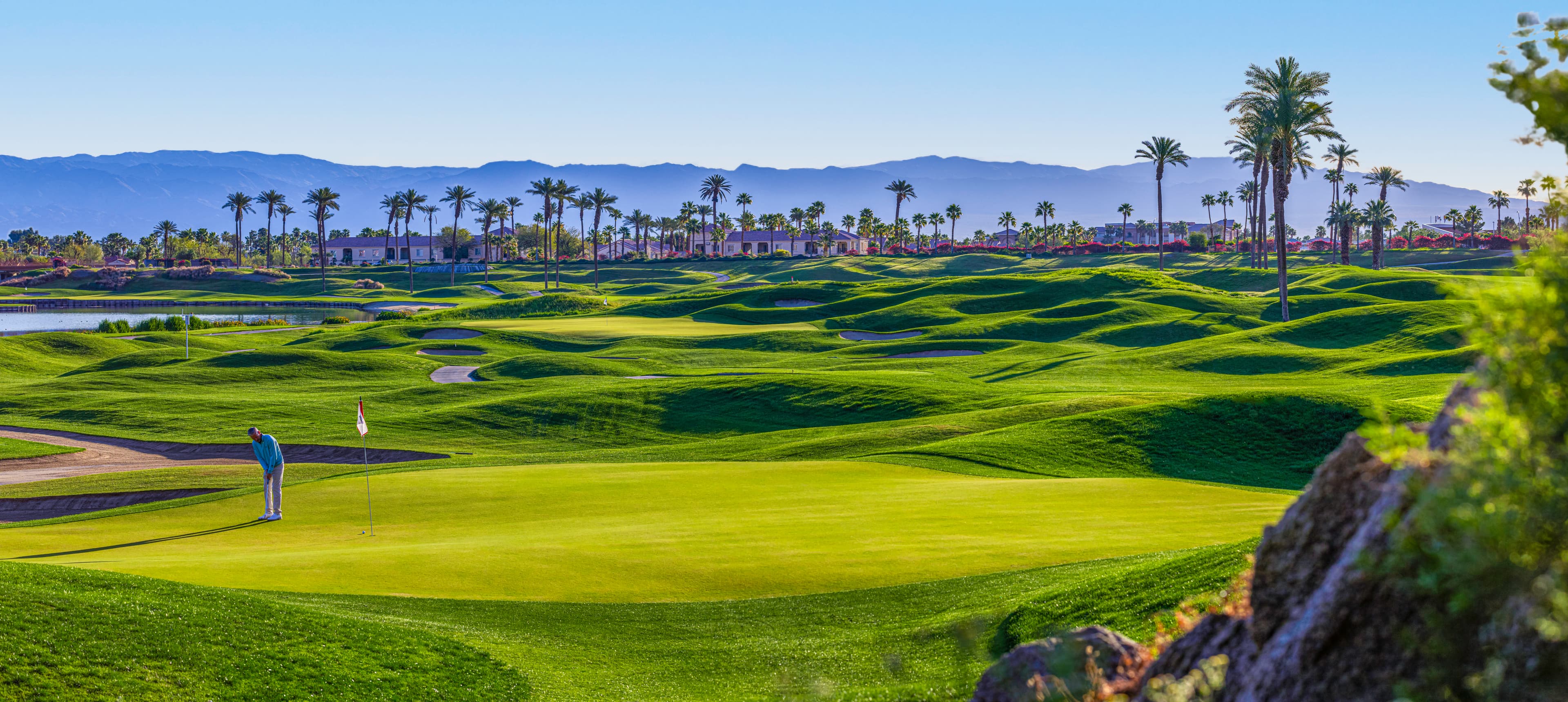
Escena Golf Club, a Nicklaus Design course on the east side of Palm Springs proper, is the alternative. The layout leans modern: broad fairways, large greens, and desert waste areas that frame each hole without punishing marginal misses too severely. It sits less than ten minutes from PSP, which makes it the fastest first-tee option for travelers landing after noon.
Check into a hotel in Palm Desert or Rancho Mirage. Both towns sit centrally in the valley and keep the next morning's drive to La Quinta under twenty minutes.
Day 2: PGA West Stadium Course
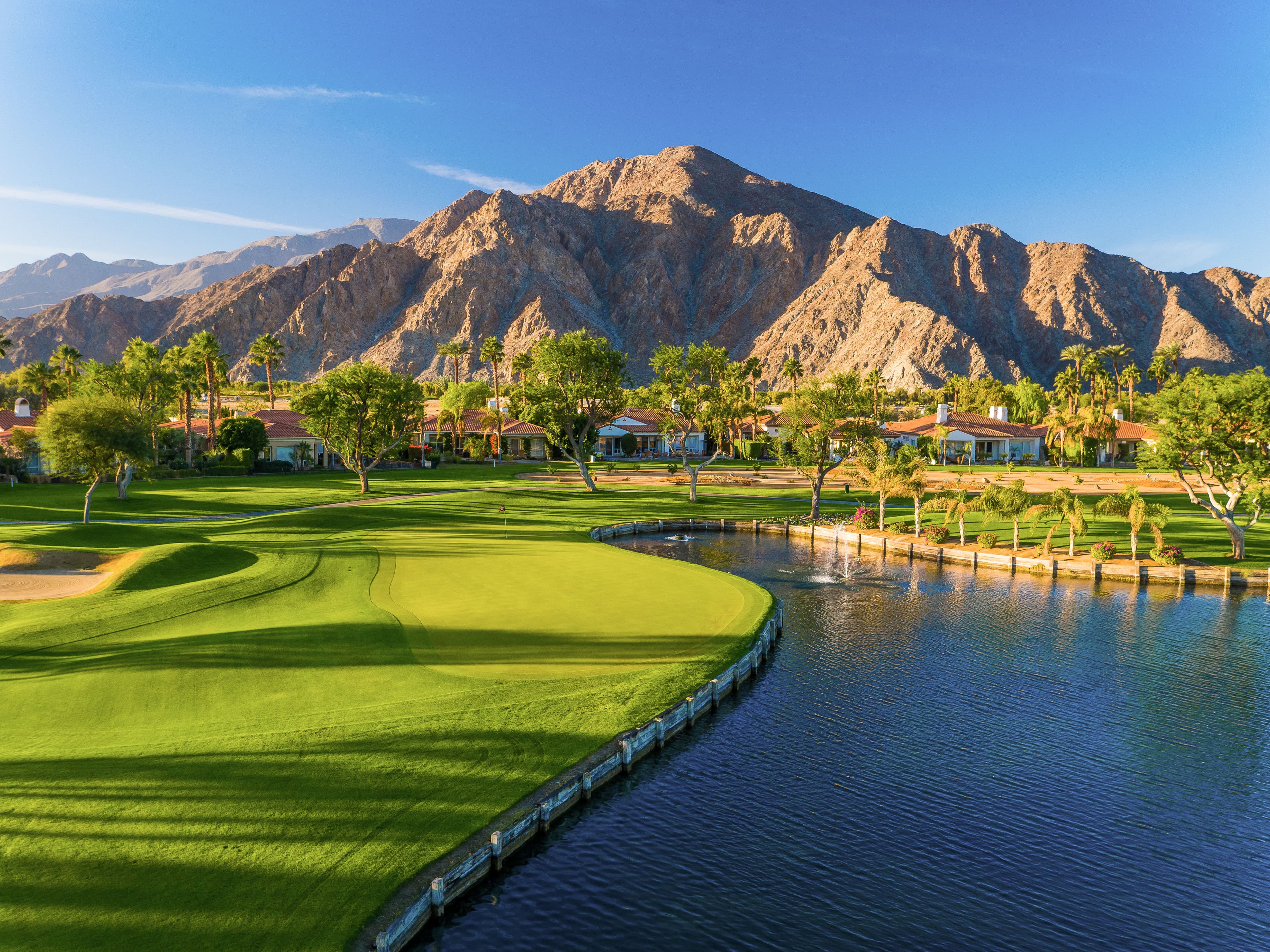
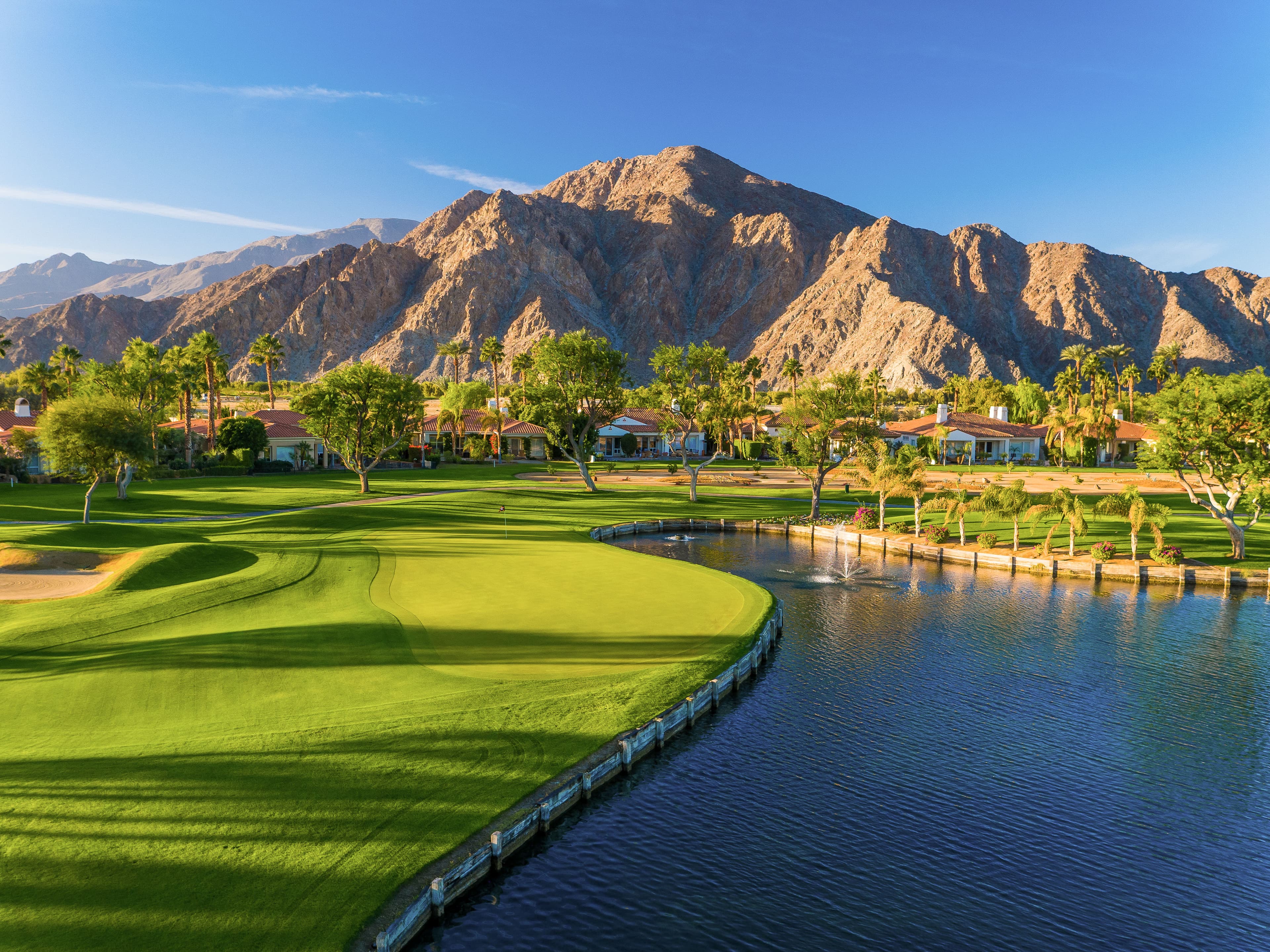
The second day anchors the trip. Dye built the course to host professional tournaments, and the design reflects that ambition: deep pot bunkers, railroad-tie bulkheads, and green complexes that demand precise approach shots from specific angles. The par-3 17th, an island green surrounded by rocks and sand, is the signature hole, but the course sustains intensity across all eighteen.
The PGA West Stadium Course, Pete Dye's 1986 design in La Quinta, remains the most talked-about layout in the Coachella Valley, and it earns the attention.
Book a morning tee time. The course plays best before wind picks up in the early afternoon, and the light on the Santa Rosa Mountains during the front nine is worth the early alarm. A round at PGA West typically takes four to four and a half hours with a cart.
The afternoon belongs to downtown Palm Springs. The stretch of North Palm Canyon Drive between Alejo Road and Tahquitz Canyon Way holds the concentration of restaurants, shops, and mid-century architecture that defines the town's character. A late lunch at one of the restaurants along the main strip, followed by an unhurried walk through the design district, uses the afternoon well without requiring a plan. The Palm Springs Art Museum, if it aligns with the schedule, merits an hour.
Day 3 (Optional): Desert Willow or Classic Club Before Departure
Travelers with a Sunday afternoon flight have time for a final round. Two courses fit the window well, both within twenty minutes of PSP.
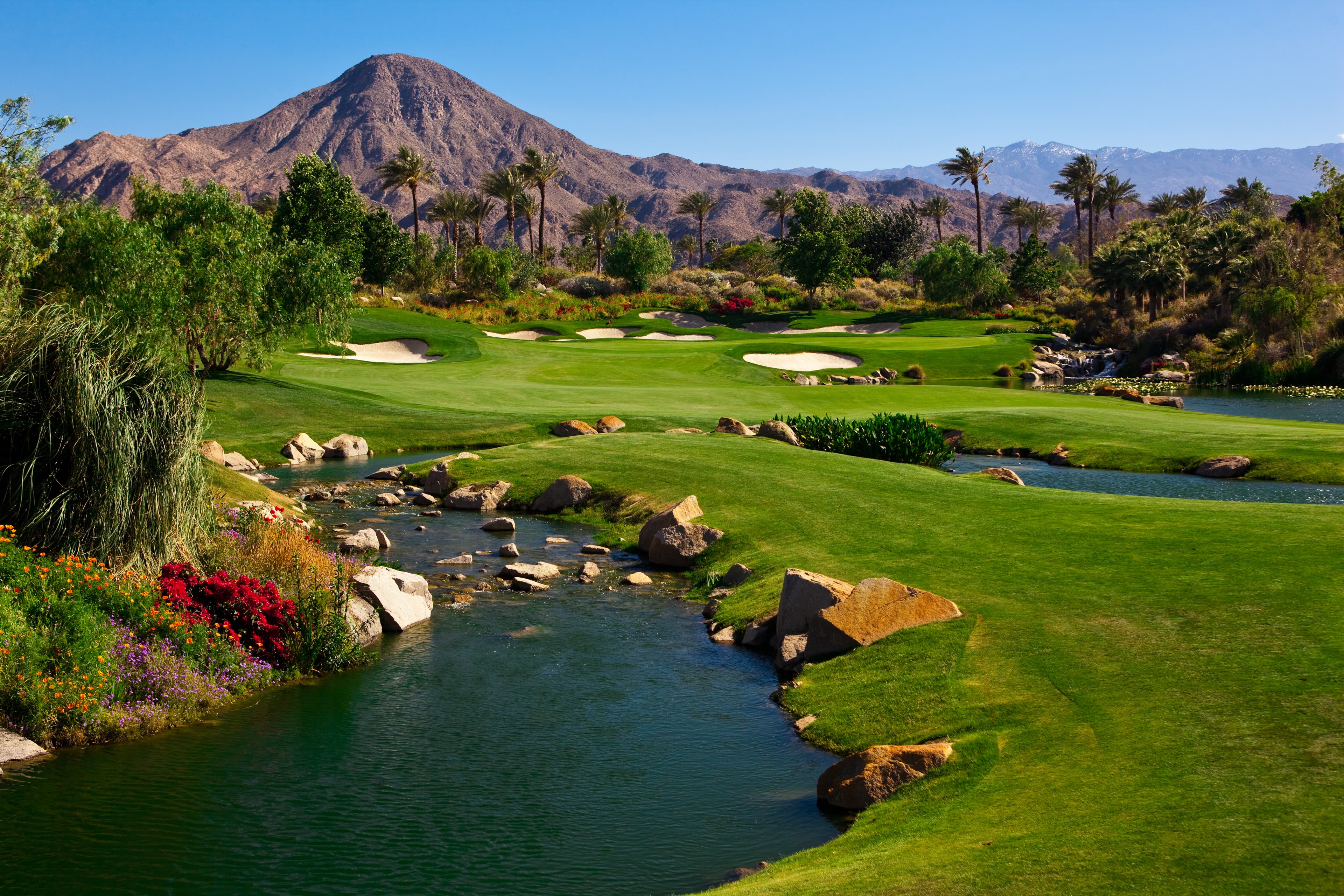
Desert Willow's Firecliff Course, designed by Michael Hurdzan and Dana Fry, plays through native desert washes with minimal turf between fairways. The design philosophy is target golf: pick a line, commit, and accept the result. Firecliff is the more demanding of Desert Willow's two courses, with forced carries and multi-tiered greens that reward precise iron play. The Mountain View Course is the gentler option if the legs are tired from the previous days.
Classic Club in Palm Desert offers a broader, more forgiving layout. Arnold Palmer designed the course with generous landing areas and approachable greens, and it has hosted PGA Tour events in the past. The pace of play is generally reliable, which matters on a departure day when the tee sheet needs to align with a flight time.
A tee time before 7:30 a.m. at either course allows a comfortable finish by noon, with time to return the rental car and clear the terminal. PSP's size works in the traveler's favor here. Security lines rarely extend beyond fifteen minutes, even on Sunday afternoons.
Budget Overview
A two-day trip runs approximately $600 to $1,100 per person. Adding a third day with Desert Willow or Classic Club pushes the range to $800 to $1,400.
| Category | Estimated Range |
|---|---|
| Green fees (2 rounds, peak season) | $200–$450 |
| Hotel (2 nights, mid-range Palm Desert) | $200–$400 |
| Rental car (2–3 days) | $70–$130 |
| Meals and incidentals | $130–$220 |
| Total (2 days) | $600–$1,100 |
| Total (3 days) | $800–$1,400 |
Summer rates collapse dramatically. Green fees from June through September can drop 50 to 70 percent, but daytime temperatures regularly exceed 115 degrees Fahrenheit. Early morning rounds are survivable in summer; anything after 10 a.m. is not advisable.
When to Go
The peak window runs from November through April. January and February deliver the best course conditioning, with overseeded fairways at their greenest and daytime highs in the mid-70s. These are also the most expensive months, particularly during the week surrounding the PGA Tour's annual stop in La Quinta.
Late October and November offer a strong combination of lower rates, warm days in the low 80s, and thinner crowds. March is slightly warmer and busier, with festival season in the valley adding pressure to hotel inventory, though golf pricing holds relatively steady.
The verdict