Palm Springs: Best Holes Ranked
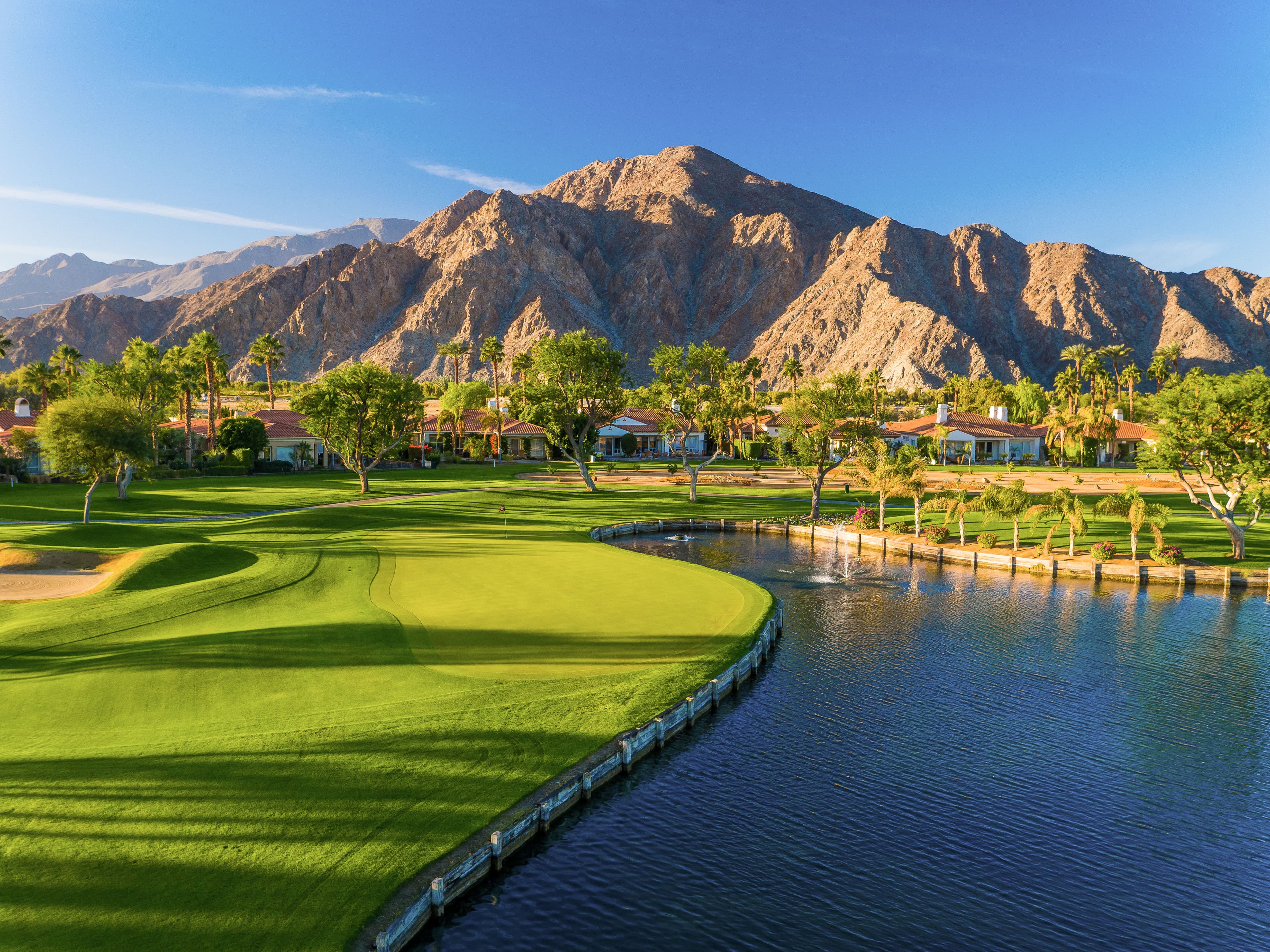
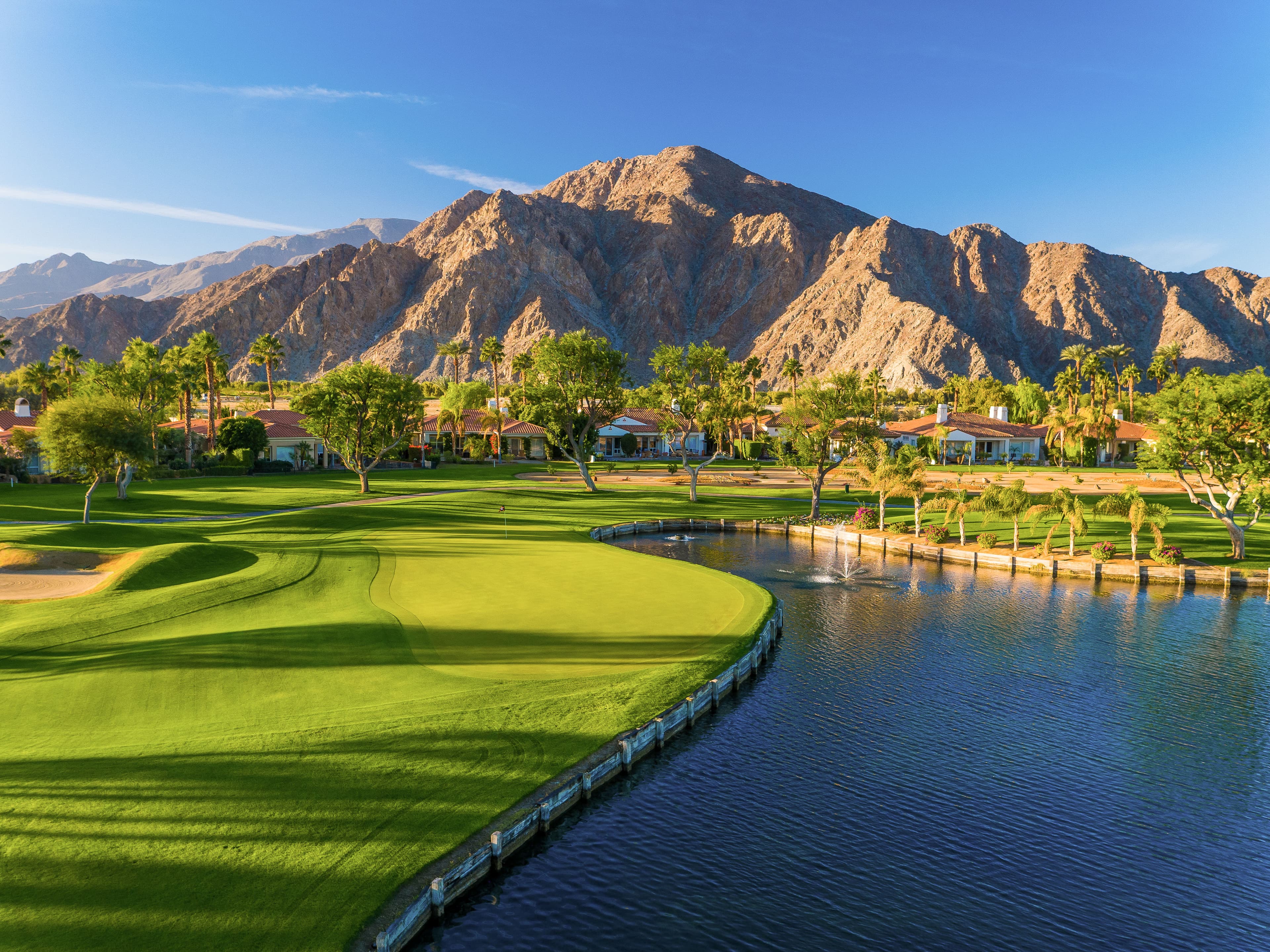
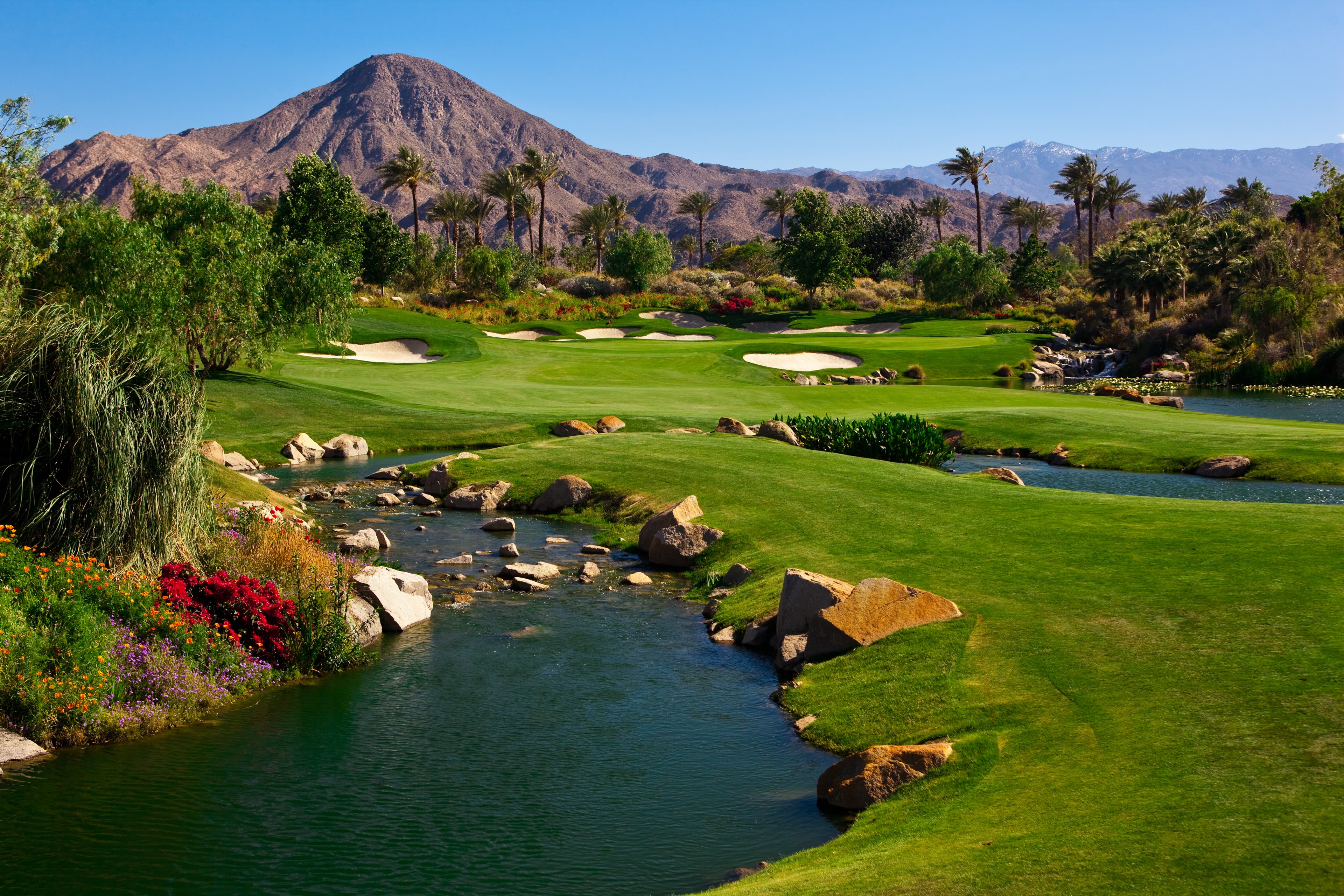
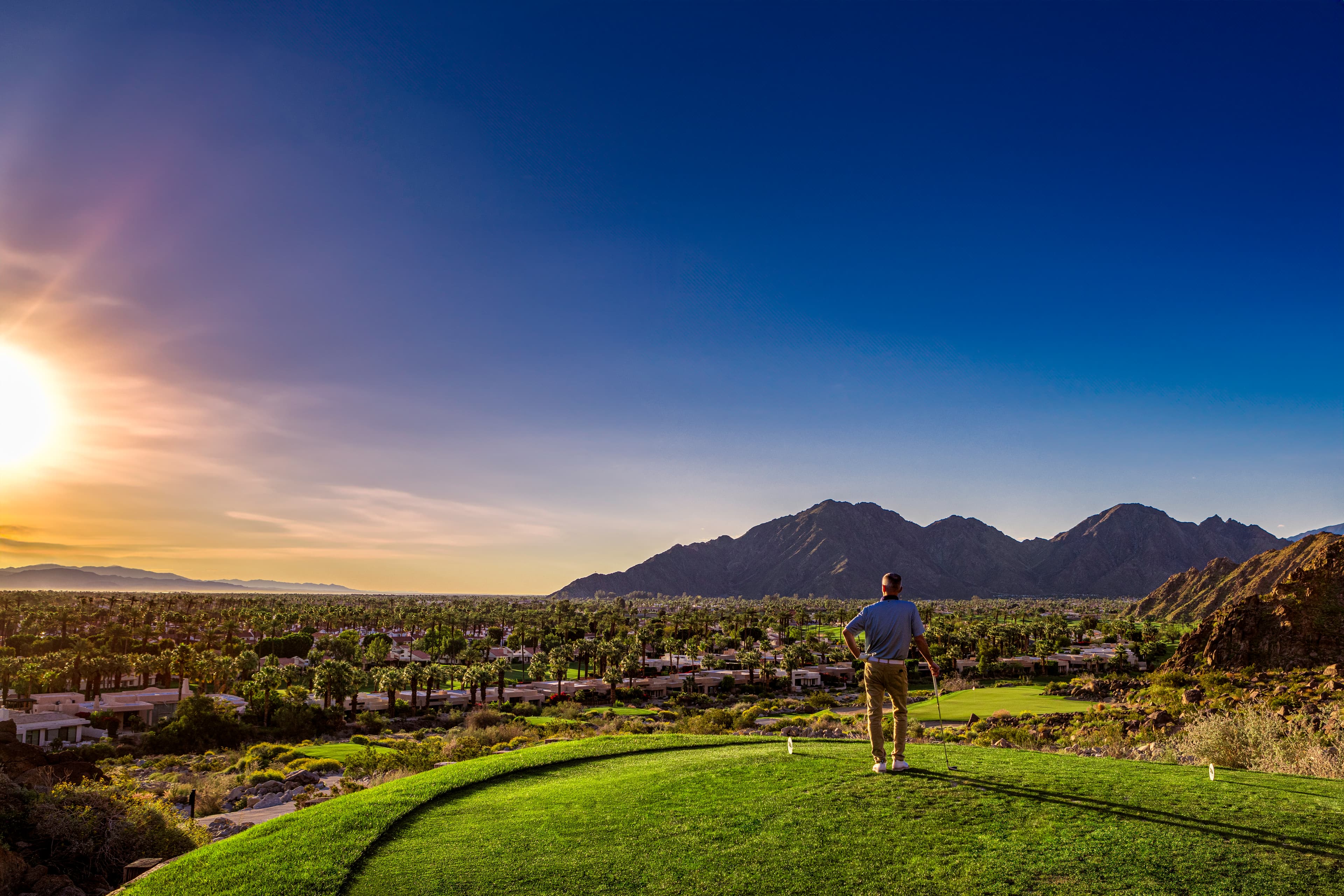
The Coachella Valley stretches roughly thirty miles from Palm Springs to La Quinta, and across that distance more than a hundred courses occupy the desert floor between the San Jacinto and Santa Rosa mountain ranges. Most are competent resort golf. A smaller number contain individual holes that justify the trip on their own terms, holes where the desert landscape functions as a genuine playing feature and the design asks a question that stays with the golfer long after the round ends.
What follows is a ranking of nine holes across seven courses, selected for strategic substance, the quality of the shot demand, and the way each hole uses the valley's topography and desert terrain. Yardages are from the standard resort or white tees unless noted.
Where to stay in Palm Springs
Planning the trip? Compare live prices across every nearby hotel and rental in one search.
Prices and availability from Booking.com, Expedia and others via Stay22. GolfTrailsHQ may earn a commission at no additional cost to you.
1. PGA West (Stadium), Hole 17 — Par 3, 168 yards
Pete Dye called it "Alcatraz," and the name functions as instruction rather than decoration. The hole is a 168-yard par 3 to an island green surrounded entirely by water and rock. There is no bail-out, no safe miss, no creative recovery. The shot either reaches the putting surface or it finds the water. Dye built the Stadium Course in 1986 to host televised golf, and the 17th is the architectural culmination of that intent. A mid-iron to a green of adequate size is not, in mechanical terms, a difficult shot. What transforms it is the total absence of margin. Every golfer on the tee knows the consequence before selecting a club, and that knowledge alters the swing in ways that yardage alone cannot explain.
It is the most discussed hole in the Coachella Valley, and the discussion is proportionate to the experience.
The Classic Club
2. PGA West (Stadium), Hole 16 — Par 4, 403 yards
The San Andreas Fault bunker gives the 16th its name and its strategic identity. Dye positioned an elongated waste bunker along the left side of the fairway, running nearly the full length of the hole, and backed it with mounding that suggests geological forces rather than heavy equipment. The tee shot must carry or avoid the bunker complex while finding a fairway that narrows toward the green. The approach plays into a prevailing afternoon wind from the San Gorgonio Pass, and the green is guarded by deep pot bunkers that collect anything short or left. On a course rated at the maximum 150 slope, the 16th stands as the hole where the difficulty feels most deliberately calibrated.
3. La Quinta Mountain Course, Hole 16 — Par 3, 165 yards
Pete Dye carved the 16th at the Mountain Course directly into the base of the Santa Rosa Mountains, and the result is a par 3 that plays from an elevated tee to a green framed by raw rock walls. The setting is more canyon than golf course. The tee shot drops roughly forty feet to a green protected by bunkers on the right and a steep rock face on the left. Club selection must account for the elevation change and the wind that swirls unpredictably in the confined space. Among the valley's many mountain-framed par 3s, this is the one where the mountains are not backdrop but playing surface.
4. Indian Wells (Players), Hole 14 — Par 3, 185 yards
John Fought's 2007 Players Course draws from classic American architecture, and the 14th is where that ambition is most visible. The par 3 plays 185 yards to a green positioned against the full panorama of the Santa Rosa Mountains, with bunkering that frames the putting surface in the manner of a Golden Age design. The green is contoured with enough internal movement to create four distinct pin positions, each demanding a different shape and trajectory on the tee shot. Fought designed the Players Course to reward planning over power, and the 14th is the clearest expression of that philosophy.
5. Desert Willow (Firecliff), Hole 17 — Par 3, 175 yards
Hurdzan, Fry, and John Cook routed the Firecliff course through natural desert washes, and the 17th asks the golfer to carry one. The par 3 plays 175 yards over a desert wash to a green that sits slightly elevated on the far side, with bunkers flanking both edges. The carry is not extreme, but the wash is visible from address to finish, and the visual effect on club selection is measurable. The Santa Rosa Mountains fill the background behind the green, creating a depth of field that makes distance judgment more difficult than the yardage suggests. On a course already rated among California's top public layouts, the 17th is the hole that earns the rating.
6. SilverRock Resort, Hole 16 — Par 4, 415 yards
Tip
7. The Classic Club, Hole 18 — Par 5, 548 yards
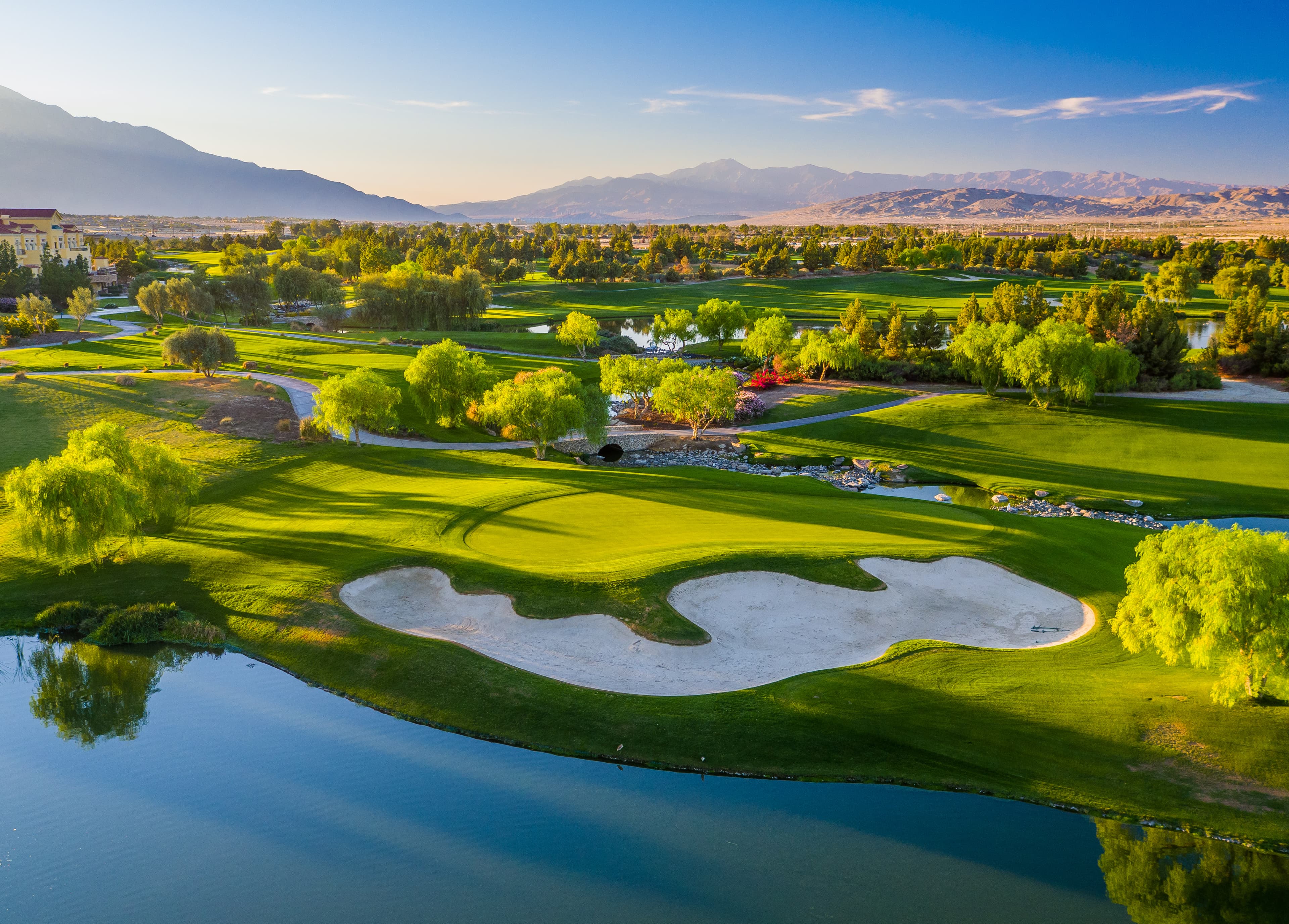
Palmer's second appearance on this list comes at the closing hole of The Classic Club, a par 5 that brings water down the left side and the Santa Rosa Mountains into full view behind the green. The hole is reachable in two for longer players willing to carry the water on their second shot, but the penalty for failure is absolute. Played as a three-shotter, the 18th is a strategic closing hole that asks for a well-placed layup and a precise wedge. Either approach produces a finish that matches the Bob Hope Classic pedigree the course once carried.
Played aggressively, it becomes the most consequential swing of the round.
8. PGA West (Nicklaus Tournament), Hole 9 — Par 4, 425 yards
Jack Nicklaus designed the Tournament Course at PGA West in 1987, a year after Dye completed the Stadium Course next door, and the 9th hole demonstrates the difference between the two architects. Where Dye creates visual intimidation, Nicklaus builds positional complexity. The fairway bends left around a lake, and the tee shot must balance distance against angle: a longer drive reduces the approach yardage but brings the water into play on the second shot. The green sits on a slight promontory above the water, receptive to a well-struck iron but unforgiving of anything that drifts left. It is the kind of hole that plays differently at every skill level, which is the hallmark of Nicklaus at his best.
9. Escena Golf Club, Hole 14 — Par 4, 390 yards
Nicklaus Design built Escena in 2005 on the northern edge of Palm Springs proper, closer to the San Jacinto Mountains than most valley courses. The 14th is a mid-length par 4 that plays toward the mountains, with a desert wash crossing the fairway at the landing zone. The wash forces a decision off the tee: lay up short with an iron for a longer approach, or carry the wash with a driver for a wedge in. The green is well-bunkered and tilted slightly toward the player, accepting a committed approach and rejecting a tentative one. On a course that offers strong value at accessible pricing, the 14th is the hole worth remembering.
The verdict