The Most Beautiful Golf Courses in America
Beauty in golf operates differently than beauty in most other contexts. A course can occupy stunning terrain and still feel ordinary if the routing ignores the landscape. Conversely, a great architect can find drama in land that a casual observer would dismiss. The courses on this list succeed on both counts: the land is extraordinary and the architect understood how to use it. Every hole feels like it belongs exactly where it sits, and the views serve the golf rather than distracting from it.
It is a list of courses where the visual experience stays with you as long as the scorecard, and where reaching for your phone to take a photograph feels like the only reasonable response to what you are seeing.
This is not a list of the best courses in America, though several would appear on that list as well.
Pebble Beach Golf Links, Pebble Beach, California
Nine holes along the Pacific coastline, with waves breaking against rocks 80 feet below the fairways. Pebble Beach Golf Links has appeared in so many photographs and television broadcasts that the visual impact should be diminished by familiarity. It is not. The 7th hole, a 106-yard par 3 played to a tiny green perched on a rocky promontory, is more striking in person than any image can convey. The 8th through 10th, routing along the cliff edge above Stillwater Cove and Carmel Bay, produce the most sustained stretch of coastal beauty in American golf. On a clear day, when the Pacific is flat and the sun is low, Pebble Beach stops even the most experienced golfers in their tracks.
Pacific Dunes, Bandon, Oregon
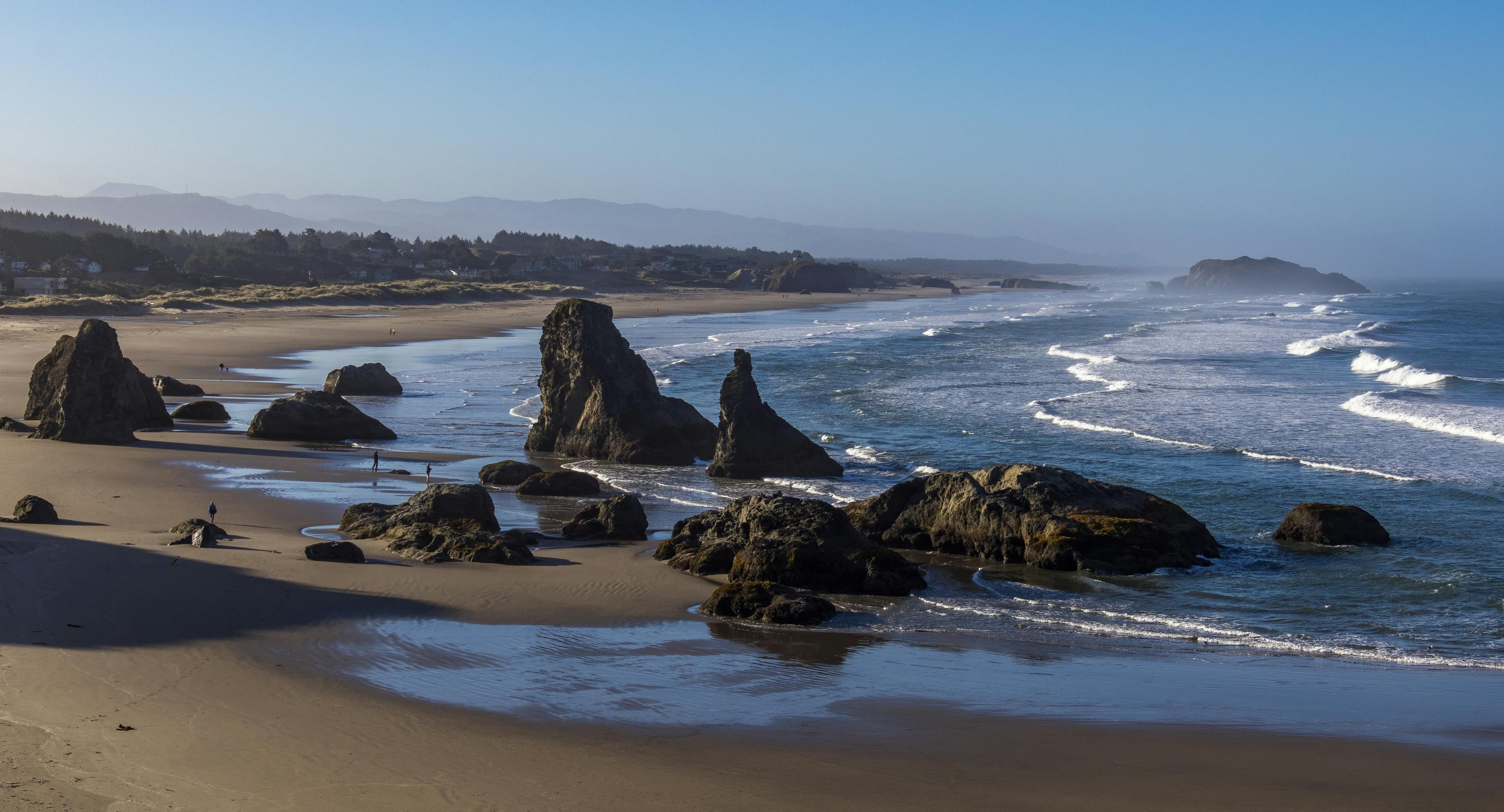
Tom Doak's masterpiece occupies a stretch of Oregon coastline that feels more like the Dingle Peninsula than the American West. Thirteen holes offer direct ocean views, and the dunes themselves, covered in native grasses that shift between gold and green with the seasons, provide a constantly changing palette. The 4th hole, a driveable par 4 with the Pacific as backdrop, presents the kind of visual drama that most courses spend millions trying to manufacture. Pacific Dunes earns its beauty honestly: no planted flowers, no manufactured waterfalls, no landscaping beyond what nature provided. The course looks as though it has been there for centuries, which is the highest compliment a links course can receive.
Arcadia Bluffs (Bluffs Course), Arcadia, Michigan
The Bluffs Course sits 200 feet above Lake Michigan on the Northern Michigan coastline, and the elevation creates views that extend to the horizon in every direction. The course plays through windswept terrain that evokes coastal Scotland more than the American Midwest, with native fescue framing the fairways and the lake appearing and disappearing as the routing turns. The par-3 12th, played across a ravine toward a green perched above the water, may be the most photogenic hole in Michigan. The light changes throughout the day as the sun moves across the lake, which means the course looks different at every hour.
Whistling Straits (Straits Course), Kohler, Wisconsin
Pete Dye built Whistling Straits on a flat stretch of Lake Michigan shoreline and transformed it into something that resembles an Irish links through sheer force of earthmoving and imagination. The course rises and falls through man-made dunes, with Lake Michigan providing a constant blue backdrop that anchors the visual composition. The approach to the par-3 17th, with the lake behind the green and over 1,000 bunkers scattered across the landscape like craters, produces one of the most dramatic moments in American golf. The artificial origins of the terrain do nothing to diminish its impact. Kohler delivered something that looks ancient on land that was featureless thirty years ago.
The Ocean Course at Kiawah Island, South Carolina
Every hole on The Ocean Course offers views of either the Atlantic Ocean or the tidal marshlands behind the island, and several holes present both simultaneously. Pete Dye raised the fairways onto dune ridges specifically to maximise ocean exposure, and the decision gives the course an elevated perspective that most coastal layouts cannot match. The par-3 14th, played directly toward the ocean from an elevated tee, creates a visual frame that is almost theatrical. Egrets, herons, and the occasional alligator provide wildlife moments that no course superintendent can schedule.
Troon North (Monument Course), Scottsdale, Arizona
Tom Weiskopf routed the Monument Course through 12-million-year-old granite boulder formations in the high Sonoran Desert, and the geology provides a visual intensity that no other course in Scottsdale can match. Saguaro cacti stand sentinel along the fairways, some of them 30 feet tall and several hundred years old. The boulders serve as both hazard and sculpture, and the late-afternoon desert light turns everything gold. The par-3 15th, played from an elevated tee past a massive boulder to a green backed by Pinnacle Peak, is the defining image of desert golf in America.
Coeur d'Alene Resort Golf Course, Coeur d'Alene, Idaho
The floating green on the par-3 14th is the signature image, a green literally built on a barge that can be moved to change the hole length, reached only by boat. It is a gimmick, but it is an effective one. Beyond that single hole, the Coeur d'Alene course plays along the shores of the lake of the same name, with mountain views in every direction and a blue-water backdrop that shifts between navy and turquoise depending on the time of day and season. The surrounding mountains, covered in evergreen forest, provide a frame that makes every hole feel like a postcard.
The course is not the most challenging on this list, but it may be the most consistently photogenic from first tee to final green.
Chambers Bay, University Place, Washington
Built on a former sand and gravel mine on Puget Sound, Chambers Bay offers views of the Olympic Mountains, the Tacoma Narrows Bridge, and the Sound itself from a links-like landscape that looks transported from the British Isles. The course hosted the 2015 U.S. Open and remains visually unlike anything else in the Pacific Northwest. The routing descends from the clubhouse through dramatic elevation changes, with fescue fairways that turn brown in summer and emerald in spring. The single tree on the course, a lone fir near the 15th green, has become one of the most recognisable natural features in American golf.
Shadow Creek, Las Vegas, Nevada
Tom Fazio was given an unlimited budget and a flat, empty stretch of Nevada desert. He responded by importing 20,000 mature trees, building an entire creek system, and creating rolling terrain where none existed. The result is jarring in the best sense: a course that looks like the Carolina Piedmont transplanted to the Mojave Desert. Waterfalls, wildflowers, and towering pines frame every hole, and the contrast with the surrounding desert, visible only from the highest points, creates a cognitive dissonance that never fully resolves. Shadow Creek is artificial in every sense, but the artifice is executed at a level that demands acknowledgment.
Sheep Ranch, Bandon, Oregon
The most recent addition to the Bandon Dunes family occupies the most exposed stretch of coastline on the property, with 13 holes directly along the Pacific. The course has no trees, no water hazards, and no bunkers filled with white sand. What it has is wind, native grass, and an uninterrupted ocean panorama that extends from the northern bluffs to a vanishing point somewhere near Japan. Sheep Ranch is minimalist golf architecture in a maximalist natural setting, and the combination produces an experience that is equal parts golf course and coastal walk.
Pinehurst No. 2, Pinehurst, North Carolina
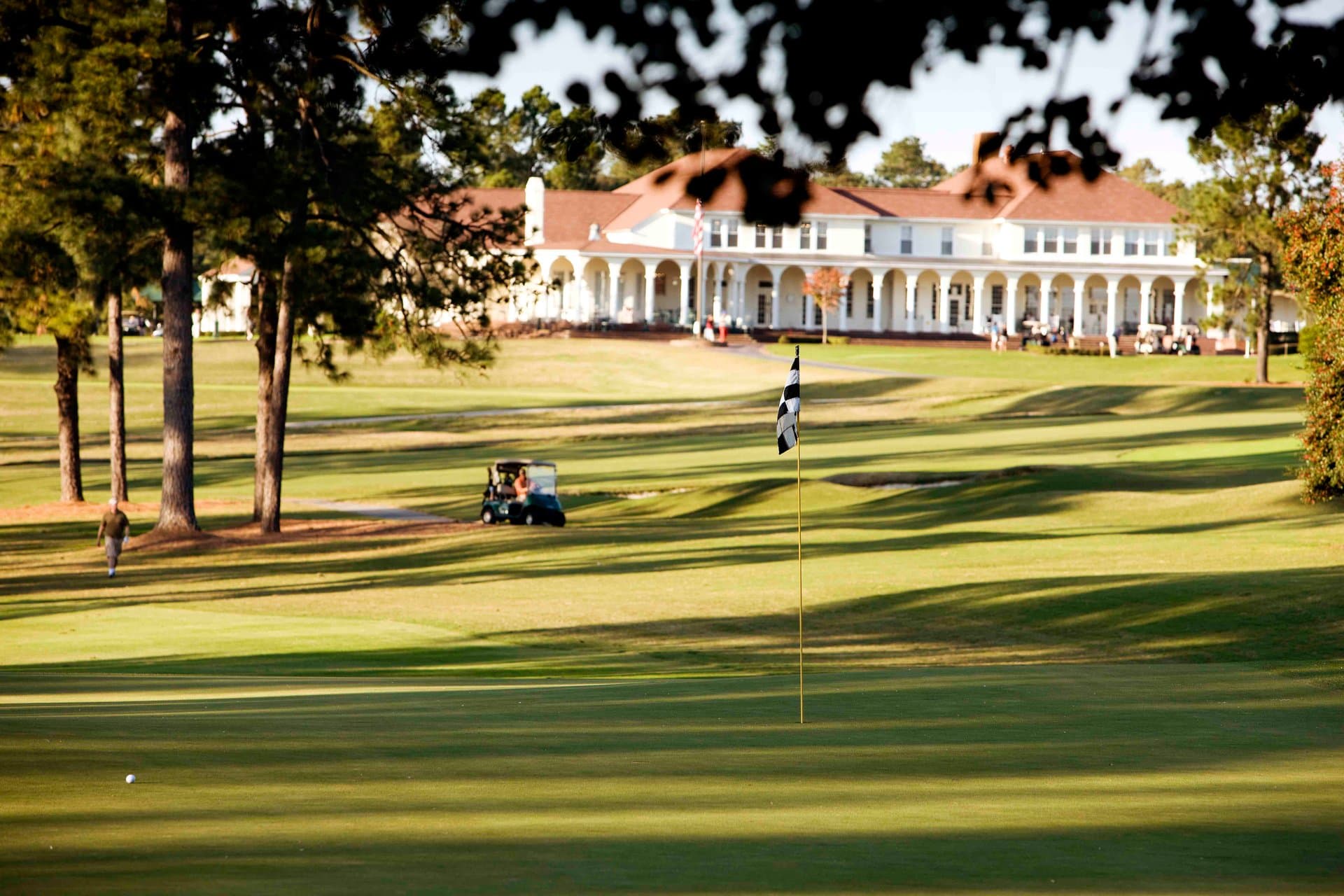
The beauty here is subtle, and that subtlety is the point. Pinehurst No. 2 does not offer ocean views, mountain backdrops, or desert drama. What it offers is the quiet elegance of Donald Ross's wiregrass-framed fairways, longleaf pines casting long shadows across sandy waste areas, and greens that dome and fall with a precision that reveals itself slowly over multiple rounds. The beauty of Pinehurst is architectural rather than geological, but it is no less moving for being man-made. In autumn, when the wiregrass turns copper and the afternoon light slants through the pines, Pinehurst is as visually compelling as any course in the country.
Spyglass Hill, Pebble Beach, California
Often overshadowed by its more famous neighbour, Spyglass Hill opens with five holes through sand dunes along the Pacific before turning inland through the Del Monte Forest. The dune holes, particularly the par-3 3rd and the par-4 4th, offer coastal views that rival Pebble Beach at a fraction of the green fee. The forest holes bring a different beauty: towering Monterey pines, cypress trees sculpted by decades of wind, and a cathedral-like quiet that contrasts sharply with the coastal exposure of the opening stretch. The shift between landscapes within a single round is something few courses attempt, and Spyglass Hill manages it without the transition feeling forced.
What Makes a Course Beautiful
The verdict
Pinehurst No. 2