How to Plan a Golf Trip for Non-Golfers Too
The partner who loves golf and the partner who does not have been negotiating vacations since the game was invented. The negotiation usually goes one of two ways: separate vacations (expensive, logistically complicated, occasionally a source of resentment) or a compromise trip where the golfer plays less than they want and the non-golfer tolerates more golf-adjacent time than they enjoy. Neither outcome is ideal.
The better approach is to choose a destination where both parties have a genuine vacation, where the golfer gets serious rounds on serious courses and the non-golfer has activities compelling enough that they are not waiting for the golf to end. This is not every golf destination. Some places are built entirely around golf and offer little else. Others combine exceptional courses with the kind of dining, culture, spa, and outdoor options that make a non-golfer's trip independently satisfying.
Destinations That Work for Both
A partner who likes beaches needs a different destination than one who prefers urban culture, hiking, or spa time.
The first decision is the most important, and it requires honest assessment of what the non-golfer actually enjoys.
The beach is beautiful, the shopping and dining in Harbour Town and Old Town are genuine attractions, and the resort spa culture at Sea Pines and Palmetto Dunes is developed enough to fill the hours when the golfer is on the course. Kiawah Island offers a quieter version of the same formula, with Charleston's food and architecture a 30-minute drive away.
For beach and resort life: Hilton Head Island is the strongest choice.
Hawaii is the ultimate version of this. While one partner plays Kapalua's Plantation Course, the other has an entire island of beaches, snorkeling, hiking, and cultural experiences. The green fees and accommodation are premium, but the non-golf offering is so strong that the trip genuinely works as a shared vacation rather than a golf trip with a reluctant passenger.
For urban culture and dining: Scottsdale deserves more credit than it receives for its non-golf offerings. The Scottsdale Arts District has serious galleries. Old Town's restaurant scene has matured well beyond resort dining. A day at a resort spa, followed by an afternoon at the Scottsdale Museum of Contemporary Art and dinner at a restaurant that takes its food as seriously as any in the Southwest, is a full and satisfying day for a non-golfer.
Austin is the choice for groups where the non-golfer values food, live music, and a vibrant city atmosphere. While the golfer plays Omni Barton Creek's Fazio Foothills, the non-golfer can spend the morning at Barton Springs Pool, the afternoon exploring South Congress, and the evening at a restaurant that would be a destination in any city in the country. Austin's non-golf identity is so strong that the golf is almost the secondary attraction.
For outdoor adventure: Lake Tahoe pairs golf with hiking, kayaking, and scenery that is impossible to ignore. The non-golfer who enjoys the outdoors will not feel underserved at a destination where the lake itself is the main attraction and the courses happen to sit in one of the most beautiful settings in American golf.
Coeur d'Alene offers a similar dynamic on a smaller scale. Lake activities, scenic boat cruises, wine tasting in the surrounding region, and mountain trails provide a full itinerary for the non-golfer.
For history and culture: Williamsburg is unique among golf destinations because the non-golf attraction is a genuine historic site. Colonial Williamsburg, Jamestown, and the broader colonial history of the Virginia peninsula provide days of exploration. The golfer plays Kingsmill or Golden Horseshoe; the non-golfer steps into the 18th century. Both return to the hotel with stories.
Schedule Structure That Respects Both Interests
The key to a successful mixed trip is schedule design that creates shared time without forcing togetherness during the hours when interests diverge.
Mornings apart, afternoons and evenings together. This is the simplest and most effective structure. The golfer takes a morning tee time (typically 7:30 to 8:30 AM) and finishes by early afternoon. The non-golfer has the morning for their own activities, whether that is a spa appointment, a museum visit, a hike, or simply a slow breakfast and a book by the pool. The afternoon and evening belong to both.
This structure requires the golfer to accept that morning-only golf means one round per day, not two. A doubleheader day leaves no shared time, and asking a non-golfer to spend an entire day alone at a destination they did not choose is a recipe for the kind of conversation no one enjoys having over dinner.
One golf-free day. On a four-night trip, the golfer should plan one day without golf. This is not a sacrifice; it is an investment. A full day exploring together, whether that means a food tour in Charleston, a drive along 17-Mile Drive near Pebble Beach, or a hike in Camelback Mountain in Scottsdale, gives the non-golfer a day that feels like their vacation rather than someone else's.
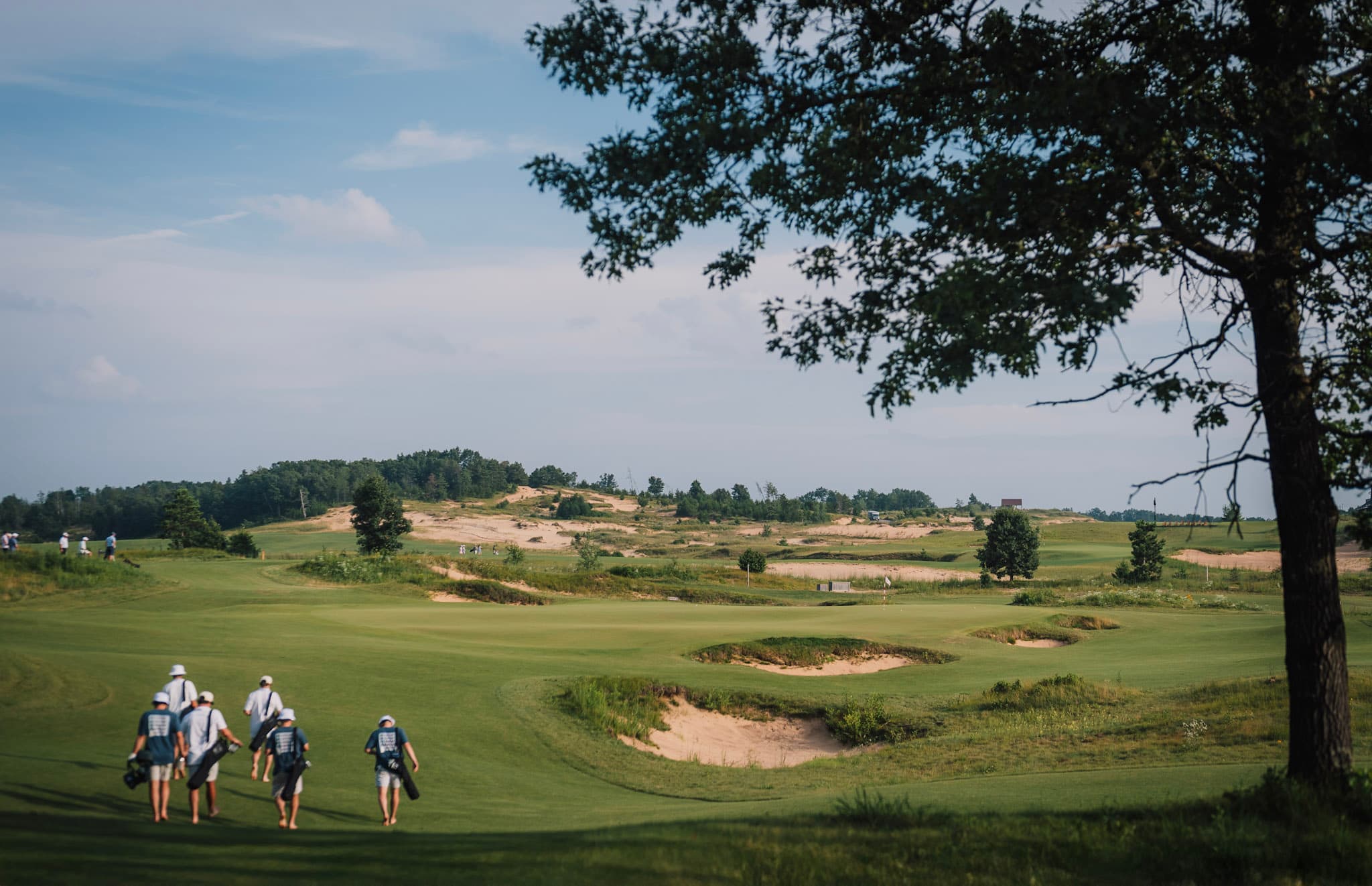
One par-3 or short course together. Many resort destinations have par-3 courses, putting courses, or short courses designed for casual play. These are excellent shared activities because the barrier to entry is low, the time commitment is short (60 to 90 minutes), and the atmosphere is relaxed. At Bandon Dunes, the Punchbowl putting course is free, requires no equipment, and is genuinely entertaining for golfers and non-golfers alike. The Sandbox short course at Sand Valley serves a similar purpose.
Accommodation That Creates Shared Space
The choice between a resort hotel and a rental property matters more on a mixed trip than on a golf-only trip.
A resort hotel with spa, pool, and on-site dining gives the non-golfer independence and amenities. They do not need a rental car. They do not need to plan their day around someone else's schedule. They wake up, walk to the pool or the spa, and have their own vacation within the larger trip.
Resort properties like The Phoenician in Scottsdale, The Sanctuary at Kiawah, and the Ritz-Carlton Kapalua in Hawaii are designed with the non-golfer in mind. Their spa programs, restaurants, and activity desks are built to serve guests who have no interest in golf. The nightly rate reflects this dual-purpose design, but the experience justifies it on trips where both partners need to feel equally served.
A rental house works well for groups (two or three couples traveling together) but can isolate a solo non-golfer if the house is in a residential area without walkable amenities. If you choose a rental, pick one near a town center, a beach, or a resort area where the non-golfer has things to do within walking distance.
Transportation Independence
A non-golfer who is stranded at a hotel without a car is a non-golfer who is having a bad day. If the golfer is taking the rental car to the course, the non-golfer needs their own transportation options.
At resort destinations, this is handled naturally. The resort shuttle, walkable amenities, and on-site activities eliminate the need for a second car. At destinations where courses are spread across a wide area (Scottsdale's course corridor stretches 30 miles), a second car or access to ride-sharing services becomes important.
Alternatively, the golfer can arrange a ride to the course with another member of the group, leaving the car with the non-golfer. This small logistical adjustment has an outsized impact on the non-golfer's experience.
Meals as Shared Ground
Food is the place where golf trips and non-golf interests converge most naturally. Every destination has a dining scene, and exploring it together is the simplest way to create shared experiences.
Make dinner reservations for the group. A 7:30 PM reservation at a restaurant the non-golfer is genuinely excited about reframes the day. The golfer has their morning round to look forward to; the non-golfer has the evening dining experience. Both have a highlight.
Breakfast together before the golfer departs for the course is another small but meaningful shared moment. Room service, a hotel restaurant, or a quick stop at a local café before the 8 AM tee time takes 30 minutes and starts the day with togetherness rather than separation.
Honest Conversations Before the Trip
The planning conversation needs to include the non-golfer. Not as a courtesy, but as a genuine co-planner whose preferences shape the destination, the accommodation, and the schedule.
Ask directly: "If you have three mornings on your own at this destination, what would you want to do?" If the answer is "I have no idea," the destination may not be right for a mixed trip. If the answer is specific ("I want to try three different restaurants, visit that gallery I read about, and spend a morning at the spa"), the trip is going to work.
The worst version of a mixed golf trip is one where the non-golfer's needs were acknowledged with phrases like "there's plenty to do" but never actually investigated. Plenty to do is not a plan. It is a hope. And on vacation, hopes that depend on someone else's sacrifice tend to produce disappointment.
The verdict

Sand Valley