Golf and Family Vacation: How to Make Both Work
The golf-and-family vacation is a negotiation. It is not described that way in the brochures, which show families smiling on the 18th green as if a four-year-old has just finished a round. In practice, the trip involves one partner who wants to play 36 holes a day and a family unit that wants beach time, pool time, dining, and activities that have nothing to do with fairway irrigation patterns. The negotiation is between these two versions of the trip, and the destinations that handle it best are the ones that give both versions room to breathe without requiring either to make excessive concessions.
The honest starting point is an honest conversation. How many rounds does the golfer realistically want to play? How many mornings is the family willing to spare? The answers to these questions determine whether the trip is a family vacation with some golf, a golf trip with some family time, or something genuinely balanced. Each of these is valid. Pretending the trip is one thing when it is actually another is the source of most family-vacation golf conflicts.
The Schedule That Works
The golden rule of the golf-family vacation is simple: golf in the morning, family in the afternoon.
Harbour Town Golf Links

Fairmont Scottsdale Princess
A 7:00 AM tee time puts the golfer back at the resort or hotel by 11:30 AM, with the full afternoon and evening available for family activities. The family sleeps in, has breakfast at a relaxed pace, and begins their day at the pool or beach while the golfer is on the course. When the golfer returns, the family reconvenes for lunch and the second half of the day belongs to everyone. This schedule works because it gives the golfer a full round without subtracting from the family's day. The golfer wakes up earlier than anyone would prefer, but this is the price of the compromise.
Afternoon golf means the family eats dinner without the golfer or eats late, which works poorly with young children. The late tee time is the format that produces resentment, and it should be avoided.
A 1:00 PM tee time, by contrast, eliminates the afternoon, which is the most valuable block of family time.
Two rounds per day is, with rare exceptions, incompatible with a family vacation. The golfer who plays 36 holes returns exhausted at 5:00 PM, having been absent for the entire day. This is a golf trip, not a family vacation, and calling it the latter creates precisely the conflict this article is designed to prevent.
Destinations Where Both Halves Thrive
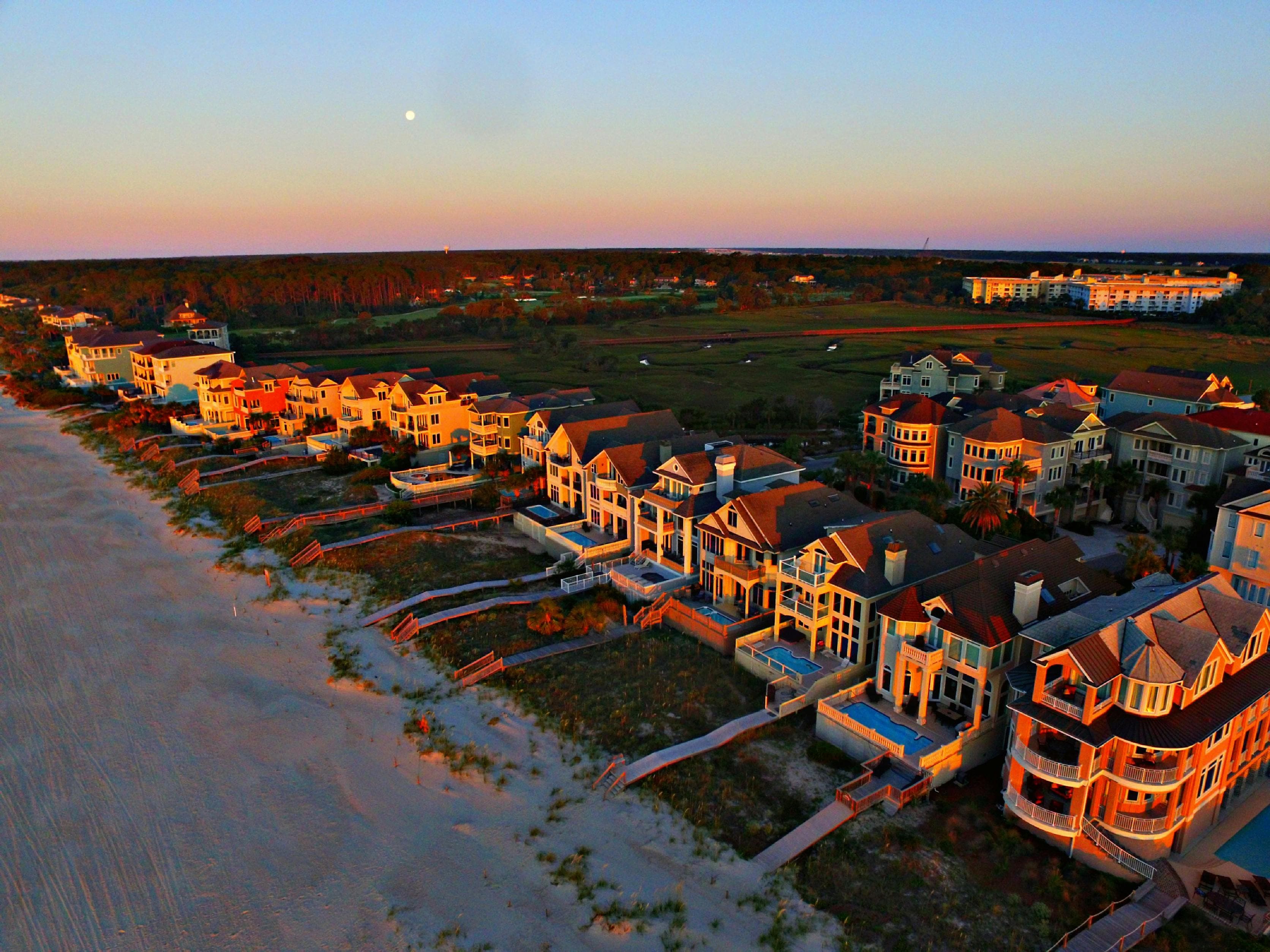
Hilton Head Island, South Carolina. Hilton Head is the prototype for the golf-family vacation because the island's geography compresses everything into a manageable footprint. The golfer plays Harbour Town Golf Links in the morning while the family spends the morning at the beach, which is never more than fifteen minutes away from any point on the island. Sea Pines Resort contains golf, beach access, bike paths, and restaurants within a single gated community. The family can operate independently of the golfer all morning and reconnect at the pool or at a marina restaurant for lunch. For families with older children, the bike paths through Sea Pines are flat, safe, and long enough to constitute an activity. For younger children, the beaches are calm and shallow.
Orlando, Florida. Orlando solves the family-vacation-with-golf equation through overwhelming alternatives. While the golfer plays Reunion Resort's Tom Watson course or ChampionsGate's Greg Norman International, the family has access to Walt Disney World, Universal Studios, SeaWorld, and a water park inventory that could fill a separate vacation entirely. This is the destination where the golfer does not need to feel guilty about the morning absence because the family's alternative is not sitting by a pool waiting; it is actively engaged in something they chose and prefer. Reunion Resort's villa accommodation, with multiple bedrooms, full kitchens, and private pools, provides the family base that hotel rooms cannot match.
Scottsdale, Arizona. Scottsdale works for families with children old enough to enjoy desert activities. While the golfer plays, the family hikes Camelback Mountain (the Cholla Trail is shorter and manageable for fit teenagers), visits the Scottsdale Arts District, or spends the morning at one of the resort pools that define the Scottsdale hospitality experience. The Fairmont Scottsdale Princess has a water park on property that holds children's attention for hours. The Hyatt Regency Scottsdale's water playground is similarly engaging. In the afternoon, the family reconvenes for desert exploration, from the McDowell Sonoran Preserve to the Butterfly Wonderland, or simply retreats to the pool.
Kiawah Island, South Carolina. Kiawah offers a quieter version of the Hilton Head model. Ten miles of undeveloped beach, five golf courses, bike paths, and a nature programme that includes guided kayak tours through the island's tidal marshes. The pace here is slower than Hilton Head, with fewer commercial distractions, which suits families looking for genuine rest. The Ocean Course provides the golfer with one of the most dramatic rounds in American golf; the beach provides the family with one of the most unspoiled stretches of Atlantic coastline accessible by resort.
Hawaii. Hawaii is the family-golf vacation that justifies its cost through the completeness of the experience. On the Big Island, the golfer plays Mauna Lani while the family visits Hawaii Volcanoes National Park. The travel distance and expense are significant, but for the family willing to make the investment, Hawaii delivers a vacation where the golf and the non-golf are both genuinely excellent rather than one serving as compensation for the other.
The golfer plays Kapalua's Plantation Course on Maui while the family snorkels at Kapalua Bay, one of the best beaches in Hawaii and steps from the resort.
Naples, Southwest Florida. Naples is the family-golf vacation for families who prefer calm over stimulation. The beaches on the Gulf Coast are wider, quieter, and less crowded than their Atlantic counterparts. The golfer plays Tiburon or Naples Grande in the morning while the family walks the beach, explores the Naples Pier, or takes an airboat ride into the Everglades. Fifth Avenue South provides the evening dining in a walkable, family-friendly setting. Naples does not have Orlando's attractions or Hilton Head's resort infrastructure, but what it offers, genuine relaxation in a beautiful setting, is precisely what some families want.
Making It Work With Young Children
Young children change the calculus significantly. The non-golfing parent's morning is not a spa-and-pool idyll; it is a parenting shift in an unfamiliar setting. The destination must offer activities that genuinely engage small children, not just tolerate them.
Resort kids' clubs, available at most major resort properties, provide supervised activities for children aged 4 to 12 while the golfer plays and the non-golfing parent has their own time. The Ritz-Carlton in Naples, the Omni at Hilton Head, and the Fairmont in Scottsdale all operate kids' programmes that parents report as genuinely enjoyable for the children rather than merely custodial.
Vacation rental houses with private pools are the accommodation that makes family-golf trips with young children feasible. A fenced pool in the backyard, a kitchen for snacks and early dinners, and bedrooms with doors that close for naptime solve the practical problems that hotel rooms create. Reunion Resort in Orlando and the VRBO inventory on Hilton Head and Kiawah both serve this need exceptionally well.
The Honest Conversation, Continued
The golf-family vacation works when both partners agree on what "works" means. For some families, one round over a five-day trip is the right amount of golf. For others, a round every morning is acceptable because the afternoon and evening belong entirely to the family. Neither model is wrong. What does not work is the trip where the golfer assumes four rounds are acceptable and the partner assumes one is the maximum. Have the conversation before the trip is booked, not on the second morning when the tee time alarm goes off at 6:00 AM for the second consecutive day.
The verdict