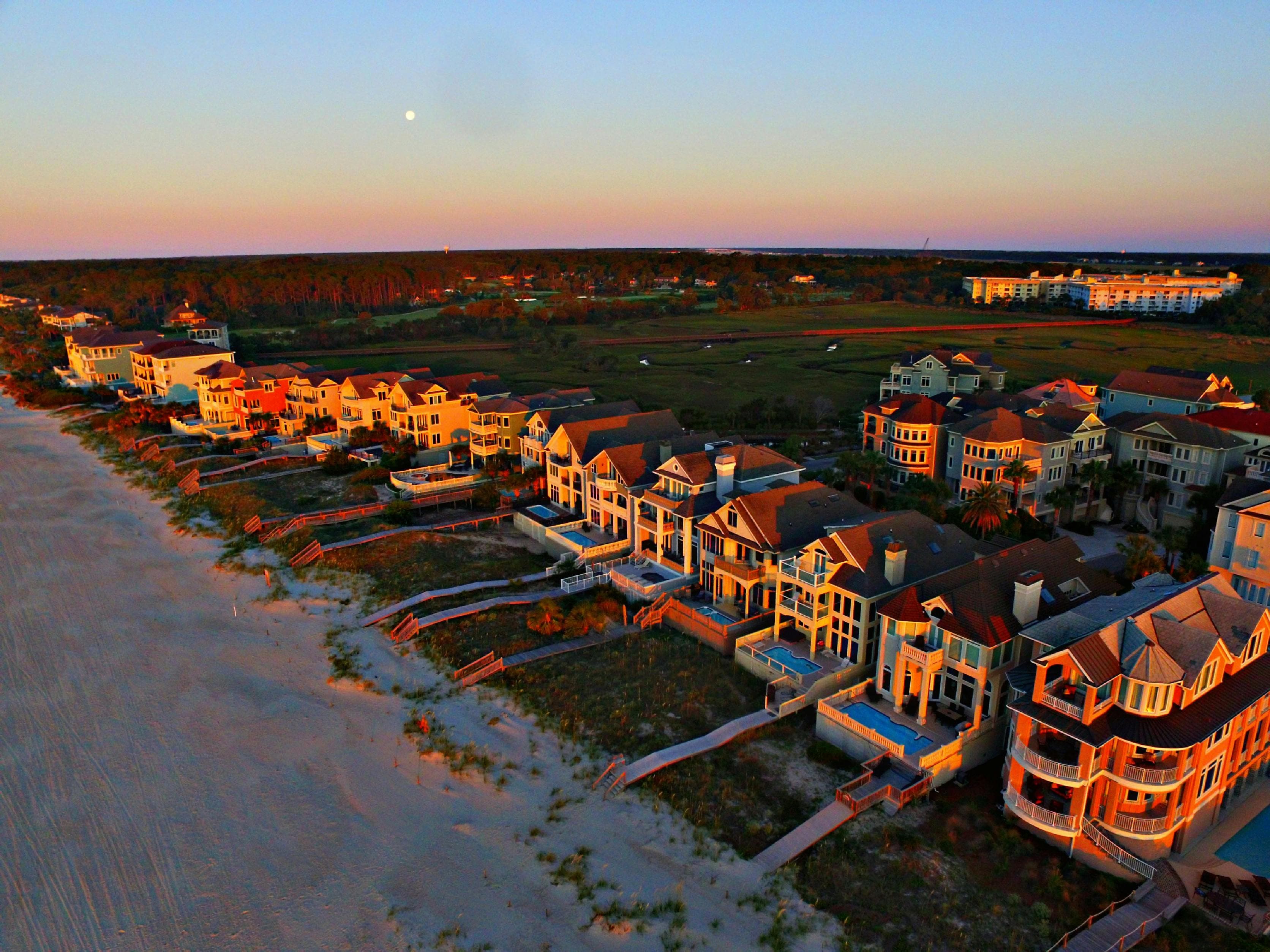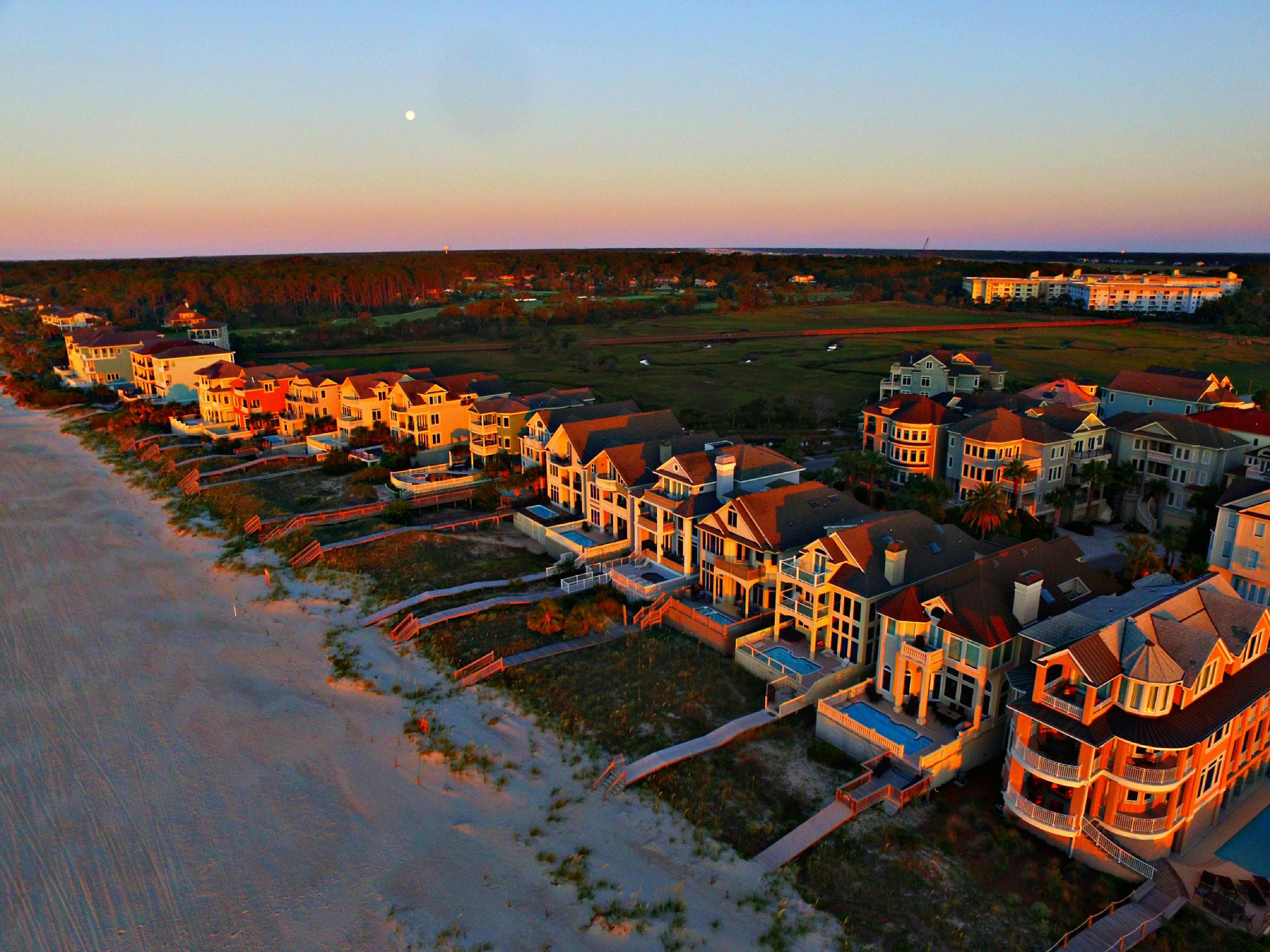
The destination
The Ocean Course at Kiawah Island was built to host a single event: the 1991 Ryder Cup, remembered as the "War by the Shore." Three decades later, the course has added two PGA Championships and another Ryder Cup is scheduled for 2031. It earned its reputation in competition. But Kiawah is more than a single course. The resort operates five layouts across a barrier island, and the broader Charleston area adds four more within easy reach. Charleston itself, 35 miles north, is the companion city: a food scene, a historic district, and a cultural depth that most golf resort towns cannot approach.
The 35-mile drive between Kiawah and the Historic District is just long enough to feel like a genuine change of setting and just short enough that a morning round at Osprey Point and an evening on King Street fit comfortably into the same day.
Where to stay in Charleston & Kiawah Island
Live prices from Booking.com, Expedia and more — every nearby hotel and rental in one search.
Prices and availability from Booking.com, Expedia and others via Stay22. GolfTrailsHQ may earn a commission at no additional cost to you.
The courses
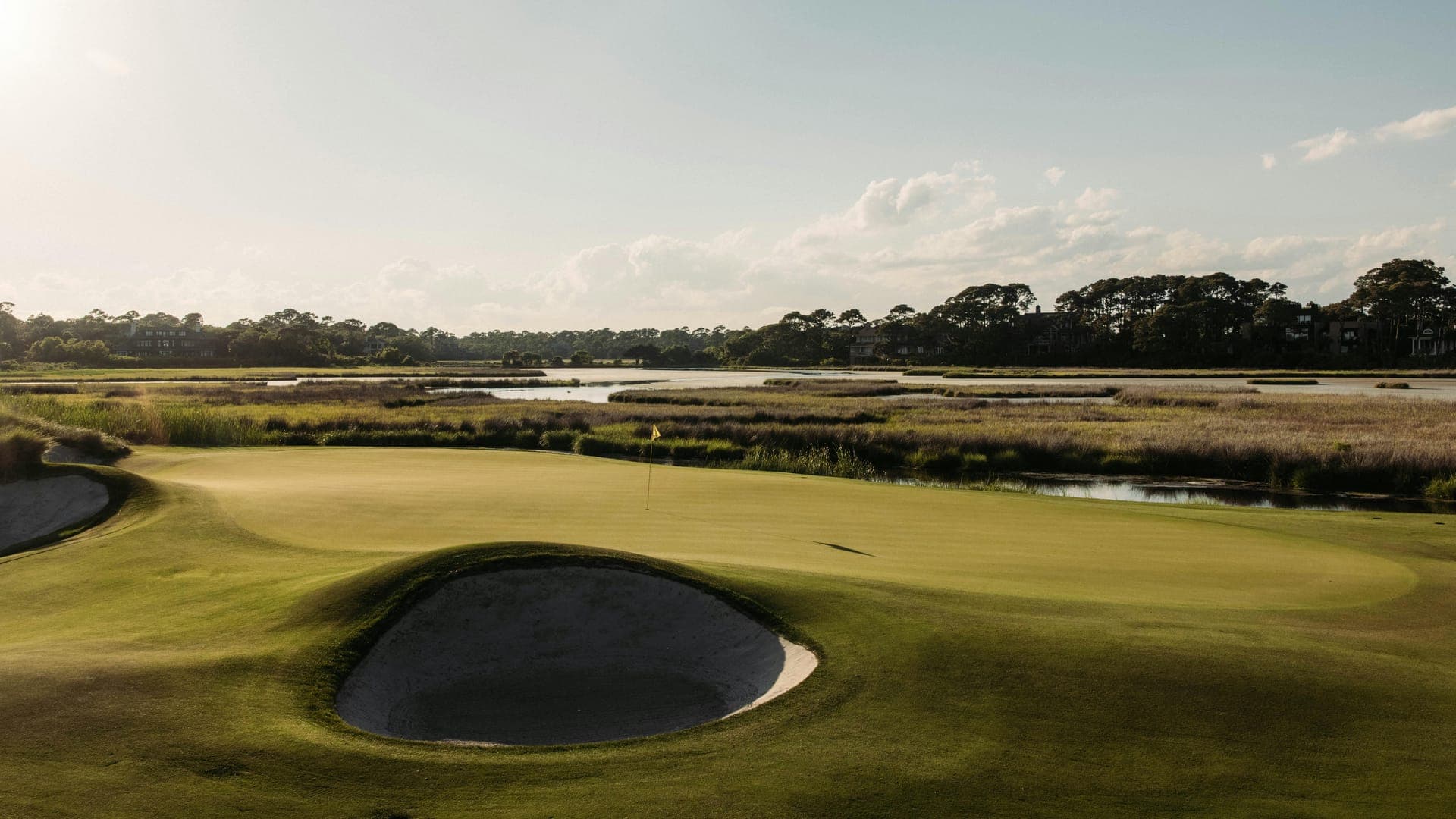
The Ocean Course demands attention first because it earns it. At 7,937 yards from the back tees with a slope of 155, it is among the most difficult resort courses in the country. Walking with a caddie is mandatory for most tee times. Pete Dye raised the fairways above the dune line during construction so that every hole would have an ocean view, a decision that also exposed every shot to coastal gusts that can shift a ball two clubs in either direction. Green fees of $350 to $685 reflect the pedigree.
The resort's four other courses offer real variety. Osprey Point, Tom Fazio's 1988 design, is the layout that resort guests tend to enjoy most, routing around four freshwater lakes through Lowcountry marsh and lagoon. Turtle Point, a Jack Nicklaus design from 1981 that underwent a Nicklaus-led renovation in 2016, includes three oceanfront holes and plays as a legitimate complement to the Ocean Course rather than a consolation prize. The River Course, Tom Fazio's 1995 design that runs along the Kiawah River, sits within the private Kiawah Island Club but opens to resort guests; the inland routing provides shelter from the wind and represents the best per-dollar value among the resort layouts. Oak Point, Clyde Johnston's 1997 design just outside the main gate, threads through marsh and old-growth oaks at similar pricing.
Beyond the resort, Wild Dunes on Isle of Palms operates two Tom Fazio designs; the Links Course was Fazio's first solo commission in 1980, with the final two holes along the Atlantic. Charleston National (Rees Jones) plays along the Intracoastal through wetlands. RiverTowne (Arnold Palmer) sits along the Wando River and represents the strongest value play in the area.
When to go
March through May is the primary golf season. April highs average 74 degrees, the humidity has not yet reached its summer intensity, and the courses emerge from winter maintenance in strong condition. The azaleas bloom across the island in March and early April. Tee times at the Ocean Course should be booked as far in advance as the system allows. Summer (June through August) brings highs of 89 to 90 with humidity that makes the air feel heavier than the thermometer suggests; reduced green fees reward early tee times and pool afternoons. October and November are what repeat visitors tend to prefer, with highs around 76, thinning crowds, and the marshes turning golden. Winter highs sit around 57; the rates drop, the pace quickens, and the golf remains entirely playable.
Getting there
Charleston International Airport (CHS) is the gateway, with direct flights from most major East Coast hubs. Downtown Charleston is 12 miles from the airport, a 20-to-25-minute drive. Kiawah is 35 miles south, 45 to 55 minutes through suburban development and Lowcountry landscape. Wild Dunes on Isle of Palms is 25 miles east. A rental car is not optional; nothing connects these nodes by transit, and the distances make ride-sharing impractical over a multi-day trip. Note that Kiawah is a gated community, so allow extra time on your first arrival to clear the security gate.
Beyond the course
Charleston is the reason this destination operates at a different level than most resort golf towns. The Historic District walking tours cover Rainbow Row, the Battery, and two centuries of architecture in roughly two hours. Food tours provide structured introductions to Lowcountry cuisine: shrimp and grits, she-crab soup, biscuits, pralines. Horse-drawn carriage tours through the antebellum streets are the most popular single activity in the city. Fort Sumter is reachable by ferry from Liberty Square. On Kiawah itself, 30 miles of paved bike trails wind through maritime forest and along the beach, and the Angel Oak Tree on Johns Island, an estimated 400-to-500-year-old Southern live oak with a canopy covering 17,200 square feet, is 20 minutes away and free to visit. Five to seven nights gives you time to do justice to both halves of the trip.