Best Golf Destinations in the South
Southern golf carries a cultural weight that distinguishes it from golf in the rest of the country. The game arrived early in the region, took hold in resort communities and private clubs, and developed alongside a hospitality tradition that treats the post-round meal and the quality of the greeting as seriously as the conditioning of the greens. The climate cooperates across a long season, the costs remain manageable relative to coastal California or the desert Southwest, and the variety of terrain, from Lowcountry salt marshes to Florida sand ridges to Alabama mountain foothills, produces a range of golf experiences under one broad geographic umbrella.
This is not a ranked list.
Each destination serves a different type of trip, and the best choice depends on priorities that only the traveler can weigh.
Myrtle Beach, South Carolina
Myrtle Beach remains the highest-volume golf destination in America. More than 80 courses serve the Grand Strand, and the infrastructure of package deals, multi-course discounts, and lodging bundles has been refined over decades. Caledonia Golf and Fish Club, True Blue, Tidewater, and the Barefoot Resort courses establish a quality ceiling that competes with destinations charging twice the price. The mid-tier is deep and consistent, offering well-maintained layouts at green fees between $60 and $120 during shoulder seasons.
Harbour Town Golf Links
The value argument is decisive. Groups of four or more can assemble a four-day, three-round trip at a cost that would cover a single day at certain prestige destinations. What Myrtle Beach lacks in exclusivity and culinary refinement, it compensates for in accessibility and volume. The optimal windows are spring (March through May) and fall (September through November), when temperatures are moderate and pricing sits between peak and off-season levels.
Hilton Head Island, South Carolina
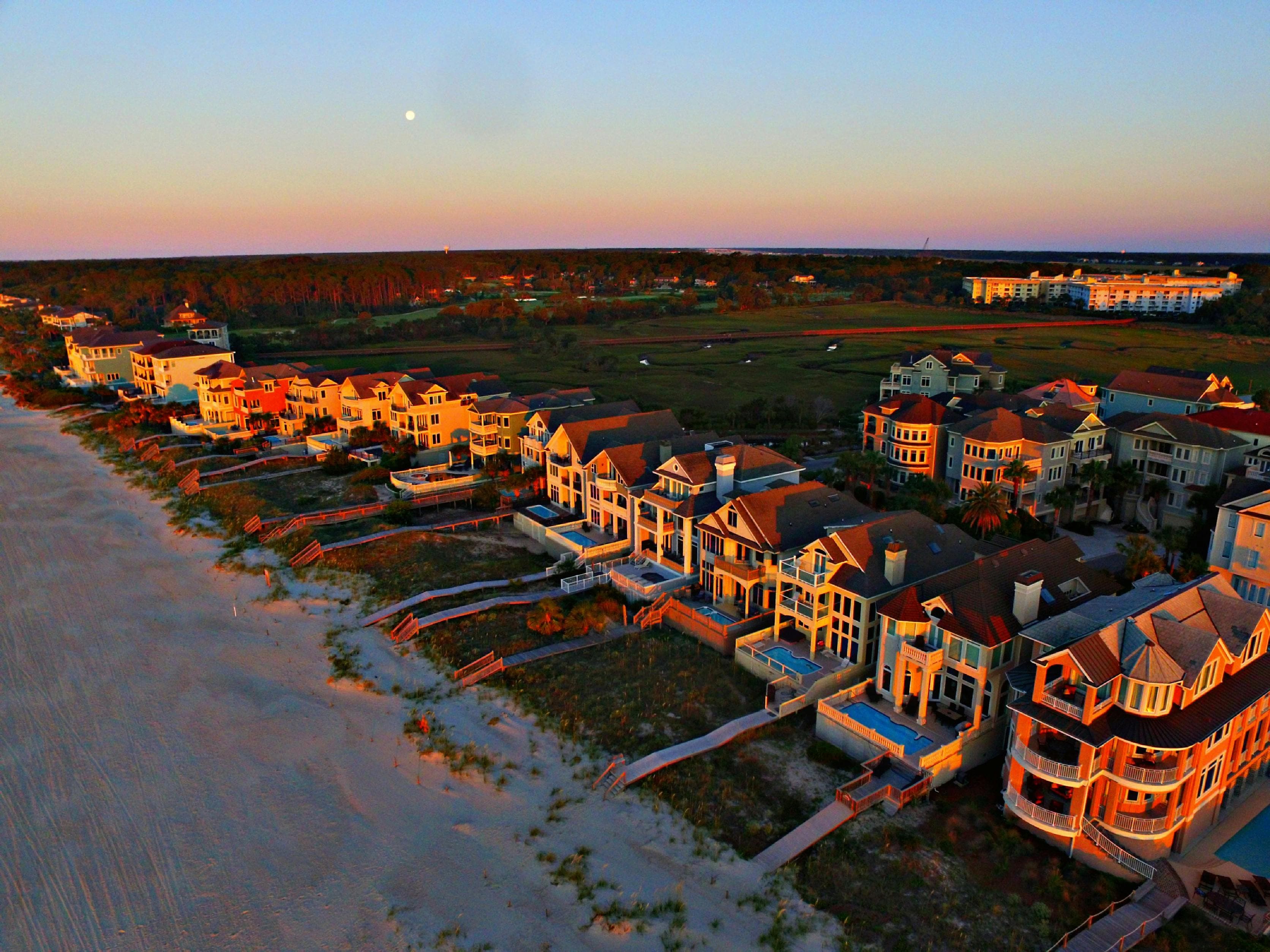
Hilton Head represents the Lowcountry at its most curated. The plantation-community model ensures consistent course conditioning and a quiet atmosphere that commercial beach towns cannot replicate. Harbour Town Golf Links is the signature, with its tight, tree-lined corridors and the iconic lighthouse finish. The course plays shorter than modern championship designs but demands accuracy from the tee through the green.
Green fees range from $100 to $250, scaling with season and course profile. The beach, the cycling trails, and the growing restaurant scene give Hilton Head a completeness that pure golf destinations lack. The Hilton Head destination guide has full course-by-course details.
Beyond Harbour Town, the island offers more than 20 courses across several gated communities, with Palmetto Dunes and Port Royal providing the strongest secondary options.
Kiawah Island, South Carolina
Kiawah's Ocean Course is one of the most demanding and visually striking layouts in American golf. The Pete Dye design runs along the Atlantic coast, with ocean visible from every hole and wind serving as a constant, shape-shifting variable. The supporting resort courses, particularly Osprey Point, provide accessible alternatives for golfers who find the Ocean Course's green fees and difficulty prohibitive.
Charleston, 30 minutes inland, elevates the trip into a different category. The dining scene is among the finest in the South, and the historic district offers a non-golf day that few resort areas can match. A Kiawah trip that ignores Charleston misses half the value. The Kiawah Island guide covers the full picture.
Sea Island, Georgia
Sea Island occupies the luxury tier of Southern golf with a quiet confidence that does not require self-promotion. The Seaside and Plantation courses provide strong resort golf, and the Lodge at Sea Island maintains a service standard that sets it apart from properties with larger marketing budgets. The Georgia coast here is gentler than the Carolina islands, with wide marshes and live oaks draped in Spanish moss creating a landscape that feels removed from the pace of modern resort development.
St. Simons Island, adjacent to Sea Island, adds casual dining and a small-town character. The price point is high, the atmosphere is deliberate, and the experience rewards golfers who value hospitality and setting as much as course architecture.
Naples, Florida
Tip
The town itself operates at a refined pace. Fifth Avenue South and Third Street South provide dining and shopping that reflect the market's demographics. This is not a destination for budget-conscious group trips; it caters to golfers who view the quality of the dinner and the hotel room as integral to the experience. The Naples destination guide provides complete planning details.
Streamsong Resort, Florida
Streamsong is the architectural outlier. Three courses by Tom Doak, Bill Coore and Ben Crenshaw, and Gil Hanse occupy reclaimed phosphate mining land in central Florida, creating a landscape that looks nothing like conventional Florida golf. The sand ridges, deep bunkers, and firm playing surfaces recall the links courses of the British Isles more than the cart-path-and-condo model that characterizes much of the state.
The walking-only policy, the remote location, and the absence of surrounding attractions filter the audience to golfers who care primarily about the golf itself. Green fees with resort packages run $200 to $350 per round, and the lodge provides comfortable if understated accommodations. The optimal window extends from October through May. The Streamsong destination guide has full logistics.
Orlando, Florida
Orlando's golf profile benefits from infrastructure and climate without demanding attention on architectural grounds. Arnold Palmer's Bay Hill anchors the market, with Reunion Resort, Orange County National, and ChampionsGate providing solid options at various price points. Green fees range from $60 to $250, with a deep mid-market between $80 and $150.
The value proposition is strongest for groups mixing golf with family activities. The airport is a major hub with competitive fares, and the non-golf options require no elaboration. For golfers willing to accept good-but-not-exceptional course quality in exchange for convenience and off-course variety, Orlando fills the role effectively. The Orlando destination guide covers the full landscape.
The Robert Trent Jones Golf Trail, Alabama
The RTJ Trail is the most undervalued golf product in the South. Eleven sites across Alabama, from the Tennessee border to the Gulf Coast, offer 26 courses designed by Robert Trent Jones Sr. and his firm. The scale is ambitious, the conditioning is consistently strong, and the green fees, typically $50 to $80 per round, are almost unreasonably low given the quality of the design and maintenance.
The Trail works best as a road trip, with groups connecting two or three sites over four or five days. Oxmoor Valley near Birmingham, Capitol Hill near Montgomery, and Ross Bridge provide the strongest individual stops. The dining and accommodation options along the Trail are functional rather than refined, which keeps the trip affordable but limits the non-golf experience.
The Southern Golf Advantage
The verdict