The Best Restored and Renovated Courses in America
Golf course restoration has become the most important architectural movement of the past two decades. Across the country, courses that had been softened, lengthened, or fundamentally altered over decades of incremental changes are being returned to something closer to their original design intent. The results, in nearly every case, are courses that are more interesting, more strategically varied, and more connected to their landscapes than the versions they replaced.
The distinction between restoration and renovation matters, and confusing the two misrepresents what has actually happened at many of the courses celebrated under the restoration banner.
A restoration attempts to recover the original architect's design, stripping away later additions and returning features to their documented or inferred historical condition. A renovation redesigns the course, sometimes extensively, while maintaining the routing or certain original features. Both approaches can produce excellent golf, but they represent fundamentally different relationships to a course's history. A restoration is an act of architectural scholarship. A renovation is an act of architectural creation.
The best projects are honest about which one they are.
The Difference in Practice
The practical distinction plays out in the details. A true restoration consults archival photographs, original drawings, construction notes, and aerial surveys to determine what the original architect built. Features that were added later, additional bunkers, reshaped greens, planted trees, are removed. Features that were lost to time or neglect are recovered.
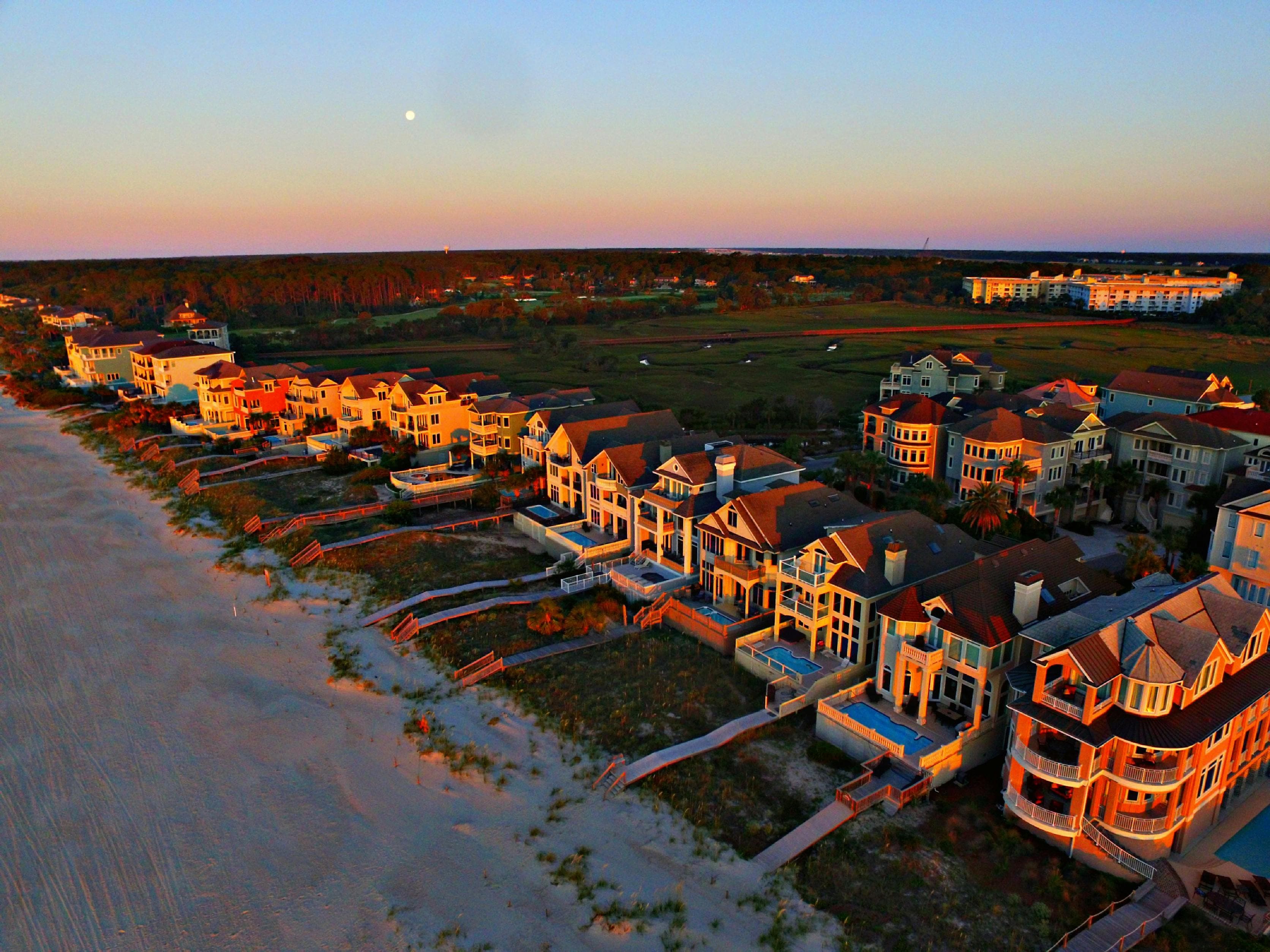
Harbour Town Golf Links
A renovation starts from the existing course and makes changes intended to improve it, using the original design as context rather than blueprint. The renovator may honor the original architect's style, borrow from it, or depart from it entirely. The question is not "What did the architect intend?" but "What should this course be now?"
Both approaches have produced outstanding results. But a golfer walking a restored course is having a different experience than one walking a renovated course, and knowing which is which enriches the round.
Pinehurst No. 2: The Standard for Restoration
The restoration of [Pinehurst No. The work removed decades of accumulated changes to Donald Ross's original design. The overseeded rough was replaced by sandy, native wiregrass areas. The greens were restored to their original contours and firmness. Maintained turf was pulled back to expose the natural sandy soil that Ross had used as a design element.
2](/courses/pinehurst-no-2) by Bill Coore and Ben Crenshaw, completed in 2011, is the most significant restoration project in American public golf.
The result is a course that plays nothing like the version that hosted US Opens in 1999 and 2005. Where the previous Pinehurst No. 2 punished wayward shots with thick rough, the restored version offers recovery options from sandy native areas but creates a new set of challenges around the greens. Ross's crowned putting surfaces, which slope away on all sides, are more exposed and more demanding when the surrounding turf is firm and shaved rather than cushioned by rough. A ball that lands on the green but fails to hold rolls off into collection areas, and the recovery shots from these areas, where the ball sits on sandy, sparse turf, require creativity and touch.
The 2014 US Open validated the approach. Martin Kaymer's winning score of 9-under was achieved through precision rather than power, and the course produced the kind of varied, strategic golf that Ross intended when he completed the design in the 1930s. Coore and Crenshaw did not modernize Pinehurst No. 2. They removed the modernizations that had been layered onto it over decades, and what emerged was better than what had been there before. That outcome is the strongest possible argument for restoration as a design philosophy.
Harbour Town: Returning the Teeth
Harbour Town Golf Links on Hilton Head Island underwent a comprehensive restoration completed in 2025, and the results have sharpened a course that had gradually lost some of its original edge. Pete Dye and Jack Nicklaus designed Harbour Town in 1969 as a counterargument to the prevailing design philosophy of the era, which favored length and breadth. Harbour Town was short, tight, and strategic, a course where placement mattered more than power and where the small greens demanded precision with every approach.
Over the decades, routine maintenance changes had softened some of the features that gave Harbour Town its character. Bunkers had been reshaped, green surrounds had been modified, and the visual intimidation that Dye built into the original design had been gradually smoothed out. The restoration recovered those elements.
The bunkers were returned to their original depths and positions, restoring the visual punch that Dye intended. The green surrounds were firmed and shaved to recreate the tight, fast conditions that make recovery shots around Harbour Town's small greens a genuine test of imagination. The result is a course that plays closer to the experience Dye and Nicklaus created for the 1969 Heritage Classic than it has in years.
For golfers visiting Hilton Head, the restored Harbour Town is a sharper, more engaging test than the version they may have played previously. The course still rewards the same skills it always has: accuracy, creativity, and nerve. It simply asks for more of them.
Seminole: The Private Benchmark
Tip
Donald Ross designed Seminole in 1929, routing the course through sand dunes along the Atlantic coast in a manner that created constant wind exposure and natural elevation change. Over the decades, trees were planted, bunkers were reshaped, and green surrounds were softened. Doak's restoration work removed many of these additions, recovering the sandy, windswept character that Ross had exploited in the original design.
The restored Seminole is widely regarded by architects and critics as one of the finest courses in America. Its influence on the broader restoration movement has been substantial. Clubs that have seen what Doak accomplished at Seminole have been inspired to investigate their own histories and consider whether their courses might benefit from similar treatment. The lesson of Seminole is that Golden Age courses were not improved by the changes made to them in the decades after their construction. They were diminished.
Merion: Preserving the East Course
Merion Golf Club's East Course in Ardmore, Pennsylvania, presents a different restoration challenge. The course, designed by Hugh Wilson and completed in 1912, occupies a compact site on Philadelphia's Main Line that has been surrounded by suburban development. Unlike Pinehurst or Seminole, where removing trees and rough could reveal sandy, natural terrain, Merion's restoration work has focused on recovering green complexes, bunker placements, and strategic corridors within the existing landscape.
The course hosted the 2013 US Open at just 6,996 yards, short by modern championship standards but effective because the green complexes, the bunkering, and the routing's relentless demand for precision compensated for the lack of length. The white-faced bunkers, Merion's visual signature, were restored to their original positions and profiles, and the greens were brought back to the contours and speeds that Wilson intended.
Merion's restoration work demonstrates that not every project requires the dramatic transformation of Pinehurst No. 2. Sometimes restoration is a matter of careful, incremental recovery of features that were gradually altered rather than wholesale reinvention. The East Course today plays as one of the most strategically demanding courses in America, on a property so compact that the architectural efficiency is itself remarkable.
The Economics of Restoration
The restoration movement has been driven partly by architectural philosophy and partly by economics. Restoration is often less expensive than new construction. The reduced maintained acreage that characterizes restored courses, with sandy waste areas replacing irrigated rough, lowers ongoing maintenance costs. A course like the restored Pinehurst No. 2 is cheaper to maintain than the version it replaced because the irrigated rough has been replaced by native areas that require no mowing, no watering, and no chemical treatment.
This economic logic has made restoration attractive to municipal courses and public facilities that operate under tight budgets. Across the country, municipal courses originally designed by Golden Age architects are being restored to their original conditions, producing better golf at lower operating costs. The recognition that a 6,600-yard course with excellent green complexes is a better and more affordable test of golf than a 7,200-yard course with bland greens and heavy maintenance requirements has shifted how municipalities and resort operators think about their golf infrastructure.
Public Access: Where to Play Restored Courses
For traveling golfers, the most accessible restored courses include Pinehurst No. 2, which remains the standard-bearer. Pinehurst No. 4, Gil Hanse's renovation that applied restoration principles to a different course on the same property, is available to resort guests and represents a distinct but complementary experience. Harbour Town is accessible to resort guests at Sea Pines on Hilton Head Island.
Beyond the marquee names, the restoration movement has improved dozens of courses that operate as daily-fee facilities. Many of these courses were designed by Golden Age architects whose names do not carry the recognition of Ross or Tillinghast but whose design talent was comparable. Playing a well-restored municipal course designed by a forgotten architect from the 1920s can be as rewarding as playing a famous private club, and the green fee is unlikely to exceed $60.
What Restoration Recovers
The best restored courses are not museum pieces. They are living demonstrations that great golf architecture transcends the era in which it was built. A Donald Ross green complex designed in 1925 creates the same strategic challenges today that it created a century ago. The ball flies further, the equipment is different, but the geometry of the game, the angles, the slopes, the relationship between risk and reward, has not changed.
The verdict