The 25 Best Public Golf Courses in America
The distinction between public and private golf has never been less useful as a proxy for quality. Several of the best courses in the country accept tee times from anyone willing to pay the green fee, and a few of them would hold their own against any private club in existence. What follows is an honest ranking of 25 courses that are open to the public in some meaningful sense, whether through daily-fee play, resort guest access, or booking windows that reward planning over pedigree.
This is not a list assembled by survey. It reflects repeated play, honest assessment, and a preference for courses that reward thought over brute force.
1. Pebble Beach Golf Links, Pebble Beach, California
Jack Neville and Douglas Grant had no design experience when they routed Pebble Beach along the Monterey coastline in 1919. Nine of the eighteen holes still hug the cliffs above the Pacific, the greens average roughly 3,500 square feet, and six U.S. Opens have been contested here. The green fee sits at $675 for non-resort guests. Worth discussing: the opening four holes are pleasant but unremarkable, which makes the transition to the coastal stretch beginning at the 6th all the more striking. Pebble Beach Golf Links remains the standard by which public-access golf is measured.
The combination of the 7th and 8th played back to back is among the finest consecutive holes in American golf.
Harbour Town Golf Links
Pinehurst No. 2
2. Pacific Dunes, Bandon, Oregon
Tom Doak's masterpiece occupies a stretch of Oregon coastline that feels closer to Scotland than California. The course plays over, around, and occasionally along the bluffs above the Pacific, with thirteen holes offering direct ocean views. Walking is mandatory. The 4th, a short par 4 that dares you to drive the green with the ocean as backdrop, is the kind of hole that makes you rethink what a golf hole can be. Pacific Dunes consistently ranks among the top ten courses in the country, public or private.
3. Whistling Straits (Straits Course), Kohler, Wisconsin
Pete Dye transformed a flat stretch of Lake Michigan shoreline into something that resembles an Irish links on steroids. Over 1,000 bunkers dot the landscape, many of them left unmarked, as Dustin Johnson learned during the 2010 PGA Championship. The course has hosted three PGA Championships and the 2021 Ryder Cup. The approach to the par 3 17th, with Lake Michigan behind the green and wind complicating everything, is one of the great moments in American golf. Whistling Straits is the rare modern design that already feels like it has been there for a century.
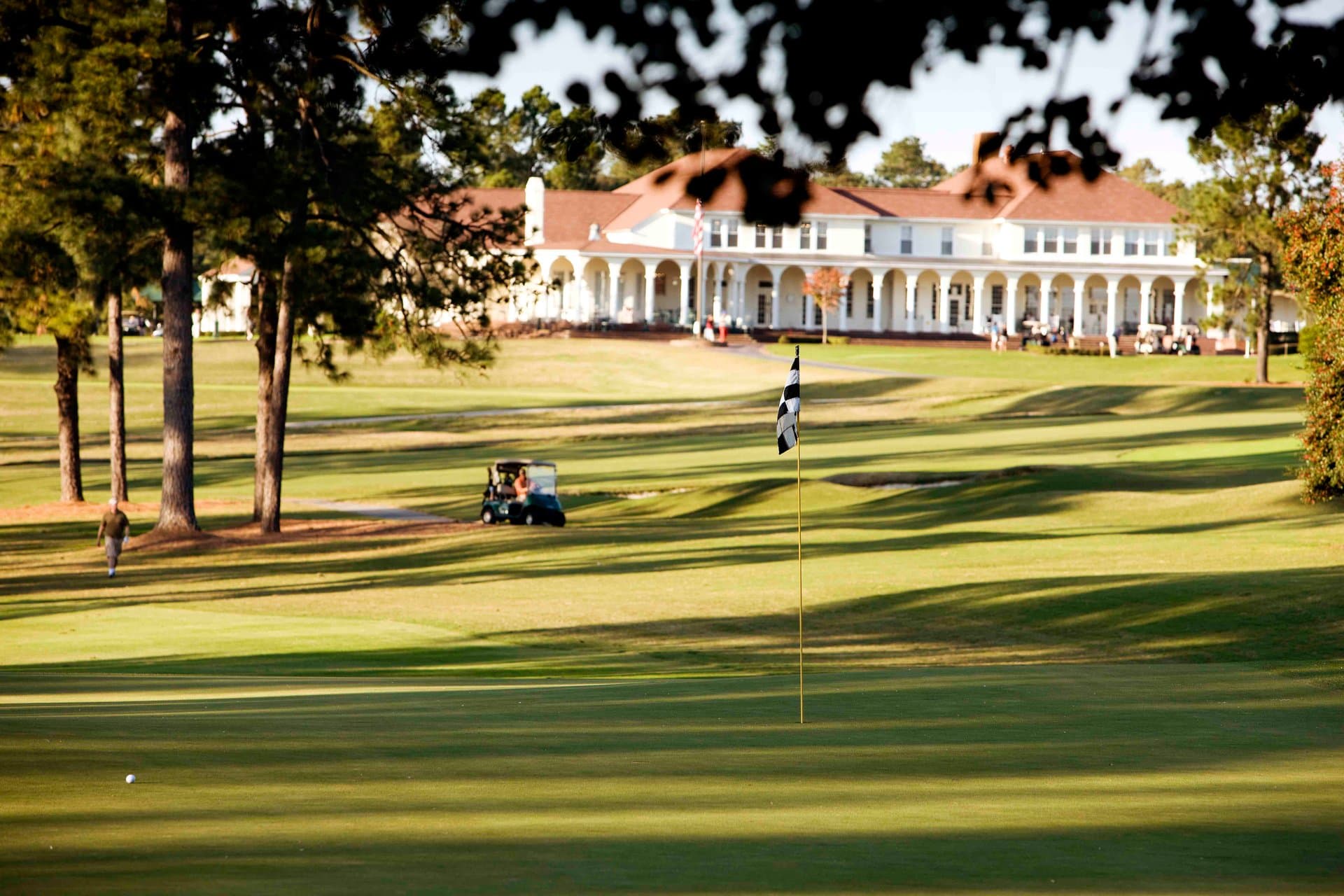
4. Pinehurst No. 2, Pinehurst, North Carolina
Donald Ross's 1907 creation has been restored twice, most recently by Coore and Crenshaw in 2011, who stripped away decades of accumulated rough and returned the course to its sandy, wide-open character. The crowned, turtle-back greens are the defence mechanism here. The course hosted back-to-back U.S. Opens in 2014 (men's and women's) and will continue hosting them in perpetuity. Pinehurst No. 2 is not the most dramatic course on this list, but it may be the most thoughtful.
They accept only the most precise approaches and shed everything else into collection areas that demand genuine short game imagination.
5. Sheep Ranch, Bandon, Oregon
The newest 18-hole course at Bandon Dunes, designed by Coore and Crenshaw on the most exposed stretch of coastline on the property. There are no trees, minimal rough, and almost no formal bunkers. The course plays as a continuous conversation between golfer and wind, with the Pacific visible from nearly every hole. It is the most natural-feeling course at Bandon, which is saying something. Sheep Ranch rewards creativity and punishes rigidity.
6. The Ocean Course at Kiawah Island, Kiawah Island, South Carolina
Pete Dye's 1991 design sits on a narrow barrier island with the Atlantic on one side and tidal marshland on the other. Every hole has a view of the water. The wind exposure is extreme by American standards, and the course played host to the famous 1991 Ryder Cup "War by the Shore" and the 2021 PGA Championship. At 7,849 yards from the back tees, it is among the longest courses in the country, but the wind, not the yardage, is what makes it difficult. The Ocean Course charges a premium green fee and earns every dollar of it.
7. Bandon Dunes, Bandon, Oregon
David McLay Kidd's original course is the one that started the Bandon revolution. Built in 1999 on a stretch of coastline that nobody in American golf was paying attention to, it proved that true links-style golf could work in the United States. The par 4 16th, which plays along the cliff edge with the Pacific crashing below, remains one of the most photographed holes in the country. The course has aged beautifully, and the routing still feels revelatory. Bandon Dunes
8. Streamsong Red, Streamsong, Florida
Tom Doak built this course on the sandy remnants of a former phosphate mine in central Florida, and the result looks nothing like Florida golf. Massive sand ridges, deep bunkers, and firm, running fairways create a links-like experience in the subtropics. The par 3 7th, played from an elevated tee to a green far below, is one of the best short holes in the state. Streamsong Red, along with its siblings, has fundamentally changed perceptions of Florida as a golf destination.
9. TPC Sawgrass (Stadium Course), Ponte Vedra Beach, Florida
Pete Dye's 1982 design is home to THE PLAYERS Championship and the most famous par 3 in golf. The 17th's island green is a genuine psychological challenge: a straightforward short iron made terrifying by water and nothing else. The rest of the course is more interesting than it gets credit for, particularly the stretch from 15 through 18, which produces more drama per hole than any finishing stretch on the PGA Tour. TPC Sawgrass
10. Old Macdonald, Bandon, Oregon
Tom Doak and Jim Urbina created a tribute to the template holes of C.B. Macdonald and Seth Raynor, executed on sweeping dunes above the Pacific. The course features interpretations of classic designs: the Redan, the Biarritz, the Alps, the Eden. The scale is enormous. Greens average over 10,000 square feet, fairways are absurdly wide, and the strategic options on every hole reward the golfer who thinks before swinging. This is architectural golf at its most generous and most rewarding.
11. The Lido, Sand Valley, Wisconsin
The recreation of C.B. Macdonald's lost Long Island masterpiece, rebuilt by Tom Doak and Jim Urbina on the sandy terrain of central Wisconsin. The original Lido was destroyed in the 1940s, and its recreation at Sand Valley has been one of the most anticipated projects in modern golf architecture. The course delivers on the promise: massive, strategic, and unlike anything else in the American Midwest. Template holes from the golden age, executed with Doak's characteristically restrained hand.
12. Mammoth Dunes, Sand Valley, Wisconsin
David McLay Kidd's second act, twenty years after Bandon Dunes. The course occupies rolling sand terrain with fairways that average over 60 yards wide. This is golf at its most welcoming for the high handicapper and its most strategic for the low one. The width creates angles, and the angles create choices that matter. At Sand Valley, Mammoth Dunes is often the course visitors enjoy the most, which is no small thing given the competition.
13. Caledonia Golf and Fish Club, Pawleys Island, South Carolina
Mike Strantz's Lowcountry masterpiece sits on a former rice plantation, and the approach through the avenue of live oaks is one of the great arrivals in golf. The course itself is shorter than most modern designs at roughly 6,500 yards from the tips, but every hole is shaped with artistic precision. The bunkering is dramatic without being punitive, and the greens reward feel over mechanics. Caledonia Golf and Fish Club is the course that most architects would choose to play on their day off.
14. Tobacco Road, Sanford, North Carolina
Mike Strantz's other Carolina masterpiece is the most polarising course on this list. Built on a former sand quarry, the landforms are extreme: blind shots, enormous bunkers, greens perched on ridges. Some golfers find it gimmicky. Those who embrace its demands find one of the most creative and memorable courses in the country. Tobacco Road is not for everyone, and Strantz would have considered that a compliment. Tobacco Road
15. Arcadia Bluffs (The Bluffs Course), Arcadia, Michigan
Perched on a bluff 200 feet above Lake Michigan, this Warren Henderson design offers some of the most dramatic views in American golf. The course plays firm and fast in the manner of a British links, with several holes running along the bluff edge. Summer golf in northern Michigan has a quality that is difficult to replicate: long days, cool breezes off the lake, and a landscape that makes the Midwest feel like the Scottish coast.
16. Erin Hills, Erin, Wisconsin
The 2017 U.S. Open venue occupies 652 acres of glacial terrain in southeastern Wisconsin. The course is enormous, with wide fairways, towering fescue rough, and greens that are simultaneously large and difficult to hold. Walking is mandatory on a property that covers more ground than most resort courses. Brooks Koepka won the Open here at 16 under par, which tells you something about the width, and also something about the difficulty when the USGA narrows it.
17. Spyglass Hill, Pebble Beach, California
Robert Trent Jones Sr. routed the opening five holes through sand dunes near the ocean, then turned inland through Monterey pine and cypress forest. The contrast between the two halves is stark and deliberate. The front nine is linkslike and exposed; the back nine is tree-lined and demands precision. Spyglass Hill is widely considered the hardest of the three Pebble Beach Resorts courses, and the opening stretch through the dunes is among the finest in California.
18. Kapalua Plantation Course, Kapalua, Maui, Hawaii
Coore and Crenshaw renovated what was already an extraordinary course on the slopes of the West Maui Mountains, adding width and restoring strategic options that the original design had lost over time. The par 5 18th, a sweeping downhill hole with the Pacific as backdrop, is the finishing hole for the PGA Tour's Tournament of Champions. The elevation changes here are unlike anything else in resort golf.
19. Shadow Creek, Las Vegas, Nevada
Tom Fazio built Shadow Creek from a flat patch of desert north of the Las Vegas Strip, importing 20,000 trees and reshaping the entire landscape. The result is an oasis that feels transplanted from the Carolina piedmont. Access requires a stay at an MGM property and a green fee north of $500. The conditioning is immaculate, the solitude is genuine, and the contrast with the desert surroundings is surreal. Shadow Creek is a manufactured experience, but it is manufactured at the highest level.
20. Edgewood Tahoe, Stateline, Nevada
George Fazio designed it; Tom Fazio refined it. The course sits on the south shore of Lake Tahoe at 6,200 feet of elevation, with the Sierra Nevada as a backdrop on every hole. The finishing holes along the lake shore are as scenic as anything in American golf. The American Century Championship celebrity tournament is held here annually, but the course is a serious test beneath the spectacle. Edgewood Tahoe demonstrates that mountain golf and strategic depth are not mutually exclusive.
21. Forest Dunes (The Loop), Roscommon, Michigan
Tom Doak designed the world's first truly reversible 18-hole course: one routing plays clockwise on odd days and counterclockwise on even days, creating two distinct courses on the same piece of land. The concept sounds like a gimmick. It is not. Both routings are strategic, varied, and legitimate tests of golf. The sandy terrain of northern Michigan suits the concept perfectly, and the course has earned its place among the best modern designs in the country.
22. TPC Scottsdale (Stadium Course), Scottsdale, Arizona
Home of the WM Phoenix Open, the loudest tournament in professional golf. The par 3 16th is surrounded by a purpose-built colosseum that holds 20,000 spectators during tournament week. When you play it, the stands are empty and the desert is quiet, which is its own strange pleasure. The Weiskopf and Morrish design rewards positioning over distance, and the desert setting provides the kind of visual clarity that makes every shot feel consequential. TPC Scottsdale
23. We-Ko-Pa (Saguaro Course), Fort McDowell, Arizona
Coore and Crenshaw built this course on the Fort McDowell Yavapai Nation, and it remains one of the best public courses in Arizona. The design philosophy trusts the natural Sonoran terrain rather than imposing on it: wide fairways, natural desert hazards, mountain views in every direction. Green fees are meaningfully lower than the resort courses in Scottsdale proper, and the conditioning is comparable. We-Ko-Pa Saguaro is the course that local golfers recommend when you ask them where to play.
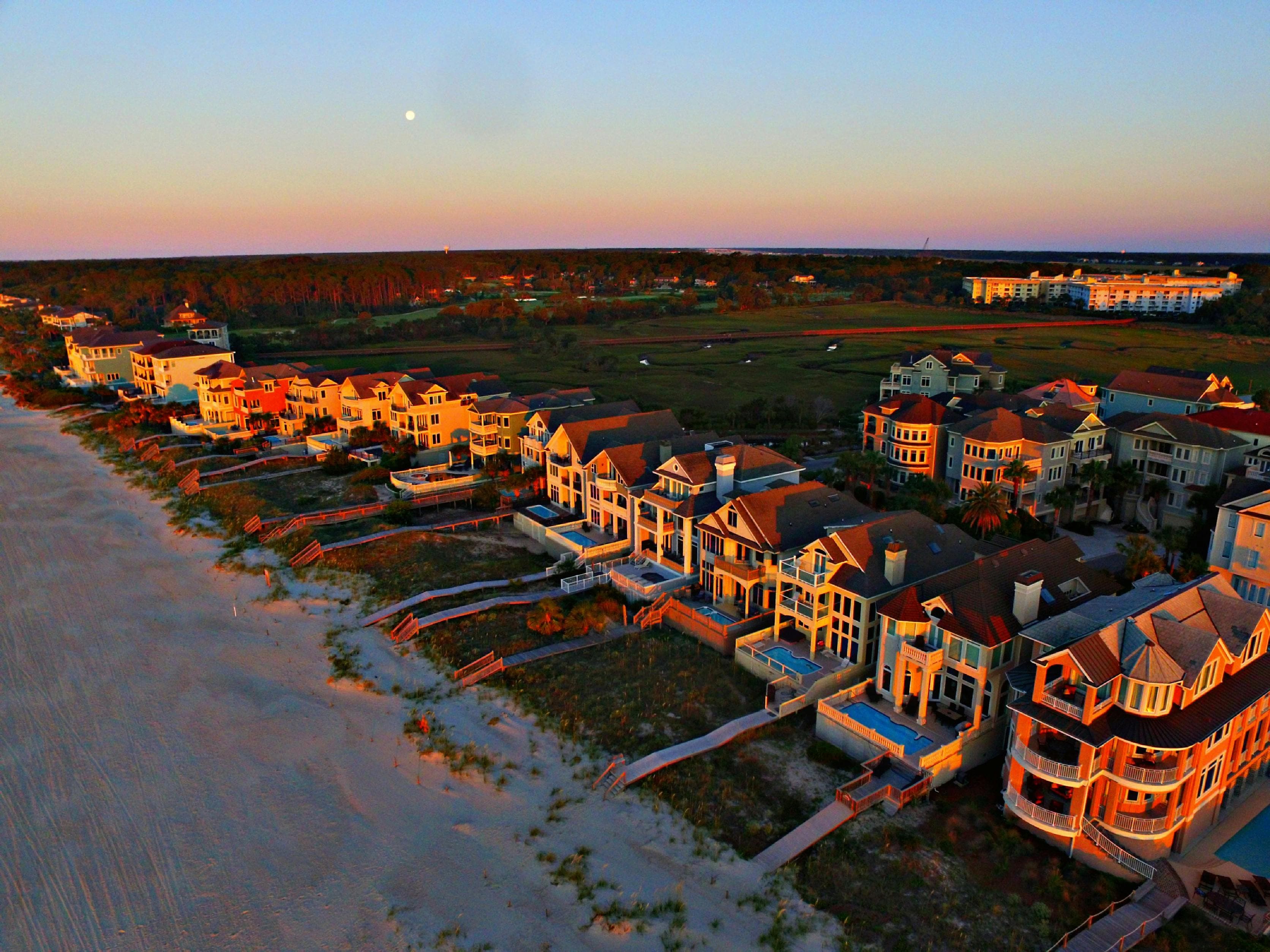
24. Harbour Town Golf Links, Hilton Head Island, South Carolina
Pete Dye and Jack Nicklaus designed Harbour Town in 1969 as a deliberate counterpoint to the long, wide courses of the era. The fairways are narrow, the greens are small, and the live oaks encroach on both sides. It rewards precision and punishes ambition, which is why it remains a favourite among PGA Tour players. The 18th, a par 4 that curves along Calibogue Sound to the red-and-white striped lighthouse, is one of the most recognisable finishing holes in the game. Harbour Town Golf Links
25. Payne's Valley, Branson, Missouri
Tiger Woods' first public golf course design sits among the Ozark hills at Big Cedar Lodge, and it avoids the common mistakes of celebrity design. The course is playable, strategic, and beautiful without being overwrought. The par 3 19th, a bonus island green hole played for fun after the round, captures the spirit of the place: golf as recreation, not ordeal. The Big Cedar Lodge setting adds a wilderness quality that distinguishes it from every other course on this list.
A Note on Methodology
Tip