10 Best Mike Strantz Courses
Mike Strantz designed fewer than ten courses before his death from cancer in 2005 at the age of 50. This small portfolio has generated a disproportionate amount of devotion among golfers who value creativity, artistry, and the willingness to take risks that most architects avoid. Strantz was a painter before he was a designer, and his courses reflect that background: every hole is composed as a visual experience, with dramatic bunkering, unexpected angles, and green complexes that reward imagination over mechanics. His courses are polarising. That was the point.
Where to stay in Charleston & Kiawah Island
Planning the trip? Compare live prices across every nearby hotel and rental in one search.
Prices and availability from Booking.com, Expedia and others via Stay22. GolfTrailsHQ may earn a commission at no additional cost to you.
1. Tobacco Road, Sanford, North Carolina
The landforms are extreme: blind shots from elevated tees, enormous bunkers that swallow errant shots, and greens perched on ridges that shed everything that does not arrive at the correct angle. Tobacco Road is not fair in any conventional sense, but it is never boring. The first round is confusion. The second round is revelation. The third round is obsession. The green fee, under $100 in most seasons, is remarkable for a course of this reputation.
Strantz's masterpiece, built on a former sand quarry in the North Carolina Sandhills, is the most polarising course in American golf.
2. Caledonia Golf and Fish Club, Pawleys Island, South Carolina
The course that most architects would choose to play on their day off. Caledonia occupies a former rice plantation south of Myrtle Beach, and the approach through the live oak avenue is one of the great arrivals in golf. Strantz's design is gentler than Tobacco Road: the bunkering is dramatic but not punitive, the fairways are generous, and the greens reward feel. Caledonia is the Strantz course for golfers who are not sure they like Strantz. It converts sceptics.
3. True Blue Golf Club, Pawleys Island, South Carolina
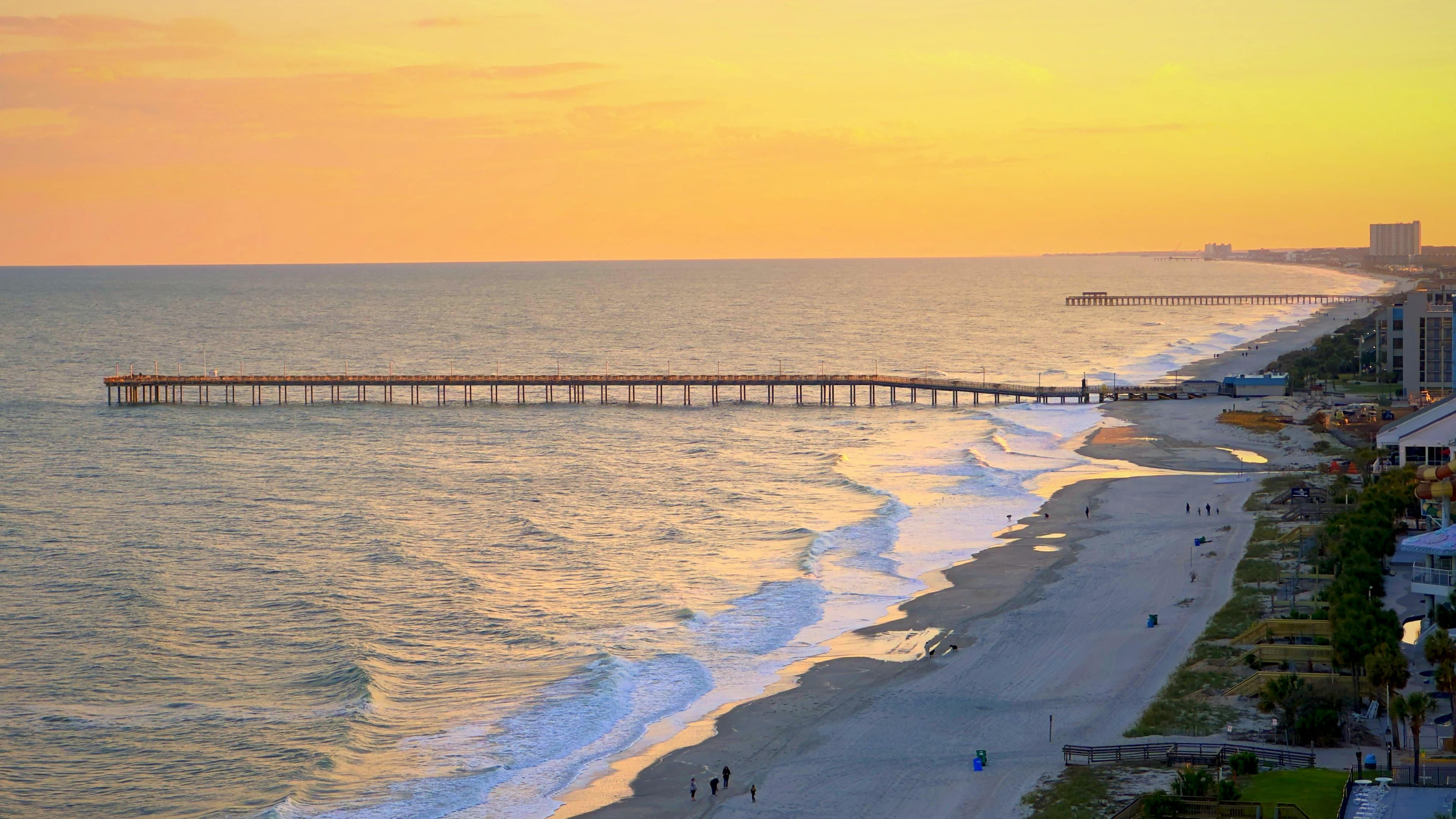
Strantz's second Pawleys Island course is bolder and more aggressive than Caledonia. True Blue features enormous waste bunkers, severely contoured greens, and a par 3 14th with a tabletop green that summarises Strantz's design philosophy in a single shot. The course shares the same Lowcountry setting as Caledonia but plays with a harder edge. Many golfers prefer it; the design demands more from the player but delivers more in return.
4. Royal New Kent, Providence Forge, Virginia
Strantz designed Royal New Kent on the coastal plain of Virginia, creating a course that looks like it was transported from the British Isles. The bunkering is deep and strategic, the fairways are shaped by mounding that creates visual deception, and the overall experience is unlike anything else in Virginia golf. Royal New Kent has had financial difficulties over the years, and the conditioning has varied, but the design itself is extraordinary. When the course is maintained to its potential, it is among the finest public courses in the Mid-Atlantic.
5. Tot Hill Farm, Asheboro, North Carolina
Strantz built Tot Hill Farm on dramatic terrain in the North Carolina Piedmont, with elevation changes that rival mountain courses. The routing drops from ridge tops to valley floors and climbs back again, with the bunkering and green complexes reflecting Strantz's painterly eye. Tot Hill Farm is the Strantz course that receives the least national attention, partly because Asheboro is not a golf destination and partly because the conditioning has not always matched the design quality. When it is in good shape, Tot Hill Farm delivers a Strantz experience at an accessible price.
6. Tradition at Stonehouse, Toano, Virginia
Another Virginia Strantz design, Tradition at Stonehouse occupies rolling terrain near Williamsburg with dramatic elevation changes and the kind of creative green complexes that define Strantz's work. The course has been through ownership changes and periods of variable conditioning, but the design, with its dramatic bunkering and bold landforms, remains engaging. Paired with Royal New Kent (20 minutes away), Tradition at Stonehouse provides a day of Strantz golf that architecture enthusiasts travel cross-country to experience.
7. Bulls Bay Golf Club, Awendaw, South Carolina
Strantz designed Bulls Bay on the coast north of Charleston, with the course playing through maritime forest and along tidal marshland. The Lowcountry setting provides the same visual palette as Caledonia but with a more exposed, windswept character. Bulls Bay is a private club, which limits accessibility, but it represents some of Strantz's most mature work.
8. Monterey Peninsula Country Club (Shore Course renovation)
The renovation is sensitive rather than radical, maintaining the coastal character of the original while adding Strantz's characteristic bunkering and green contouring. The Shore Course is private, but it demonstrates Strantz's ability to work within existing constraints rather than imposing his vision from scratch.
Strantz renovated the Shore Course at Monterey Peninsula Country Club, bringing his artistic sensibility to a course on some of the finest golf land in California.
The Strantz Legacy
Mike Strantz designed fewer courses than any architect on any "best of" list in golf, and yet his influence is unmistakable. His work demonstrated that golf architecture could be genuinely artistic, that courses could surprise and challenge and delight simultaneously, and that the polite conventions of modern design were conventions, not requirements. Every course he built has a personality, and every golfer who plays one forms an opinion. The opinions are strong and contradictory, which is exactly what Strantz intended. He did not design for consensus. He designed for reaction.
True Blue Golf Club
The verdict