Bandon Dunes Resort: Best Holes Ranked
Six courses occupy the coastal bluffs above the southern Oregon shore, each designed by a different architect or team, each expressing a distinct interpretation of links golf on American soil. Selecting the finest individual holes across the property requires weighing strategic merit against setting, shot variety against memorability. What follows is that attempt, drawn from all six courses at the resort and ranked by the quality of the questions each hole poses.
Where to stay in Bandon
Planning the trip? Compare live prices across every nearby hotel and rental in one search.
Prices and availability from Booking.com, Expedia and others via Stay22. GolfTrailsHQ may earn a commission at no additional cost to you.
1. Pacific Dunes No. 13 — Par 4, 444 yards (Tom Doak, 2001)
The consensus choice for the best hole on the property, and a reasonable candidate for the best par 4 on the Pacific coast. The tee shot plays from elevated ground to a wide fairway that narrows as it approaches the cliff edge. The approach is the hole's architectural statement: a mid-iron or long iron played toward a green that sits at the edge of a bluff falling sharply to the ocean below. The green tilts subtly away from the player, rejecting anything without proper trajectory and spin. Wind off the Pacific adds a variable that changes the hole's character by the hour. There is no bailout that leaves a comfortable recovery. Every shot demands a committed decision.
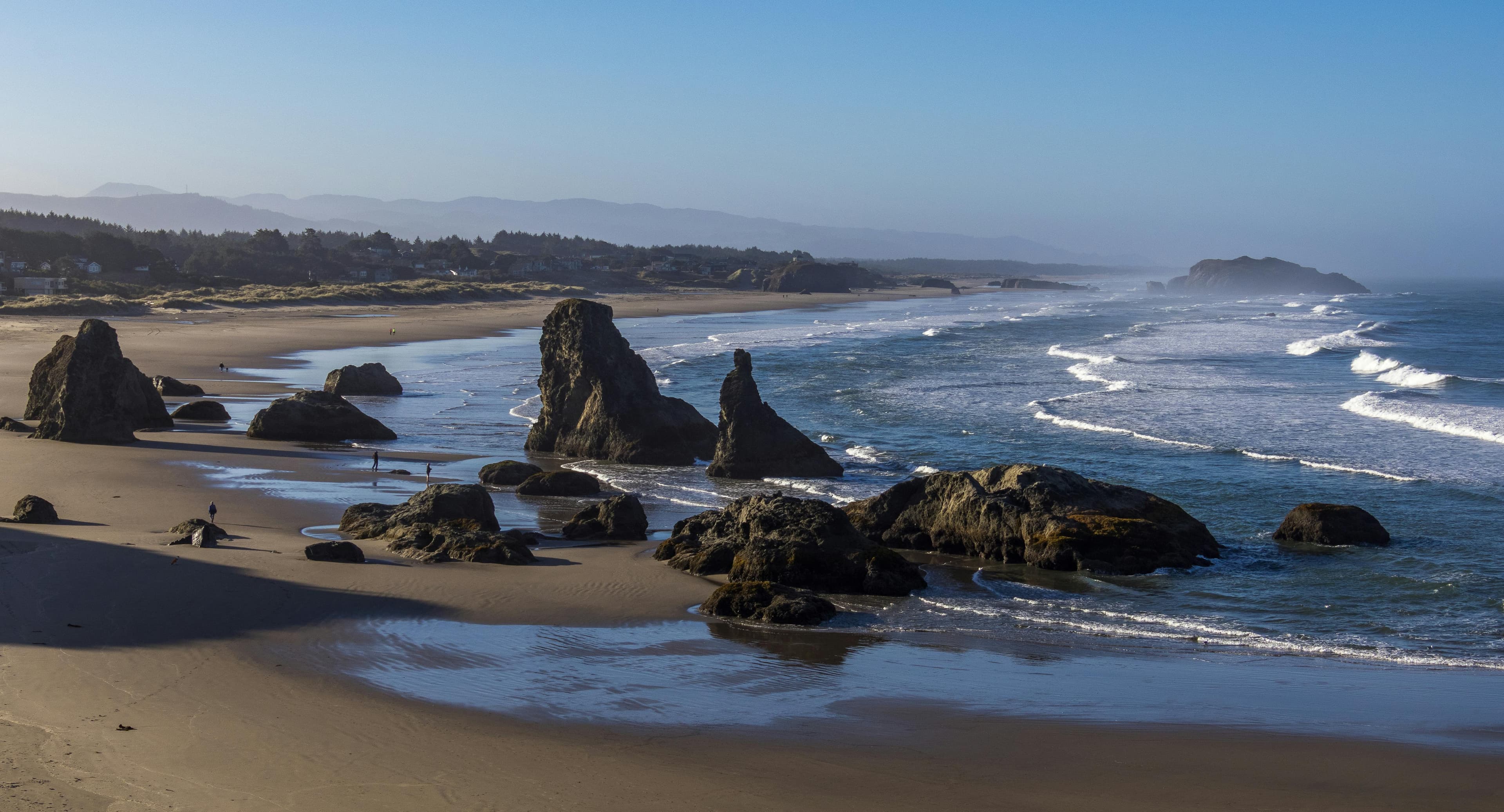
Bandon Trails
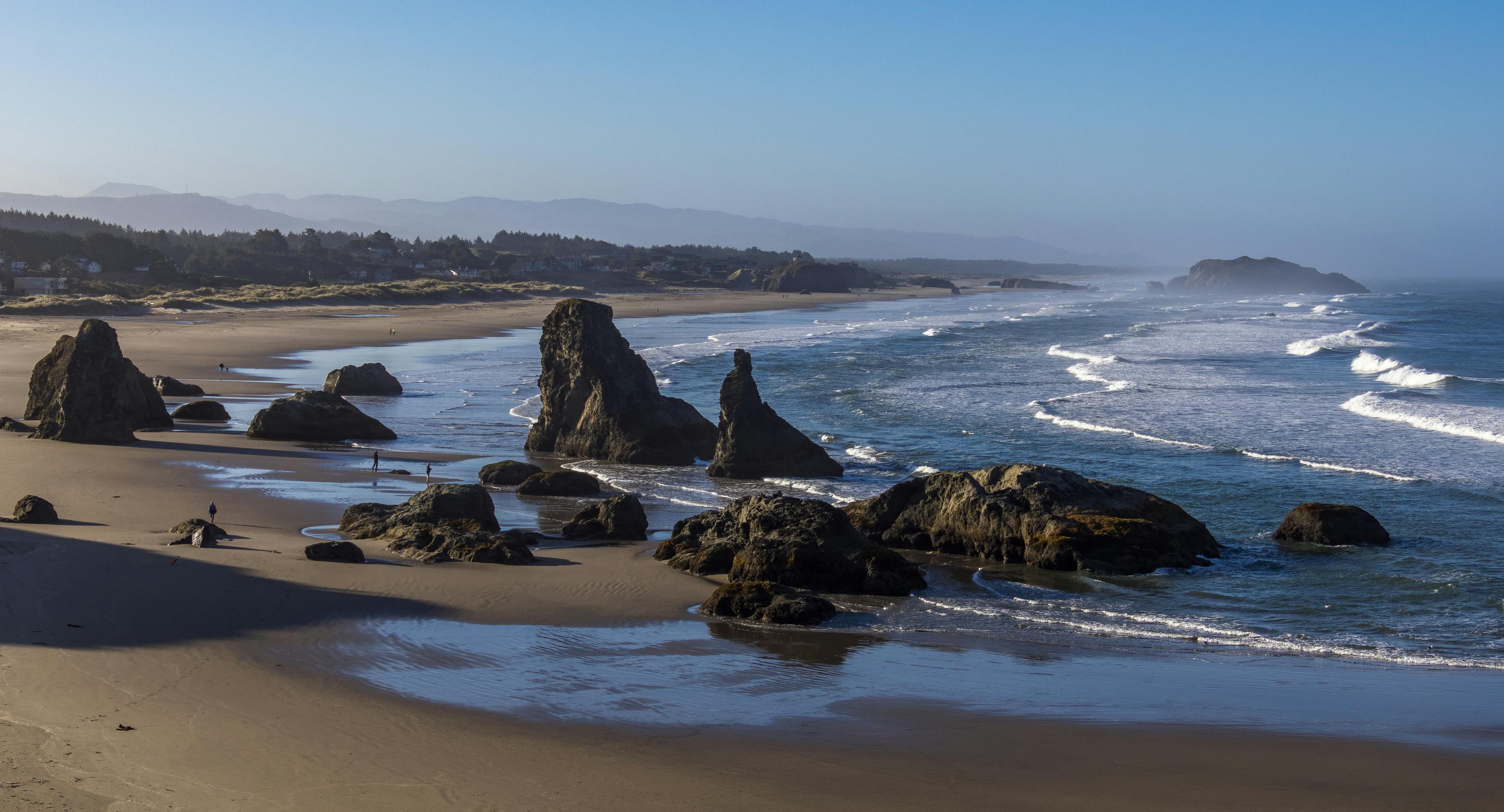
Old Macdonald
2. Pacific Dunes No. 11 — Par 3, 148 yards (Tom Doak, 2001)
Short on the card, severe in its consequences. The green perches on the cliff edge with the ocean crashing directly behind and below. The yardage suggests a pitching wedge or 9-iron, but wind exposure at this point on the routing can push the selection two or three clubs higher. The putting surface is modest in size, and the bunkers that frame it are deep enough to demand a quality recovery. Doak accomplished with 148 yards what most architects cannot achieve in 450.
What makes the hole exceptional is the ratio of drama to distance.
3. Sheep Ranch No. 4 — Par 4, 344 yards (Coore & Crenshaw, 2020)
The entire right side of this hole is the Pacific Ocean. Not a distant backdrop or a scenic view, but an immediate boundary running from tee to green, waves breaking against the rocks below the fairway edge. The hole plays short enough that driver is unnecessary for most, but the wind along this stretch is relentless and unpredictable in direction. The green is open in front, accepting a running approach, but the player must first choose how much of the ocean to challenge off the tee. It is a hole about nerve as much as technique.
4. Bandon Dunes No. 16 — Par 4, 363 yards (David McLay Kidd, 1999)
The sixteenth on the original course plays along the bluff with the Pacific directly behind the green. The hole is reachable from the tee for longer hitters, but the putting surface is defended by deep bunkers and a firm, crowned surface that sheds anything without precision. For those laying back, the second shot is a short iron into wind with the ocean filling the entire frame beyond the flagstick.
Kidd understood that the best short par 4s offer a choice between ambition and restraint, then make both options consequential.
5. Bandon Trails No. 14 — Par 4, 368 yards (Coore & Crenshaw, 2005)
Bandon Trails routes through coastal forest and meadow rather than along the ocean, and this hole represents the inland character of the property at its strongest. The fairway threads through a corridor of shore pines, the canopy filtering light in a way that feels distinctly Pacific Northwest. The approach plays to a green tucked into the tree line, where wind becomes a secondary concern and accuracy off the tee governs everything. It is a reminder that Bandon is more than its coastline.
6. Old Macdonald No. 4 — Par 4, 415 yards (Tom Doak & Jim Urbina, 2010)
The fourth at Old Macdonald features a Biarritz green, the elongated two-tiered putting surface that Charles Blair Macdonald borrowed from a French resort course and installed at the National Golf Links of America in 1911. The swale bisecting the green creates two distinct targets and punishes the player who finds the wrong level. The approach must match both distance and trajectory to the pin location. It is template architecture executed with conviction, and it teaches something about golf history in the process.
7. Bandon Dunes No. 5 — Par 5, 519 yards (David McLay Kidd, 1999)
The fifth is the first hole on the original course to fully reveal the ocean, the fairway bending left toward the bluff as it descends toward the green. Longer hitters can reach in two with a well-placed drive, but the second shot must carry bunkers and gorse while accounting for the crosswind that builds along this exposed stretch. The hole rewards planning across three shots and offers distinct strategies depending on conditions and risk tolerance.
8. The Preserve No. 11 — Par 3, 125 yards (Coore & Crenshaw, 2012)
The Preserve is a 13-hole par-3 course, often underestimated by visitors prioritizing the five championship layouts. The eleventh plays from an elevated tee to a green set in a natural depression with dunes rising on all sides. At 125 yards, it asks for nothing more than a controlled wedge, but the green's contours and the wind channeling through the surrounding dunes complicate what appears straightforward. It is the kind of hole that rewards a third or fourth playing more than the first.
The verdict