What Makes a Great Par 3? The Iconic Short Holes
Par 3s receive more attention per yard than any other hole type in golf. They are the holes most likely to be photographed, most likely to be discussed at the 19th hole, and most likely to produce the memories that golfers carry home from a trip. The reasons are structural. A par 3 distills the game to its essence: one shot, one target, one result. There is no recovery from a poor drive, no strategic adjustment on a second shot. The tee shot is the entire hole, and the architecture that frames it determines whether the moment is memorable or merely functional.
The difference between a great par 3 and an adequate one is not length, not scenery, and not difficulty. It is the quality of the decision the golfer faces before swinging. The best short holes create genuine uncertainty about club selection, shot shape, and target. They force a commitment to a plan and an acceptance of consequences. Adequate par 3s present a target, ask for a swing, and move on. Great ones remain in the mind long after the ball comes to rest.
Pebble Beach No. 7: The Shortest Test in Championship Golf
At 106 yards, the 7th at Pebble Beach is one of the shortest holes on any championship course in the world. The green sits on a rocky promontory above the Pacific, exposed to wind that varies in direction and intensity throughout the day. Jack Neville, who designed the hole in 1919, placed the putting surface on terrain that the ocean had shaped over millennia. The architecture is minimal. The setting does the work.
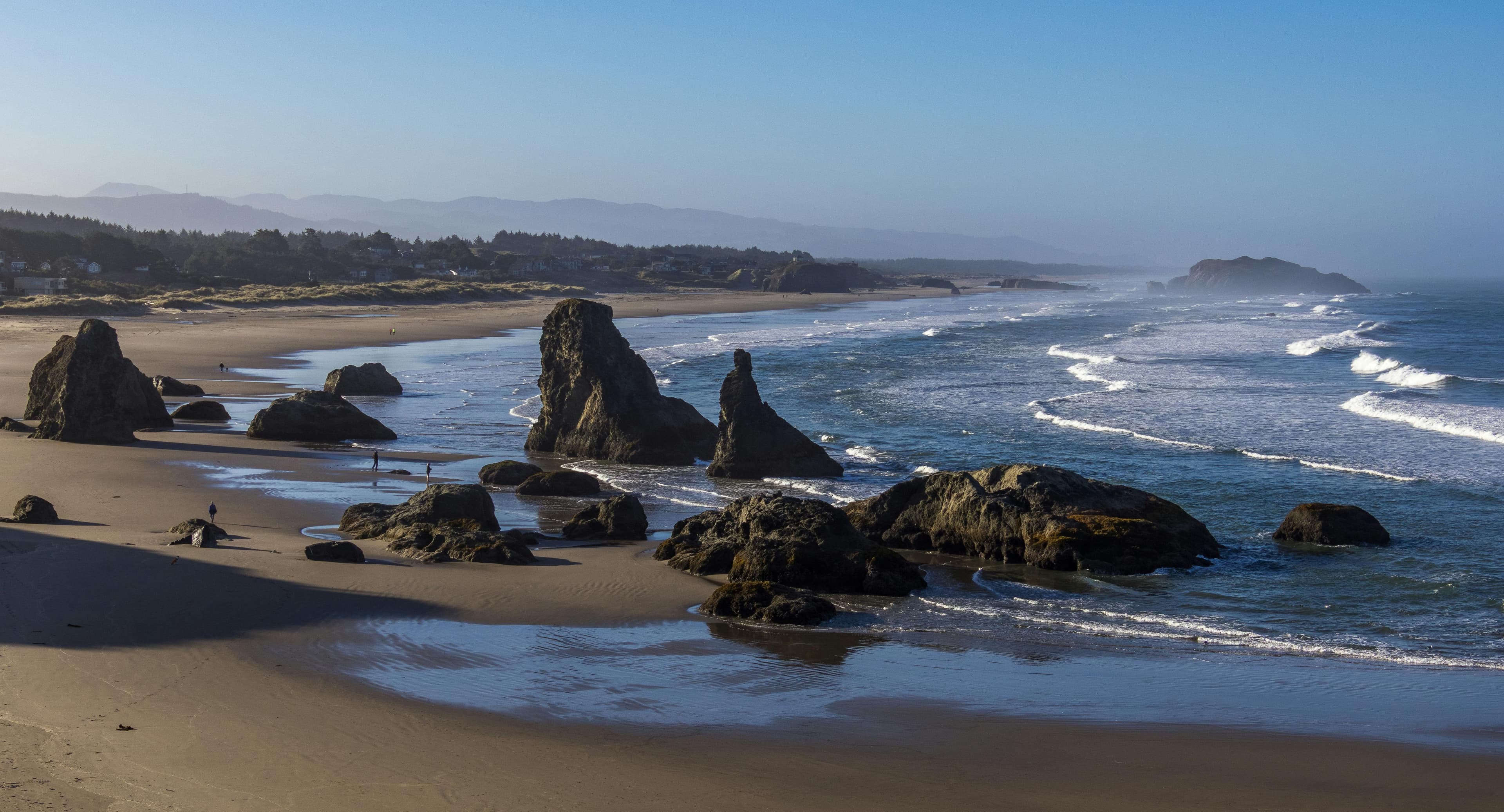
Bandon Preserve
The decision on the 7th changes with every round. On a calm morning, the hole plays as a straightforward half-wedge to a small target. When the wind is off the ocean, the club selection might move up three or four clubs, and the shot shape shifts from a simple pitch to a controlled low punch aimed at the left edge. The green's location on the point means wind wraps around it unpredictably, and even experienced local players misjudge the conditions regularly.
What makes the 7th exceptional is the ratio of decision to distance. In 106 yards, the golfer must assess wind speed, wind direction, green firmness, pin position, and the consequences of missing in four distinct directions, each producing a different result. That density of thinking in so compact a space is what separates this hole from the thousands of short par 3s that offer nothing beyond a target and a yardage.
TPC Sawgrass No. 17: The Psychology of Water
Pete Dye's 17th at TPC Sawgrass is the most famous par 3 in American golf, and its fame rests entirely on psychological challenge. At 137 yards, the hole requires nothing more than a smooth wedge or short iron. The green is reasonably sized at roughly 4,000 square feet. The complication is that the green is entirely surrounded by water, and the bulkhead walls that define its edges provide zero forgiveness. A shot that misses by two feet finds the same water as one that misses by twenty.
The golfer knows the shot is within their capability. The golfer also knows that the consequence of failure is total. This collision between confidence and consequence creates the specific kind of tension that great par 3s produce. The club selection is obvious. The execution is compromised because the situation introduces pressure that technique alone cannot resolve.
What Dye understood is that the challenge of the 17th is not physical but mental.
The genius of the hole is its universality. A tour professional hitting a 9-iron faces the same psychological challenge as a 20-handicapper hitting a 6-iron. The water does not discriminate by skill. It discriminates by nerve. During The Players Championship, more balls find the water on this hole than on any other single hole on the PGA Tour schedule. For visiting golfers, standing on that tee with a wedge in hand and nothing between ball and water, 137 yards feels considerably longer than the yardage suggests.
Troon North No. 15: The Monument Hole
The 15th at Troon North's Monument Course in Scottsdale is a par 3 that uses the Sonoran Desert as both setting and strategic element. The hole plays 139 yards from the back tees to a green perched on a natural shelf of desert rock, with a massive granite boulder standing behind the putting surface like a sentinel. The boulder gives the hole its name and its visual identity, but it is the architecture in front of the green that makes the hole work.
Tom Weiskopf and Jay Morrish designed the 15th with a wide waste bunker guarding the front-left approach, a steep falloff to the right, and a green that tilts gently from back to front. The pin position dictates the shot. A front pin requires a precise carry over the bunker's edge. A back pin invites a bolder swing but brings the back slope into play, and anything that runs through the green disappears into desert hardpan.
What elevates the Monument hole is its integration with the landscape. The hole does not impose architecture on the desert. It uses the desert as architecture. The boulder, the rock shelf, the waste areas, and the native vegetation are all structural elements of the design.
This approach, letting the land dictate the hole rather than engineering a challenge onto flat ground, is what separates the best desert par 3s from the merely photogenic ones.
Bandon Preserve: The Short Course as Architecture
The Bandon Preserve at Bandon Dunes is a 13-hole par-3 course designed by Bill Coore and Ben Crenshaw. It is not a practice facility or a warm-up exercise. It is a serious piece of golf architecture, built on the same dramatic coastal terrain as the resort's championship courses and designed with the same level of care.
The holes range from 85 to 160 yards and play across dune ridges, through swales, and along the edge of bluffs above the Pacific. Each hole presents a distinct challenge. Some use punchbowl greens that gather approach shots toward the center, rewarding general accuracy without demanding surgical precision. Others use exposed, wind-swept sites where the golfer must account for gusts that can move a wedge shot ten yards offline.
Bandon Preserve demonstrates a principle that the best par-3 courses share: short holes played in sequence reveal the full vocabulary of par-3 design in a way that a single hole within an 18-hole routing cannot. Over 13 holes, Coore and Crenshaw use elevation change, wind exposure, green contour, bunker placement, and natural terrain to create a range of challenges that collectively argue for the par 3 as the most architecturally concentrated hole type in the game.
Tip
Why Short Holes Define a Course
Across these examples, the common thread is clarity of purpose. Each hole knows what it wants to be. The 7th at Pebble Beach is a test of judgment under wind. The 17th at TPC Sawgrass is a test of nerve over water. Troon North's 15th is a test of integration between architecture and landscape. Bandon Preserve is a test of range, demonstrating how many distinct experiences the par-3 format can produce.
The reason par 3s so often define a golf course is that they compress every element of design into its smallest possible space. There is no room for filler on a par 3. Every feature, the bunker depth, the green contour, the surrounding terrain, the visual frame from the tee, must earn its place. On a par 5, a weak stretch of fairway can be forgiven. On a par 3, every yard is visible and every decision is immediate.
The verdict