Streamsong Red: Course Review and Playing Guide
Par: 73 | Yardage: 7,148 (tips) | Designer: Bill Coore & Ben Crenshaw (2012) | Type: Resort | Green Fee: $200–$325 | Walking: Encouraged (caddie available)
Streamsong Red sits on land that, until recently, had no business producing golf. For the better part of a century, the acreage surrounding Bowling Green, Florida served the phosphate mining industry, heavy equipment carving through mineral deposits and leaving behind sand ridges, depressions, and exposed terrain that bore no resemblance to the surrounding flatland. When the mining operation wound down, the landscape it left behind looked nothing like central Florida. It looked, improbably, like the raw material for links golf. Bill Coore and Ben Crenshaw saw it and understood what the land was offering.
Where to stay in Streamsong
Planning the trip? Compare live prices across every nearby hotel and rental in one search.
Prices and availability from Booking.com, Expedia and others via Stay22. GolfTrailsHQ may earn a commission at no additional cost to you.
The Design Story
The phosphate extraction process created something that architects spend millions trying to simulate: genuine elevation change on otherwise featureless terrain. Ridgelines rise 50 to 60 feet above adjacent corridors. Valleys cut through sandy waste that drains as naturally as Scottish dune systems. The mineral content of the soil produces a firm, fast playing surface without the irrigation demands that most Florida courses require. When Coore and Crenshaw first walked the property, they found a site that contradicted virtually every assumption about what Florida golf had to be.
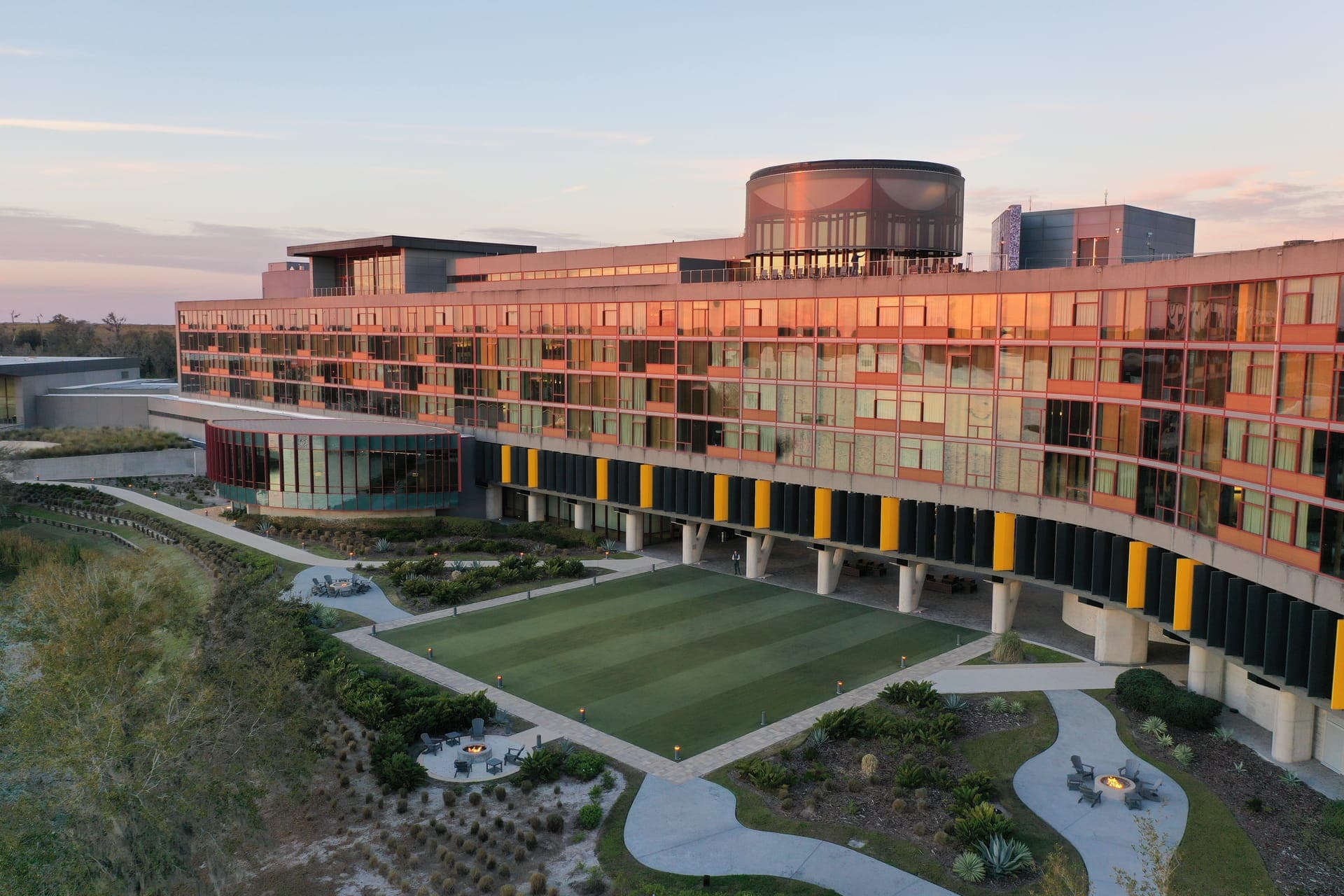
Streamsong Resort
Their approach was characteristically restrained. Where other architects might have reshaped the mining remnants into something more conventionally photogenic, Coore and Crenshaw routed through the terrain largely as they found it. The ridgelines became strategic features rather than visual backdrops. The depressions became collection areas that give short-game artists room to work. The sand waste areas, remnants of the mining operation's byproducts, became hazards with a visual severity that manufactured bunkers rarely achieve. The design philosophy was simple in principle and difficult in execution: let the land dictate the golf, and resist the urge to impose a signature upon it.
The result opened in 2012 alongside the Blue course, designed by Tom Doak. The two courses share the same former mining landscape but occupy different philosophical positions. Doak's Blue is more overtly strategic, its challenges legible from the tee. Coore and Crenshaw's Red is more intuitive, its demands revealing themselves gradually over multiple rounds. That distinction has fueled debate among Streamsong regulars since opening day, and it has not been settled.
How the Course Plays
The routing covers rolling terrain with enough elevation change to make the walk genuinely interesting. Early holes establish the ground conditions and the width of the playing corridors. Fairways are generous by modern resort standards, often 40 yards across or wider, but the firmness of the turf means that balls respond to contour in ways that soft, overwatered surfaces do not. A drive that lands in the correct half of the fairway may feed toward the ideal approach angle. A drive that lands three yards the wrong side may kick into a collection area that turns a simple approach into a complicated one.
The 7th plays to a punchbowl green that gathers shots from a wide range of trajectories, rewarding the player willing to use the ground rather than fly the ball to the flag. The 12th, a long iron across a valley to an elevated shelf, is a hole where the visual intimidation is significant but the execution is straightforward if the club selection is honest. The short holes throughout the routing reinforce the Coore and Crenshaw philosophy: present a clear challenge, provide multiple paths to navigate it, and let the golfer choose.
The par 3s are among the strongest on the property.
The par 73 layout includes five par 3s, a structural choice that gives the round a rhythm distinct from the standard par-72 configuration. The extra short hole is not filler. It occupies a stretch of terrain where a par 3 was the right call, and forcing a par 4 would have required earthwork that the architects were unwilling to impose.
The greens are where the design asserts itself most clearly. They are large, accept running approaches, and contain enough internal slope to create dramatically different pin positions. Reading these surfaces requires patience. First-time visitors will misread putts that locals have learned to anticipate, and the caddies here carry knowledge that is worth the fee.
A green that plays straightforward with a front-right flag becomes a genuine test with a back-left pin, and the difference is not simply distance but angle, trajectory, and risk.
The closing stretch, from the 15th through the 18th, asks for sustained quality. The 16th, a reachable par 5, presents a risk-reward second shot over waste area that separates aggressive play from reckless play. The 18th plays uphill to a green that frames the round's conclusion against the central Florida sky, a finish that rewards a committed swing and a clear mind.
What the Green Fee Purchases
Tip
The comparison to the other courses on property is inevitable. The Blue, Doak's contribution, offers a more cerebral round. The Black, designed by Gil Hanse and opened in 2017, is the firmest and fastest of the three, with minimalist bunkering and a demand for precision that separates it from either of the original pair. Serious visitors play all three over a multi-day stay, and the differences between them sustain conversation long after the trip ends. The Streamsong complete golf guide covers the full portfolio and recommended combinations.
Practical Considerations
Streamsong Resort sits in Bowling Green, roughly 80 miles southeast of Tampa and 60 miles south of Orlando. The drive from either airport takes between 75 and 90 minutes, through countryside that offers no indication of what lies at the end of the road. Tee times are available to overnight guests, and the resort's 228 rooms fill during peak season from October through May. Booking early, particularly for weekend stays in February and March, is advisable.
The walking-encouraged policy is worth taking seriously. The terrain is manageable on foot, and the elevation changes, modest by mountain standards but unusual for Florida, make the walk engaging rather than merely long. A caddie adds value beyond the physical relief, particularly on greens that play differently than they read.
The property itself is deliberately remote. There is no surrounding town to explore, no restaurant row, no competing attractions within easy reach. The isolation is part of the design, both of the resort and of the experience. Visitors come to Streamsong to play golf, and the infrastructure supports that single purpose with quiet efficiency. The Streamsong destination guide covers accommodation, dining, and logistics for planning a complete trip.
The verdict