Streamsong / Central Florida: Best Time to Visit
Streamsong Resort sits on a former phosphate mining site in Bowling Green, Florida, roughly 90 minutes south of Tampa and an hour east of Sarasota. The isolation is the point. Three courses designed by Tom Doak (Blue), Bill Coore and Ben Crenshaw (Red), and Gil Hanse (Black) occupy a landscape of sand ridges, native grasses, and reclaimed lakeland that looks nothing like conventional Florida golf. There are no houses lining the fairways, no cart paths dictating pace, and no competing attractions within easy reach. Streamsong is a destination where golf is the entire agenda, which means weather and course conditions carry outsized importance. A poorly timed visit here cannot be salvaged with a backup plan at the beach or a restaurant district. Getting the timing right matters more at Streamsong than at almost any other American golf resort. For a broader overview of the property, the Streamsong destination guide covers logistics, accommodations, and course details in full.
Where to stay in Streamsong
Planning the trip? Compare live prices across every nearby hotel and rental in one search.
Prices and availability from Booking.com, Expedia and others via Stay22. GolfTrailsHQ may earn a commission at no additional cost to you.
Fall: October Through November
October marks the beginning of Streamsong's prime season, and the transition is abrupt. Summer heat and rain recede, daytime highs drop from the low 90s in September to the low 80s by mid-October, and humidity eases to a tolerable level.
By November, highs settle into the mid-70s, and the combination of dry air, warm sun, and firm turf creates ideal conditions for the kind of strategic ground-game golf that all three courses reward.
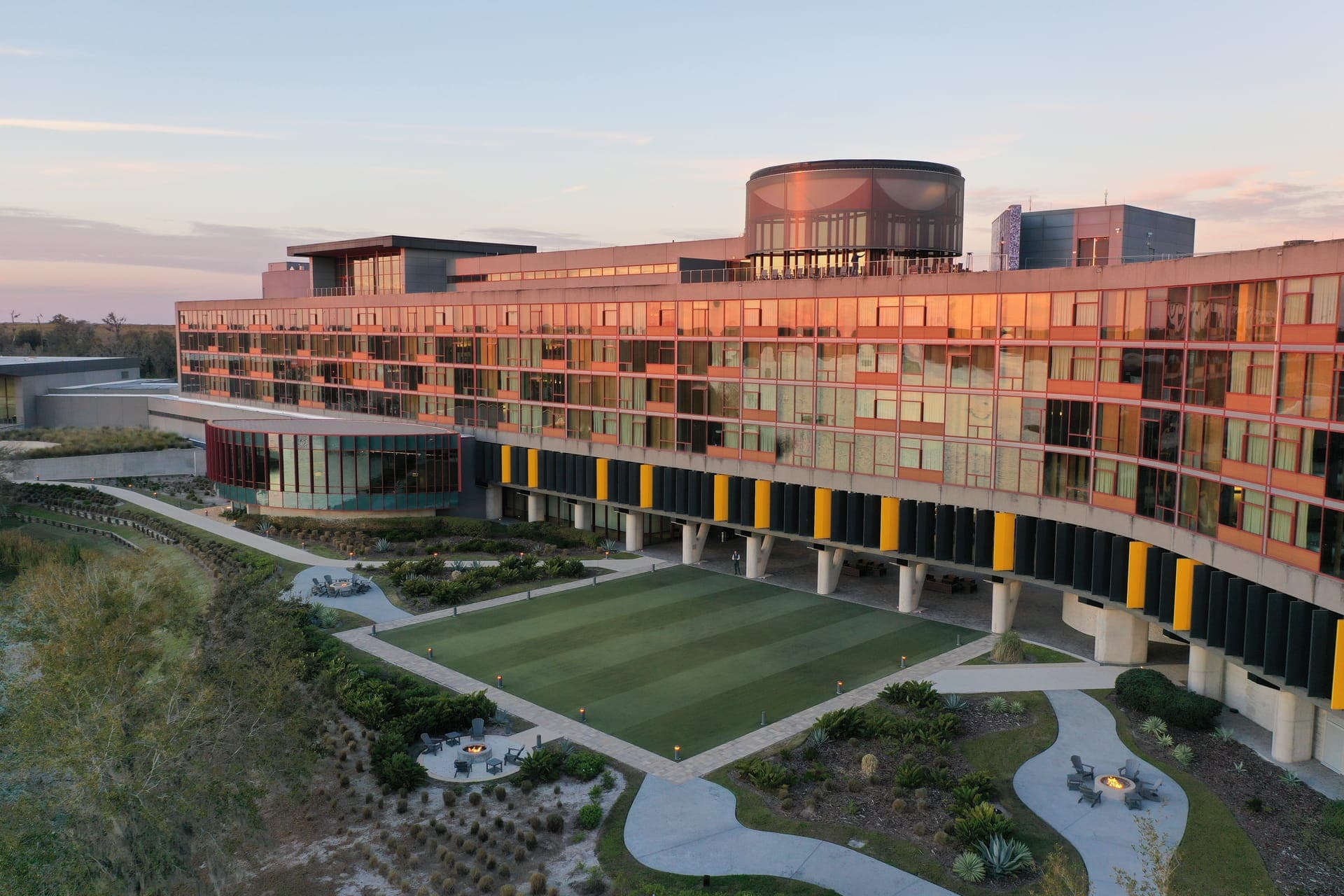
Streamsong Resort
Course conditions are excellent in fall. The sandy subsoil at Streamsong drains quickly, so even late-season rain does not produce soggy conditions. The native grasses framing the fairways turn golden brown, giving the landscape its distinctive links-like character. Greens are fast and firm, and the bunker complexes, which are central to each architect's design, play their most demanding.
Pricing is at or near peak levels. Streamsong operates on a stay-and-play model, and fall packages for two nights and three rounds typically run $800 to $1,200 per person depending on room category and course selection. Tee times on all three courses are available but should be booked at least three to four weeks in advance for October and November weekends.
Winter: December Through February
Winter is Streamsong's peak demand period. Snowbird traffic and holiday travel push occupancy rates to their highest, and pricing reflects the demand. Stay-and-play packages reach $1,000 to $1,400 per person for the standard two-night, three-round configuration. Tee times must be secured well ahead, and weekend availability in January and February can fill six weeks or more in advance.
The weather justifies the premium. Daytime highs range from the low 70s to mid-70s, humidity is low, and rain is infrequent. Morning temperatures dip into the 50s, occasionally the upper 40s, requiring a light layer for the first few holes before the sun warms the open terrain. Course conditions are at their annual peak. The overseeded playing surfaces are lush, greens are true and fast, and the firm, sandy fairways provide the ground-game bounces that make Streamsong's courses distinctive.
The one variable is wind. Central Florida winter fronts can push sustained winds of 15 to 25 miles per hour across the property, and the exposed ridgeline terrain of all three courses amplifies the effect. But for golfers who prefer calm conditions, checking the forecast before finalizing travel dates is prudent.
Wind days at Streamsong are challenging in the best sense, exposing the strategic depth of the routing and demanding creative shotmaking.
Spring: March Through May
Spring extends the prime season with gradually warming temperatures. March highs sit in the upper 70s, April pushes into the low 80s, and May reaches the mid to upper 80s. Humidity increases through the season, becoming noticeable by late April and pronounced by May. The afternoon thunderstorm cycle that defines Florida summers begins to establish itself in May, though storms are less frequent and less intense than in summer.
Pricing eases from winter peaks starting in mid-March. By April, stay-and-play packages drop to the $700 to $1,000 range, and May offers the first significant discounts. Course conditions remain strong through April, with the overseeded surfaces still holding. By May, the transition back to warm-season Bermudagrass begins, and some courses may show patchy areas as the ryegrass fades.
Late March through mid-April is an appealing window: comfortable temperatures, peak-level conditions, and pricing that sits $100 to $200 per person below the January peak. For golfers who missed the winter window, early spring is the natural alternative.
Summer: June Through September
Summer at Streamsong is an entirely different experience. Daytime highs reach the low to mid-90s, humidity is oppressive, and afternoon thunderstorms are a near-daily occurrence from June through September. The isolation that defines Streamsong in the best sense becomes a liability in summer: there is nowhere to retreat during a weather delay except the clubhouse, and a two-hour lightning suspension in the middle of a round with no alternative activities available is a different proposition than at a coastal resort.
Tip
For Florida residents and golfers who accept the trade-offs, summer provides an affordable entry point to three of the country's best public courses. For visitors traveling specifically for the Streamsong experience, summer undersells the property.
The Verdict
Streamsong is best experienced between October and April. The optimal months are November and March, which balance strong weather, peak course conditions, and pricing that sits below the January and February peak. Winter delivers the premium experience at premium prices. Summer should be reserved for budget-conscious golfers who can tolerate heat and are flexible about storm interruptions.
The verdict