Seaside Course at Sea Island: Course Review and Playing Guide
Par: 70 | Yardage: 7,055 (tips) | Designer: Tom Fazio (redesign, 1999) | Type: Resort (guests only) | Green Fee: $200–$400 | Walking: Permitted (caddie available)
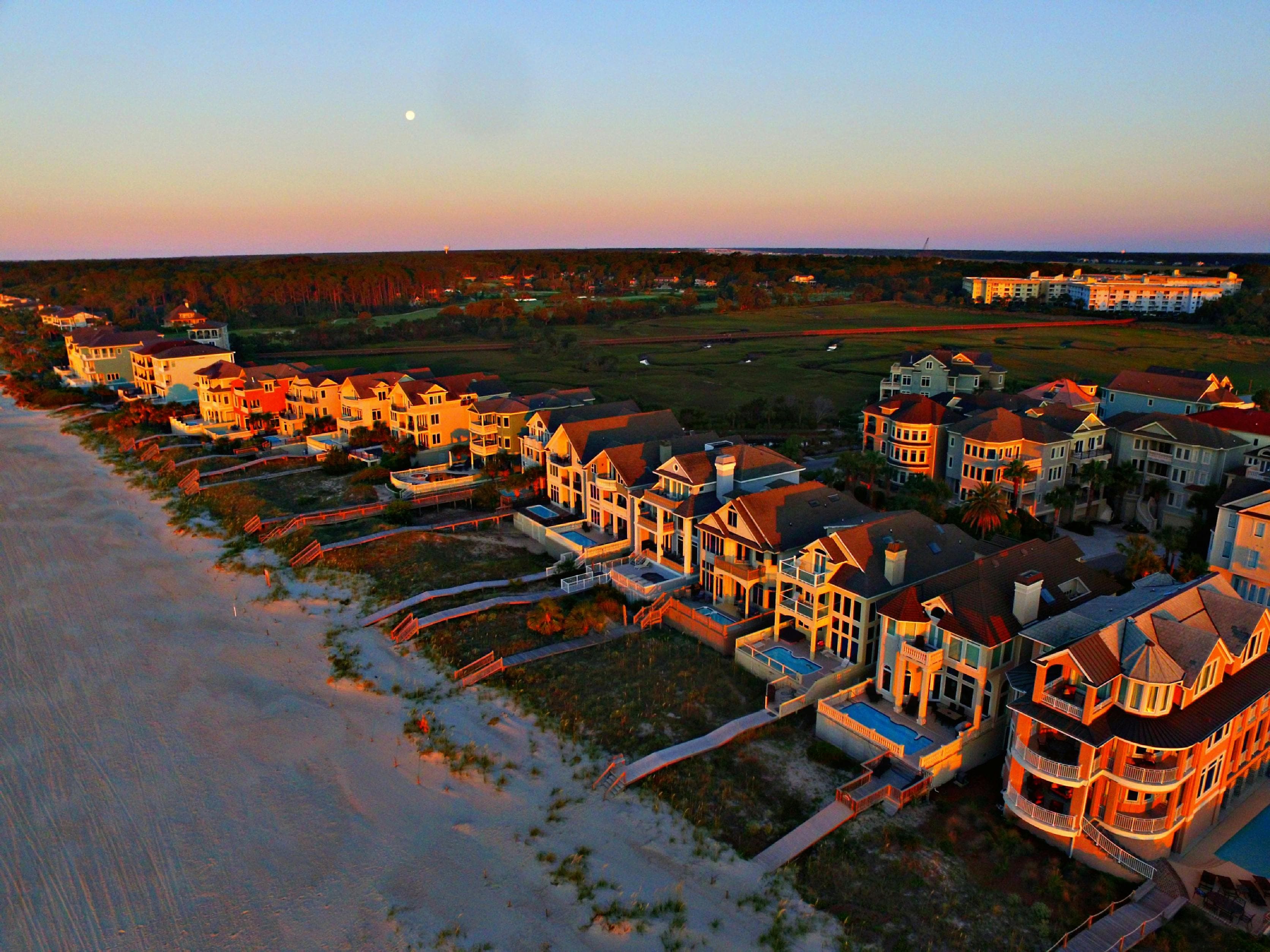
The Seaside Course at Sea Island Golf Club has operated in various forms since the 1920s, when the original layout was built to serve the guests of The Cloister resort on the Georgia coast. The course has been redesigned more than once, and the version that exists today is substantially the work of Tom Fazio, who completed a comprehensive renovation in 1999. That renovation preserved the course's coastal routing along the Black Banks River and the marshes of St. Simons Island while modernizing the strategic content to accommodate contemporary play. Since 2010, the Seaside Course has hosted the RSM Classic, a fall PGA Tour event that has become one of the better-attended tournaments on the schedule and a course that touring professionals consistently praise for the quality of its test.
Where to stay in Sea Island & St. Simons
Planning the trip? Compare live prices across every nearby hotel and rental in one search.
Prices and availability from Booking.com, Expedia and others via Stay22. GolfTrailsHQ may earn a commission at no additional cost to you.
The Design Story
Fazio's renovation at Seaside was a project of selective preservation. The original routing by Harry S. Colt and Charles Alison, later modified by Dick Wilson and then by Joe Lee, had established a relationship between the golf holes and the surrounding marsh and river landscape that was worth maintaining. Fazio retained the general path of the routing while rebuilding greens, repositioning bunkers, and reshaping fairways to create a course that could hold a professional event without sacrificing the intimacy that makes it effective as a resort experience.
Seaside Course at Sea Island Golf Club
The marsh, which borders several holes on the back nine, functions as both a visual frame and a strategic element. It is not merely decorative hazard frontage. On the par-5 15th, the marsh intrudes into the landing area for the second shot, forcing a decision about how much risk to absorb on the way to a green that is reachable in two for longer hitters. On the par-3 17th, the tee shot carries marsh to reach a green that sits on a narrow peninsula. The relationship between golf and water is constant but never repetitive, and Fazio's routing ensures that the player's orientation to the marsh changes frequently enough to prevent the landscape from becoming background.
The result is a course that feels established in its landscape rather than imposed upon it.
The greens are among the most thoughtfully contoured on any resort course in the Southeast. Missing on the wrong side of a pin position creates recovery putts that are genuinely difficult to two-putt. This subtlety is part of what makes the course competitive for tour players while remaining fair for resort guests playing from forward tees.
They are not excessively fast or severely sloped, but they reward precision in approach-shot placement.
How the Course Plays
The opening holes move through a corridor of live oaks draped in Spanish moss, a visual register that is distinctly coastal Georgia. The 1st is a par 4 of moderate length that favors a draw from the tee, and the 2nd is a short par 4 where the aggressive play is a fairway wood or long iron positioned for a wedge into a small green. The front nine weaves between oak-lined corridors and open marsh edges, and the variety of hole lengths prevents any settling into a single club pattern. Four par 4s of significantly different yardages require different strategies off the tee, and the two par 3s on the front demand different shot shapes and trajectories.
The back nine is where Seaside builds its reputation. The holes along the Black Banks River and the surrounding marsh are exposed to the coastal breeze that typically intensifies through the afternoon. The 13th, a par 4 that plays along the river's edge, is one of the most demanding driving holes on the course. The fairway is narrower than the front-nine corridors, and the marsh on the right side provides no recovery option. The stretch from 15 through 17 combines the par-5 risk-reward, a strong par 4, and the marsh-carry par 3 into a three-hole sequence that frequently determines the outcome of RSM Classic leaderboards.
The 18th is a par 4 that returns to the clubhouse, and its green is positioned to create a natural amphitheater effect. The hole plays as a solid finishing test rather than a dramatic gamble, which suits the course's overall temperament. Seaside does not rely on spectacle. It accumulates difficulty through positioning and angle, and the scorecard at the end of the round typically reflects how well the player managed those demands rather than how many heroic shots were executed.
What the Green Fee Purchases
Tip
The PGA Tour pedigree adds a layer of context to the experience. Walking the same routing that Davis Love III, who is a Sea Island resident and the tournament's host, navigates each November places the resort round in a competitive framework. The course is maintained to tour-event standards year-round, and the conditioning reflects that commitment. The Sea Island complete golf guide covers the resort's additional courses, including Plantation and Retreat, which offer contrasting styles within the same property.
Practical Considerations
Sea Island is located on the Georgia coast between Savannah and Jacksonville, Florida. Brunswick Golden Isles Airport is the closest regional option, while Jacksonville International Airport, approximately 70 miles south, provides the broadest commercial service. Savannah/Hilton Head International Airport, roughly 80 miles north, is an alternative with good connectivity.
The golf season runs year-round, though peak conditions coincide with the fall and spring months when temperatures are moderate and humidity is lower. Summer brings heat and afternoon thunderstorms characteristic of the Georgia coast. Winter rounds are viable but require flexibility with weather.
The verdict