Sea Island, GA: The Complete Golf Trip Guide
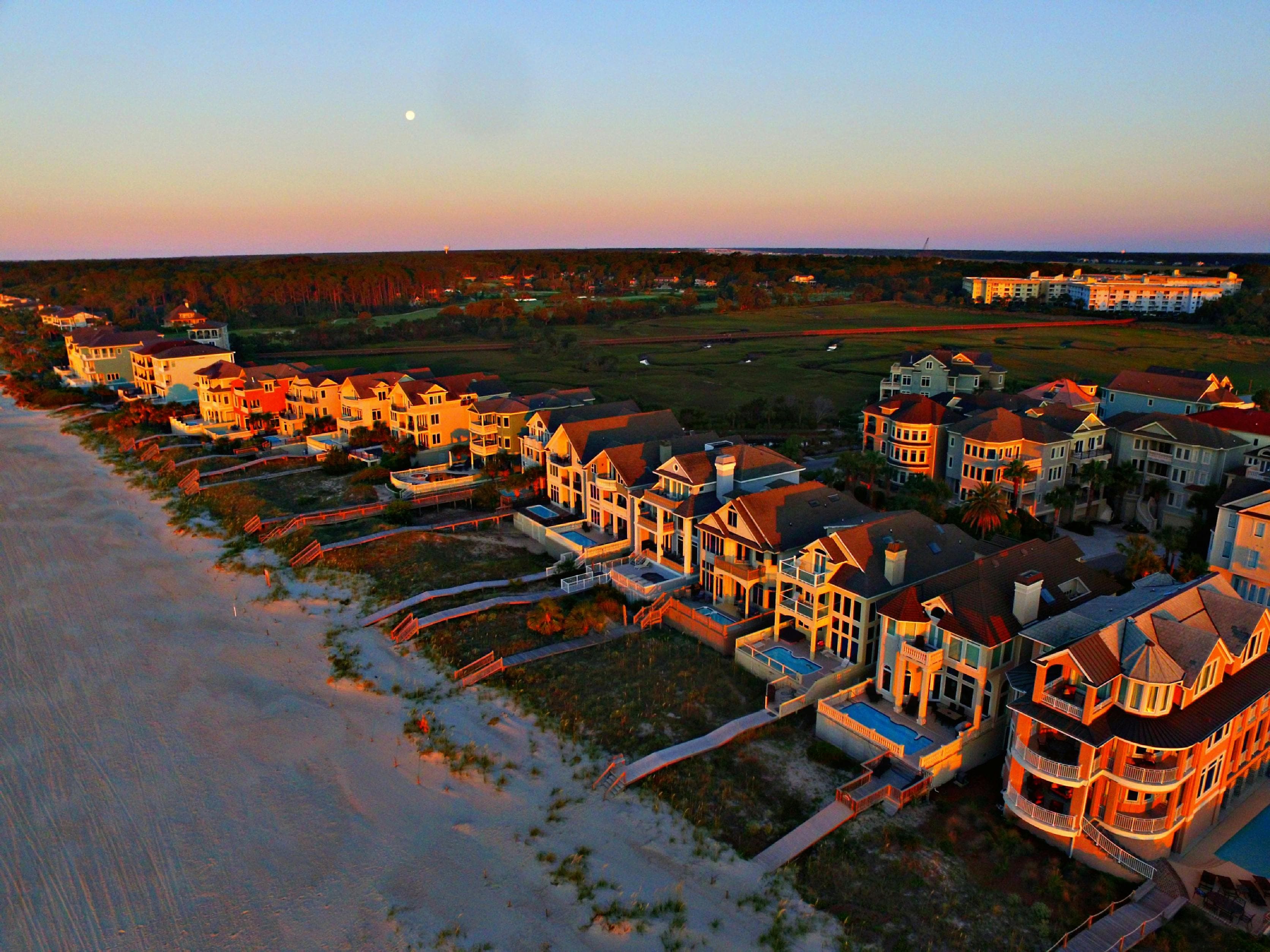
The Golden Isles of Georgia occupy a stretch of the Atlantic coast where barrier islands sit low against the water and live oaks grow laterally, their limbs reaching forty feet in every direction before touching the ground. Sea Island is the smallest and most private of these islands, connected by a causeway to St. Simons Island and accessible only through the gates of the Sea Island Resort. There are no public beaches, no commercial strips, no competing hotels. The resort has operated here since 1928, and its character reflects nearly a century of deliberate restraint. The architecture is low-slung and Georgian. The landscaping is native. The atmosphere carries the quiet assurance of a place that has never needed to announce itself.
Golf arrived early and stayed central. The resort now maintains three eighteen-hole courses across Sea Island and neighboring St. Simons Island, each designed or redesigned by a name that registers immediately in the architectural canon. The PGA TOUR plays here annually. Yet the resort's identity is not golf-only. It is a property where golf happens to be done exceptionally well, within a broader framework of coastal Georgia hospitality that treats leisure as something earned and unhurried.
The Golf Performance Center, one of the most regarded teaching facilities in the country, draws players year-round.
Where to stay in Sea Island & St. Simons
Planning the trip? Compare live prices across every nearby hotel and rental in one search.
Prices and availability from Booking.com, Expedia and others via Stay22. GolfTrailsHQ may earn a commission at no additional cost to you.
The Courses
Understanding Sea Island's golf requires acknowledging the access model first. All three courses are reserved exclusively for resort guests. There is no public or semi-public play. Booking a room at The Cloister or The Lodge is the price of entry, and that bundled arrangement shapes the experience in ways that matter. Pace of play is controlled. Conditions remain immaculate because rounds per day stay well below what a public-access course would tolerate. The trade-off is cost, and it is not trivial.
The Lodge at Sea Island
Seaside Course
The Seaside Course is the resort's flagship and the one most visitors will recognize by reputation. Tom Fazio designed the current iteration, which opened in 1999 after a comprehensive rebuild of the original Dick Wilson and Joe Lee routing. It plays as a par 70, measuring just under 7,100 yards from the back tees, and it hosts the RSM Classic on the PGA TOUR each November.
The routing moves through maritime forest and salt marsh along the eastern edge of St. Simons Island, with the final stretch running parallel to the Black Banks River. The par-3 seventh, played from an elevated tee across tidal marsh to a green framed by water on three sides, is the hole that appears in most photography of the resort. But the course's real strength is its consistency across all eighteen holes. Fazio graded the terrain to create gentle movement on a naturally flat landscape, and the bunkering is precise without being penal. Greens are mid-sized and contoured enough to reward iron play without punishing moderate approach shots. The course asks for accuracy and course management rather than raw distance, which is part of why it works as both a tour venue and a resort course.
Green fees for Seaside run $275 to $400 depending on season, with the higher end applying during the RSM Classic window and spring weekends.
Plantation Course
The Plantation Course occupies the interior of the resort property on Sea Island itself, routed through avenues of live oaks and across a series of lagoons that come into play on roughly half the holes. Rees Jones redesigned the course in 2019, and his work sharpened the strategic options without altering the fundamental character: this is a par-72 layout that plays through a parkland setting rather than the coastal marsh environment of Seaside.
At approximately 7,060 yards from the tips, the Plantation Course favors players who can shape the ball both directions. Several doglegs require committed tee shots, and the green complexes use subtle shelving to create pin positions that vary meaningfully from day to day. The conditioning matches Seaside, as both courses benefit from the same agronomic program and limited daily play counts.
Green fees range from $225 to $375. For groups playing multiple rounds during a stay, the Plantation Course often becomes the preferred second or third round because its parkland routing provides a visual and strategic contrast to the coastal feel of Seaside.
Retreat Course
The Retreat Course is the most recent addition, designed by Davis Love III and his brother Mark Love. It opened in 2001 on the site of the former Sea Island Golf Club retreat nine and a historic plantation, and its routing incorporates several holes that play along the marshes of the Frederica River and through corridors of ancient oaks.
This is a par-72 layout at 7,046 yards from the back tees, and it carries the Love brothers' design philosophy: wide fairways that invite aggressive lines, substantial green complexes that reward creativity in the short game, and a ground-game-friendly approach that makes the course enjoyable across handicap levels. The tenth hole, a par 4 that bends along the river with the marsh tight against the right side, is the signature, but the course's appeal lies less in individual standout holes than in the sustained quality of the routing through one of the most beautiful pieces of property on the Georgia coast.
Green fees for the Retreat range from $200 to $350. Walking is encouraged on all three courses, and caddie services are available for each.
Where to Stay
Sea Island Resort operates two primary lodging properties, and the choice between them defines the character of the trip.
The Cloister is the resort's original property, a Mediterranean-revival structure that opened in 1928 and was completely rebuilt in 2006. It holds a Forbes Five-Star rating and occupies a beachfront position between the Black Banks River and the Atlantic Ocean. Rooms start at $600 per night in the quieter months and reach $1,200 during peak season. The public spaces are formal in the old Southern sense: jacketed dining, afternoon tea, a spa that operates at a pace designed to fill an entire day rather than a pre-round hour. For couples and smaller groups, The Cloister establishes a register of hospitality that few American resorts still attempt. G8 summits and diplomatic events have been hosted here, and the service infrastructure reflects that history.
The Lodge at Sea Island Golf Club sits adjacent to the Seaside and Plantation courses and caters more directly to golfers. Nightly rates run $400 to $800, and the atmosphere is correspondingly less formal. The rooms are comfortable and well-appointed without the ceremonial weight of The Cloister. The building overlooks the practice facility and first tees, and the bar serves as the natural gathering point after rounds. For groups of four whose primary purpose is golf, The Lodge is the more practical choice. The proximity to the courses eliminates transit time, and the culture of the property assumes that guests are there to play.
Both properties grant access to all three courses, the beach club, the fitness center, and the resort's restaurant portfolio. The difference is tone, not access.
Getting There
Jacksonville International Airport is the primary commercial gateway, located approximately ninety minutes south of the resort by car. The drive follows Interstate 95 north through coastal Georgia and is straightforward. Brunswick Golden Isles Airport sits thirty minutes from the resort and handles private aviation, which accounts for a measurable share of the resort's guest arrivals. Savannah/Hilton Head International Airport, roughly ninety minutes to the north, is an alternative for travelers connecting through East Coast hubs.
Tip
When to Visit
Sea Island is a year-round destination, and the coastal Georgia climate cooperates with golf in every month. Spring and fall represent the ideal windows. March through May and October through November deliver daytime temperatures in the 65-to-80-degree range, low humidity relative to summer, and courses in peak condition. The RSM Classic in November brings tour-level conditioning to Seaside and a tournament atmosphere to the resort, though tee time availability tightens during the event week.
Summer on the Georgia coast is honest heat. June through August brings temperatures into the low 90s with humidity to match, and afternoon thunderstorms are a near-daily occurrence from mid-June onward. Early morning tee times that finish before noon are standard practice. Green fees and room rates soften during summer months, and the beach and pool take on greater importance in the daily rhythm.
Winter is mild by Eastern Seaboard standards. December through February temperatures range from the mid-40s to low 60s, and courses remain open. The occasional cold front pushes lows into the 30s for a day or two, but extended freezes are rare. The resort's winter rates represent the best value window, and for golfers accustomed to seasonal closures in the Northeast or Midwest, the ability to play quality golf in January without a cross-country flight has real appeal.
What It Costs
Sea Island is a premium destination, and the pricing reflects the exclusivity of the access model. A realistic budget for a three-night, three-round trip breaks down as follows.
At The Lodge, the most golf-oriented option, accommodation runs $1,200 to $2,400 for a three-night stay. Three rounds across the Seaside, Plantation, and Retreat courses total $700 to $1,125 depending on season. Adding meals, caddie fees, and incidentals, per-person cost for a three-day trip ranges from $2,200 to $3,800.
At The Cloister, the same three rounds of golf carry identical green fees, but accommodation rises to $1,800 to $3,600 for three nights. Total per-person cost reaches $2,800 to $5,000.
These figures place Sea Island in the upper tier of American resort golf destinations, comparable to Pebble Beach and Kiawah Island in total trip cost. The value proposition rests not on price per round but on the cumulative quality of the experience: three courses maintained to tour standards, accommodations that hold Forbes Five-Star distinction, and an atmosphere of privacy and pace that larger resorts cannot replicate.
Planning Notes
Tee times are managed through the resort's golf concierge and are booked at the time of room reservation. Booking accommodation and golf simultaneously, as far in advance as the reservation window allows, is the practical approach.
During spring and fall weekends, the most desirable morning times on Seaside fill early.
The resort's dining portfolio includes several restaurants across The Cloister and Lodge properties. Jackets are required at The Cloister's main dining room for dinner, a detail worth noting for groups packing primarily for golf. St. Simons Island's village, a short drive from the resort, offers casual alternatives and a sense of the broader Golden Isles community beyond the resort gates.
The full Sea Island destination guide covers the complete course and accommodation inventory.
The verdict