Retirement Golf Trip Ideas
Retirement changes the golf trip in ways that are almost entirely positive. The schedule constraints that compressed every previous trip into a frantic long weekend disappear. Tuesday through Thursday tee times, once impossible, become preferable. Shoulder season travel, when courses are emptier and prices drop, is suddenly available. The five-night trip, always talked about and never feasible when annual leave was finite, can happen without guilt.
What retirement also changes, and what most golf-trip guides decline to acknowledge, is the body. The player who walked 36 holes at Bandon at 45 may not want to walk 36 holes at 65. The early morning tee time that once required coffee and willpower now requires careful consideration of joint stiffness and medication schedules.
The best retirement golf trips account for these realities without apology, choosing destinations and courses that reward the game's subtler pleasures rather than demanding its most strenuous ones.
Why Timing Is the Retiree's Greatest Asset
Peak-season pricing at destinations like Pinehurst, Scottsdale, and Kiawah exists because working golfers are confined to weekends and school holidays. Retirees are not. A mid-week trip during shoulder season can reduce total costs by 30 to 40 percent at the same destination, on the same courses, with lighter crowds and faster pace of play.
The most significant financial advantage of retirement golf travel is access to the calendar's quiet pockets.
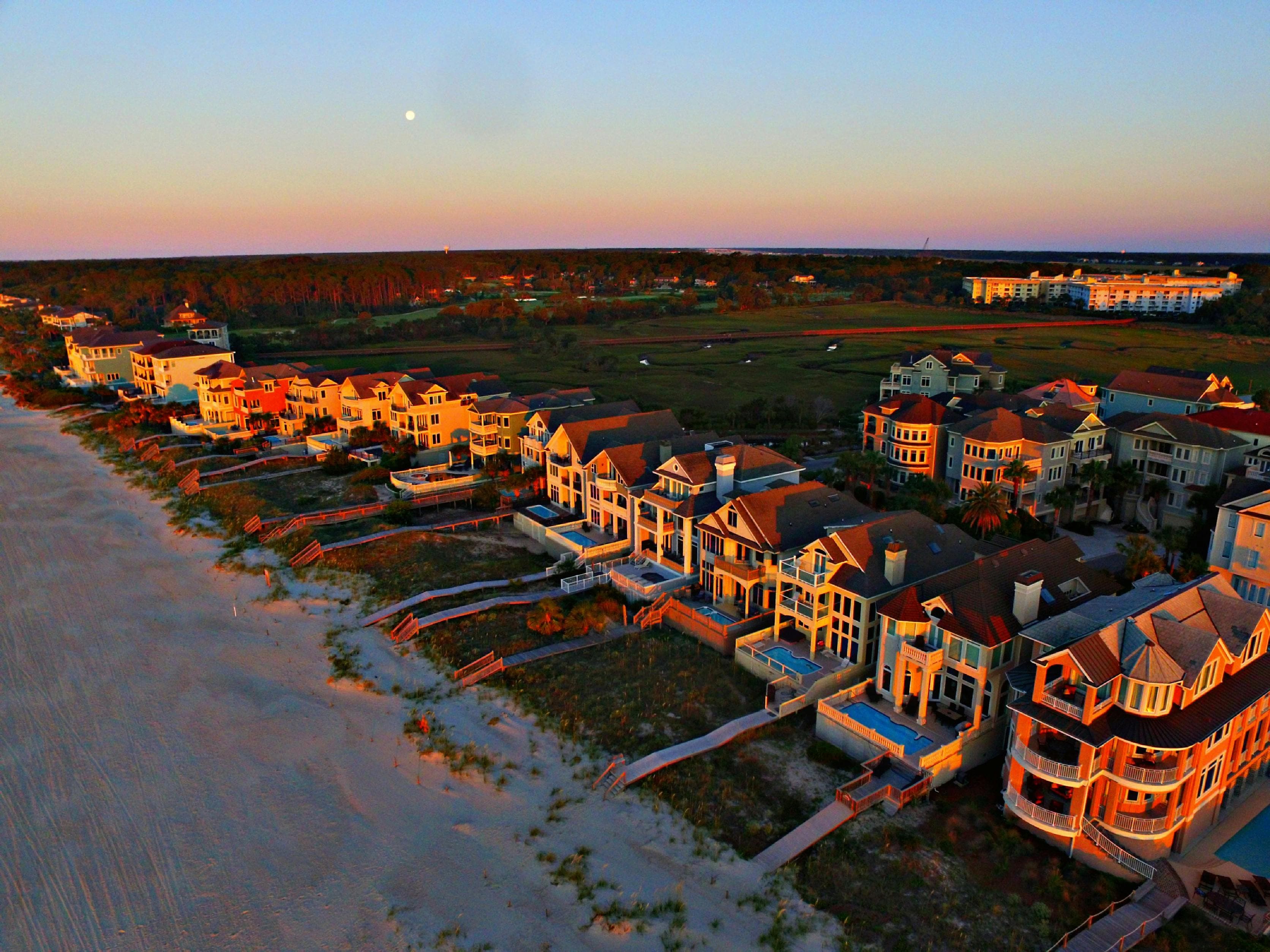
Harbour Town Golf Links

Ross Bridge
Weekday golf also produces a different experience on the course itself. Starters are more relaxed, marshals are less aggressive, and the round settles into a rhythm that a Saturday morning shotgun start cannot replicate. Courses that feel crowded in peak season feel contemplative on a Wednesday in October.
The Destinations
Robert Trent Jones Golf Trail, Alabama. The RTJ Trail is the retirement road trip. Eleven sites across Alabama, each with 36 to 54 holes, at prices that make daily golf economically reasonable. Green fees average $50 to $70 per round, and the course quality, particularly at Ross Bridge in Birmingham and Capitol Hill in Prattville, significantly exceeds what the pricing suggests. The road-trip format suits retirees who have time to drive between sites, explore small towns, and play at a pace that the long-weekend crowd cannot afford. A seven-day RTJ Trail trip, playing a different course each day and staying at the on-site lodges, is one of the best value golf experiences in the country.
Naples, Southwest Florida. Naples is where golfers retire, and there is a reason for that. The climate supports year-round play, the course density is the highest per capita in the country, and the city's restaurant scene along Fifth Avenue South has matured into something that rewards repeated visits. Tiburon Golf Club, with its two Greg Norman layouts, and Naples Grande provide the anchor rounds. The Everglades are a short drive east for the day when golf takes a back seat to wildlife and scenery. For retirees who winter in Florida, Naples is the base from which a season's worth of golf can be played without exhausting the options.
Palm Springs, California. Palm Springs offers the snowbird alternative to Florida, with a desert climate that delivers 300-plus days of sunshine and green fees that drop meaningfully during the shoulder months of May and November. PGA West Stadium Course and Indian Wells provide championship-level rounds, while the broader Coachella Valley contains dozens of semi-private courses that welcome visitors at reasonable rates. The mid-century architecture, the cultural scene in downtown Palm Springs, and the proximity to Joshua Tree National Park provide rest-day programming that does not revolve around the golf course. Extended-stay accommodation in La Quinta and Indian Wells is well suited to the two-week trip that retirement permits.
Pinehurst, North Carolina. Pinehurst was built for the pace that retirement allows. The village is walkable. The resort is self-contained. The courses, particularly No. 2 after its Coore and Crenshaw restoration, reward accuracy and course management over distance. A retired golfer who has lost 30 yards off the tee but gained 30 years of understanding about where to miss can score better on No. 2 than a younger player who hits it further and thinks about it less. The resort's dining, spa, and social programme fill the non-golf hours without requiring a car, and the mid-week green fees are meaningfully lower than weekend rates.
The mid-week advantage is Pinehurst's gift to retirees. A Tuesday through Thursday trip avoids the weekend traffic, gets preferred tee times, and often comes with package pricing that the weekend crowd cannot access.
Hilton Head Island, South Carolina. Hilton Head is the retirement golf trip for the couple where both partners want to enjoy the destination. Harbour Town Golf Links provides the signature round, its par-71 Pete Dye design favouring placement over power along the Calibogue Sound. The island's bike paths, beaches, and marsh views provide the non-golf programme, and the pace of life on Hilton Head is slower than any major golf destination outside Sea Island. The accommodation market includes rental villas in Sea Pines that are comfortable for extended stays of a week or more, and the restaurant scene at the marina is reliable and accessible without a car.
Planning for Comfort
A few considerations specific to retirement golf travel.
Walkability matters more than difficulty. Choose courses with gentle terrain and well-maintained paths between greens and tees. A flat, well-conditioned course that walks easily is more enjoyable at 65 than a spectacular layout with severe elevation changes. Many courses offer single-rider carts for golfers who want to walk some holes and ride others, which is a sensible compromise.
One round per day is the right pace. The afternoon is for the pool, the spa, a walk, or a nap. Two rounds per day is achievable but fatiguing over multiple days, and the second round's quality tends to decline. If the destination offers a par-3 course, use it for the afternoon when the appetite for golf exceeds the appetite for another full round.
Minimise driving. Direct flights matter more with age, and destinations with non-stop service from your home airport should carry more weight in the decision than they did at 40. Once at the destination, resort properties where the courses, dining, and accommodation occupy the same property reduce the daily logistical load to near zero. Pinehurst, Sea Island, and Streamsong all eliminate the need for a rental car entirely.
Extended stays reveal more. The three-day trip scratches the surface. The five-day trip finds the rhythm. The seven-day trip discovers the restaurant the locals actually eat at, the par-3 course that does not appear in the marketing, and the afternoon routine that turns a trip into a temporary life. Retirement permits the longer trip. Take it.
The Trip You Have Earned
The verdict