Pinehurst, NC: Best Time to Visit
Pinehurst is a genuine year-round golf destination. The Sandhills region of North Carolina does not shut down for winter, and the sandy soil that defines its courses drains fast enough to keep play moving through every season. But the experience shifts meaningfully depending on when a trip is booked. Temperatures, humidity, green fees, and course conditions all follow seasonal patterns that reward informed planning.
This guide breaks down what to expect across all four seasons, with an emphasis on the factors that matter most to golfers building a Pinehurst trip: playability, value, and comfort on the course.
Where to stay in Pinehurst & the Sandhills
Planning the trip? Compare live prices across every nearby hotel and rental in one search.
Prices and availability from Booking.com, Expedia and others via Stay22. GolfTrailsHQ may earn a commission at no additional cost to you.
Spring (March through May)
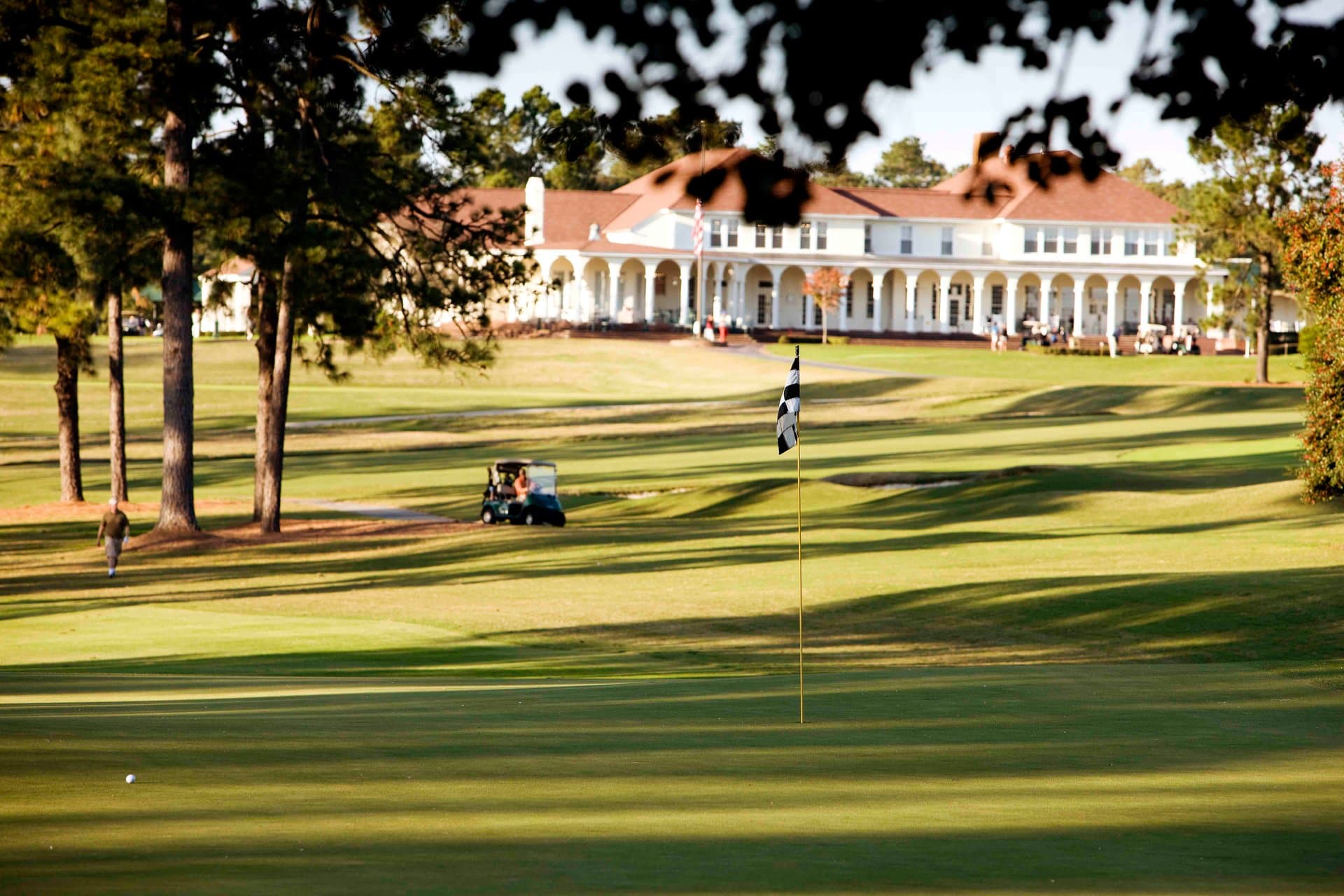
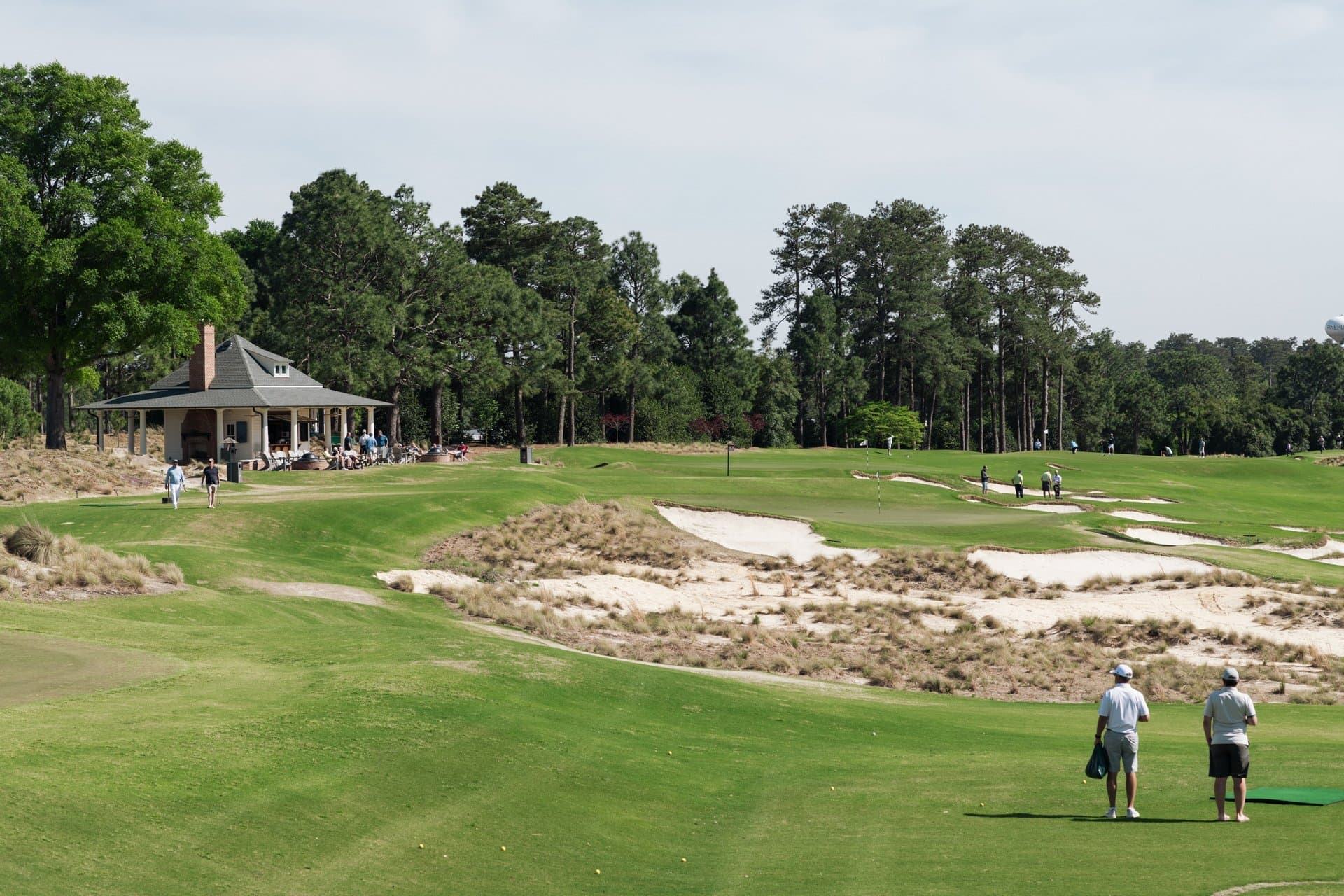
Spring is widely considered the premier window for Pinehurst golf. Daytime temperatures settle into the 65 to 80 degree range, mornings are crisp without being cold, and the humidity that defines summer has not yet arrived. Course conditions peak during this stretch. The Bermuda fairways green up through March and April, and by May the turf is lush and firm underfoot.
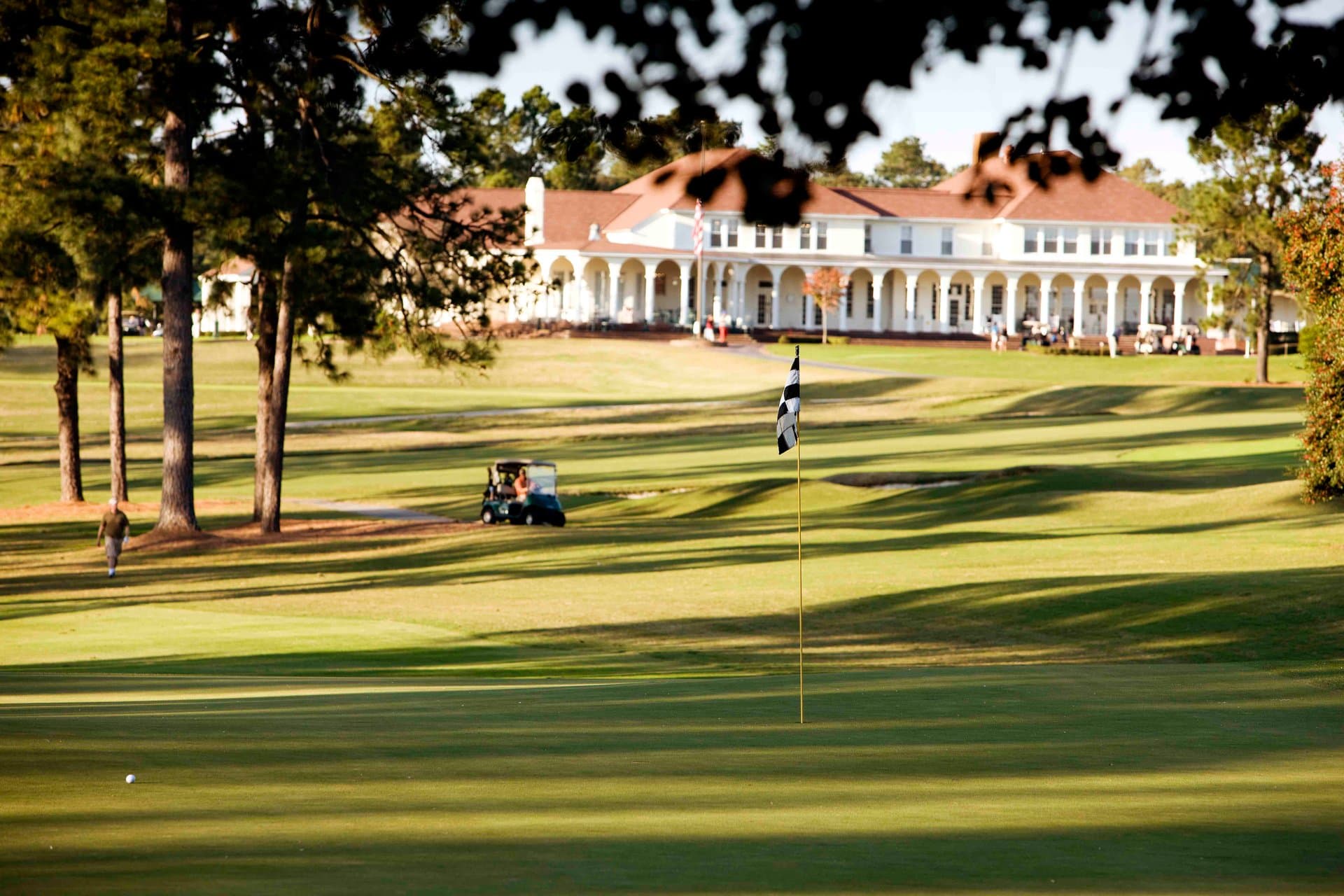
Pinehurst No. 2
This is also when demand is highest. Tee times on Pinehurst No. 2 and No. 4 fill early, and stay-and-play packages reflect the premium season. Golfers who plan to visit in spring should book accommodations and tee times well in advance, particularly for April and May weekends.
The trade-off is straightforward: the best conditions come at the highest prices and the tightest availability.
Spring also coincides with some of the Sandhills' most pleasant non-golf weather. Walking the village, dining outdoors, and exploring the surrounding area are all at their most comfortable. For golfers traveling with non-playing partners, this season offers the most well-rounded experience.
Summer (June through August)
Summer in Pinehurst is hot. Afternoon temperatures regularly exceed 90 degrees, and the inland location of the Sandhills means there is no coastal breeze to soften the humidity. This is not Hilton Head or the Outer Banks. Pinehurst sits roughly 100 miles from the nearest coastline, and the air in July and August can be heavy from morning through evening.
That said, summer is also when Pinehurst offers its best value. Green fees drop, stay-and-play packages become significantly more affordable, and the courses are far less crowded. Golfers who can tolerate heat and plan their rounds for early morning will find summer a compelling option. First tee times before 7:30 a.m. allow for a full round before the worst of the afternoon heat, and the long daylight hours make late afternoon rounds viable once temperatures begin to ease.
Course conditions remain strong through summer. The Bermuda turf thrives in heat, and the resort's maintenance standards do not waver. The primary concession to the season is comfort, not quality of play. Hydration, sun protection, and a willingness to ride rather than walk on the hottest days are practical adjustments worth making.
For budget-conscious golfers, particularly those with flexibility on travel dates, summer represents the widest gap between cost and quality. The golf itself does not diminish. Only the thermometer changes.
Fall (September through November)
Fall rivals spring as the ideal Pinehurst season and, by some measures, surpasses it. September begins warm but the worst of the humidity fades quickly. October is arguably the single best month to visit: daytime highs in the low 70s, cool mornings, minimal rainfall, and course conditions that benefit from a full summer of growth. November remains comfortable through Thanksgiving, with temperatures in the 55 to 65 degree range and shorter but still very playable days.
Tip
The longleaf pines that frame Pinehurst's courses remain green year-round, so the landscape does not undergo the dramatic colour changes of New England or the mid-Atlantic. The visual experience is subtler: golden light, cooler shadows, and a stillness in the air that makes walking rounds particularly rewarding.
Winter (December through February)
Pinehurst does not close for winter. This distinguishes it from many northern and mountain destinations and is one of the Sandhills' underappreciated advantages. Daytime highs range from the low 40s to the low 60s depending on the month, and while mornings can be brisk, afternoon rounds in January and February are often entirely comfortable with a mid-weight layer.
Winter rates are the lowest of the year. Stay-and-play packages during this period offer genuine value, and the courses are quiet. The primary consideration is turf condition. Bermuda grass goes dormant in winter, and fairways take on a brown, firm character that plays differently from the green, lush surfaces of spring and summer. The resort overseeds some areas, but golfers should expect a different visual and playing experience from the peak-season standard.
For those who prioritize solitude and affordability over pristine turf, winter Pinehurst has a distinct appeal. The village itself is quieter, restaurant reservations are easy, and the pace of life slows to something closer to what the place felt like decades ago. A January trip to Pinehurst will not deliver postcard-perfect conditions, but it will deliver excellent golf at a fraction of the peak-season cost.
The Verdict
Pinehurst rewards visitors in every season, but the optimal window depends on what a golfer values most. Between the two, fall edges ahead on value and availability, while spring wins on turf quality and the energy of a destination in full swing.
Spring and fall deliver the best all-around experience: mild temperatures, peak course conditions, and comfortable days on the course.
Summer is the clear choice for value-driven golfers who can handle heat. Winter suits those who want quiet, affordable golf and do not mind dormant fairways. Neither season compromises the quality of the routing, the design, or the hospitality that Pinehurst has refined over more than a century.
The verdict