Orlando: Course History & Design Story
Orlando's emergence as a golf destination is inseparable from its emergence as the theme park capital of the United States. The tourism infrastructure that Walt Disney World catalyzed after its 1971 opening, the hotels, the highway system, the airport capacity, the sheer volume of visitors passing through Central Florida each year, created the conditions under which golf could flourish as a secondary industry. The courses did not create the market. The market created the demand for courses, and architects responded with designs that ranged from resort-friendly to genuinely ambitious.
Where to stay in Orlando
Planning the trip? Compare live prices across every nearby hotel and rental in one search.
Prices and availability from Booking.com, Expedia and others via Stay22. GolfTrailsHQ may earn a commission at no additional cost to you.
Arnold Palmer and Bay Hill
Arnold Palmer purchased Bay Hill Club and Lodge in 1974, drawn by the quality of Dick Wilson's original 1961 design and the property's location on a chain of lakes southwest of downtown Orlando. Palmer, who was by then the most famous golfer in the world, made Bay Hill his home club and the site of his PGA Tour event, now the Arnold Palmer Invitational.
The most significant individual course in the Orlando market predates the tourism boom.

Walt Disney World
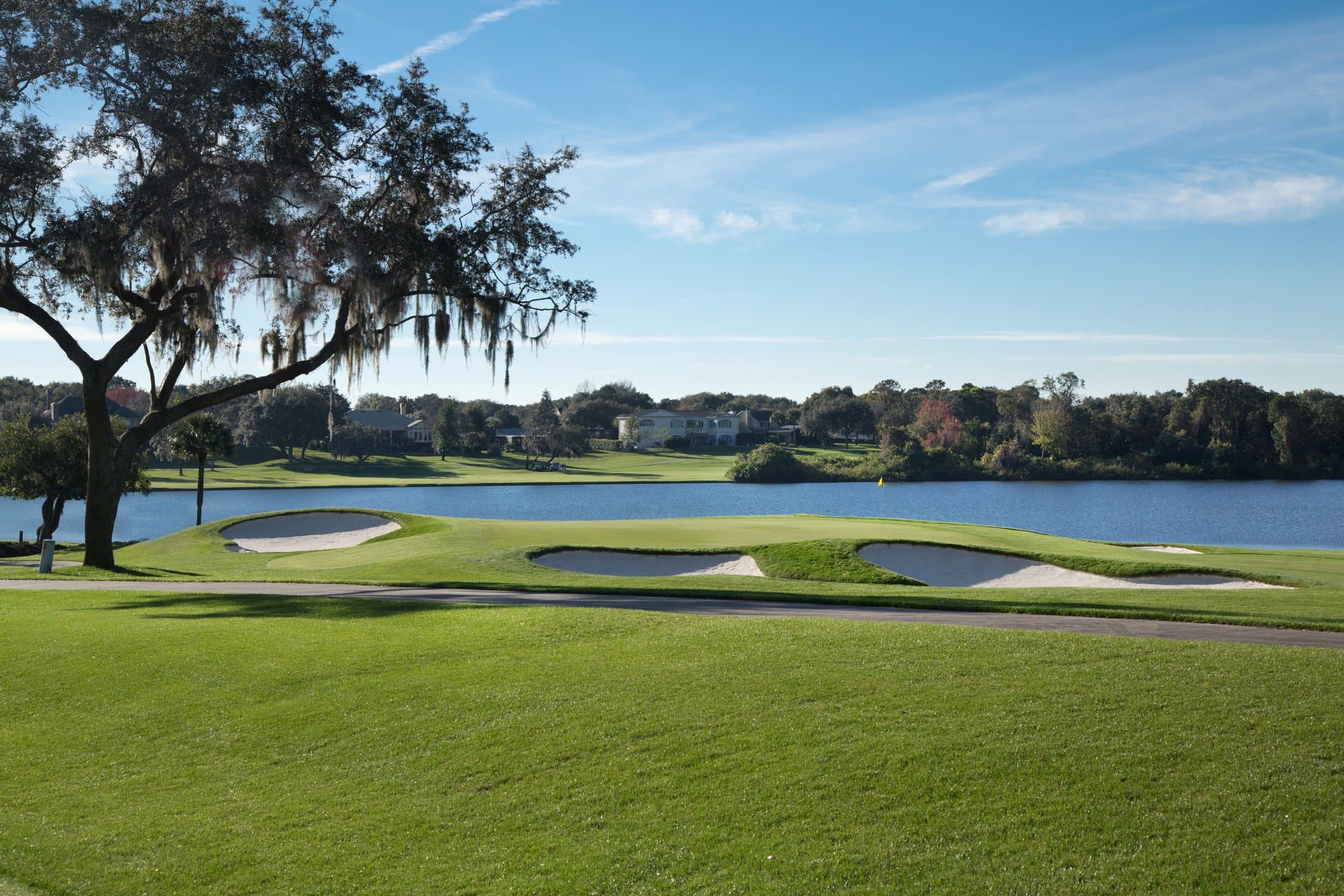
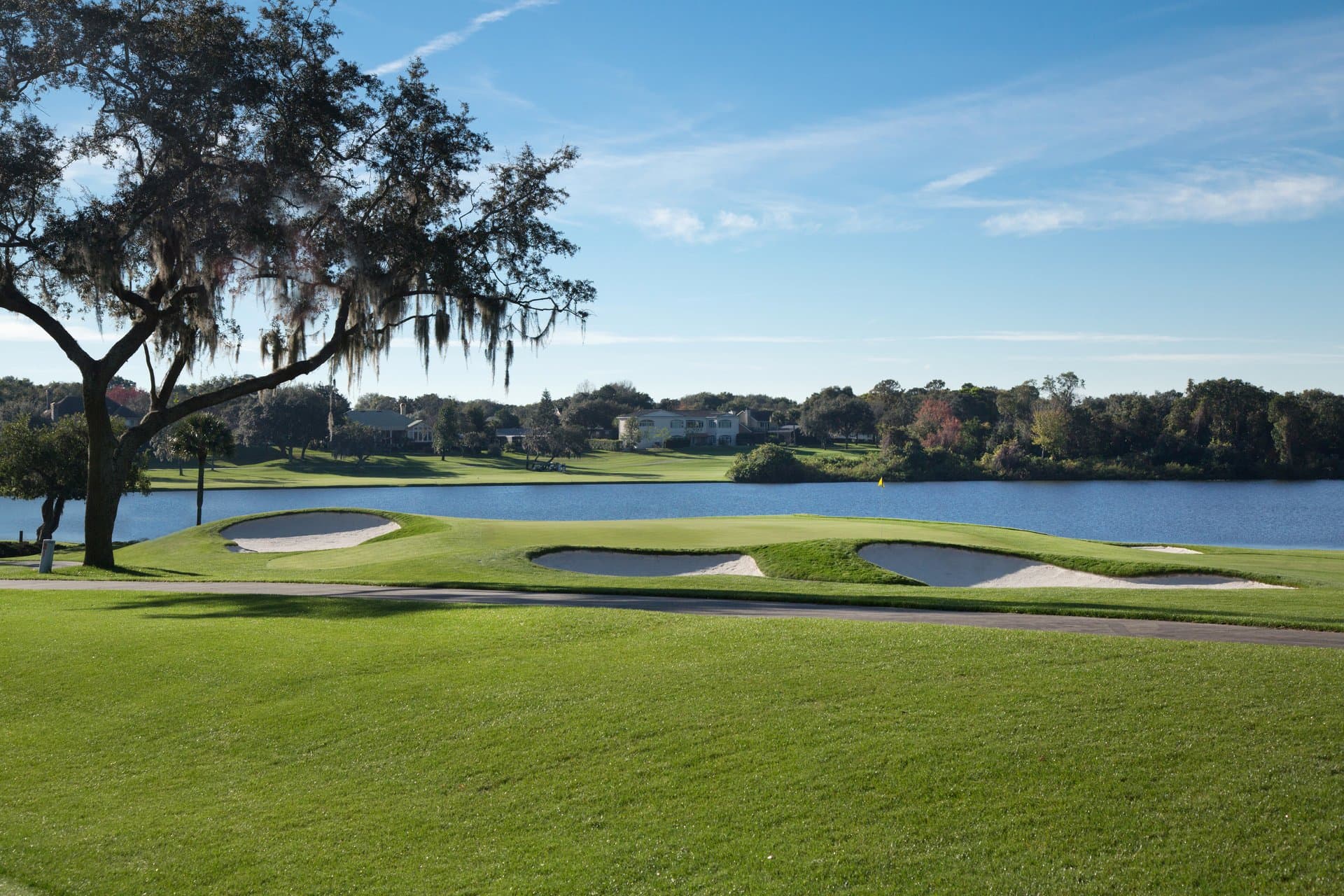
Wilson's design at Bay Hill is a genuine test of golf architecture that happens to exist in a resort setting. The course plays through Florida flatland terrain that Wilson shaped with ponds, mounding, and tree lines to create strategic definition. The finishing stretch, particularly the par-4 18th with its approach across water to a green backed by the lodge, produces decisive tournament moments with regularity. Palmer's modifications over the decades were generally modest; he understood that Wilson's routing and green complexes were sound, and he focused more on conditioning and tournament preparation than on wholesale redesign.
Bay Hill's importance to Orlando golf extends beyond its tournament. The course demonstrated that serious championship architecture could coexist with the resort model, and its success encouraged developers throughout Central Florida to invest in higher-caliber designs.
Walt Disney World
Disney entered the golf business almost immediately after opening the Magic Kingdom, constructing courses that served the resort's massive guest population. The Palm and Magnolia courses, designed by Joe Lee and opened in 1971, hosted the PGA Tour's Walt Disney World Golf Classic and later the Children's Miracle Network Classic. Lee designed in the prevailing Florida style: generous fairways, water hazards on multiple holes, and green complexes sized to accommodate resort-pace play. The courses were competent, well-maintained, and entirely consistent with the Disney brand of accessible, family-oriented recreation.
Tom Fazio's Osprey Ridge (1992) represented a more ambitious design effort within the Disney property. Fazio introduced elevation changes, strategic bunkering, and green complexes with more architectural interest than the Lee courses offered. The course demonstrated what was possible when a designer of Fazio's caliber worked within the Disney system, though it operated under the same pace-of-play and accessibility expectations that governed all Disney recreational offerings.
Osprey Ridge was eventually closed and redeveloped, a loss that removed the most architecturally significant course from the Disney portfolio.
The Resort Course Expansion
The 1980s and 1990s brought a construction wave that filled the Orlando corridor with courses designed to serve the tourist market. The calculation was straightforward: Central Florida received tens of millions of visitors annually, many of whom played golf, and the flat, inexpensive land around the theme parks could be developed relatively quickly. The result was a proliferation of resort and daily-fee courses, many of which were competent but architecturally undistinguished.
Several projects exceeded this baseline. Rees Jones designed Reunion Resort's Independence Course (2004), which hosts the PGA Tour's Korn Ferry Tour event and provides genuine championship conditions. Jack Nicklaus and Tom Watson contributed additional courses at Reunion, creating a multi-designer resort complex that offered stylistic variety across three distinct layouts.
Championsgate, designed by Greg Norman (International Course, 2000) and located near Disney World, brought an Australian-influenced design sensibility to Central Florida. Norman's routing used the flat terrain as an asset rather than a limitation, creating wide playing corridors with bold bunkering that rewarded strategic play from multiple angles. The International Course's National counterpart, also by Norman, provided a more traditionally Florida-style experience with water hazards and defined fairway corridors.
Tom Fazio's contributions to the region extended beyond Disney to include Orange County National's Panther Lake Course (1997), a design that is consistently ranked among the best public courses in Florida. The course occupies land with more natural elevation change than most Orlando-area properties, and Fazio exploited this advantage with a routing that moves through rolling terrain, around lakes, and across sandy waste areas. The result feels materially different from the standard Central Florida layout, and the course's use as a PGA Tour qualifying site confirms its competitive rigor.
The Challenge of Flat Land
The defining architectural challenge in Orlando is the same one that confronts designers throughout peninsular Florida: the land is flat. Central Florida sits on a limestone plateau with minimal natural elevation change, and the water table is high enough that any significant excavation produces a pond. Architects working here must manufacture interest through earthmoving, water features, tree placement, and green complex design, all strategies that compensate for the absence of natural topography.
The best designers accept the limitation and work within it. Wilson at Bay Hill, Fazio at Orange County National, and Norman at Championsgate each found ways to create strategic complexity and visual interest on fundamentally level ground. The less successful courses in the region, and there are many, rely on water hazards and tree lines as their primary sources of difficulty, producing repetitive experiences that blur together across multiple rounds.
The Destination Today
Orlando's golf market has contracted from its peak in the early 2000s, when over 150 courses operated within an hour of the airport. Closures, driven by real estate pressure and market saturation, have reduced that number, but the remaining courses include enough genuine architectural quality to reward a visitor who selects carefully. The Orlando best courses guide identifies the layouts that justify a dedicated golf trip rather than a round squeezed between theme park visits. The Orlando complete guide addresses the practical logistics of a destination where golf competes for attention with a dozen other industries, all of them optimized to capture the tourist dollar.