Orlando, FL: Best Courses Guide
Central Florida is flat. Relentlessly, uniformly flat. The land between the airport and the theme parks sits at roughly 100 feet above sea level, and golf course architects working in the region have been reckoning with that fact for decades. The best Orlando courses do not pretend the topography is something it is not. They use water, which is everywhere, and creative earthwork to manufacture the variety that the terrain itself withholds. The result is a golf market that rewards close attention. The gap between a thoughtfully routed Orlando course and a forgettable one is enormous, and the green fee alone does not always predict which side of that line a course falls on.
What the region does offer, unambiguously, is conditioning. Bermuda fairways maintained in subtropical warmth hold color and firmness twelve months a year. Greens are fast. Drainage is engineered into every layout because afternoon thunderstorms arrive like clockwork from May through September. For the traveling golfer building a winter or spring trip, Orlando delivers turf quality that northern courses cannot match until June.
The courses below are grouped by tier, each one evaluated on design merit, conditioning, and value relative to what it costs to play.
Where to stay in Orlando
Planning the trip? Compare live prices across every nearby hotel and rental in one search.
Prices and availability from Booking.com, Expedia and others via Stay22. GolfTrailsHQ may earn a commission at no additional cost to you.
Premium
Three courses define the top of the Orlando market, and they share almost nothing in common beyond price point.
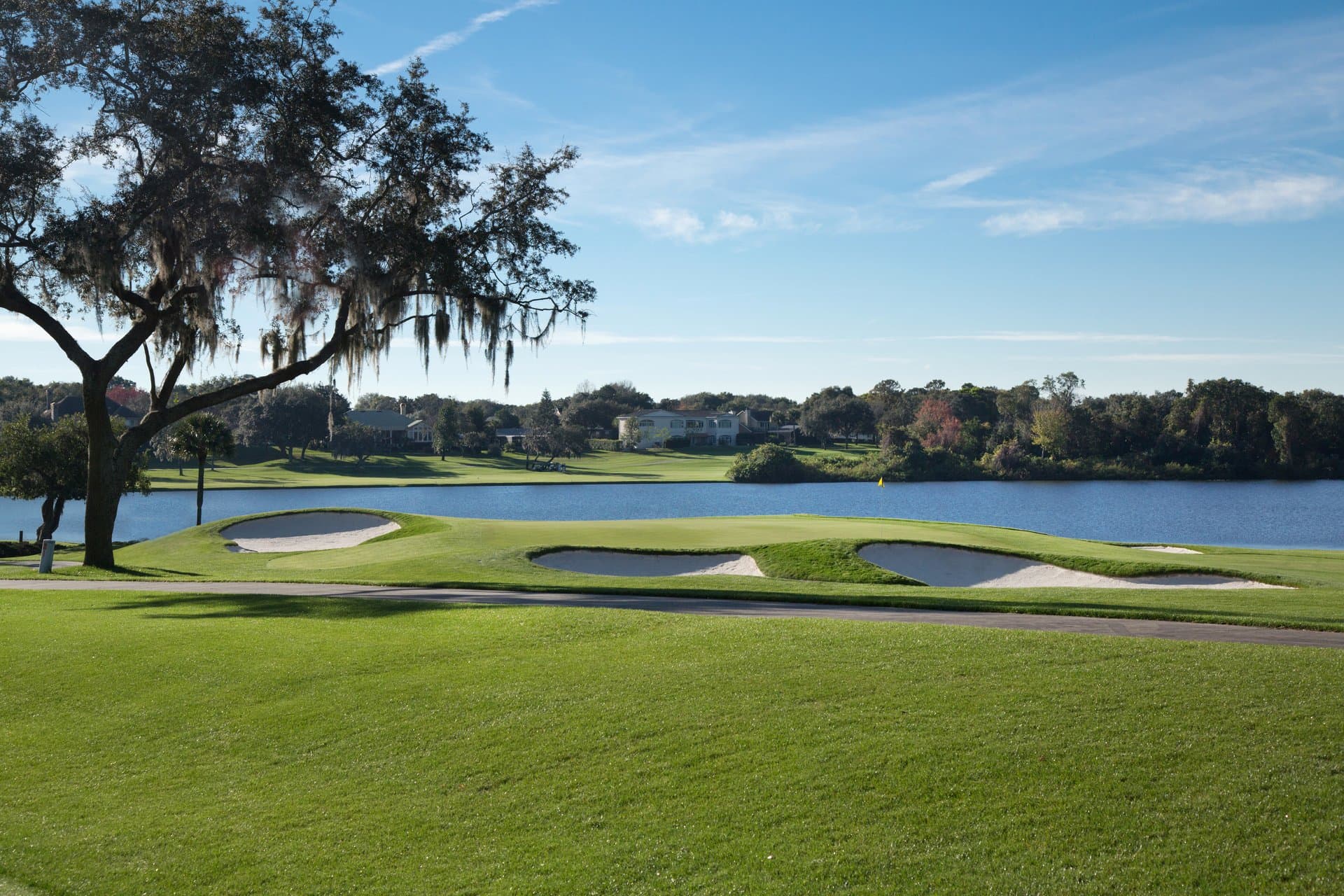
Royal St. Cloud Golf Links
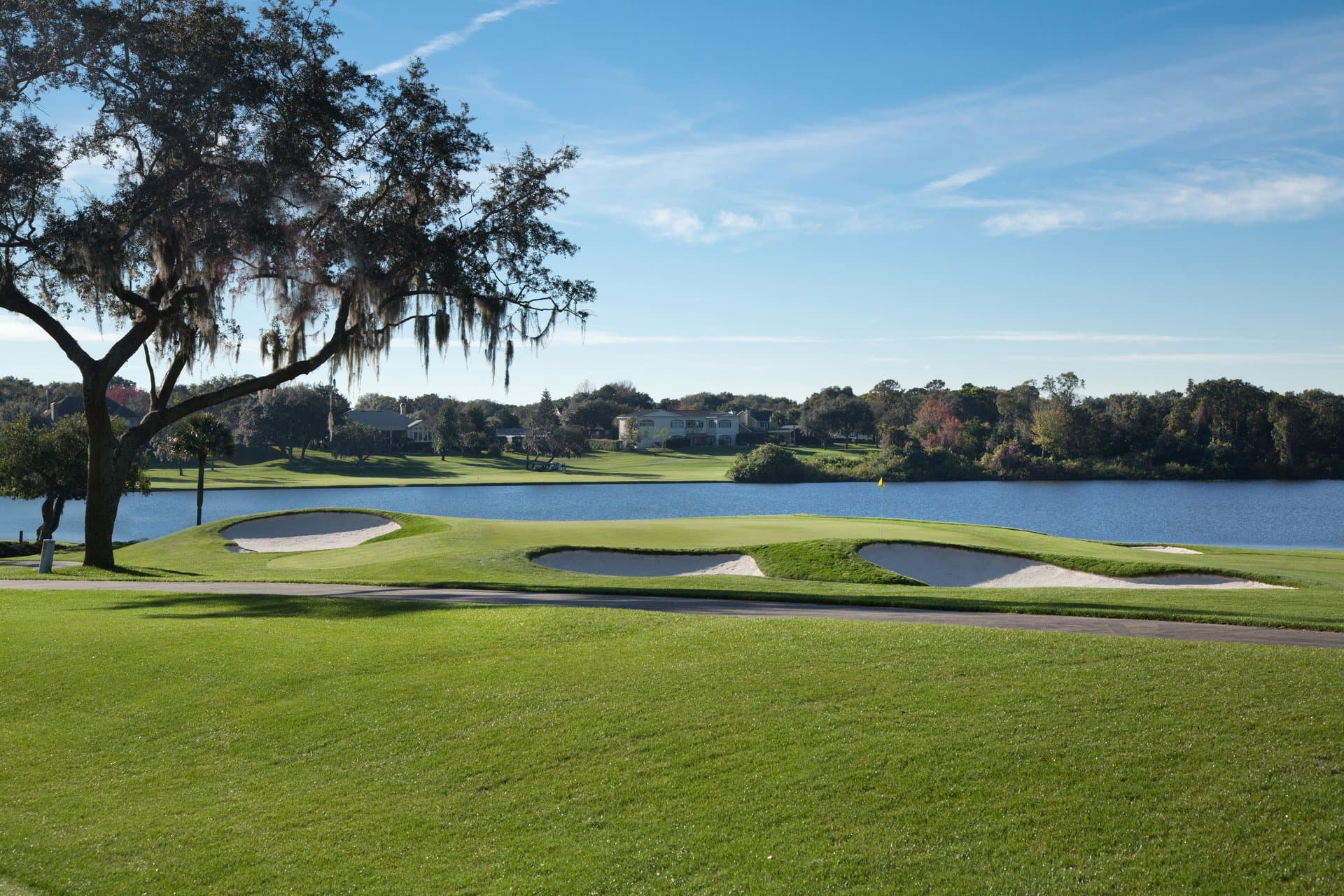
Waldorf Astoria Golf Club
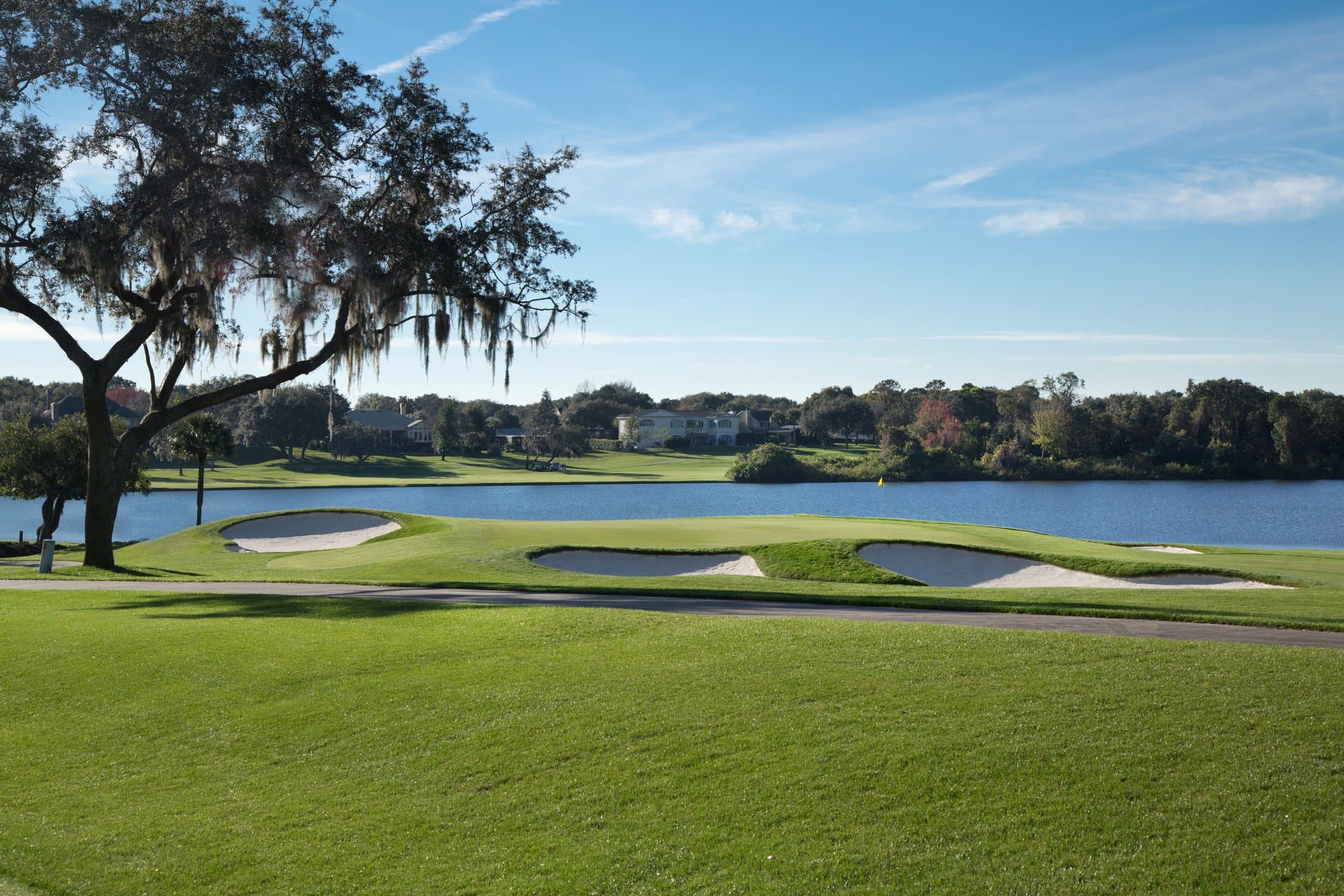
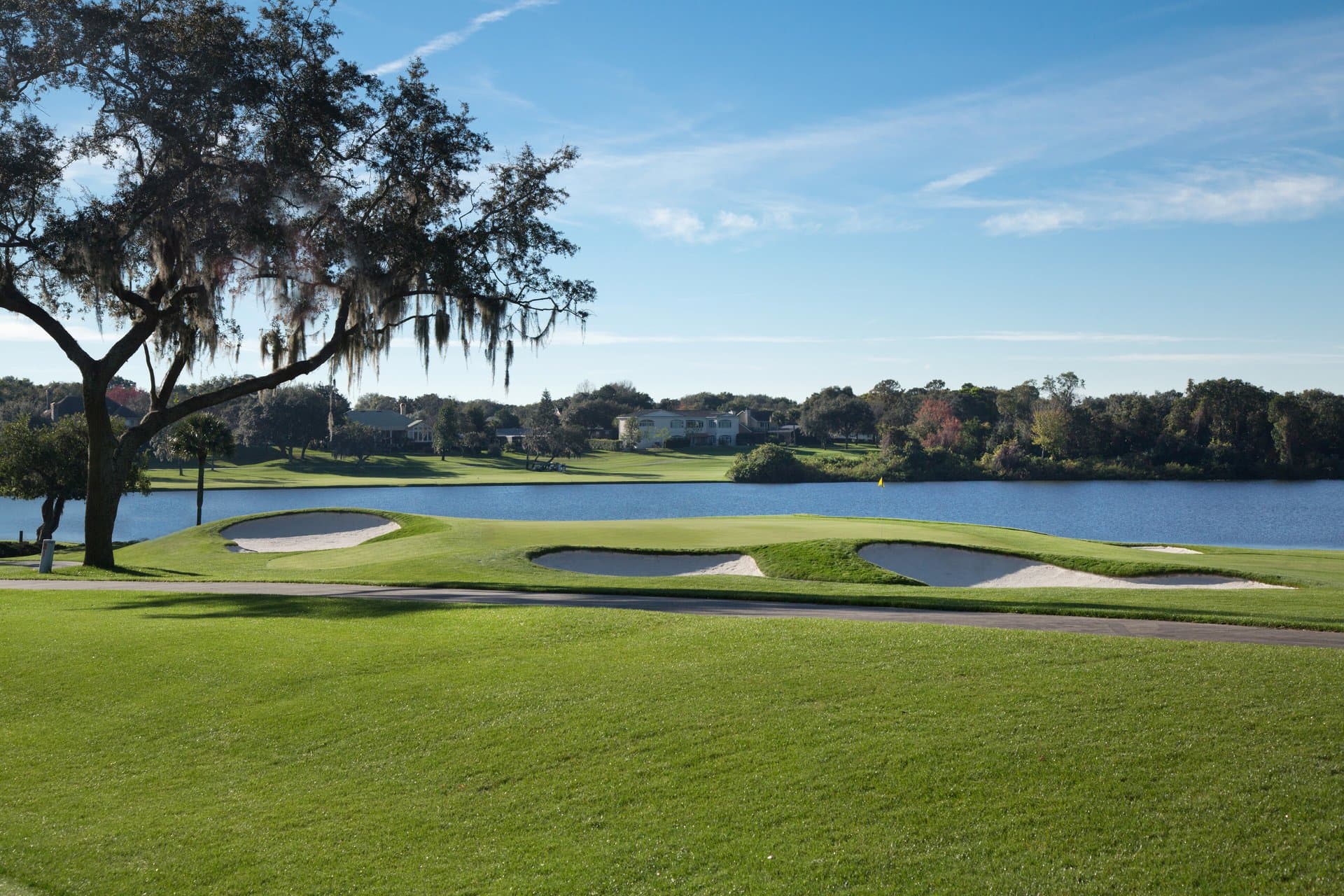
Bay Hill Club & Lodge carries the weight of its history without leaning on it. Arnold Palmer's home club since 1974, the par-72 championship layout at 7,381 yards hosts the Arnold Palmer Invitational each March, drawing a field that consistently includes the top ten players in the world. The course routes through mature Florida pines with water influencing play on eleven holes. The 18th is the hole that defines the property: a 467-yard par 4 wrapping along the right shore of a lake that swallows anything pushed or faded, with a green tucked against the water's edge. Access is limited to resort guests, with green fees of $250 to $450 depending on season. That exclusivity keeps pace of play manageable and conditioning at a tournament standard year-round. Bay Hill suits the serious golfer who wants to play a course in the condition the Tour players see it.
It is one of the most photographed finishing holes on the PGA Tour, and it earns the attention.
Waldorf Astoria Golf Club, Rees Jones's 2009 design, occupies a corridor of preserved wetlands west of Disney. Jones moved more earth here than most Central Florida projects attempt, creating elevation shifts that feel genuine rather than manufactured. The routing weaves through cypress stands and across wetland crossings, with the back nine in particular presenting a sequence of strong two-shot holes that demand precise iron play. At $150 to $275, the Waldorf sits below Bay Hill in price while offering a design that many local golfers rank alongside it in quality. It is the best pure resort course in the corridor for golfers who prioritize architectural substance over tournament pedigree, and the post-round dining at the Waldorf property itself removes any need to search for a restaurant afterward.
Bella Collina, Nick Faldo's design west of Orlando near Montverde, benefits from a geological anomaly. The property sits on rolling terrain that looks more like the Carolina Sandhills than Central Florida. Faldo used the natural contours to create a course with genuine elevation change on tee shots, approach shots, and around the greens. The par-3s are particularly strong, each demanding a different shape and trajectory. Semi-private access at $150 to $250 makes Bella Collina attainable for visitors willing to drive 30 minutes from the tourist corridor. The setting is quiet, the conditioning is sharp, and the terrain alone justifies the trip.
Upper Mid-Range
This tier contains the courses that fill the middle days of an Orlando golf trip and, in several cases, produce the most memorable rounds.
ChampionsGate International, Greg Norman's links-influenced design, is the bolder of the two ChampionsGate layouts. Pot bunkers, fescue rough, and open ground-game corridors distinguish it from the prevailing Florida parkland template. Norman studied British Open venues before designing the course, and the influence is legible on holes where the smart play is a low runner into the green rather than a high approach. At $100 to $200, it represents strong value for a design with genuine personality. The National Course, Norman's companion layout on the same property, follows a more traditional parkland routing through mature trees and water features. It is less idiosyncratic than the International but more forgiving, and the two courses together make ChampionsGate a logical base for a multi-day trip.
The par-4s in particular reward golfers who think backward from the green, choosing tee shot placement based on the angle they want for the approach rather than simply hitting driver.
Grand Cypress New Course, Jack Nicklaus's design adjacent to the Villas of Grand Cypress, includes 27 regulation holes and a separate 9-hole course inspired by the Old Course at St Andrews. The St Andrews tribute features double greens, pot bunkers, and a Swilcan-style bridge. It is not a replica, but the lineage is unmistakable, and it plays unlike anything else in the state. The regulation 27 holes route through rolling mounding and water features that Nicklaus shaped from what was originally citrus grove land. Green fees of $135 to $225 include the full complement of holes. For the Nicklaus devotee, this is the Orlando course to prioritize.
Reunion Resort houses three signature courses by Nicklaus, Palmer, and Watson on a single sprawling property south of Kissimmee. The Nicklaus course is the most acclaimed of the three, anchored by the par-3 6th, which drops dramatically from an elevated tee to a green framed by water and sand. The Palmer course integrates more water into its routing and delivers the scenic round of the trio. The Watson course, links-influenced with firm fairways and strategic bunkering, rewards the thinking golfer. At $100 to $175 per round, all three courses deliver design pedigree at mid-range pricing. Groups staying at Reunion for three or four nights can play a different signature course each morning without leaving the resort.
The Mid-Range
Orange County National Panther Lake may be the most underpriced course in Orlando. The 36-hole facility, which hosted PGA Tour Qualifying School for years, maintains conditioning standards that rival courses charging twice the green fee. Panther Lake, the longer and more open of the two layouts, stretches across sculpted mounding with water on a dozen holes. The Crooked Cat Course, its tighter sibling, threads through more confined corridors and penalizes wayward tee shots more severely. At $69 to $129 for either course, Orange County National is the clear best value in the mid-range and the first recommendation for golfers who care more about turf quality and shot variety than brand recognition.
Shingle Creek Golf Club, David Harman's design along the headwaters of the Everglades, routes through a natural corridor that feels detached from the surrounding development. The creek itself winds through the property, creating forced carries and strategic angles that give the course more character than its $79 to $149 price range might suggest. The back nine, where the creek corridor tightens and mature oaks frame several approach shots, is the stronger half and worth the patience the front nine requires. Falcon's Fire, Rees Jones's earlier Orlando design, delivers a solid resort experience at $59 to $119 with enough water and bunkering to hold the attention of a mid-handicapper. Providence Golf Club, Mike Dasher's design south of the corridor, offers honest parkland golf at $49 to $99 and serves as a reliable warm-up round for groups who want to ease into the trip before committing to premium green fees.
The Value Play
Royal St. Cloud Golf Links occupies former cattle ranch land east of Orlando, and the links designation is not marketing fiction. The course is open, windswept, and firm underfoot, with pot bunkers and mounding that create the visual and strategic character of a links layout transposed onto Florida terrain. Wind is a genuine factor here, particularly on the exposed back nine, where club selection on approaches can shift two or three clubs depending on the afternoon breeze. At $30 to $65, it is the cheapest course in this guide by a wide margin, and it plays nothing like its price would suggest. The drive from the tourist corridor takes 30 to 40 minutes, which is enough to discourage casual resort golfers and keep the course quiet. For groups building a five- or six-round trip, Royal St. Cloud is the round that keeps the budget in check without requiring any apology.
For the full Orlando destination guide, including accommodations, restaurants, and non-golf activities, see our companion planning resources.
The verdict