Myrtle Beach vs Pinehurst: Value vs Prestige
Two of the most established golf destinations in the American Southeast sit roughly three hours apart by car, yet they occupy entirely different positions in the sport's hierarchy. Myrtle Beach built its identity on volume, accessibility, and price competition across a sprawling coastal corridor. Pinehurst built its identity on pedigree, a single storied resort, and the legacy of Donald Ross. Both attract serious golfers. Both fill calendars year-round. But the trip each delivers, and the traveler each serves best, could hardly be more different.
Where to stay in Myrtle Beach
Planning the trip? Compare live prices across every nearby hotel and rental in one search.
Prices and availability from Booking.com, Expedia and others via Stay22. GolfTrailsHQ may earn a commission at no additional cost to you.
Course Quantity
The numbers are not even in the same conversation. Myrtle Beach and the surrounding Grand Strand contain more than 80 courses, ranging from budget-friendly daily-fee layouts to nationally recognized designs like Caledonia Golf and Fish Club and True Blue Golf Plantation. A group can play a different course every round for a full week and still have options left on the table.
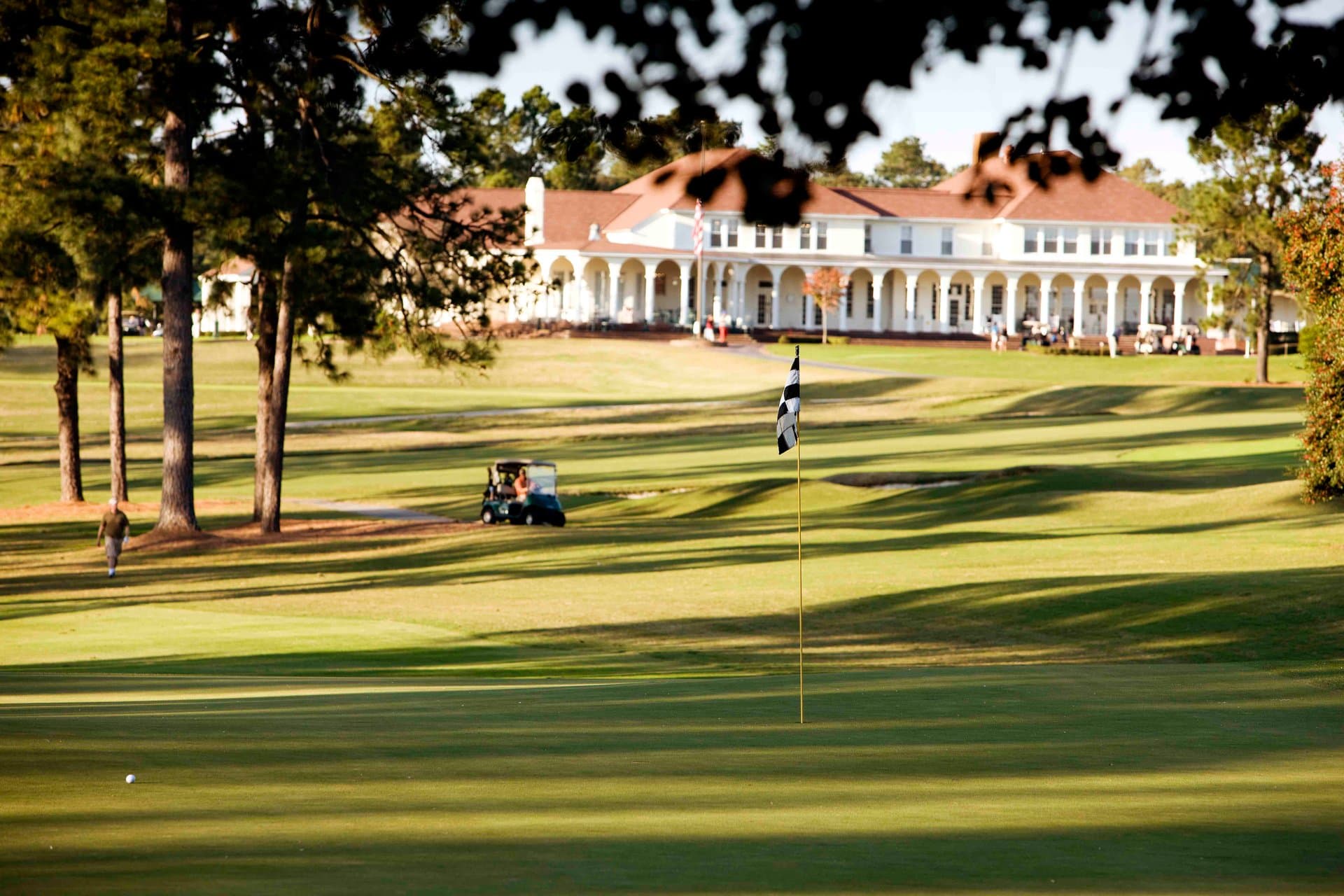
Pinehurst No. 2
Pinehurst Resort operates nine courses on its property, and the Village of Pinehurst and surrounding Sandhills region add perhaps another dozen worth considering. That is a strong portfolio by any measure, but it is a curated collection rather than an open market. Golfers who want maximum variety in course selection will find it at Myrtle Beach without contest.
Course Quality Ceiling
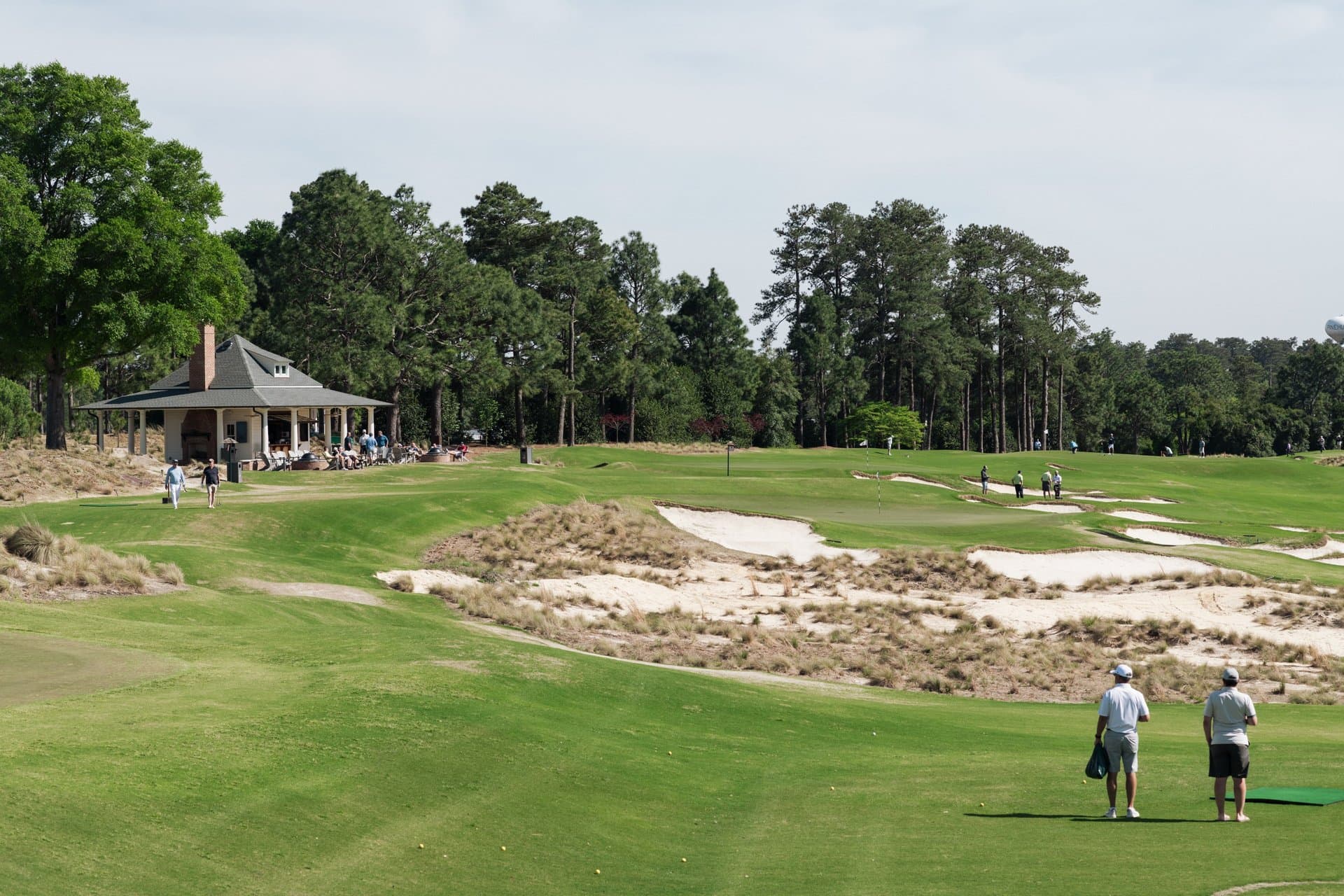
Pinehurst's advantage here is historic and specific. Pinehurst No. 2, restored by Coore and Crenshaw to its original Donald Ross vision ahead of the 2014 U.S. It has hosted more single-site USGA championships than any other venue. The sandy waste areas, crowned greens, and strategic demands of No. 2 represent golf architecture at its most consequential. No. 4, redesigned by Gil Hanse, is a legitimate secondary headliner that would anchor most resort destinations on its own.
Open, stands as one of the most important courses in American golf.
Myrtle Beach reaches its quality ceiling at Caledonia and True Blue, both designed by Mike Strantz. These are excellent courses that belong on any serious golfer's itinerary. But neither carries the competitive history or architectural significance of No. 2. The Grand Strand's depth of good courses is impressive; its peak, while high, sits a tier below Pinehurst's.
Cost
This is where the comparison becomes most practical. A quality day of golf at Myrtle Beach, including a respected course, a comfortable hotel room, and three meals, runs between $100 and $250 per person depending on the season and the specific course. Stay-and-play packages compress costs further. A group of four can play five rounds in three days and keep the total bill under $1,500 per person with modest planning.
Pinehurst operates on a different cost structure. A round on No. 2 runs $395 to $595 depending on season, and on-resort accommodations start above $300 per night. Even the resort's more affordable courses, like No. 1 or No. 3, carry green fees that would place them at the top of Myrtle Beach's range. A realistic all-in daily budget at Pinehurst runs $400 to $800 per person. That premium buys a singular experience, but the premium is real and unavoidable.
Setting and Atmosphere
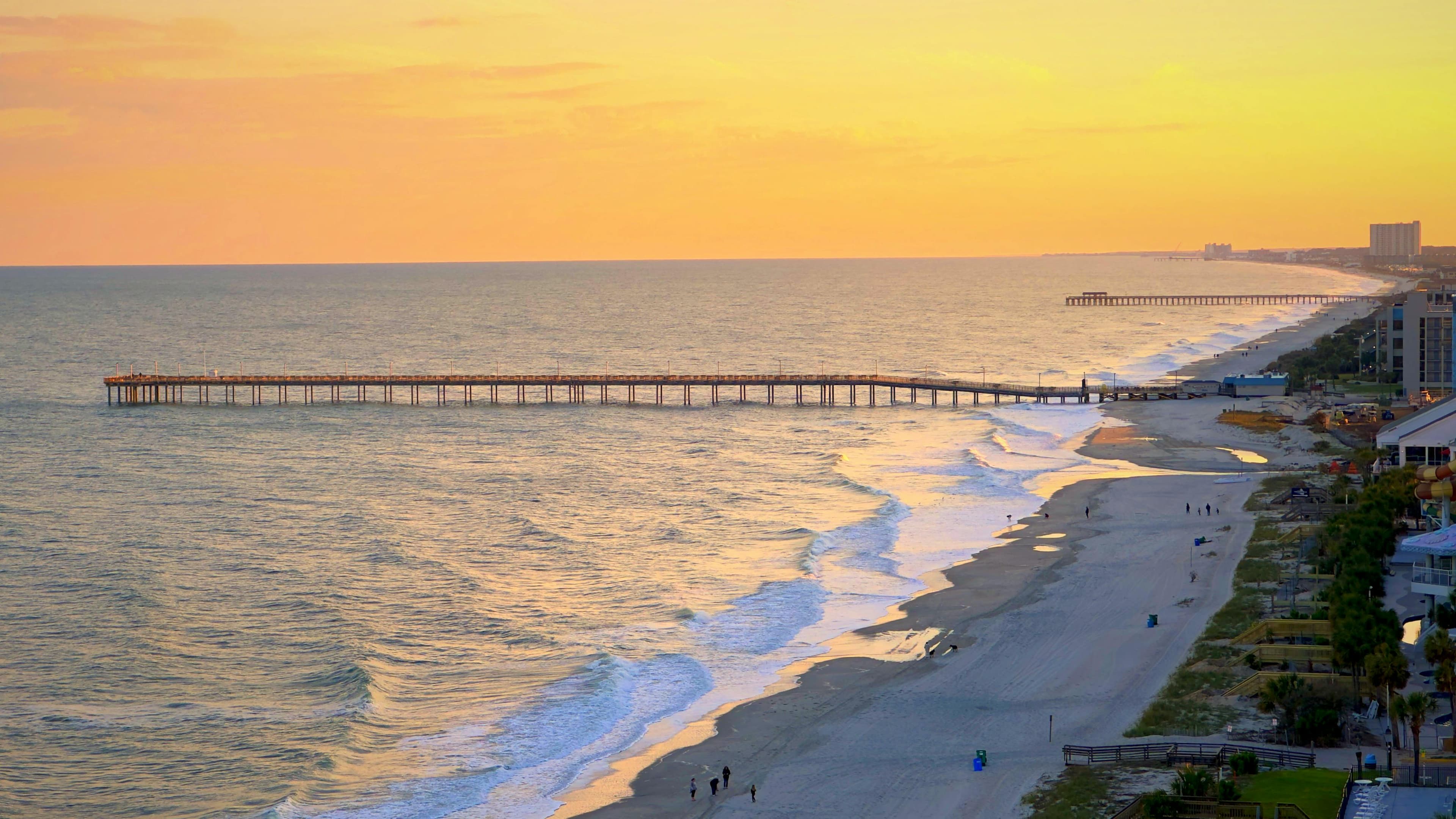
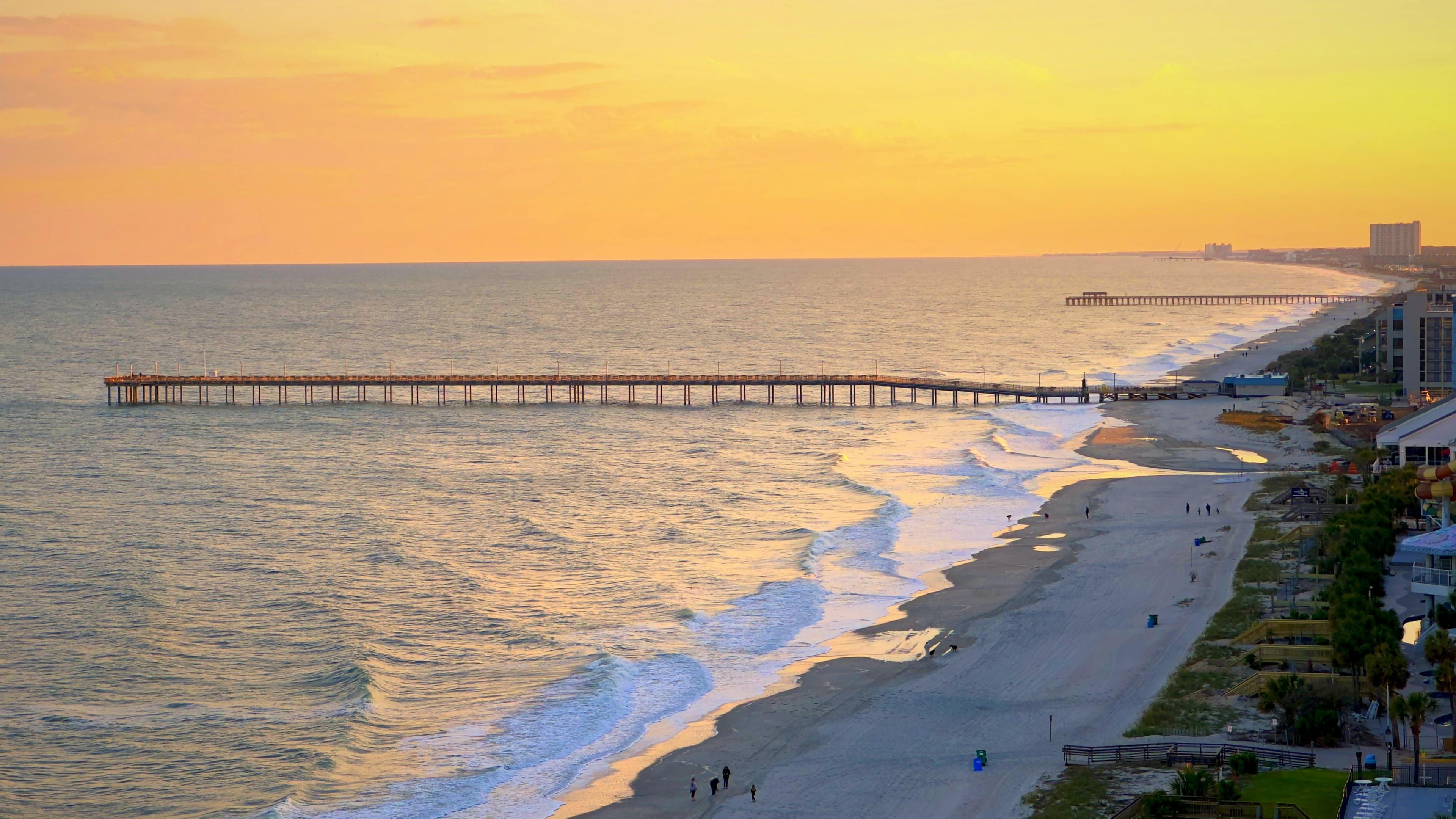
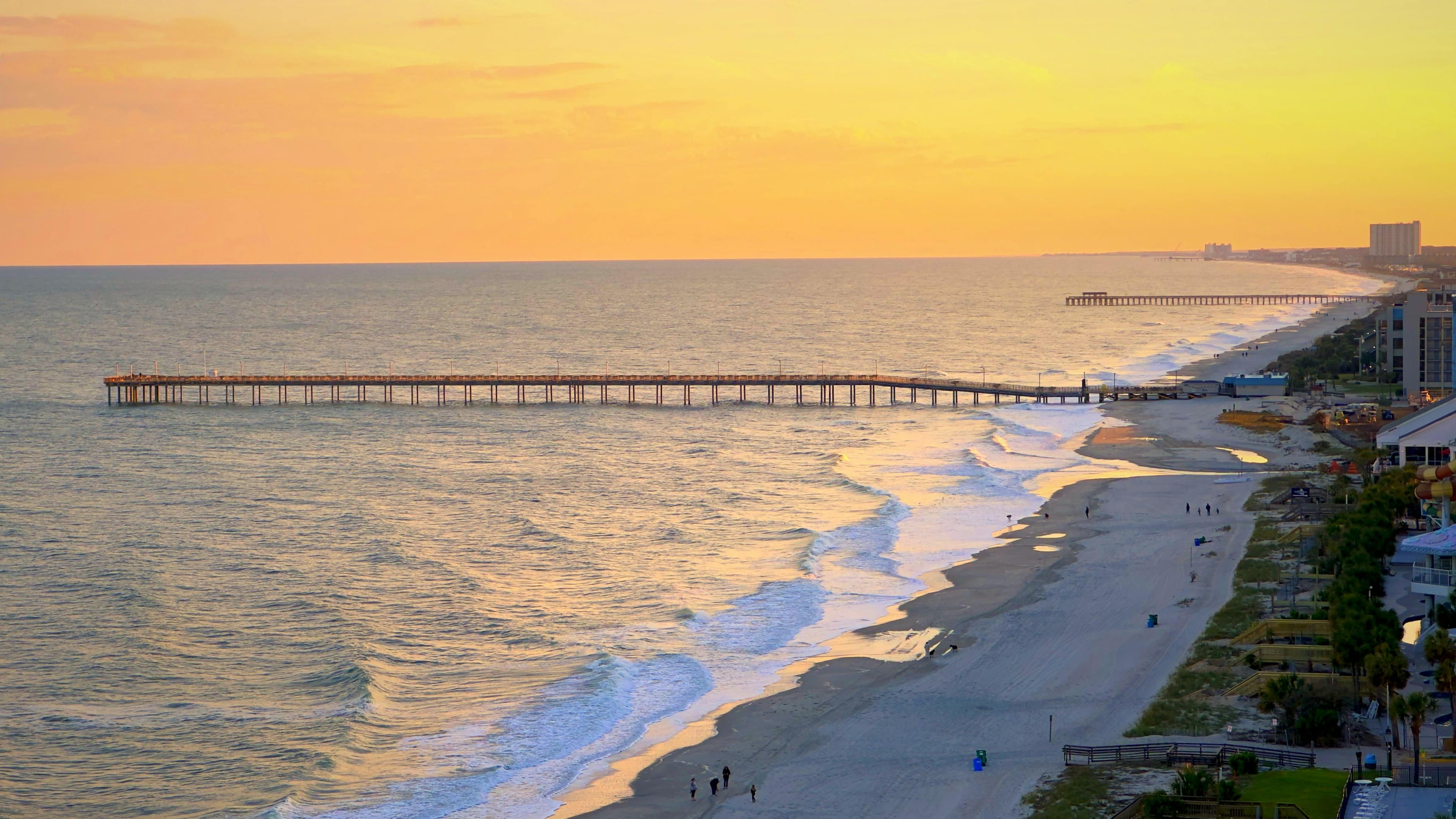
Myrtle Beach is a commercial beach corridor. Hotels, restaurants, entertainment venues, and golf courses line a 60-mile stretch of coastline that makes no attempt to disguise its orientation toward tourism. The atmosphere is informal, high-energy, and organized around group travel. The strip has its own logic and appeal, but subtlety is not part of the proposition.
Pinehurst is a quiet village in the North Carolina Sandhills, built around a single resort that opened in 1895. The setting is pine forest rather than oceanfront. There is no strip, no boardwalk, no commercial corridor. The village itself is walkable and small. The dominant sound in the evening is conversation at the Ryder Cup Lounge or footsteps on the brick paths between the Carolina Hotel and the clubhouse. The two environments share almost nothing in common beyond the fact that people arrive to play golf.
Non-Golf Activities
Myrtle Beach offers more to do off the course, full stop. The beach is the obvious draw, but the corridor also supports fishing charters, outlet shopping, live entertainment, and a dining scene that runs from oyster bars to steakhouses. For groups that include non-golfers, or for golfers who want active evenings after their rounds, Myrtle Beach provides options without requiring a car trip.
Pinehurst's non-golf offerings are limited but intentional. The resort operates a spa, clay shooting, tennis and pickleball courts, and a croquet lawn. The village has a handful of good restaurants and a brewery. Beyond that, the expectation is that golf is the primary activity and relaxation fills the gaps. Travelers who need structured entertainment beyond the course will find Pinehurst quiet. Travelers who consider that a feature rather than a limitation will find it ideal.
The Group Trip Question
Myrtle Beach was essentially built for the buddies trip. Large groups with varied handicaps and budgets can find courses, accommodations, and evening entertainment that keep everyone engaged without requiring consensus on a single price tier. The infrastructure supports 8-, 12-, even 16-person groups with minimal logistical friction. It is the default destination for annual golf weekends for good reason.
Pinehurst serves a different kind of group trip: the aspirational one. Four friends who have talked for years about playing No. 2, a father-son trip built around a shared appreciation for the game's history, a small group willing to invest in an experience they will reference for decades. The group size tends to be smaller, the planning more deliberate, and the stakes for the experience higher.
Architecture and Design Heritage
Pinehurst's identity is inseparable from Donald Ross, who spent the last 35 years of his life refining No. 2 and shaping courses across the Sandhills. Playing the resort's courses is an education in early American golf design, from the strategic bunkering to the convex greens that reject anything other than a precisely placed approach. The Coore-Crenshaw restoration and the Hanse redesign of No. 4 extend that architectural conversation into the modern era.
Myrtle Beach offers architectural variety rather than architectural heritage. Strantz, Fazio, Dye, Love, and Jones all left marks on the Grand Strand. The range of styles is broad, and golfers who appreciate seeing different design philosophies across a single trip will find that diversity rewarding. What Myrtle Beach lacks is a single defining architectural statement on the level of No. 2.
The Three-Hour Drive Between Them
It is worth noting that these two destinations are close enough to combine. A week-long trip that spends three days on the Grand Strand and two days at Pinehurst is logistically straightforward and emotionally satisfying. The contrast between the two settings sharpens the appreciation of each.
Golfers who frame this as an either-or decision may be overlooking the strongest option of all.
The Direct Answer
The verdict