The 10 Most Photographed Golf Holes in America
Golf photography follows a predictable pattern: the camera comes out when the landscape does something extraordinary. An ocean cliff, a floating green, a lighthouse, a flower garden. The most photographed holes in American golf earn their attention not through gimmickry but through the honest intersection of great architecture and great setting. These are the holes that fill Instagram feeds and magazine covers, but more importantly, they are the holes that stop you mid-round and demand a moment of appreciation before you play the shot.
Here are ten, all on courses you can play, ranked not by beauty (an impossible exercise) but by the sheer volume of images they produce.
1. The 7th at Pebble Beach Golf Links
Par 3, 106 yards. Pebble Beach, California.
At 106 yards, it is one of the shortest holes in championship golf. The wind determines the club, which can range from a sand wedge to a 7-iron depending on the day. The image, a small green isolated against the Pacific, has been reproduced so many times that first-time visitors experience a strange double vision: the hole they have seen in photographs and the hole that exists in three dimensions, with the sound of waves and the smell of salt air adding layers that no camera captures.
The most photographed hole in American golf sits on a rocky shelf above the Pacific Ocean, and the green is surrounded by nothing but air, rock, and water.
Harbour Town Golf Links
2. The 17th at TPC Sawgrass
Par 3, 137 yards. Ponte Vedra Beach, Florida.
Pete Dye's island green during THE PLAYERS Championship produces more dramatic television moments than any other hole in professional golf. Approximately 100,000 balls land in the water surrounding the green during a typical year of public play. The hole is short, the target is generous by island-green standards, and the psychological difficulty is entirely out of proportion to the physical challenge. The image of the green, a manicured circle surrounded by a wall of railroad ties and dark water, is the most recognized in modern American golf.
3. The 18th at Harbour Town Golf Links
Par 4, 472 yards. Hilton Head Island, South Carolina.
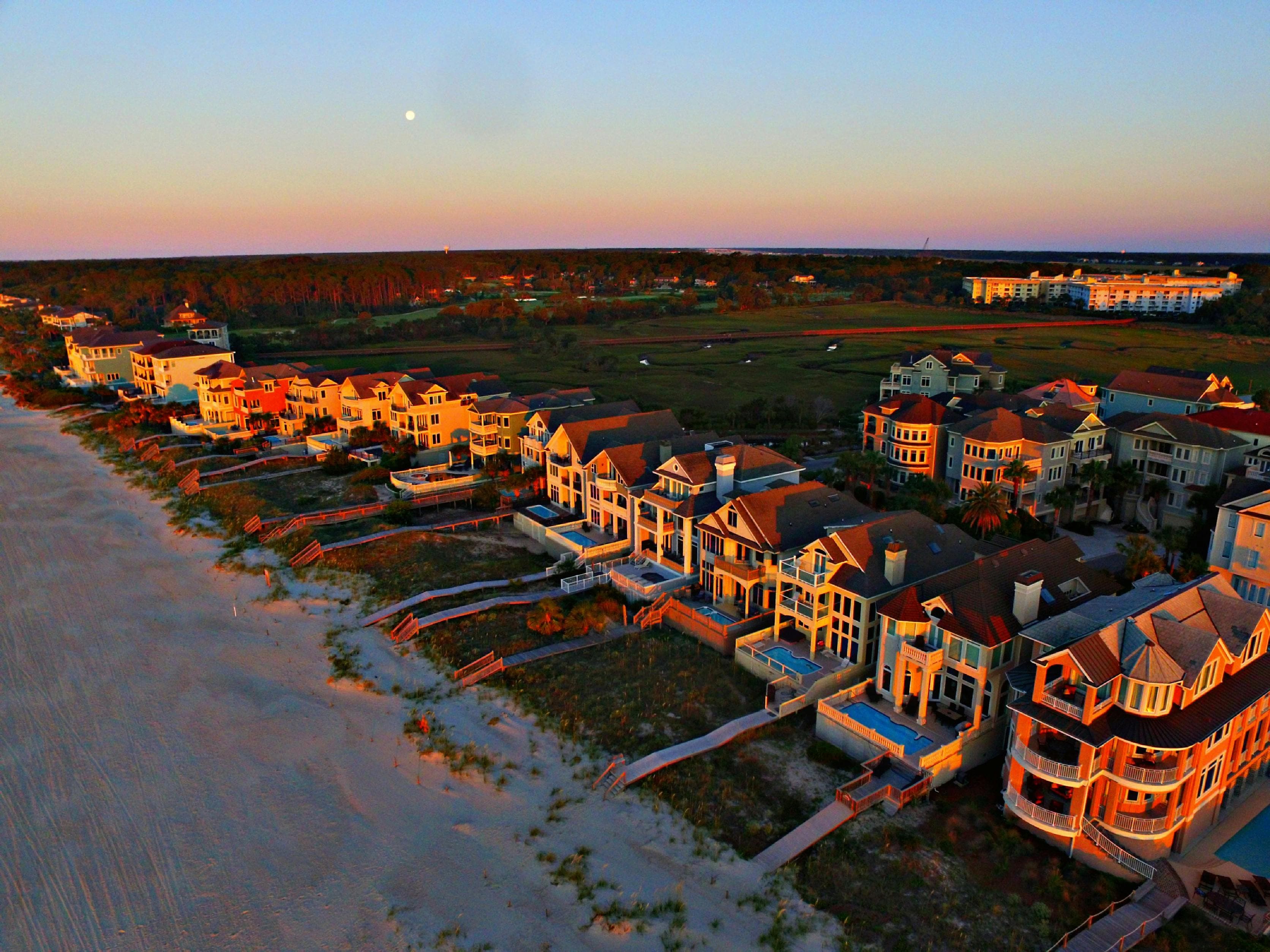
The red-and-white striped lighthouse behind the 18th green has become the defining image of Lowcountry golf. The hole curves left along Calibogue Sound, and the lighthouse rises above the trees behind the green, framing every approach shot and every putt in a composition that photographers cannot resist. During the RBC Heritage each spring, the grandstands add structure to the scene. On a quiet afternoon, the live oaks, the sound, and the lighthouse are sufficient.
4. The 14th at Coeur d'Alene Resort Golf Course
Par 3, 140-175 yards. Coeur d'Alene, Idaho.
A floating green in Lake Coeur d'Alene, reached by a mahogany boat. The green's position is adjusted daily, which changes the yardage and creates a slightly different photograph each time. The lake, the mountains, and the improbability of the target produce an image that reads as equal parts golf hole and optical illusion. It is the most unique tee shot in American golf, and the most distinctive photograph.
5. The 16th at TPC Scottsdale Stadium Course
Par 3, 162 yards. Scottsdale, Arizona.
During the WM Phoenix Open, 20,000 spectators fill a purpose-built colosseum around the 16th green, creating the loudest hole in professional golf. The photograph of the full colosseum is one of the most shared images in the sport. When you play the course outside of tournament week, the stands are empty and the desert is quiet. Both versions of the hole are worth photographing: the chaos and the calm.
6. The 18th at Edgewood Tahoe
Par 5, 572 yards. Stateline, Nevada.
The final hole at Edgewood runs along the south shore of Lake Tahoe, and the green sits against a backdrop of the lake and the Sierra Nevada mountains. The water is a particular shade of blue that shifts with the light and the season. The American Century Championship celebrity tournament has made this hole familiar, but the in-person color saturation exceeds what television conveys. Early morning and late afternoon produce the best light, and the mountain reflections in the lake add a second horizon to the image.
7. The 12th at Arcadia Bluffs
Par 3, 186 yards. Arcadia, Michigan.
The tee sits on the edge of a 200-foot bluff above Lake Michigan, and the green is framed against the water below. On a clear day, the lake extends to the horizon. The scale of the bluff, visible in photographs that include the tee box and the water below, communicates the elevation change that makes this hole both visually dramatic and tactically demanding. The wind off the lake makes club selection an exercise in faith.
8. The 16th at SentryWorld
Par 3, 177 yards. Stevens Point, Wisconsin.
The "flower hole." Robert Trent Jones Jr. surrounded this par 3 with more than 30,000 flowers that bloom from late spring through early fall. The resulting image, a golf green surrounded by concentric bands of color, is unlike anything else in American golf. The flowers are maintained by a dedicated horticultural staff, and the display peaks in mid-summer. This is the one hole on the list that is explicitly designed to be photographed, and the honesty of that intention works in its favor.
9. The 4th at Pacific Dunes
Par 4, 463 yards. Bandon, Oregon.
Explore our Bandon Dunes guide
10. The 17th at PGA West Stadium Course
Par 3, 168 yards. La Quinta, California.
Pete Dye's island green in the Coachella Valley, with the San Jacinto Mountains rising behind it in the California desert. The contrast between the green island, the blue water, and the brown mountain range creates a three-layer composition that is distinctly American. Lee Trevino once hit four balls into the water here during a senior event and walked off the course. The hole photographs beautifully, plays brutally, and stores memories permanently.
What the Camera Misses
These ten holes share a quality that photographs can approximate but never fully convey: the physical experience of standing on the tee. The wind at Pebble Beach's 7th. The silence at Edgewood's 18th. The sound of a ball landing in the water at Sawgrass's 17th. The boat ride to Coeur d'Alene's floating green. The flower scent at SentryWorld's 16th.
They are not holes that are beautiful despite being difficult or difficult despite being beautiful. They are holes where beauty and challenge are inseparable, where the same feature that makes the hole visually arresting also makes it demanding to play.
The most photographed holes in American golf earn their status through the intersection of visual drama and playing experience.
The verdict