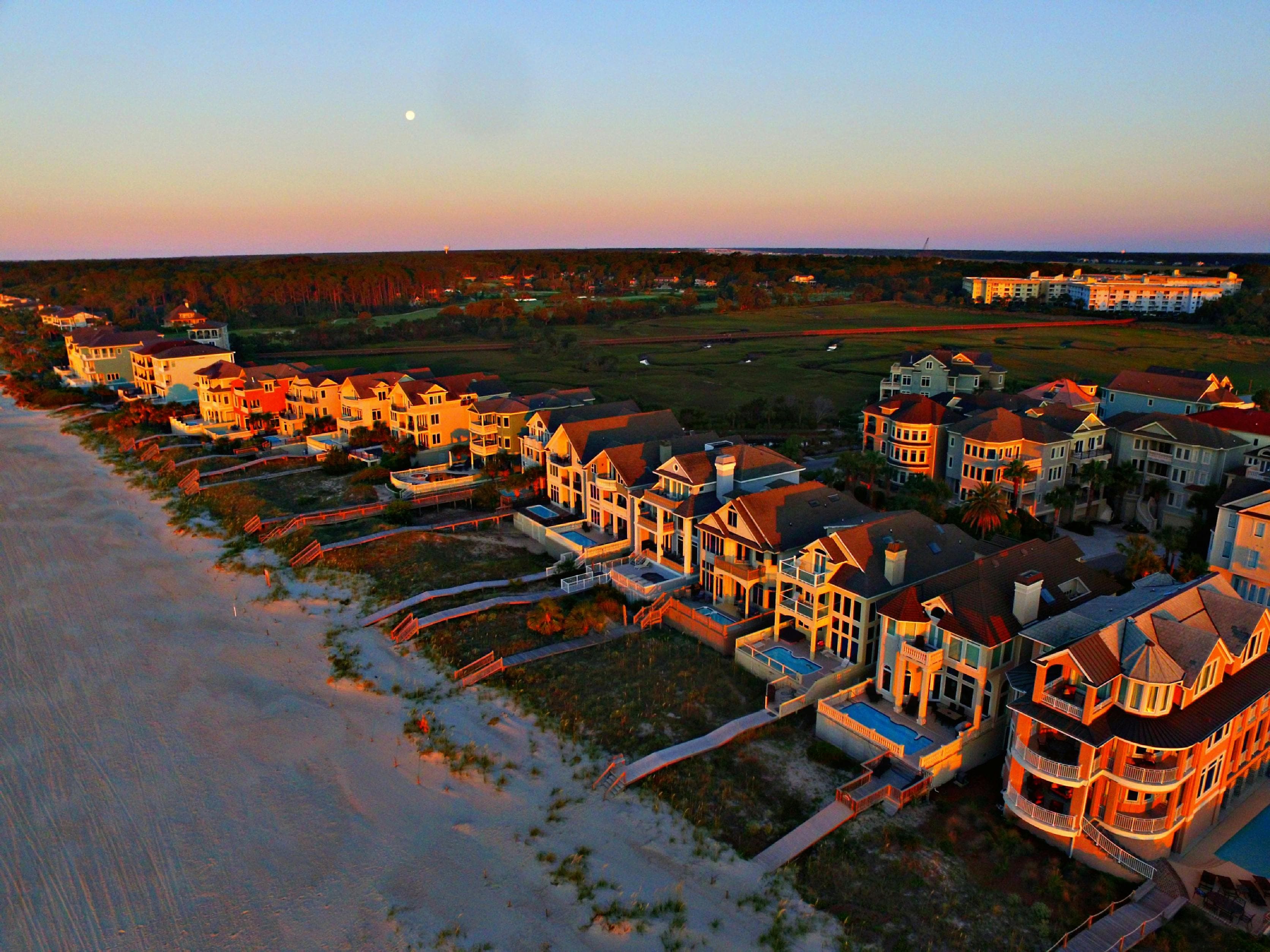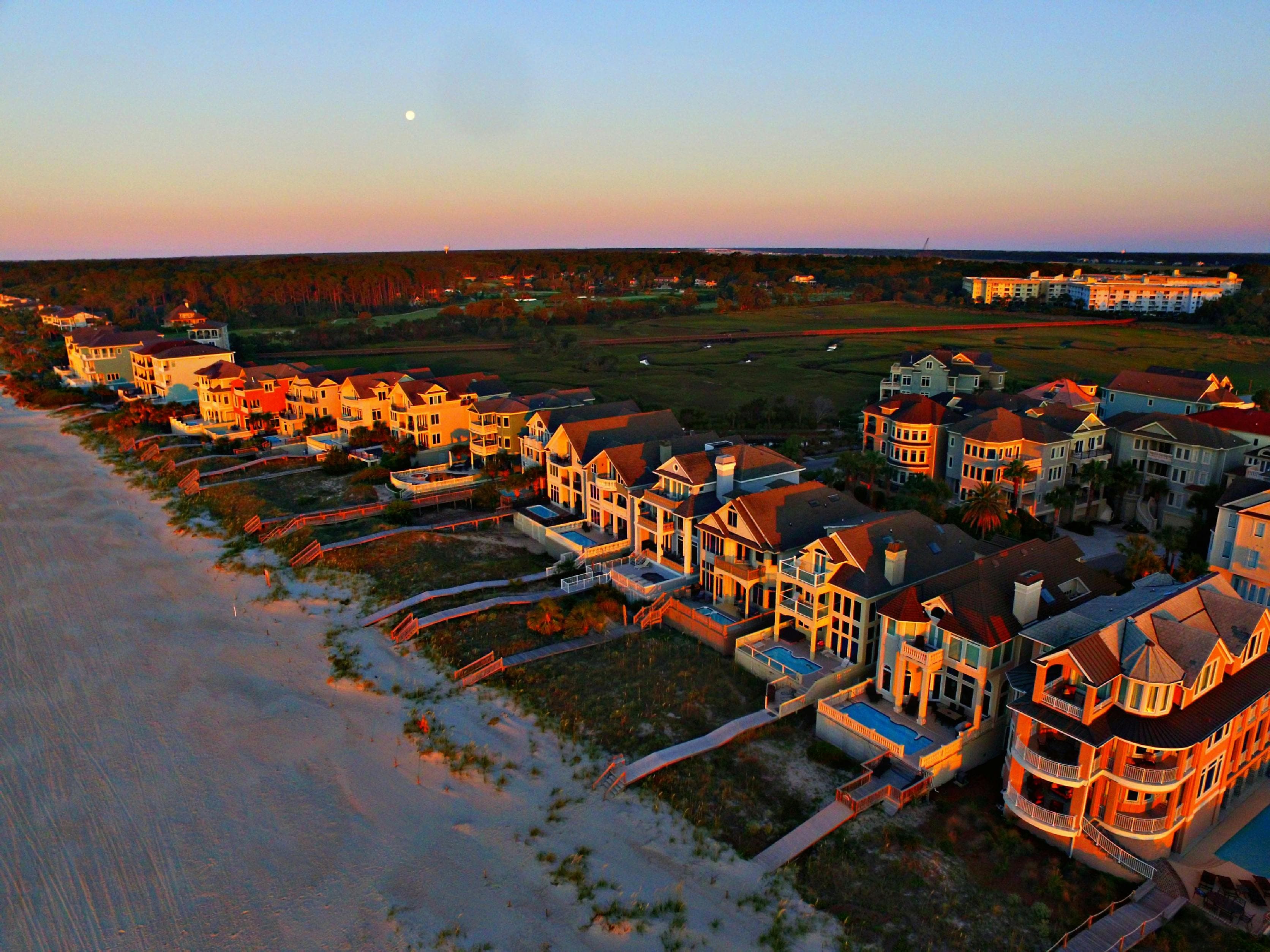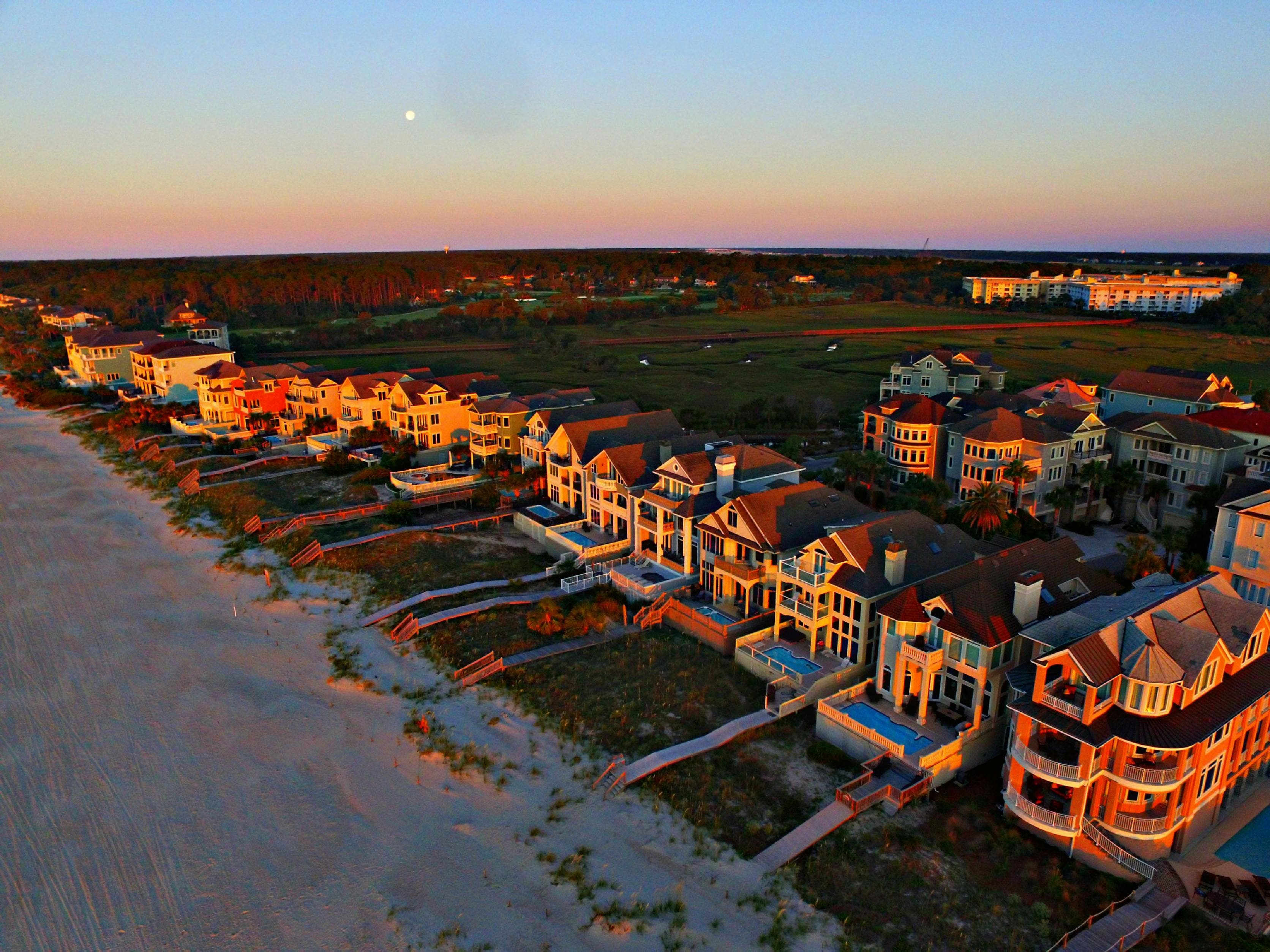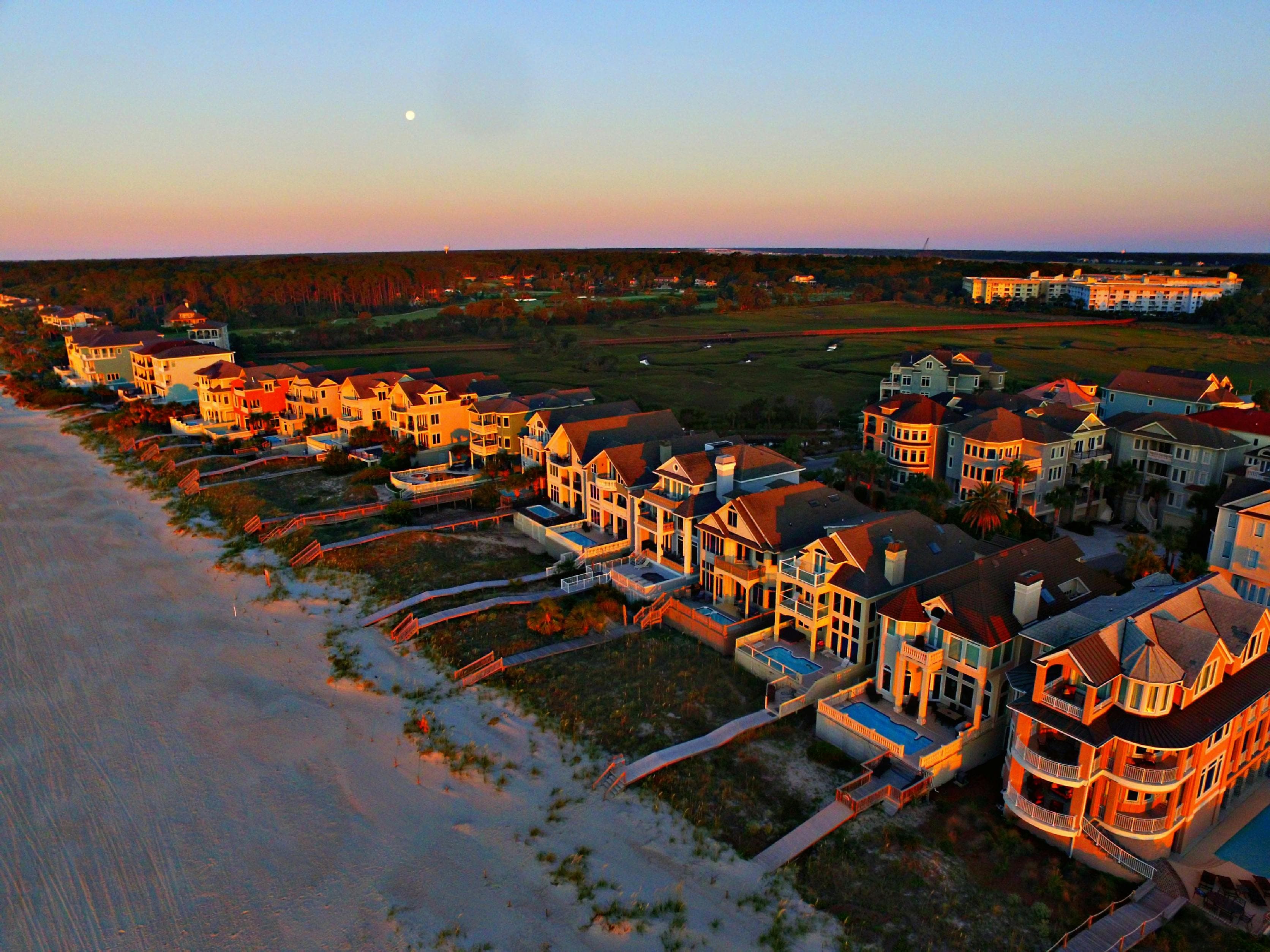
Where to stay in Hilton Head
Live prices from Booking.com, Expedia and more — every nearby hotel and rental in one search.
Prices and availability from Booking.com, Expedia and others via Stay22. GolfTrailsHQ may earn a commission at no additional cost to you.
Getting There
Hilton Head Island has its own airport, which sounds more convenient than it is. Hilton Head Island Airport (HHH) sits on the island itself and eliminates any ground transfer, but the flight options are limited. American Airlines offers year-round service from Charlotte. Delta runs seasonal routes from Atlanta and LaGuardia. United adds seasonal service as well. For golfers connecting from a major hub, Charlotte is the most reliable year-round gateway through HHH, and it works well enough for travelers originating in the Northeast or Midwest with a single connection.
The more practical option for most visitors is Savannah/Hilton Head International Airport (SAV), 39 miles away with a drive time of 50 to 60 minutes. SAV receives flights from all major carriers with full commercial service, and the route from the airport to the island is a straightforward run along I-95 and US-278 with minimal traffic outside of Saturday changeover days during summer. The airport name includes "Hilton Head" for a reason: the island is the primary leisure destination for a significant portion of SAV traffic.
For the large share of golfers who drive, Hilton Head occupies a favorable position in the Southeast highway network. Savannah is roughly an hour away. Charleston is two hours north on US-17 and I-95. Charlotte is 3.75 to 4 hours via I-77 and I-95. Atlanta is 4 to 5 hours west on I-16 and I-95. These distances make the island a natural long-weekend drive for golfers across Georgia, the Carolinas, and into Tennessee and North Florida.
A rental car is essential. While the island itself is compact enough that distances between courses are short, the mainland courses in Bluffton (Hilton Head National, Old South, Crescent Pointe) sit across the bridge, and airport transfers from SAV require ground transportation in any case. Rental rates range from $33 to $90 per day depending on vehicle class and season, with 13 operators available on the island. Groups of four splitting a midsize rental pay less than $10 per person per day, which makes the car an incidental cost rather than a budget consideration.
One logistical detail worth noting: several of the island's courses sit within gated plantation communities. Sea Pines Resort charges a $9 gate fee (cash only) for non-residents entering the community. This applies whether you are playing Harbour Town, Atlantic Dunes, or Heron Point, visiting Harbour Town Lighthouse, or catching the Savannah ferry from Harbour Town Marina. It is a small charge but an easy one to forget, and the gate attendants do not accept cards.
When to Visit
Hilton Head's golf calendar runs twelve months, which gives it an advantage over destinations that shut down for winter or become uninhabitable in summer. But not all months are equal, and the differences in pricing, weather, and crowd levels are significant enough to shape trip planning.
Peak golf season runs from March through May. This is the window of best weather for golf: April highs average 73 degrees Fahrenheit, humidity is manageable, and the courses are in spring condition after their winter maintenance programs. The RBC Heritage, played at Harbour Town Golf Links in April, draws the PGA TOUR and the associated spike in visitor traffic and green fees. Tee times at Sea Pines courses during Heritage week should be booked well in advance if they are available at all. Green fees across the island reach their highest points during these months.
Summer, from June through August, shifts the island's primary identity from golf to beach. Temperatures in July and August average 87 to 88 degrees Fahrenheit with high humidity, and afternoon rounds become genuinely uncomfortable. The courses respond with reduced green fees, making summer the window for golfers who tolerate heat and want access to premium layouts at lower prices. The trade-off is real: accommodation rates are at their peak because family beach traffic fills the island. A summer golf trip to Hilton Head works best when structured around early morning tee times, with afternoons reserved for the pool or the beach.
The fall shoulder season, September through November, is what many experienced Hilton Head visitors consider the best overall golf window. Temperatures remain warm through October (highs of 75 degrees), crowds thin after Labor Day, and courses reach peak condition after the summer growing season. Green fees trend downward through the fall. If the calendar allows flexibility, October is the month to target.
Winter, December through February, delivers the lowest rates and lightest crowds. January highs average 57 degrees, which requires a layer but remains entirely playable. Courses stay open. The island is quiet enough that pace of play improves, and the savings on both green fees and accommodation are substantial. A winter trip to Hilton Head costs roughly half what the same itinerary costs in April, and the golf itself is nearly as enjoyable on the frequent clear, mild days that the Lowcountry winter provides.
Budget Planning
Hilton Head accommodates a range of budgets, though its center of gravity sits higher than Myrtle Beach and lower than Kiawah Island. Understanding the tiers helps with realistic planning.
A premium trip built around Harbour Town ($399 to $518), Heron Point ($169 to $265), the Robert Trent Jones Course at Palmetto Dunes ($200 to $300), and Atlantic Dunes ($120 to $180), with lodging at The Inn and Club at Harbour Town ($300 to $500 per night), will run $400 to $700 per person per day during peak season. This tier delivers PGA TOUR-host courses, resort amenities, and the Sea Pines experience at a price that sits below comparable trips to Pebble Beach or Kiawah but well above the Southeast average. The Harbour Town round alone accounts for a significant portion of the daily spend, and the course earns its premium.
A mid-range trip mixing Palmetto Dunes courses ($150 to $241), Palmetto Hall ($100 to $185), and Hilton Head National ($110 to $160), with lodging at the Omni ($210 to $450) or Sonesta ($134 to $350), brings the daily cost to $200 to $400 per person. This tier accesses strong course design and resort amenities without the Harbour Town surcharge, and it represents the sweet spot for most visiting golfers.
A value-oriented trip is genuinely viable by crossing the bridge. Old South ($55 to $100) and Crescent Pointe ($34 to $74) deliver Lowcountry golf at prices that compete with budget destinations anywhere in the country. Pair those with Shipyard ($39 to $160) and Port Royal Barony ($60 to $190) on the island, lodge at the Hampton Inn ($88 to $175) or Red Roof Inn ($55 to $100), and a full day of golf plus lodging runs $100 to $200 per person. Off-season timing pushes these numbers lower still. The value tier here lacks the resort integration of the plantation courses, but the golf itself holds up.
Dining on Hilton Head skews toward the resort end of the spectrum, but groups with villa kitchens can reduce food costs meaningfully by cooking breakfasts and some dinners. Budget $30 to $70 per person per day for dining depending on approach and restaurant selection.
Local Knowledge
The island's plantation communities create a geographic logic that rewards awareness. Sea Pines sits at the southern tip and contains Harbour Town, Heron Point, Atlantic Dunes, Harbour Town Lighthouse, and the marina. Palmetto Dunes occupies the central-east oceanfront with its three courses and the Omni and Hilton hotels. Shipyard Plantation neighbors Palmetto Dunes and holds both the golf club and the Sonesta Resort. Port Royal sits at the northeast end of the island. Palmetto Hall is on the north-central interior. Grouping rounds by geography saves time and gate-fee repetition.
The mainland courses (Hilton Head National, Old South, Crescent Pointe) sit within 10 to 15 minutes of the bridge on the Bluffton side of US-278. Grouping these into a single day makes practical sense and keeps island days focused on island courses.
Tee time booking operates differently depending on the property. Sea Pines courses are booked directly through the resort, with preferred access for guests. Palmetto Dunes similarly favors resort guests. Heritage Golf Group manages several courses including Shipyard, Port Royal Barony, and Palmetto Hall, and these are available through both direct booking and GolfNow. The public courses (Hilton Head National, Old South, Crescent Pointe) book directly or through standard tee time platforms. During peak season, booking two to four weeks ahead is advisable for popular courses and preferred tee times.
Beaufort, a small historic town roughly 30 minutes north on US-21, makes for a pleasant half-day excursion. Horse-drawn carriage tours cover Antebellum architecture, Civil War history, and film locations in 55 to 75 minutes. The town has a character distinct from Hilton Head's resort atmosphere and offers a quieter complement to the island's activity options.
Finally, the Lowcountry produces some of the best seafood on the Eastern Seaboard, and Hilton Head's dining scene reflects that access. Grouper, shrimp, oysters, and blue crab are local rather than imported, and the restaurants within the plantation communities tend to take their food seriously. Sunset dining at Harbour Town or along Shelter Cove Marina provides the kind of atmosphere that turns a golf trip into something the non-golfers in the group remember as fondly as the golfers.