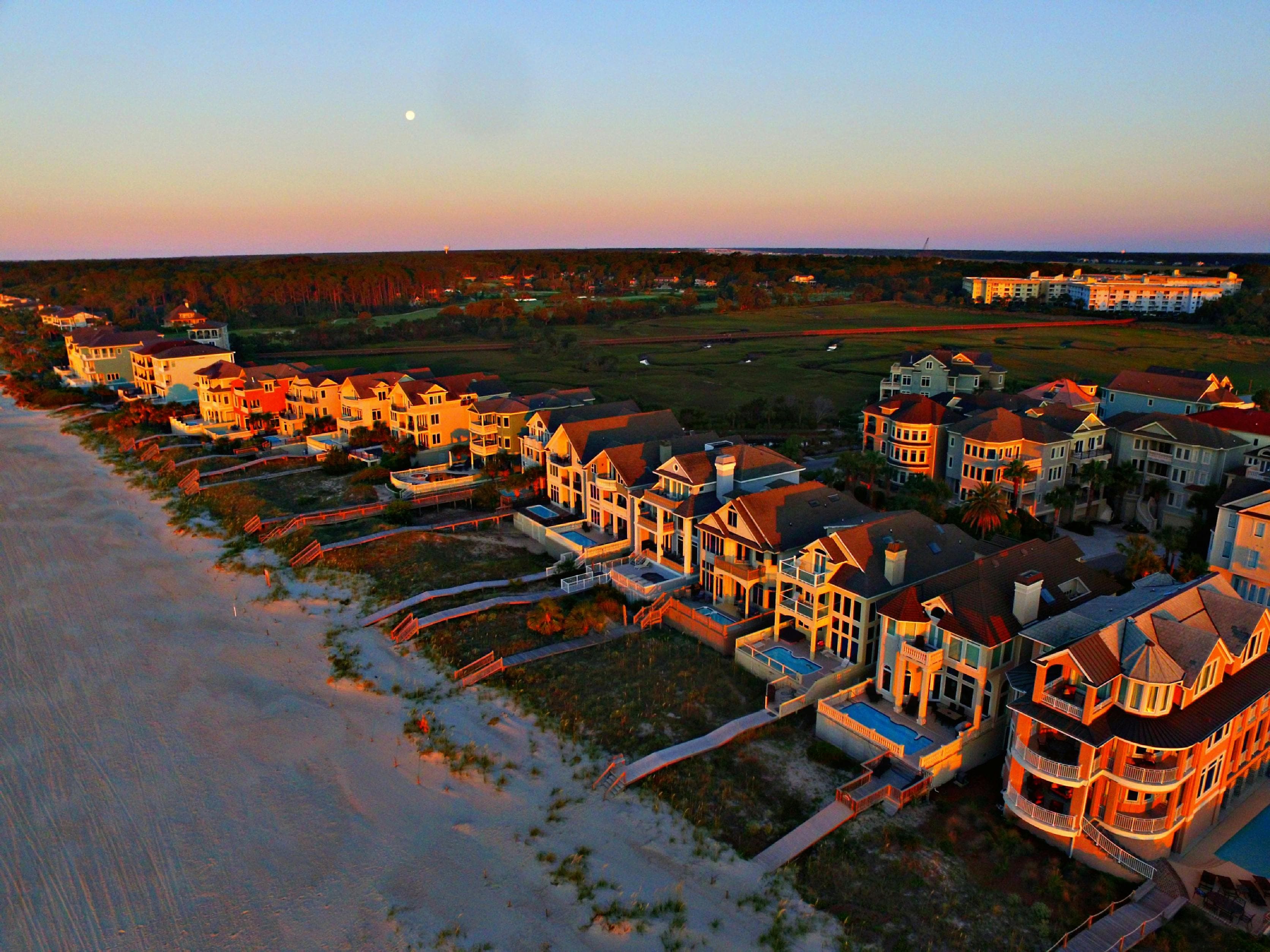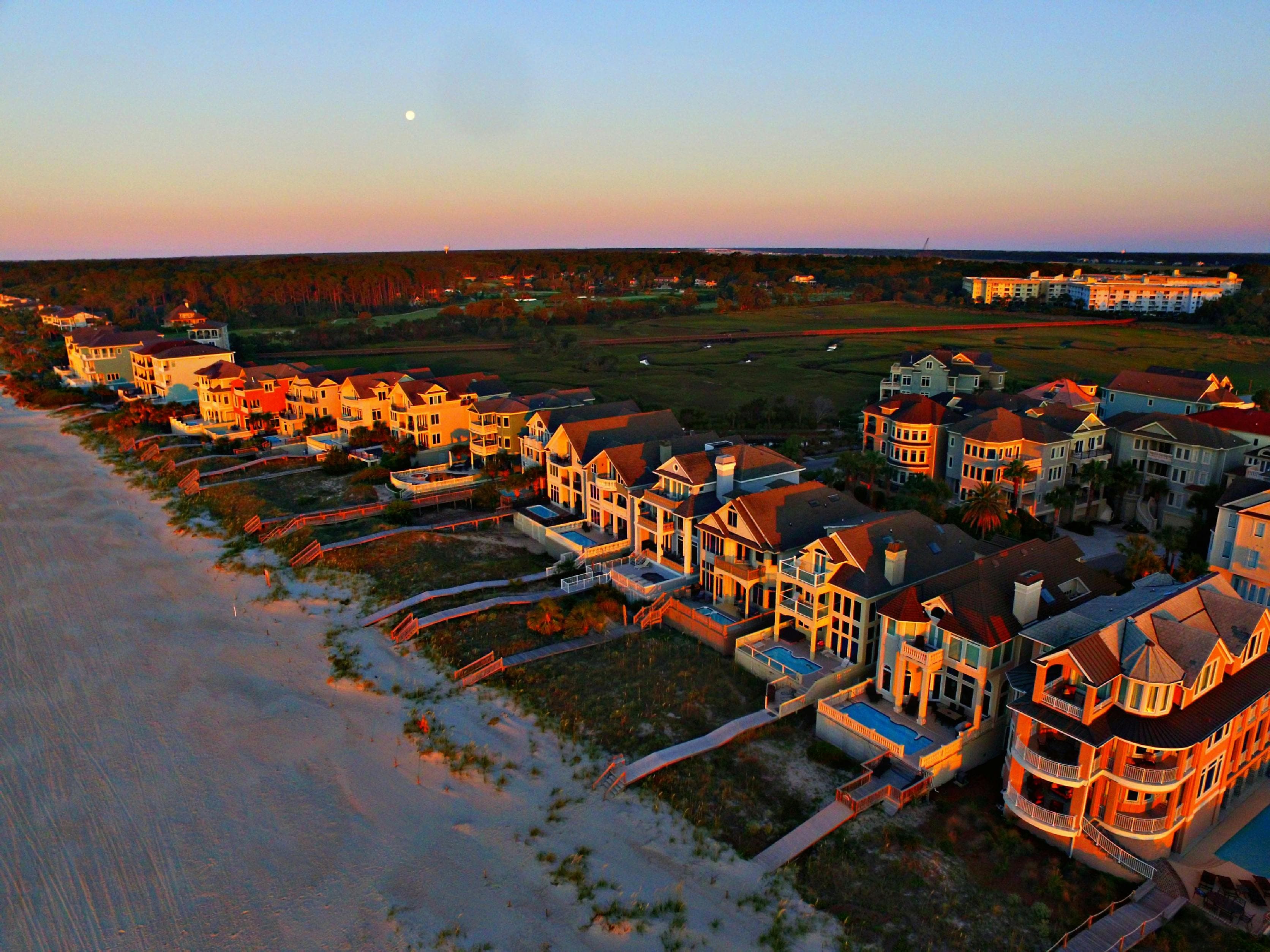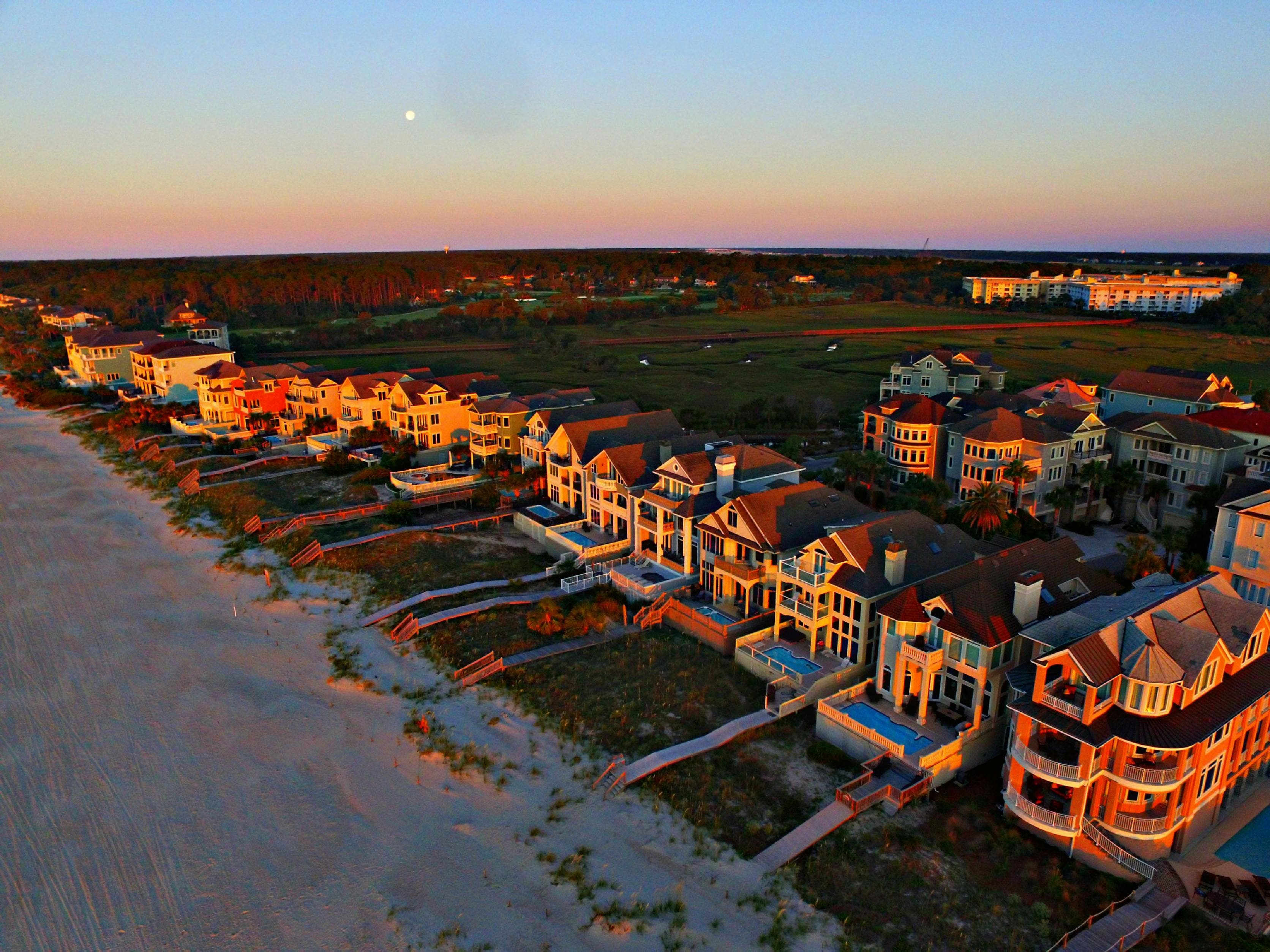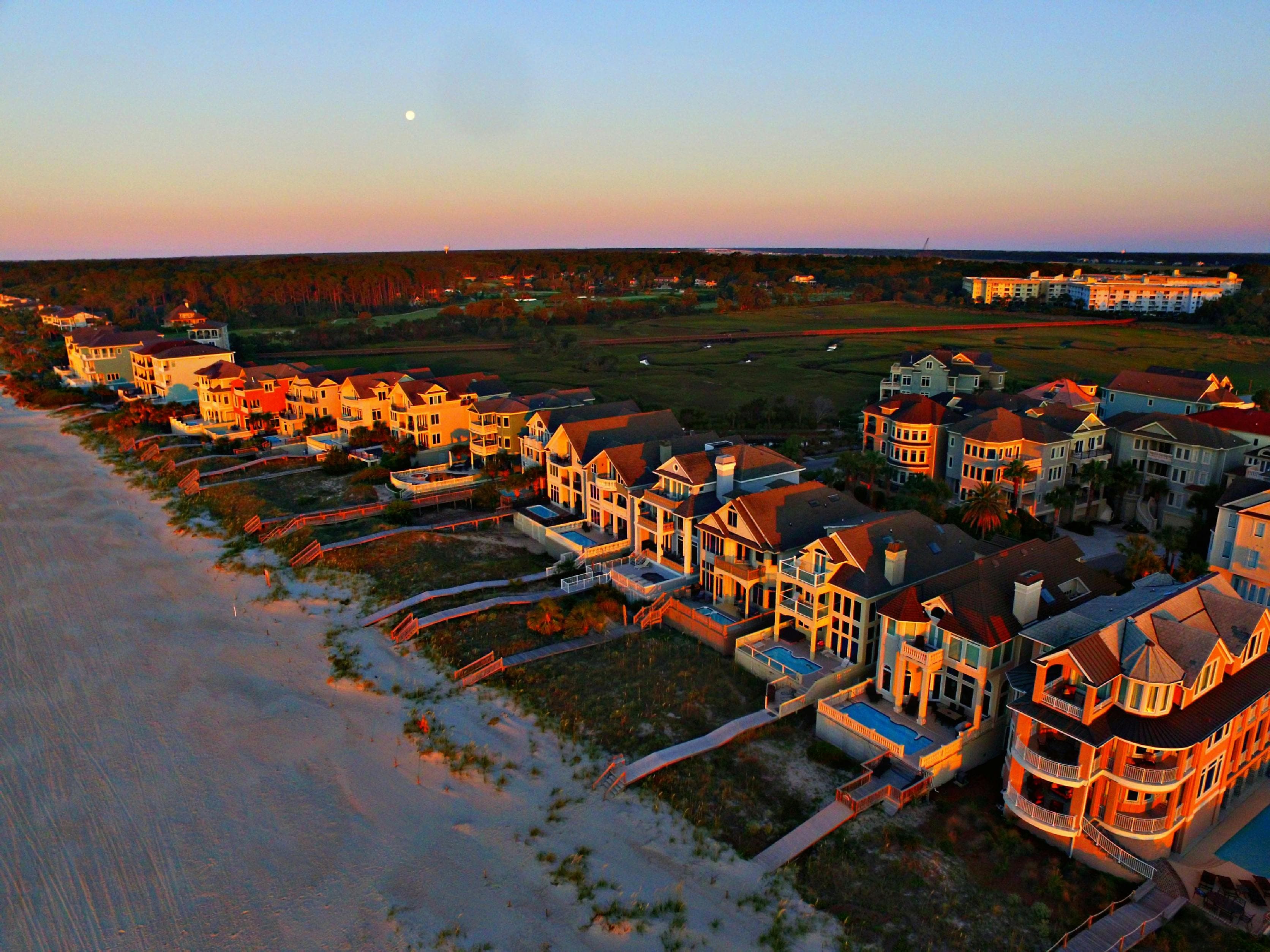
Hilton Head Island, South Carolina
Hilton Head Island is 12 miles long, five miles wide, and shaped roughly like a shoe. It sits at the southern tip of South Carolina's Lowcountry, separated from the mainland by a short bridge over the Intracoastal Waterway. The first golf course here opened in 1963. Within six years, Pete Dye and Jack Nicklaus had built Harbour Town Golf Links, the PGA TOUR arrived, and the island's identity was set. Sixty years later, golf remains the organizing principle around which the rest of the island operates.
What distinguishes Hilton Head from other resort golf destinations is the plantation system. The island is divided into gated residential communities, each called a plantation, and most of the significant courses sit within them. Sea Pines Resort alone contains three courses, including Harbour Town. Palmetto Dunes holds three more. Port Royal, Shipyard, and Palmetto Hall each add to the count. The practical effect is that golf on Hilton Head tends to be a resort experience rather than a public one. Tee times are booked through resort properties. Access often requires passing through a staffed gate. The courses themselves reflect this arrangement: they are maintained to standards that justify resort-level green fees, and the surroundings are curated in ways that a standalone public course rarely attempts.
The Courses
Harbour Town Golf Links is the course that put the island on the map and the one that keeps it there. Pete Dye designed it in 1969 with Jack Nicklaus consulting, and it has hosted what is now the RBC Heritage every year since. A major restoration completed in November 2025, led by Love Golf Design, rebuilt greens, bunkers, bulkheads, and agronomic systems. The course plays 7,099 yards from the Heritage tees with a slope of 147, and green fees of $399 to $518 reflect both the pedigree and the recent investment. The iconic red and white striped lighthouse behind the 18th green is the single most recognizable image in Lowcountry golf.
Sea Pines Resort flanks Harbour Town with two additional courses that carry their own weight. Heron Point by Pete Dye, a 2007 redesign of George Cobb's original Sea Marsh layout, plays 7,035 yards with six sets of tees accommodating a wide range of abilities. Atlantic Dunes by Davis Love III, a complete reconstruction of Hilton Head's first golf course, reopened in 2014 with water on almost every hole and Spanish moss-draped oaks framing fairways lined with native grasses. Together, the three Sea Pines courses offer enough variety for a multi-day stay without leaving the resort gates.
Palmetto Dunes Oceanfront Resort provides the island's other major course cluster. Robert Trent Jones Sr. built the first of the three in 1969. His design carries a course rating of 72.6 and a slope of 133, relatively moderate numbers that mask the strategic demands of his trademark bunkering and green complexes. Arthur Hills added a second course in 1986, emphasizing accuracy over distance with lagoons winding through 10 of its 18 holes. George Fazio's 1974 contribution is the island's only par-70 layout, built around a series of long par 4s and just two par 5s, with Diamond Zoysia greens. The three Palmetto Dunes courses share green fees in the $150 to $300 range depending on layout and season, and the resort's oceanfront position makes it a natural base for trips that combine golf with beach time.
Beyond the major resort clusters, the island and its immediate mainland surroundings hold several courses worth knowing. Palmetto Hall, a semi-private Arthur Hills and Spencer Holt design from 1991, runs through heavily wooded terrain with towering pines and moss-draped oaks, offering green fees of $100 to $185. Shipyard Golf Club provides 27 holes across three nines designed by George Cobb and Willard Byrd, with rates that start as low as $39 during off-peak windows. Port Royal Golf Club's Barony Course, one of the first courses on the island dating to 1963, rewards accuracy with its small, bunker-guarded greens.
Hilton Head National Golf Club, technically in Bluffton just off US-278, pairs a Gary Player back nine with a Bobby Weed front nine featuring larger contoured greens. Green fees run $110 to $160 with time-of-day pricing that rewards flexibility. Old South Golf Links, also in Bluffton, is a Clyde Johnston design through Lowcountry marshland that was named among Golf Digest's Top 10 New Public Courses when it opened in 1992. At $55 to $100, it delivers a genuine Lowcountry golf experience at a fraction of the resort course rates. Crescent Pointe Golf Club, the only Arnold Palmer-designed public course in the area, offers six sets of tees and green fees from $34 to $74. These mainland courses represent the value end of the Hilton Head market and are often overlooked by visitors who never cross the bridge.
Where to Stay
The accommodation landscape on Hilton Head operates on two distinct models: traditional hotels and resort villa rentals. Understanding the difference shapes trip planning.
The luxury tier begins with Montage Palmetto Bluff, which sits in Bluffton roughly 30 minutes from the island's courses. It is a destination unto itself, with a Jack Nicklaus Signature golf course reserved for resort guests, three pools, five restaurants, a marina, and equestrian facilities. Nightly rates of $514 to $1,200 reflect the positioning. On the island proper, The Inn and Club at Harbour Town places guests adjacent to Harbour Town Golf Links with butler service, Forbes Four-Star recognition, and complimentary transport within Sea Pines Resort. Rates run $300 to $500.
The upscale middle of the market offers several strong options. Omni Hilton Head Oceanfront Resort provides 323 rooms with three pools, a spa, and direct beach access, positioned roughly a mile from the Palmetto Dunes courses. Sonesta Resort, an AAA Four-Diamond property, sits within Shipyard Plantation with a driving range on site and Shipyard Golf Club steps away. The Hilton Beachfront Resort and Spa, formerly a Marriott property now under the Hilton flag, occupies a position within Palmetto Dunes itself, offering 513 rooms with direct golf course access.
Villa rentals dominate the accommodation inventory. Palmetto Dunes offers more than 500 rental units ranging from $180 to $400 per night, with three golf courses, an 11-mile lagoon, and tennis facilities within the community. Sea Pines Resort lists more than 400 rental villas and homes at $200 to $500 per night, with 40-plus miles of bike trails and three golf courses on the property. For golf groups, villas offer significant advantages: full kitchens reduce dining costs, multiple bedrooms keep per-person rates competitive, and proximity to courses eliminates logistics.
Budget-conscious travelers have options as well. The Hampton Inn near Palmetto Hall starts at $88 per night with free hot breakfast. The Holiday Inn Express on South Forest Beach runs $76 to $200. Park Lane Hotel and Suites, with full kitchens and rates from $63 per night, and the Red Roof Inn at $55 to $100 represent the value floor. These properties lack the resort integration of the plantation-based options but provide clean, functional lodging that keeps more of the budget available for green fees.
Beyond the Course
Hilton Head's position in the Lowcountry opens up a range of activities that go well beyond the standard resort diversions. The island sits at the intersection of tidal waterways, barrier islands, and the open Atlantic, and much of the best non-golf programming takes advantage of that geography.
The water is the main attraction. Dolphin watching cruises depart from multiple marinas, with sunset sailings through Calibogue Sound offering high sighting rates for Atlantic bottlenose dolphins. Guided kayak tours through Broad Creek Wildlife Area provide naturalist-led paddles through the salt marsh ecosystem, no experience required. The Creek Cat boat tour, where passengers drive their own small motorized catamarans through 25 miles of waterways, is the most distinctive water experience available and carries a 4.9 rating from nearly 400 reviews on Viator.
The Savannah Day Trip by Boat deserves particular mention. The round-trip ferry departs from Harbour Town Marina and docks on River Street in Savannah's historic district, providing roughly four hours in one of the most compelling small cities in the South. At $85 per person, it doubles as both transportation and sightseeing. The Daufuskie Island Guided History Tour offers a different excursion, combining a ferry crossing with a golf cart tour of Gullah heritage sites, the First African Baptist Church, and the Mary Fields School.
Harbour Town Lighthouse and Museum anchors the cultural offering on the island itself. The 114-step climb to the observation deck provides views across Calibogue Sound, and the museum houses RBC Heritage memorabilia and Civil War artifacts. At $7.50 per person, it is one of the most accessible attractions on the island. The island's 60-plus miles of paved leisure pathways and 12 miles of hard-packed beach suitable for cycling make Hilton Head one of the best biking destinations on the East Coast, recognized as a Gold Level Bicycle Friendly Community by the American League of Bicyclists.
For groups traveling with non-golfers, the combination of beach access, water activities, and day trip options creates a parallel itinerary that runs comfortably alongside a full golf schedule. The companion who spends a morning kayaking through Broad Creek and an afternoon cycling the beach path is not waiting around. They are having a Lowcountry experience that happens to include no golf.
The Lowcountry Factor
Hilton Head occupies a specific niche in American golf travel. It is not a volume destination in the Myrtle Beach mold, nor a single-property pilgrimage like Bandon Dunes. It is a resort island where golf exists within a broader Lowcountry lifestyle that includes beach, water, food, and a pace that discourages rushing. The plantation communities create a sense of enclosure and quiet that is difficult to replicate on a public course strip.
The island also benefits from genuinely favorable golf weather across most of the calendar. March through May and September through November deliver the best conditions, with the RBC Heritage in April drawing the attention of the professional game. Summer brings heat and humidity but also lower green fees. Winter, with highs in the upper 50s and low 60s, offers the lowest rates and lightest crowds on courses that remain open year-round. The twelve-month golf season is a practical advantage that many competing destinations cannot match.
The golfer who visits Hilton Head is typically not chasing the lowest price. The island's appeal is the quality of the overall experience: courses designed by Dye, Nicklaus, Jones, Hills, Fazio, Love, and Palmer; resort infrastructure that simplifies logistics; Lowcountry food and atmosphere that give the non-golf hours their own character; and an island setting that makes the whole thing feel like a proper getaway rather than a series of tee times strung together by car rides.
The value-conscious traveler should not overlook the mainland courses. Old South and Crescent Pointe deliver legitimate Lowcountry golf at rates that compete with budget destinations anywhere in the Southeast. Combined with off-island lodging, a Hilton Head area trip can be assembled at a fraction of the resort rack rate. The courses do not care which side of the bridge you slept on.