Hilton Head, SC: Bucket List Golf Trip Itinerary (4-5 Days)
Hilton Head Island operates on a different frequency than most American golf destinations. The Lowcountry's particular combination of live oaks, salt marshes, and tidal creeks produces courses that feel ancient even when they are not, and the island's resort infrastructure has had half a century to mature into something genuinely comfortable rather than merely functional. This itinerary covers four to five days of premium golf across the island and its immediate surroundings, anchored by the course that defined Hilton Head as a golf destination and extending to designs that have earned their own reputations in the decades since. For a broader view of the destination, the Hilton Head destination guide covers the full course inventory, seasonal timing, and logistics.
The routing here is deliberate. It opens with a warm-up round to shake off travel, builds toward the headliner on day two, layers in a demanding 36-hole day at Sea Pines, and closes with an off-island round that provides a different architectural perspective. An optional fifth day allows for a replay or a course that did not fit the original sequence.
Where to stay in Hilton Head
Planning the trip? Compare live prices across every nearby hotel and rental in one search.
Prices and availability from Booking.com, Expedia and others via Stay22. GolfTrailsHQ may earn a commission at no additional cost to you.
Day 1: Arrival and Palmetto Dunes — Robert Trent Jones Course
Fly into Savannah/Hilton Head International Airport, a forty-five-minute drive from most island properties. Check into your accommodation and settle in before a mid-afternoon tee time at the Palmetto Dunes Robert Trent Jones Oceanfront Course. Jones laid out this routing along one of the few stretches of Hilton Head coastline that allows direct ocean interaction, and the tenth hole delivers a tee shot with the Atlantic as its backdrop. The course is a proper Jones design: long from the tips, with elevated greens protected by deep bunkers and enough water to demand attention on approach shots. It does not rank among Jones's most celebrated works, but it provides a calibration round that rewards solid ball-striking without punishing rust from travel.
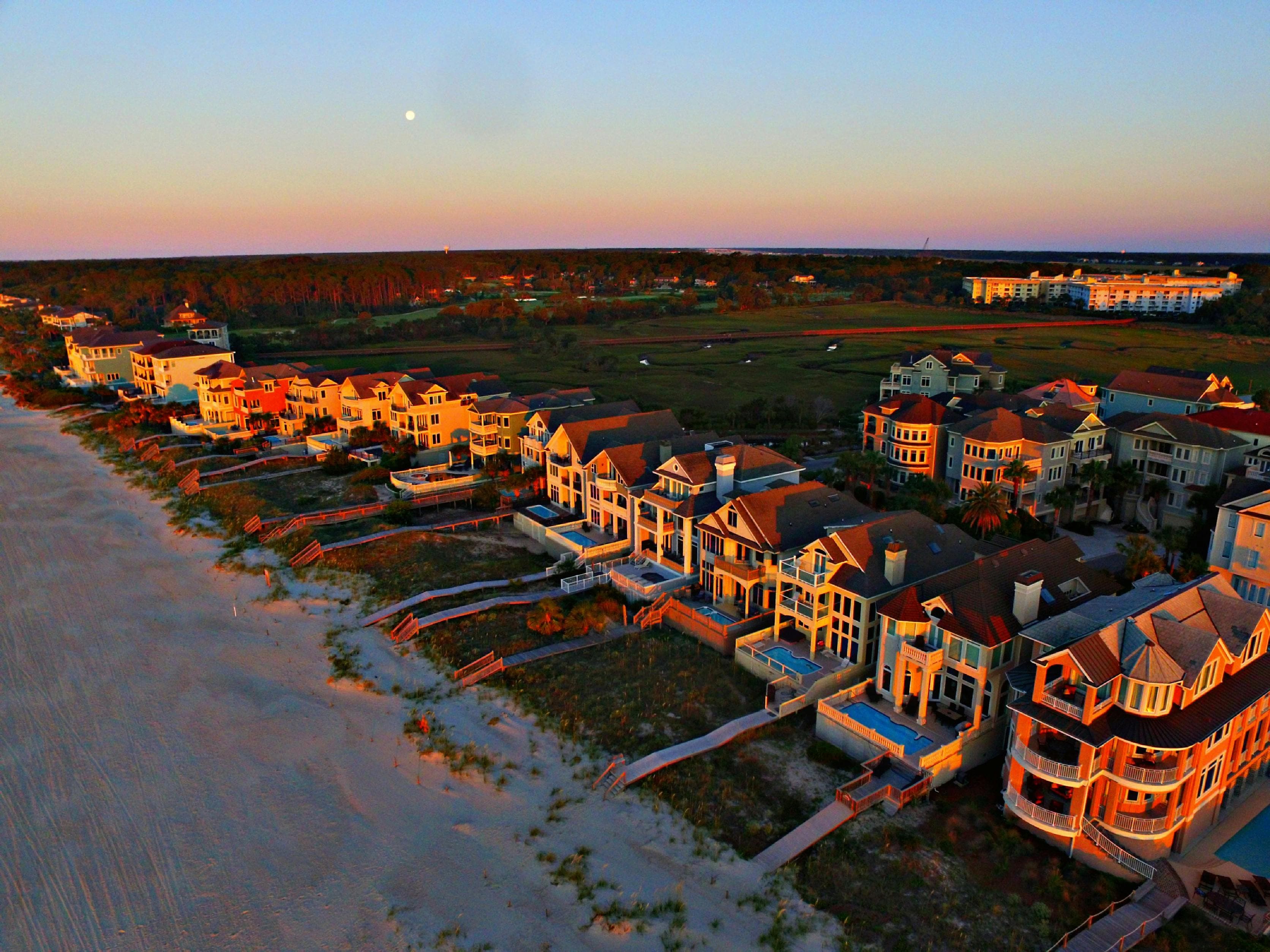
Harbour Town Golf Links
Green fees range from $175 to $259 depending on season. Walking is permitted but uncommon in the Lowcountry humidity. The resort properties at Palmetto Dunes sit within minutes of the first tee, making this a logistics-free opening to the trip.
Dinner on arrival night works best kept simple. Skull Creek Boathouse, positioned on the island's north end overlooking the Intracoastal Waterway, serves Lowcountry seafood in an atmosphere that signals arrival without demanding a reservation three weeks in advance.
Day 2: Harbour Town Golf Links and Sea Pines
This is the day the trip pivots around. Harbour Town Golf Links has hosted the RBC Heritage on the PGA Tour since 1969, and Pete Dye's original routing remains one of the most strategically interesting layouts in American resort golf. Book a morning tee time. The course plays through corridors of live oaks and pines, with small, well-defended greens that reward precision over power. The famous eighteenth, a par 4 that bends left along Calibogue Sound toward the lighthouse, is among the most recognizable finishing holes in professional golf. It plays even better in person than it does on television.
Harbour Town is a shotmaker's course. Dye's greens tilt, slope, and shed balls with a subtlety that only becomes apparent after a few misreads. Peak season green fees run $350 to $450 for Sea Pines resort guests, with higher rates for outside play.
The fairways are narrow enough to penalize loose driving, but the real examination occurs on approach.
Reserve the afternoon for Sea Pines itself. The resort's beach club, pool facilities, and network of biking and walking trails occupy the hours between the final putt and dinner without requiring a plan. The island's bike path system runs thirty miles through dense maritime forest and along tidal lagoons. Evening dining within Sea Pines ranges from casual harbour-side options to the more composed restaurants at the Inn at Harbour Town.
Day 3: Heron Point and Atlantic Dunes — A Sea Pines Double
Sea Pines operates three courses, and the two that complement Harbour Town both warrant a full day. Book Heron Point by Pete Dye for the morning and Atlantic Dunes by Davis Love III for the afternoon.
Heron Point opened in 2007 as a complete Dye renovation of the former Sea Marsh Course. It shares DNA with Harbour Town in its strategic demands but occupies a different landscape, routing through marshland and alongside Calibogue Sound with wider corridors and more dramatic elevation shifts than the original. The par-3 seventh plays across a tidal marsh to a green that appears to float at high tide. Green fees run $200 to $325.
Atlantic Dunes emerged from Love's 2014 redesign of the former Ocean Course, and it marked a philosophical departure for Sea Pines. Love stripped away the dense vegetation that had enclosed the old layout, restoring sight lines to the ocean and creating a links-influenced course that plays firmer and faster than its neighbors. The fairways roll. Bunkers sit below the playing surface rather than perched above it. Wind becomes the primary defense on exposed holes, particularly along the stretch near the beach. Green fees sit between $175 and $275.
Playing both courses in sequence reveals how two designers read the same coastal environment through fundamentally different lenses. Pack lunch at the clubhouse between rounds. Hydration matters more than golfers typically acknowledge in the Lowcountry, where humidity compounds fatigue across a 36-hole day.
Day 4: May River Golf Club at Palmetto Bluff
The drive to Palmetto Bluff in Bluffton takes roughly thirty minutes from Sea Pines, crossing the bridge off-island and heading south along Route 278. May River Golf Club occupies a Jack Nicklaus Signature design that opened in 2004 and has operated as a private club with limited resort access through the Montage Palmetto Bluff property. The course follows the May River through hardwood forest and open marshland, and Nicklaus routed it to maximize the interaction between golf holes and the tidal river system. The greens are large by Hilton Head-area standards, but Nicklaus shaped them with enough internal movement to create pin positions that fundamentally alter the approach on repeated play.
Tip
An alternative for travelers without Montage access is Colleton River Plantation, a private community in Bluffton that occasionally opens its two courses to outside play through reciprocal arrangements.
Both the Nicklaus and Dye courses at Colleton River rank among the strongest private layouts in the state.
Before returning to the island, dinner in Old Town Bluffton is worth the stop. The small historic district along Calhoun Street has developed a restaurant scene that punches well above its size. The Lowcountry cooking here tends toward less ornamentation and more direct flavors than the resort dining on Hilton Head proper.
Day 5 (Optional): Replay or Palmetto Dunes Arthur Hills Course
Travelers with a late afternoon departure have two strong options. A Harbour Town replay rewards the golfer who now understands the course's tendencies and wants to apply lessons from the first round. Alternatively, the Palmetto Dunes Arthur Hills Course offers a layout that routes through lagoons and mature maritime forest with a different character than the Robert Trent Jones course played on day one. Green fees at the Hills course run $150 to $225, making it the most accessible round of the week.
Either option leaves time for a final Lowcountry lunch before the drive to Savannah. The Salty Dog Cafe at South Beach Marina in Sea Pines serves its purpose as a casual farewell to the island, though it leans more toward atmosphere than cuisine.
For travelers with a full free day, Savannah sits one hour south and merits the drive. The historic district, River Street, and the city's restaurant inventory provide a non-golf dimension that pairs naturally with a morning without a tee time.
Budget Overview
A four-day version of this itinerary, with three nights in a Sea Pines villa or Palmetto Dunes oceanfront rental and four rounds of golf, runs approximately $2,000 to $2,800 per person based on double occupancy. The five-day version with an additional night and a fifth round extends the range to $2,500 to $3,500 per person.
| Category | Estimated Range |
|---|---|
| Accommodation (3-4 nights) | $700-$1,400 |
| Green fees (4-5 rounds) | $800-$1,500 |
| Rental car (4-5 days) | $180-$300 |
| Dining | $300-$500 |
| Biking / kayaking / extras | $50-$150 |
The Inn at Harbour Town offers golf packages that bundle room rates with Harbour Town, Heron Point, and Atlantic Dunes access at meaningful discounts over booking separately. Sea Pines villa rentals through the resort's property management program provide more space at lower per-night rates, particularly for groups of four.
When to Go
The ideal windows are March through May and September through November. Spring brings azaleas, moderate humidity, and firm course conditions before the summer saturation sets in. Fall offers the most consistent weather, lower green fees than spring, and tee sheet availability that peak season does not provide.
Summer on Hilton Head is playable but demanding. Daily highs sit in the low 90s with humidity to match, and afternoon thunderstorms arrive with regularity from June through August. Early morning tee times are essential, and the pace of the trip should slow accordingly.
Winter rounds are possible, with highs in the mid-50s to low 60s, but the Lowcountry's damp cold can make a January round feel colder than the thermometer suggests. Green fees drop significantly from December through February, and the courses are notably less crowded.
The Heritage tournament week in mid-April commands premium pricing across the island, but the combination of tournament golf at Harbour Town and resort play on the surrounding courses creates an experience that justifies the premium for those who plan early enough to secure both tickets and tee times.
The verdict