America's Golf Bucket List: 25 Courses You Must Play
There is no shortage of golf course rankings in American media. Publications release annual lists, readers debate the order, and the same ten names cycle through the conversation year after year. Most of those lists include courses that no public golfer will ever play. Augusta National, Cypress Point, Pine Valley, and Shinnecock Hills are extraordinary places, but they are relevant only to the small number of golfers who receive invitations. A bucket list built around inaccessible courses is an exercise in aspiration without a plan.
This list takes a different approach. Every course here is accessible to a golfer willing to pay the green fee and make a tee time. Some are expensive. Some require resort stays or advance booking. None requires a member's introduction. These are 25 courses where the experience justifies the effort, where the design rewards careful study, and where the setting elevates the round beyond the ordinary. They are presented in no particular order, because ranking them against one another misses the point. The point is to play them.
For a broader look at accessible layouts across the country, our guide to the best public golf courses in America covers the full landscape. Those planning multi-course trips will find useful context in our guide to the best golf resorts in America.
The Courses
1. Pebble Beach Golf Links — Pebble Beach, California
Jack Neville and Douglas Grant (1919) · $575–$625
Six U.S. Opens and a centennial that only deepened its reputation. The seventh, a downhill par three to a tiny green above Stillwater Cove, remains the most photographed par three on the continent. The green fee is among the highest in public golf, and the experience earns it.
The coastal stretch from the fourth through the tenth is the most celebrated sequence of holes in American golf.
2. Pacific Dunes — Bandon, Oregon
Tom Doak (2001) · $275–$375
Thirteen holes offer direct ocean views along the southern Oregon coastline, and Doak's routing uses the clifftop terrain with a restraint that makes the drama feel earned rather than manufactured. Walking only. Caddies available and recommended. The par-four eleventh, sweeping left along the bluff edge, is one of the great holes in modern design.
The consensus pick for the finest public course in America, and the argument is strong.
3. Bandon Dunes — Bandon, Oregon
David McLay Kidd (1999) · $275–$375
The original course at the resort that changed American golf. Kidd routed the layout through gorse-covered dunes above the Pacific, and the resulting links-style experience proved that American golfers would travel to remote locations for the right golf. The front nine inland holes build steadily toward the oceanside back nine, where the par-four sixteenth plays to a green perched above the surf.
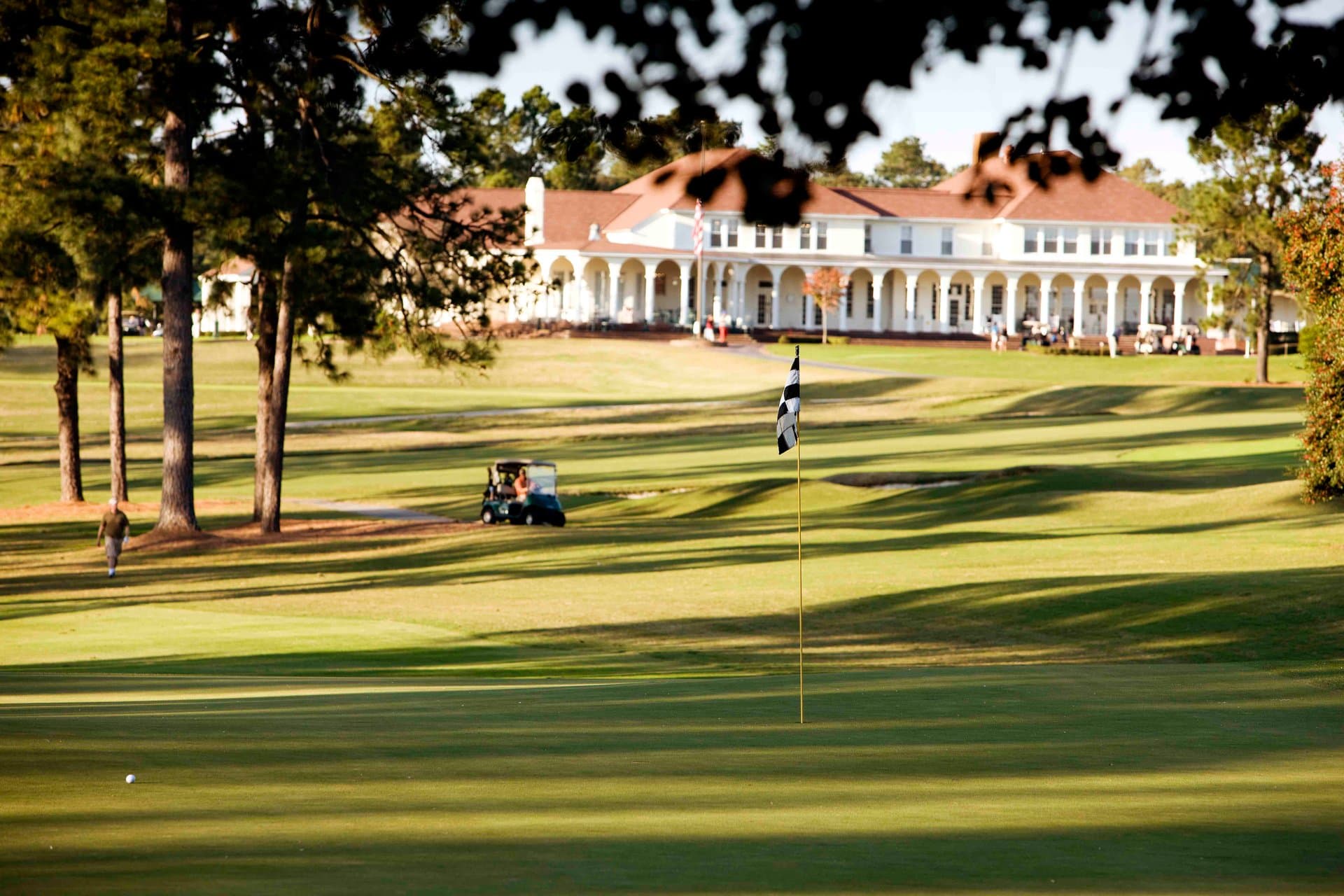
4. Pinehurst No. 2 — Pinehurst, North Carolina
Donald Ross (1907, restored by Coore & Crenshaw 2011) · $395–$495
The Coore and Crenshaw restoration stripped away decades of rough and returned the course to its sandy, wire-grass origins. The result is the most important architectural restoration in American golf. The crowned, convex greens remain the defining challenge. No. 2 has hosted more single golf championships than any course in the country, and the walk through the longleaf pines carries a weight of history that few American courses can match.
5. Whistling Straits (Straits Course) — Kohler, Wisconsin
Pete Dye (1998) · $350–$450
Built on a flat Lake Michigan shoreline that Dye reshaped into something resembling an Irish links, with over a thousand bunkers scattered across the property. Three PGA Championships and the 2021 Ryder Cup have confirmed the course's championship credentials. The exposed lakefront routing means wind is a constant variable. The walk is demanding, the views across Lake Michigan are expansive, and the scale of the earthmoving remains astonishing two decades later.
6. The Ocean Course — Kiawah Island, South Carolina
Pete Dye (1991) · $450–$550
Designed for the 1991 Ryder Cup and elevated along a ridge so that every hole offers views of either the Atlantic Ocean or the marshlands behind. The course is long, punishing in wind, and honest about its difficulty. The par-three seventeenth, with the green tucked against the ocean, is among the most demanding short holes in championship golf. This is not a course that flatters, but it is one that stays in memory.
7. Shadow Creek — Las Vegas, Nevada
Tom Fazio (1989, revised 2008) · $600–$750
Built in the desert north of the Las Vegas Strip at a reported cost exceeding $60 million, Shadow Creek is a manufactured environment so complete that it is easy to forget the surrounding landscape entirely. Mature trees, creeks, elevation changes, and manicured conditioning create a playing experience unlike anything else in Nevada. Access requires a reservation through select Las Vegas casino hotels, and the green fee includes limousine transport. The exclusivity is deliberate, and the course delivers accordingly.
8. TPC Sawgrass (Stadium Course) — Ponte Vedra Beach, Florida
Pete Dye (1980) · $350–$550
Home of The Players Championship and the island-green seventeenth that has become the most recognized single hole in professional golf. The Stadium Course is a thorough examination of every department of the game, with water on eleven holes and Dye's characteristic railroad-tie bulkheads framing landing areas throughout. The course plays harder than television suggests. The seventeenth is only 137 yards, but the absence of any bail-out option makes it uniquely stressful under any conditions.
9. Bethpage Black — Farmingdale, New York
A.W. Tillinghast (1936) · $75–$150
The sign at the first tee warns that the course is "an extremely difficult course which we recommend only for highly skilled golfers." Tillinghast's severe design hosted the 2002 and 2009 U.S. Opens and the 2019 PGA Championship. It remains a New York State public course, accessible for a green fee that is among the lowest on this list. The difficulty is genuine, but so is the egalitarian spirit. This is championship golf without pretense.
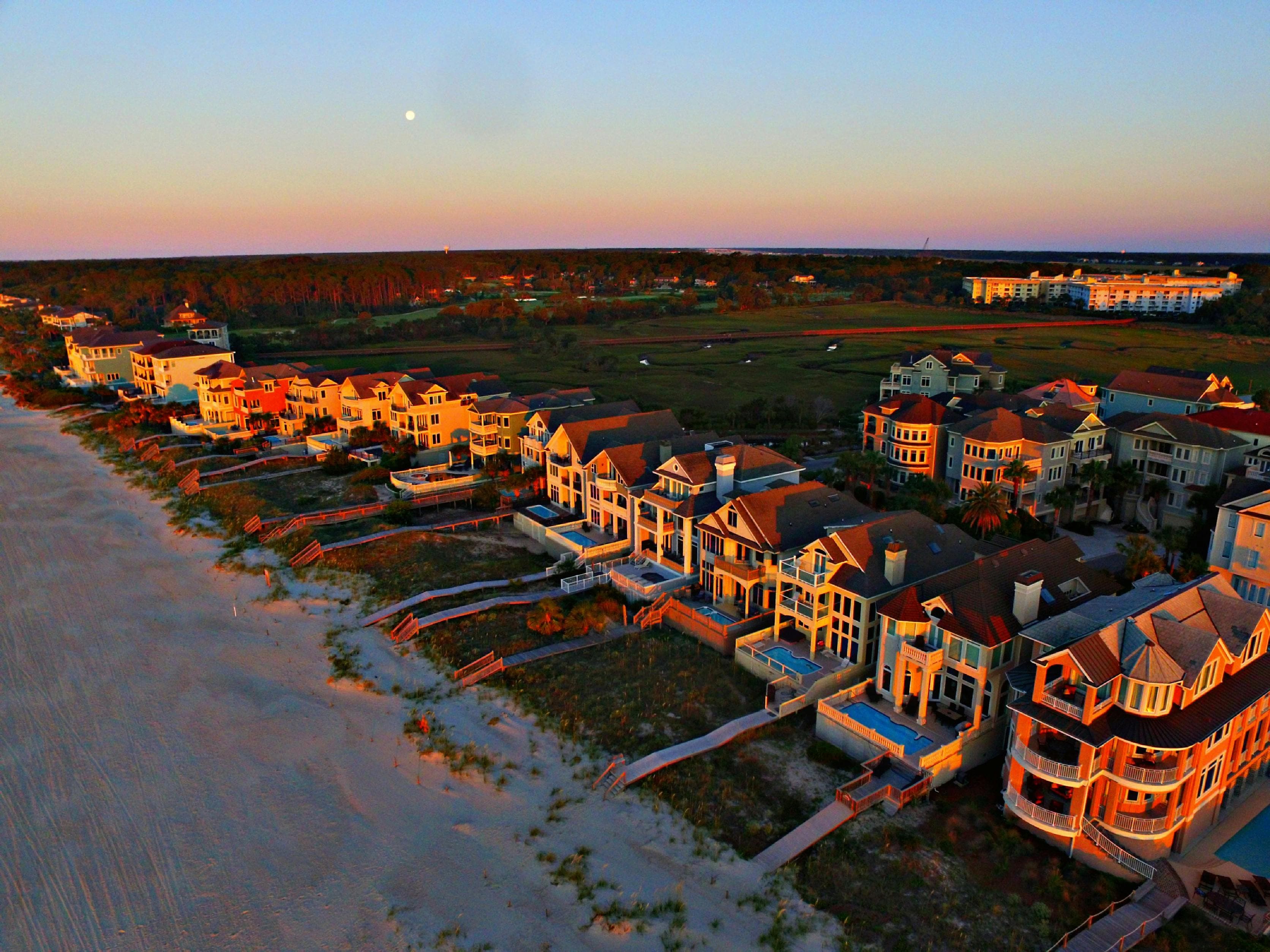
10. Harbour Town Golf Links — Hilton Head Island, South Carolina
Pete Dye with Jack Nicklaus (1969) · $300–$450
The antithesis of modern length-obsessed design. Harbour Town plays to under 7,100 yards from the tips and demands precision through corridors of ancient live oaks draped in Spanish moss. The par-four eighteenth, with its approach to a green backed by the iconic red-and-white lighthouse and Calibogue Sound, is one of the great finishing holes in American golf. The RBC Heritage has been played here since 1969.
11. Streamsong Red — Bowling Green, Florida
Bill Coore and Ben Crenshaw (2012) · $225–$325
Built on a former phosphate mining site in central Florida, where the excavation left behind sand ridges and elevation changes that have no equivalent in the state's famously flat terrain. Coore and Crenshaw routed the course through these landforms with characteristic subtlety, producing a layout that feels more like the Sand Hills of Nebraska than anything in Florida. The greens are bold, the strategy is clear, and the walking is excellent.
12. Streamsong Blue — Bowling Green, Florida
Tom Doak (2012) · $225–$325
Doak's contribution at Streamsong occupies adjacent terrain to the Red course but produces a distinctly different experience. The bunkering is more dramatic, the green complexes more severe, and the overall impression more muscular. The seventh, a short par four over an enormous waste bunker to a shelf green, distills Doak's design philosophy into a single hole. Paired with the Red in a 36-hole day, the contrast between the two designers' approaches becomes a course in modern architecture.
13. Streamsong Black — Bowling Green, Florida
Gil Hanse (2017) · $225–$325
The newest course at Streamsong and the one that most directly evokes links golf. Hanse used wider fairways, more ground-game options, and fewer forced carries than either the Red or Blue, producing a course that rewards imagination over power. The putting surfaces are the most complex on the property. The course completed Streamsong's transformation from an improbable concept to the finest public golf resort on the East Coast.
14. Arcadia Bluffs — Arcadia, Michigan
Warren Henderson and Rick Smith (1999) · $150–$250
Set on a bluff 200 feet above Lake Michigan, Arcadia Bluffs offers the most dramatic topographic setting of any course in the Midwest. The routing uses the elevation change sparingly but effectively, with several holes playing along the bluff edge and views of the lake visible from nearly every fairway. The walk is substantial. The wind off the lake is a factor on most days. The combination of setting, conditioning, and design quality makes this the flagship course of Northern Michigan golf.
15. PGA West (Stadium Course) — La Quinta, California
Pete Dye (1986) · $175–$375
Originally dubbed "Stadium Golf" for its amphitheater-like mounding, PGA West Stadium was Dye at his most provocative. The par-three seventeenth, "Alcatraz," plays to a tiny island green (the prototype for Sawgrass's seventeenth, reversed in inspiration). The course hosted the early years of what became the American Express tournament and remains among the most photographed layouts in the desert. Difficulty is the selling point. Subtlety is not the objective.
16. Spyglass Hill — Pebble Beach, California
Robert Trent Jones Sr. (1966) · $425–$475
Often overshadowed by its famous neighbor, Spyglass Hill is the more difficult course on the Monterey Peninsula and, by some measures, the better test of golf. The first five holes play through sand dunes near the ocean before the routing turns inland through the Del Monte Forest. The transition from links to parkland within a single round is unique. The course consistently appears in top-50 public lists and rewards the player who brings both power and precision.
17. Caledonia Golf and Fish Club — Pawleys Island, South Carolina
Mike Strantz (1994) · $175–$275
The approach to the clubhouse, through a corridor of live oaks along a former rice plantation, sets a tone that the course sustains for 18 holes. Strantz was a designer of uncommon artistic instinct, and Caledonia may be his finest work. The routing moves through wetlands, oaks, and tidal creeks with a natural flow that obscures how much shaping was involved. At under 6,600 yards from the back tees, the course proves that great design has no minimum yardage requirement.
18. Forest Dunes (The Loop) — Roscommon, Michigan
Tom Doak (2016) · $125–$200
The only reversible course on this list and one of only two in the United States. The Loop plays as the Black course one day and the Red course the next, with each direction producing 18 entirely distinct holes on the same terrain. The concept is a direct homage to the Old Course at St Andrews, where the original format of golf was played over shared fairways. The execution is more than a novelty. Both routings stand on their own merit as top-100 caliber courses.
19. Bay Harbor Golf Club — Bay Harbor, Michigan
Arthur Hills (1997) · $125–$225
Nine holes along the Lake Michigan shoreline, nine through a former quarry, and nine through forested terrain. The Links nine, perched on the bluffs above Little Traverse Bay, delivers the most visually stunning stretch of holes in Michigan golf. The Quarry nine repurposes industrial landscape into strategic golf with a creativity that predated Streamsong by fifteen years. The combination of three distinct nines allows for variety across repeated visits.
20. We-Ko-Pa (Saguaro Course) — Fort McDowell, Arizona
Bill Coore and Ben Crenshaw (2006) · $125–$275
Set on the Fort McDowell Yavapai Nation east of Scottsdale, the Saguaro Course moves through pristine Sonoran Desert with minimal disturbance to the native landscape. Coore and Crenshaw routed the course through washes and among saguaro cacti, producing a layout that feels discovered rather than constructed. The width off the tee is generous by desert standards, and the strategic interest builds through approach play and green contours. This is desert golf at its most natural.
21. Pasatiempo Golf Club — Santa Cruz, California
Alister MacKenzie (1929) · $275–$325
MacKenzie considered Pasatiempo among his finest designs, and he chose to build his home overlooking the sixth fairway. The course occupies a dramatic coastal site above Santa Cruz, with barrancas crossing several holes and green complexes that reward precise approach play from specific angles. A recent restoration has clarified MacKenzie's original intent. At 18 holes of pure strategic interest on a manageable piece of land, Pasatiempo is a seminar in golden-age design.
22. Chambers Bay — University Place, Washington
Robert Trent Jones Jr. (2007) · $175–$275
Host of the 2015 U.S. Open and built on a former gravel quarry along Puget Sound, Chambers Bay is American links golf at its most ambitious. The fescue turf, the firm conditions, the enormous scale of the landforms, and the single tree on the property all point toward a links experience that is genuinely uncommon in the United States. The course has been polarizing since its opening. Those who embrace the ground game and accept the bounces find a layout of considerable depth.
23. Erin Hills — Erin, Wisconsin
Michael Hurdzan, Dana Fry, and Ron Whitten (2006) · $200–$350
Host of the 2017 U.S. Open, Erin Hills occupies a site of dramatic glacial terrain northwest of Milwaukee. The fescue-covered landscape and the scale of the elevation changes give the course a character unlike any other in Wisconsin. The routing covers significant ground, and the walk is among the longest on this list. The par-five eighteenth, playing downhill to a green framed by native grasses, provides a finish that justifies the effort of the preceding seventeen holes.
24. Old Macdonald — Bandon, Oregon
Tom Doak and Jim Urbina (2010) · $275–$375
A tribute to the template holes developed by Charles Blair Macdonald, the father of American golf architecture, built on the same stretch of Oregon coast as its sister courses. The Biarritz, Redan, Alps, and Cape holes are all represented, executed at a scale that takes full advantage of the massive dunes. Old Macdonald is the widest course at the resort and the one most suited to the ground game. For students of architecture, it is the most educational round at Bandon.
25. Sheep Ranch — Bandon, Oregon
Bill Coore and Ben Crenshaw (2020) · $275–$375
The newest and most exposed course at Bandon Dunes, with ocean views from all 18 holes. Coore and Crenshaw routed the course across open, windswept terrain above the Pacific, with minimal bunkering and maximum strategic width. The result feels less constructed than any other course at the resort. The wind is the primary defense, and the firmness of the fescue turf determines the shot options on every approach. Sheep Ranch distills links golf to its essence: land, grass, wind, and the choices they demand.
Planning the Trip
Twenty-five courses spread across twelve states. No single trip covers them all, and that is the point. A bucket list is a long-term project, not a vacation itinerary. The courses cluster into natural groupings. Bandon accounts for four entries alone. Streamsong provides three. The Monterey Peninsula offers two. Northern Michigan contributes three. A focused traveler can check off significant portions of this list through well-planned regional trips over several years.
Harbour Town Golf Links
Pinehurst No. 2
The green fees on this list range from $75 at Bethpage Black to $750 at Shadow Creek. Most fall between $175 and $375, which represents a significant but not unreasonable investment for a round of golf that delivers a lasting impression. Several of these courses reward advance booking and flexibility on dates. Nearly all play best when walked.
The verdict